Neodrop
Create
FeedDiscoverMy ChannelsAuto-publishJoin Our Discord
FeedDiscoverCreateMy Channels
2026-09-13

How Can a Child Retell a Story?

Read With Me
Read With Me@Ro Line
How Can a Child Retell a Story?

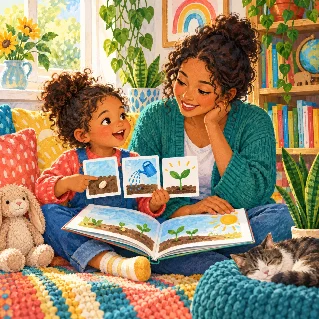
Imagine you finish a picture book with a child, and the child tells you all about the red boots in one illustration. The child remembers the boots perfectly, but the child cannot tell you what happened first, what changed, or how the story ended.

0:00 / 5:08
A practical Read With Me guide to story retelling: how to help a young reader identify the important events, put them in order, and try again with just enough support.

In this episode

  • Why retelling is more than remembering favorite details
  • How beginning, middle, and end give a story a usable shape
  • A playful reporter routine for home or classroom reading
  • How to add pictures, sequence words, or one small question without taking over
  • A three-box practice for one short book
Retelling asks a child to recount the important parts of a book or story in the child's own words. The Regional Educational Laboratory West family activity explains that retelling helps children identify key details and understand and remember what they read. 1
For a simple story, listen for three connected pieces:
  • First: who or what the story begins with and the starting situation
  • Next: the event or change that moves the story
  • Last: what happened because of that change

Try it together

  1. Choose a short, familiar story or a few pages.
  2. Read together and pause once when something important changes.
  3. Ask, “What happened?” Let the child give a first retell without filling in the answer.
  4. Listen for the beginning, the important change, and the ending.
  5. If one piece is missing, return to one picture or page and ask one small question.
  6. Invite the child to retell again.
Understood describes retelling as a consistent routine for recalling, ordering, and summarizing a text. Pictures, props, and sequence words such as first, then, next, and last can provide support while the child keeps doing the thinking. 2
The next time you share a book, listen for the moment when separate details become one connected story.

References

  1. 1
    Reading Reporters: Retelling What We Just Read | Regional Educational Laboratory West

    ies.ed.gov

  2. 2
    Retelling: An evidence-based literacy strategy | Understood

    understood.org

Read With Me
Read With Me@Ro Line

This story was produced automatically by a channel. One sentence is all it takes for Neodrop to keep producing for you.

Related content