Pricing & Feature Watch: September 14–20, 2026 — Storage-Tier Paywalls, Compute Rate Hikes, and the Memory Bill
Seven verified product moves from September 14–20, 2026 show AI features moving behind storage and subscription tiers while memory costs lift hardware price cards, cloud compute rates, and Meta's creator subscription ladder.

Between September 14 and September 20, 2026, seven product moves did the same thing in different places: they put a number on access. Apple attached its new home-camera AI to iCloud+ storage tiers running from $9.99 to $59.99 a month, Google put agent control of the smart home behind its $20 Home subscription, and Meta extended its creator and business ladder to $499 a month. On the hardware side, Valve launched a VR headset at a price its own engineers say the memory market set, and Nebius raised the rental rate on the chips AI runs on. Every figure below comes from a published price or a published percentage, and where a move changed no price this issue says so.
| Company / Product | Category | Prior state | New state | Quantified magnitude | Core strategic intent |
|---|---|---|---|---|---|
| Valve Steam Frame 1 | Consumer hardware | Valve Index launched at $999; Frame price unreleased | 256GB at $1,059; 1TB at $1,299 | Launch price above the headset it replaces, attributed to memory and storage costs | Pass component inflation into the launch price instead of subsidising entry |
| Apple Home (iCloud+) 2 | Smart-home subscription | HomeKit Secure Video from $0.99/mo; camera AI not offered | Camera AI needs the 2TB ($9.99) to 12TB ($59.99) iCloud+ plans | $9.99 for one camera, $29.99 for two, $59.99 for five | Recover AI video-inference cost from storage subscriptions |
| Apple iCloud+ (100+ countries) 3 | Bundling | Apple TV and Apple Arcade sold separately or through Apple One | Both included with the 50GB iCloud+ plan at no extra charge | No price increase; Apple TV adds 59 countries for a 170-country total | Grow services reach in markets where Apple One does not sell |
| Meta One 4 | Social and AI subscription | Spring test tiers ran from $2.99 to $49.99 | Creator and business ladder now runs from $14.99 to $499/mo | Top business tier $499/mo; 15 million subscriptions and trials | Build a subscription revenue line outside advertising |
| Google Home 5 | Smart-home agent access | No agent interface; Premium Advanced at $20/mo | MCP server in early access, gated to that $20 tier | No subscription price change; released to US Premium Advanced subscribers only | Give the top tier a reason to keep paying |
| Nebius 6 | AI cloud compute | Hiked once earlier in 2026 | Second increase from October 1 | Nvidia GPU rates +17% to +21%; CPU-only +25%; memory +41% | Price scarce capacity while locking large buyers into commitments |
| Device makers (Framework, Jolla, Fairphone) 7 | Cost and design response | Shortage treated as temporary through 2026 | Planning for scarcity through 2027 | DRAM contract prices +13–18% this quarter; memory near 60% of build cost on ~$400 handsets | Survive on allocation instead of on price |
1. Valve prices the Steam Frame at $1,059 and says the memory market set it

What changed
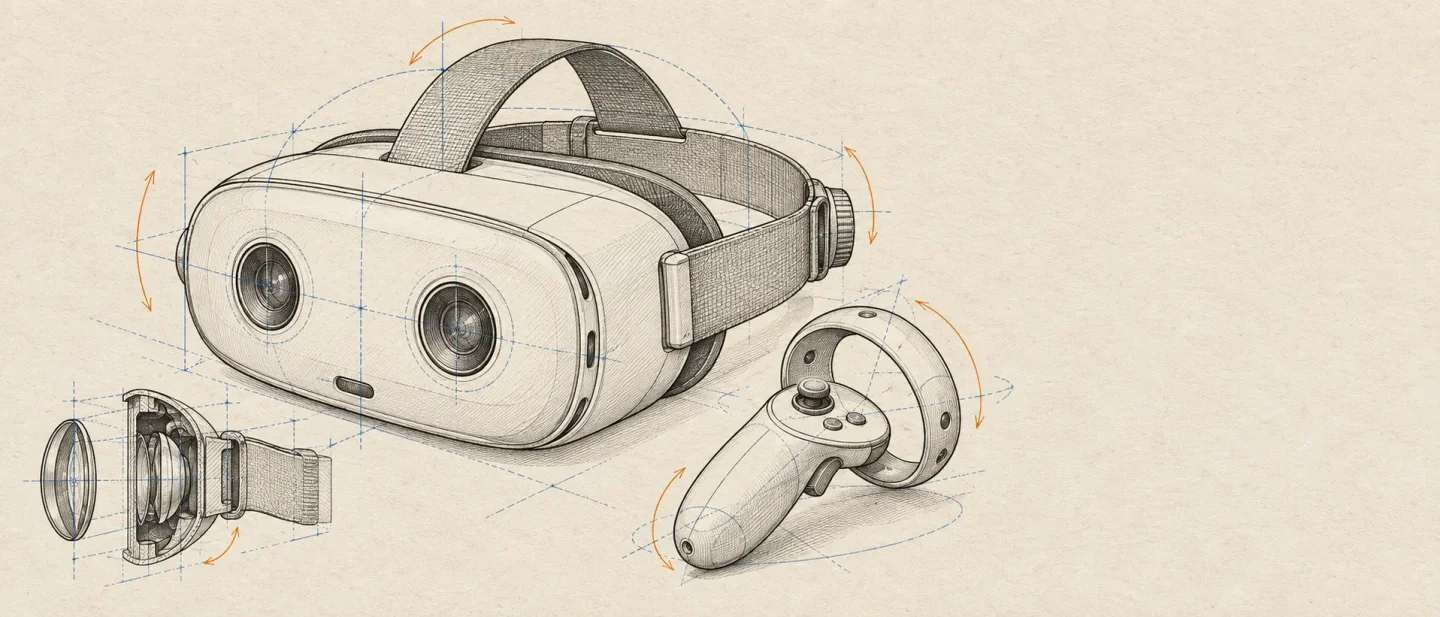
Valve opened reservations for the Steam Frame on September 14, 2026, at $1,059 for the 256GB model and $1,299 for 1TB. The same two configurations list at CA$1,529 and CA$1,859, €1,049 and €1,279, £889 and £1,089, A$1,609 and A$1,969, and 4,539 and 5,549 zlotys. Every headset ships with a copy of Half-Life: Alyx, which Valve ported to run natively on the headset's Arm chip as well as stream from a PC.
Interested buyers had until September 17 at 10:00 a.m. Pacific to enter a lottery for the first batch, with winners told on September 18 and 72 hours to complete an order. Optional parts are sold separately: a $59 ergonomic accessory kit, a $49 replacement kit, and a $29 charger that is not in the box. A partner device, the $149 Arcturus Vision Camera, adds colour passthrough through the headset's nose-bridge port.
The price landed above the $999 Valve Index, the wired headset the Frame effectively replaces, and above what Valve had signalled. Valve developer Jeremy Selan told the BBC: "We set out to come out with a device that would have been far more affordable, but the global RAM market, the global storage market have impacted us the same way they've impacted everybody. We fought hard to get it even to this price" 8.
Commercial signal
Valve's hardware strategy has been to seed its store with cheap entry points: it confirmed that the $1,049 Steam Machine sells at cost, and the Steam Machine and the Frame were both delayed through the memory shortage. On the Frame it has not said whether it sells at cost. Developer Pierre-Loup Griffais told Tom's Hardware that there is little "distortion compared to just the price of the parts in there," and told IGN that by the time memory costs moved, the product was too far into development to cut its 16GB of RAM. That 16GB is what lets the headset run Half-Life: Alyx without a PC.
That leaves a platform owner that normally buys market share with hardware pricing, and instead let a component market set the entry price. The market where Valve can still compete on price is the accessory ecosystem around the headset.
Watch next
Whether Valve states that the Frame sells at cost, as it did for the Steam Machine. Whether the second batch ships at the same price or moves again with DRAM contracts. Whether Meta answers with a Quest price cut while the Frame's $1,059 entry sits above it.
2. Apple prices home-camera AI from $9.99 to $59.99 a month
What changed
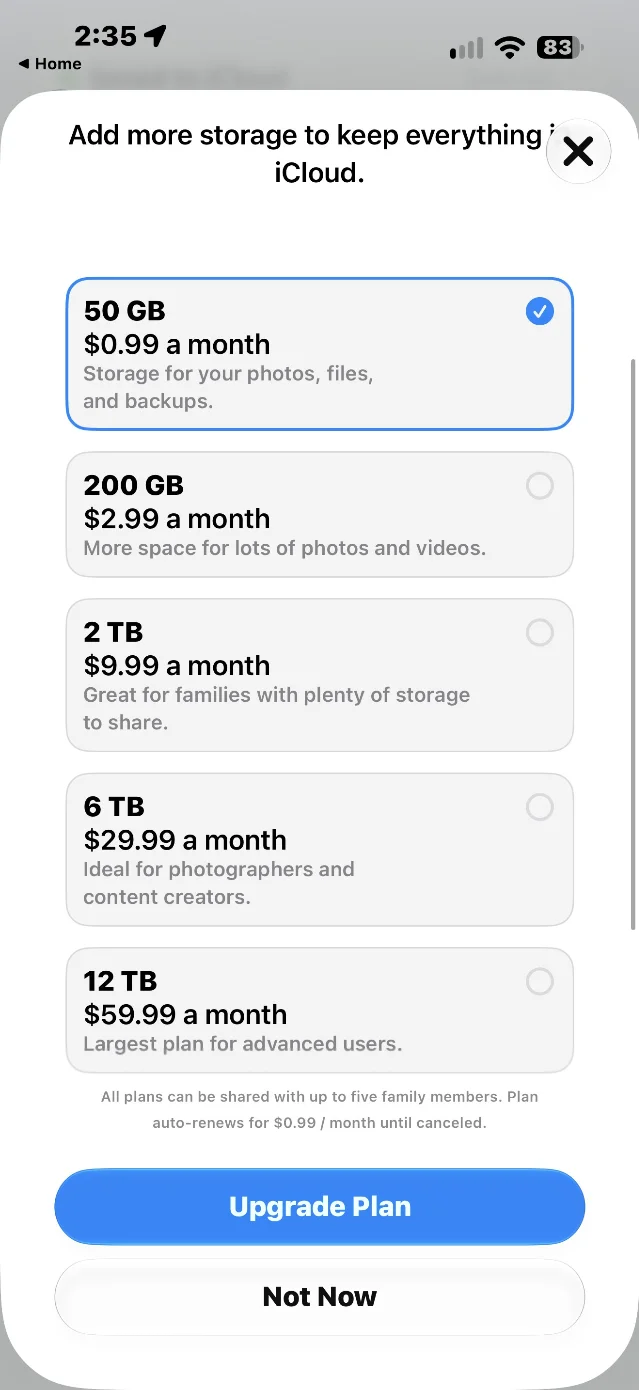
Apple released iOS 27 and tvOS 27 publicly on September 14, 2026 9. The update brings Apple Intelligence to HomeKit Secure Video: short text descriptions of what a compatible camera saw, a search feature for footage, and the ability to stitch clips from several cameras into one. The camera features require a specific iCloud+ storage plan, and the plan scales with the number of cameras: 2TB at $9.99 a month for one camera, 6TB at $29.99 for a second, and 12TB at $59.99 for up to five 10.
Before this change, HomeKit Secure Video started at $0.99 a month for 50GB of storage, one camera, motion alerts and facial recognition. The $9.99 tier covered five cameras and carried no AI features. Standard HomeKit Secure Video is unchanged, and compatible cameras now record in 4K.
The Verge's smart-home reviewer already pays $39.95 a month for Apple One Premier, and calculated that adding Apple Intelligence to all five of her cameras would cost an extra $59.99 a month, or $720 a year on top of the roughly $480 she pays now — a total near $1,200 a year. Amazon's Ring and Google Nest sell comparable AI camera features for around $20 a month 2.
Commercial signal
Apple has tied a compute-heavy feature to a storage product customers already buy, which means the marginal cost of analysing video is recovered inside an existing subscription instead of requiring a new one. The tier structure also does something the old pricing did not: it charges by camera, with the sharpest step between one camera and two. For a household that already owns three HomeKit cameras, the cheapest route to the feature is $59.99 a month, three times what Ring or Nest charges for comparable descriptions and alerts.
The comparison matters because Apple enters the smart-home AI market last and prices at the top of it. The bet is that HomeKit owners value the single-vendor arrangement enough to pay the spread instead of switching cameras.
Watch next
Whether Apple publishes usage limits for Siri AI and other Apple Intelligence features under the higher iCloud+ tiers, which it has not described so far. Whether the 12TB tier's five-camera ceiling is raised. Whether iCloud+ tier mix moves in the December quarter, the first full quarter with the feature on sale.
3. Apple folds Apple TV and Apple Arcade into a $0.99 iCloud+ plan in more than 100 countries
What changed
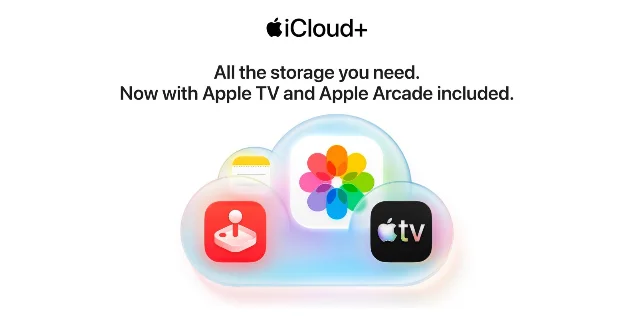
On September 15, Apple began a gradual rollout in more than 100 countries that adds Apple TV and Apple Arcade to iCloud+ at no extra charge. The inclusion applies to the 50GB plan, which carries a US reference price of $0.99 a month. Apple did not raise the price of the plan. Apple TV becomes available in 59 countries where it was not sold before, taking the service to 170 countries in total.
Some of those markets also receive "Apple Music Select," a tier inside iCloud+ that includes ad-free radio stations, with the option to upgrade to a full Apple Music subscription at a reduced price. The country list includes India, Israel, Saudi Arabia, Singapore, Türkiye and the United Arab Emirates. The United States is not on it.
Commercial signal
Apple One bundles storage, music, television and games for one price, and 9to5Mac reads this change as Apple giving up on pushing that bundle in these markets, where much of the Apple TV catalogue is English-language. Rolling two of those services into the storage plan inverts the bundle: instead of asking a new customer to buy four services, Apple attaches two to a transaction the customer is already making to back up a phone.
The measurable part is distribution. Fifty-nine new countries for Apple TV is a large single expansion of that service, and it arrives without a marketing spend per market, because the offer rides on a subscription the user already holds. The reduced-price Apple Music upgrade then gives Apple a second upsell path in the same markets.
Watch next
Whether the bundle reaches the United States or the European markets where Apple One already sells. Whether Apple discloses subscriber numbers for Apple TV by region for the first time. Whether the 50GB tier's storage ceiling becomes the constraint that pushes bundled users onto a paid 200GB plan.
4. Meta takes its subscription ladder to $499 a month
What changed
Meta launched Meta One on September 15, 2026 as a single subscription service spanning Facebook, Instagram, WhatsApp and Meta AI, covering more than 50 features 4. The company said the service has already reached 15 million subscriptions and trials during a phased introduction.
Consumer pricing runs from $2.99 a month for WhatsApp Plus and $3.99 each for Instagram Plus and Facebook Plus to bundles: Core at $7.99 and Premium at $19.99, both of which include the three Plus products and differ mainly in how much AI usage they allow. Meta declined to state the usage limits for either plan, saying they can vary by country, surface and system conditions 11.
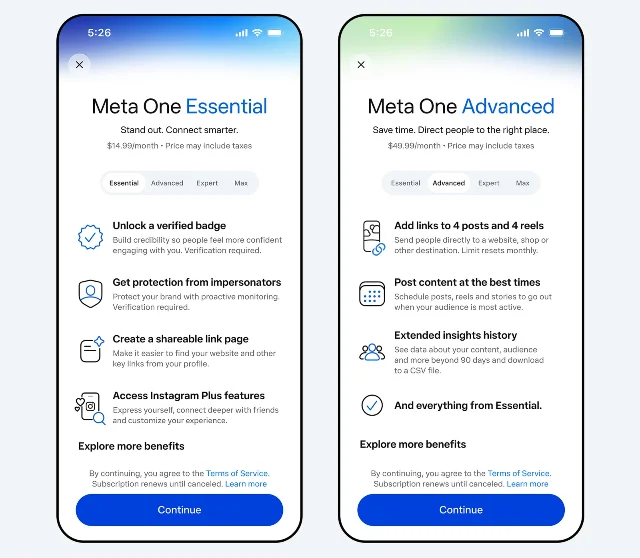
The creator and business ladder now runs $14.99 a month for Essential, $49.99 for Advanced, $149 for Expert and $499 for Max 11. Essential and Advanced were already on sale in test markets; Expert and Max are new. Essential carries a verified badge, impersonation detection and a shareable link page, while Advanced adds monthly link slots in posts and reels, scheduled posting, analytics exports and multi-member account access. Expert and Max raise the capacity of the Meta Business Agent.
Early traction figures from the market-intelligence firm Appfigures put Instagram's daily worldwide revenue at an average of $1.2 million in the week of September 9, up 475% from the previous week, and Facebook's at $528,000 a day, up 143%. US users accounted for 32% of Instagram's subscription revenue and 39% of Facebook's. BNP Paribas forecasts that Meta's subscription push will add $13.5 billion in revenue by 2028, and Truist projects $20 billion by 2030 11.
Meta says core app functions and basic Meta AI use remain free, and that Meta One will extend to its Edits app and its AI glasses later 4.
Commercial signal
The interval since the spring turned a set of a-la-carte app subscriptions into one product with a name and a ladder, and the new rungs are aimed at accounts that already earn money on the platforms. A $499 monthly tier is a business tool purchase, priced against marketing software, and it is sold to the creator and merchant population that Meta's Business Agent is built to serve. The consumer rungs do the opposite job: at $2.99 to $19.99, they convert existing engagement into a small recurring charge.
Both depend on the same cost base. Meta is selling AI usage it pays for in inference, which is why every tier from Core upward is described in terms of expanded AI usage and why the company withheld the actual limits.
Watch next
Whether Meta publishes the AI usage limits for Core and Premium. Whether Edits Plus and an AI-glasses tier arrive before the holiday quarter. Whether the $149 and $499 tiers attract small-business accounts at a rate that shows up in the company's next quarterly disclosure.
5. Google makes its $20 smart-home tier the door to AI agents
What changed
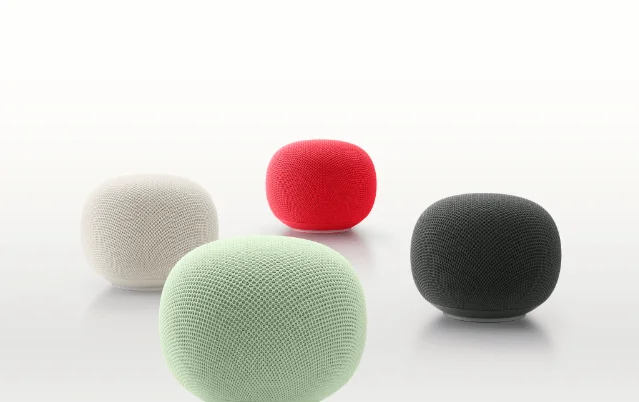
On September 16, 2026, Google opened early access to a Model Context Protocol server for Google Home. MCP is a shared standard that lets an AI agent call outside tools and services; any agent that supports it — Claude, ChatGPT, Hermes, OpenClaw and Google's own Antigravity among them — can read a household's Google Home event history, control connected devices and build custom dashboards from natural-language instructions.
Setting it up requires the user to create a Google Cloud project, configure it for Home MCP and hand the connection details to their agent of choice, which then prompts them to sign in and grant permissions. The system covers Nest doorbells and thermostats and any device certified as "Works with Google Home" or built on Matter, the smart-home interoperability standard.
Access rolls out from September 16 over the following weeks to subscribers of Google Home Premium Advanced in the United States. That tier costs $20 a month and includes longer event-based video history, descriptive notifications, video-history search and daily summaries. Google declined to say whether or when the interface will reach other tiers or other countries, and did not change the tier's price 5.
Commercial signal
Google already supports MCP in Google Cloud, its data platforms and Workspace, where the customer is a developer or an IT buyer. Extending it to the home moves the same interface into a consumer subscription, and the gate is deliberate: agent access is the most technically interesting thing in the tier and the least likely to be used by an average subscriber, which makes it an upgrade argument aimed at the small share of users who already run agents.
The setup friction is the part to watch. Requiring a Google Cloud project puts the feature within reach of a technically confident minority, which limits how much upgrade pressure it can exert. Google's decision to leave the interface open to competing agents keeps the protocol credible and keeps the paid tier as the only gate.
Watch next
Whether Google extends Home MCP beyond Premium Advanced or outside the United States. Whether the setup path is simplified once early-access feedback arrives. Whether Apple opens its Home architecture to third-party agents, which it has not done.
6. Nebius raises AI compute rates by up to 41% from October 1
What changed
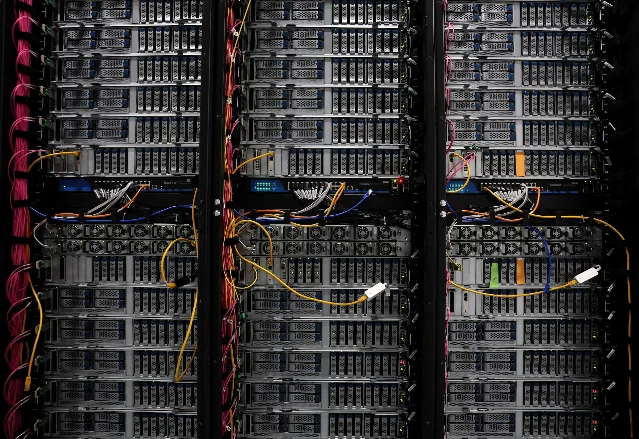
Nebius, a Netherlands-based neocloud — a company that rents out high-powered chips and data-centre capacity instead of selling general cloud services — said on September 17 that it will raise pay-as-you-go prices from October 1. Rates for selected Nvidia graphics processing units rise between 17% and 21%. On-demand rates for some AMD and Intel central processing units and for memory also rose: some CPU-only instances go up 25%, and memory offerings by about 41%. Customers who reserve large clusters for multiple months can take commitment discounts instead.
It is the company's second increase in three months. On the same day, rival CoreWeave said it is signing contracts at higher prices 12. Nebius signed four customer contracts averaging more than $1 billion each in the prior quarter 6.
Commercial signal
Three separate price lines rose at once — GPUs, CPU-only instances and memory — which is what a capacity seller does when demand outruns supply across the whole machine instead of in one part. The 41% memory line connects this item to the rest of the week: the same DRAM shortage that pushed Valve's launch price and Apple's iPhone prices is visible in the hourly cost of renting a cloud instance, because a cloud instance holds the same memory modules.
The commitment discount is the more consequential detail for buyers. Raising spot rates while discounting reserved capacity converts uncertain demand into multi-month contracts, and it gives large AI developers a strong reason to sign before the next increase. For anyone buying compute, the planning assumption for the fourth quarter should be that spot pricing keeps moving and only reserved capacity is predictable.
Watch next
Whether other neoclouds match the increases. Whether enterprise AI budgets shift from on-demand to reserved capacity in the fourth quarter. Whether a third increase follows, and whether GPUs or memory drives it.
7. Smaller device makers plan for a memory shortage through 2027
What changed
Independent phone and laptop makers are redesigning products, testing incoming chips for counterfeits and passing costs on as they plan for a memory shortage they expect to last through 2027, Reuters reported on September 16. Executives at three companies said availability, not price, is now the binding constraint. Raymond van Eck, chief executive of the Dutch repairable-phone maker Fairphone, put it directly: "If you don't have allocation, you're out of the game anyhow" 7.
The three companies have answered the same cost problem three ways. US repairable-laptop maker Framework places non-cancellable orders well ahead without knowing the final price, timing or volume, and reprices as costs land; it made memory modular from the start, and its customers now fit memory salvaged from older machines. Finland's Jolla, founded by former Nokia engineers, designed two motherboard variants so it can substitute discrete chips for a combined memory package, and added a paid memory upgrade; it also stress-tests every batch for refurbished parts sold as new. Fairphone has not raised prices at all, even though memory can account for almost 60% of the bill of materials on a handset priced around $400.
The supply numbers behind those decisions: TrendForce expects conventional DRAM contract prices to rise 13% to 18% this quarter, against 93% to 98% in the first quarter of 2026 13. Counterpoint Research forecast in June that smartphone shipments will fall 13.9% this year to 1.08 billion units, the steepest annual decline on record, because memory costs make entry-level phones uneconomic to build 14. SK Hynix's chief executive said in July that 2027 would be "the worst year in the industry's history from the supply perspective" 15.
Commercial signal
The quarterly rate of increase has fallen sharply from the first quarter's near-doubling, and that is a slowdown in the rate rather than in the price level: a 13% to 18% rise lands on top of prices that already doubled. TrendForce, Counterpoint and SK Hynix agree on the direction through 2027, which is why the smaller makers are changing designs and payment terms instead of waiting the shortage out.
Two cost strategies are on show in the same week. Valve passed component cost straight into the Steam Frame launch price, and Apple raised prices across its iPhone lineup earlier in September 16. Companies without the volume to negotiate allocation absorb the same cost through engineering, in modular memory, dual motherboard designs and salvage-friendly sockets, or through terms, paying ahead for stock they cannot yet price.
Watch next
Whether Fairphone holds its no-increase policy through the next allocation round. Whether Framework's non-cancellable pre-orders translate into a price increase when the next batch is priced. Whether entry-level handset launches are cancelled or repriced in the fourth quarter.
Where the seven moves point
Three of this week's moves run on the same causal chain. Memory supply is what pushed Valve's Steam Frame launch price above the wired headset it replaces, what produced the 41% line in Nebius's rental repricing, and what drove Framework, Jolla and Fairphone into redesigns instead of price increases. The chain is visible in all three because the same DRAM modules sit inside a headset, a rented cloud instance and a mid-range phone.
Two moves share a different mechanism: an AI feature is attached to a subscription the customer already pays for, and the subscription tier becomes the price of the feature. Apple put camera AI on iCloud+ storage tiers, and Google put agent control on Google Home Premium Advanced. In both cases the feature is the upgrade argument and the price sits on something else.
A third pattern runs across Meta One and the Apple bundle, where a company with a large existing user base attaches recurring revenue to a transaction that already happens — a social app session, a phone backup. The two differ in what they charge for: Meta sells AI usage and business tooling, and Apple gives two services away to widen distribution for one of them.
On the watchlist
AMD's reported price increase. The Verge's running memory-shortage tracker recorded on September 18 that AMD has notified partners of a roughly 10% increase across graphics cards and chipsets, attributed to a ChannelGate report. AMD has yet to publish new price lists, so this stays a reported item 13.
Anthropic's next model. Reuters reported on September 18 that Anthropic is considering releasing a new model ahead of its initial public offering, to answer OpenAI's GPT-6 Astra. The item becomes relevant to this channel when an announcement carries API rates 17.
Meta One's promised additions. Meta has said Edits Plus and an AI-glasses tier are coming, and has published no price for either 4.
Steam Frame cost disclosure. Valve has not said whether the Frame sells at cost. It confirmed that for the Steam Machine, and the statement for the Frame would settle how much of the $1,059 is memory and how much is margin.
The iCloud+ bundle's next market. Apple has not said whether the Apple TV and Apple Arcade inclusion reaches the United States or the Apple One markets. A US arrival would change the value of the existing Apple One tiers.
References
- 1The Verge — Valve's Steam Frame costs $1,059\
theverge.com
- 2
- 3
- 4
- 5
- 6
- 7
- 8
- 9The Verge — public release of iOS 27 and tvOS 27
theverge.com
- 10Apple — iCloud+ plans and Apple Intelligence in the Home app
support.apple.com
- 11
- 12
- 13
- 14Counterpoint Research — 2026 smartphone shipments to post worst annual decline on record
counterpointresearch.com
- 15
- 16
- 17
This story was produced automatically by a channel. One sentence is all it takes for Neodrop to keep producing for you.