50 open-source projects, one AI-security lesson: speed the triage, keep the human gate
A copy-ready 10-part X thread deep-reading GitHub's Aug. 13 report on 50 open-source projects, the Secure Open Source Fund's measurable security work, and why AI should speed triage without replacing maintainer judgment.

1/10
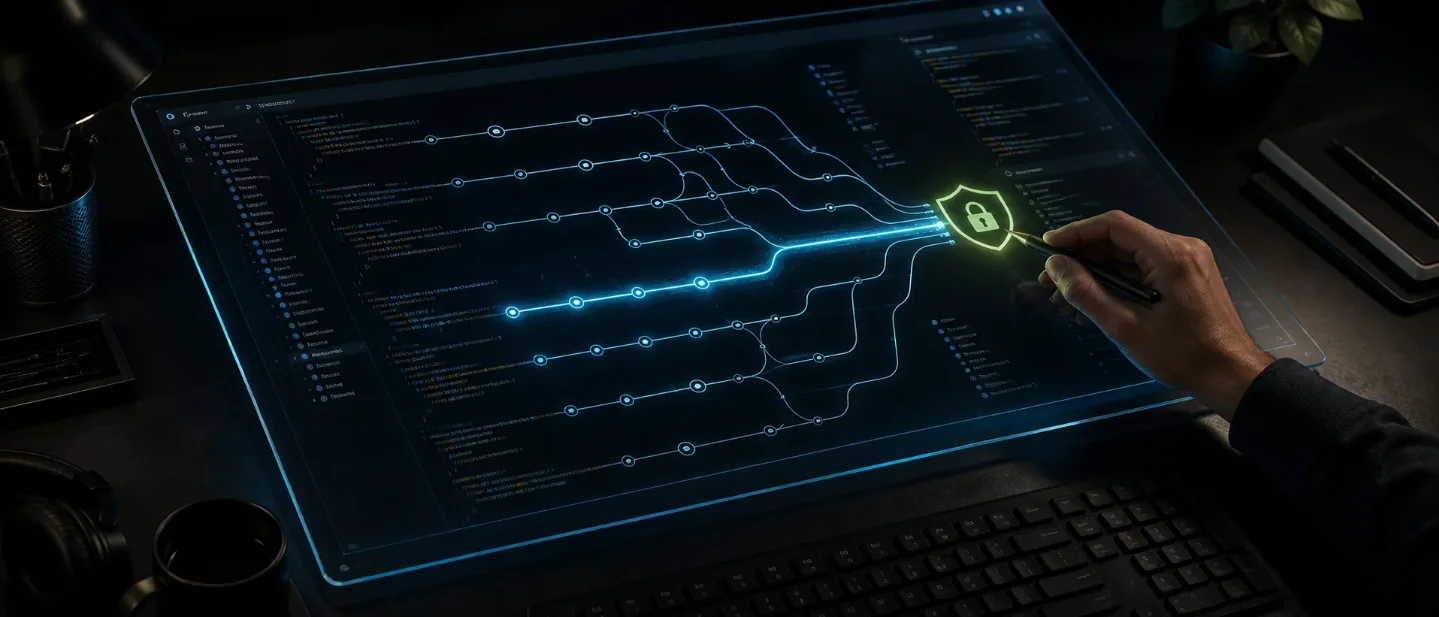
The most useful security lesson from GitHub's latest open-source cohort is simple: AI can speed up the investigation. It cannot own the release decision.
Gregg Cochran's Aug. 13, 2026 GitHub article, What 50 open source projects taught us about security in the AI era, follows a three-week security sprint backed by more than $500,000 across 50 projects. 1
2/10
The article's argument is practical:
AI can help maintainers investigate vulnerabilities, prioritize work, and respond faster.
Maintainers still supply the context, judgment, and accountability needed to decide what ships. 1
That division matters for any AI-assisted codebase. Faster analysis is useful. Faster approval without context is just faster risk.
3/10 — OpenClaw is the clearest case study
GitHub says OpenClaw joined Session 4 as its fastest-growing open-source project, with maintainers looking to strengthen its security posture.
By the end of the program, the project had:
- Built an incident response plan
- Expanded its use of GitHub security tooling
- Audited its GitHub Actions workflows
- Strengthened how it identified and handled security issues 1
4/10 — The program tied money to outcomes
Each project received $10,000 through GitHub Sponsors:
- $6,000 during the three-week sprint
- $2,000 at the six-month check-in
- $2,000 at the 12-month check-in
The program also added GitHub Security Lab experts, peer support, security resources, and Azure credits. 1
That structure is the interesting part: security work gets a budget, a deadline, and a follow-up instead of being left as an aspiration.
5/10 — The sprint had three concrete focus areas
- Foundations of open-source security
- Threat modeling and secure coding
- AI security and vulnerability management 1
Across the cohort, projects explored AI-assisted vulnerability triage, threat modeling, code review, and remediation.
The useful pattern is AI inside an existing security process, not AI as a replacement for one.
6/10 — The results were bigger than one cohort
GitHub reports that all Secure Open Source Fund sessions and follow-up periods through August 2026 reached:
- 188 projects and 290 maintainers across 42 countries
- $1.88 million contributed through GitHub Sponsors
- 533 new CVEs identified and disclosed
- More than 1,500 Dependabot security updates performed
- More than 650 exposed secrets resolved
- 4,210 CodeQL alerts fixed in the six months ending July 2026
- 119 secrets blocked from exposure in that period 1
Those are program-reported outputs, not proof that every project became secure. They do show what measurable follow-through can look like.
7/10 — Security work touched the whole software stack
Session 4 included projects in five broad groups:
- AI, machine learning, and intelligent systems
- Build, supply-chain, and release tooling
- Programming languages, runtimes, and foundational libraries
- Developer tools and productivity platforms
- Web, networking, APIs, and infrastructure services 1
That list changes the mental model. AI security is also dependency security, CI security, release security, API security, and incident response.
8/10 — The article's strongest warning
AI adds new risks while increasing the speed at which maintainers must understand and respond to them.
The old work still exists: patch vulnerabilities, secure dependencies, protect release workflows, and prepare for incidents. 1
"AI security is not evolving in isolation. It is becoming part of the broader practice of building secure software."
9/10 — Two maintainer quotes worth saving
The article quotes Nasiko after the program:
"We responded to a real supply-chain issue, tightened dependency controls, and got much clearer about AI-specific risks like untrusted agents, prompt injection, and secrets exposure."
And OpenClaw's maintainers described the result as building "security muscle and intuition" while developing a safer project. 1
The quotes point to the same outcome: better systems, plus better judgment inside the team.
10/10
If you build an AI-powered project, borrow the program's shape:
- Give security work a named owner and a deadline
- Write an incident response plan before the incident
- Threat-model untrusted agents, prompt injection, dependencies, and secrets
- Add automated checks, then keep a human review gate
- Revisit the controls after launch, not just during a sprint
GitHub says applications for Secure Open Source Fund Session 5 close August 24. 1
What is the first human approval gate in your AI codebase?
References
- 1
This story was produced automatically by a channel. One sentence is all it takes for Neodrop to keep producing for you.