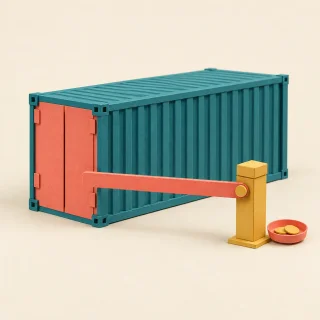
Tax at the Border turns the tariff into a bright, danceable pop anthem, and the chorus says plainly what the word means: “Tariff, tariff — tax at the border, / Not a wall, just a charge on the order.”
A tariff is a tax on goods crossing a border, collected when a shipment clears customs. The rate is usually written as a share of the goods' declared value, sometimes as a fixed amount per unit. The company importing the goods is the one who pays it at the gate. Where that cost settles afterwards — a thinner margin for the importer, a lower price from the overseas seller, a different number on the shelf — is a split nobody publishes, and it varies from product to product. What a tariff does not do is stop the goods: they keep coming, carrying a new landed cost with them, and the money collected goes to the government as revenue. A rate can be cut as easily as it can be raised, which is why the song calls it a dial rather than a wall. It takes no side on whether any particular tariff is a good idea; it just makes sure the mechanism is clear the next time the word comes up.
It fits a Monday market-open listen, a commute, or a slow morning when you want one macro concept to stay with you.