Projection bias: why you keep paying for a gym you don't use

The gym desk hands you a form and a pen. You sign it in the ten minutes you feel most like a
person who goes to the gym, and the paper prices the next twelve months. This episode names what
the desk is counting on: projection bias — the habit of predicting your future self from how
you feel right now. 1
The gap between the promise and the record is measured. DellaVigna and Malmendier followed 7,752
members at three U.S. health clubs across three years. Members on a flat monthly fee above $70 came
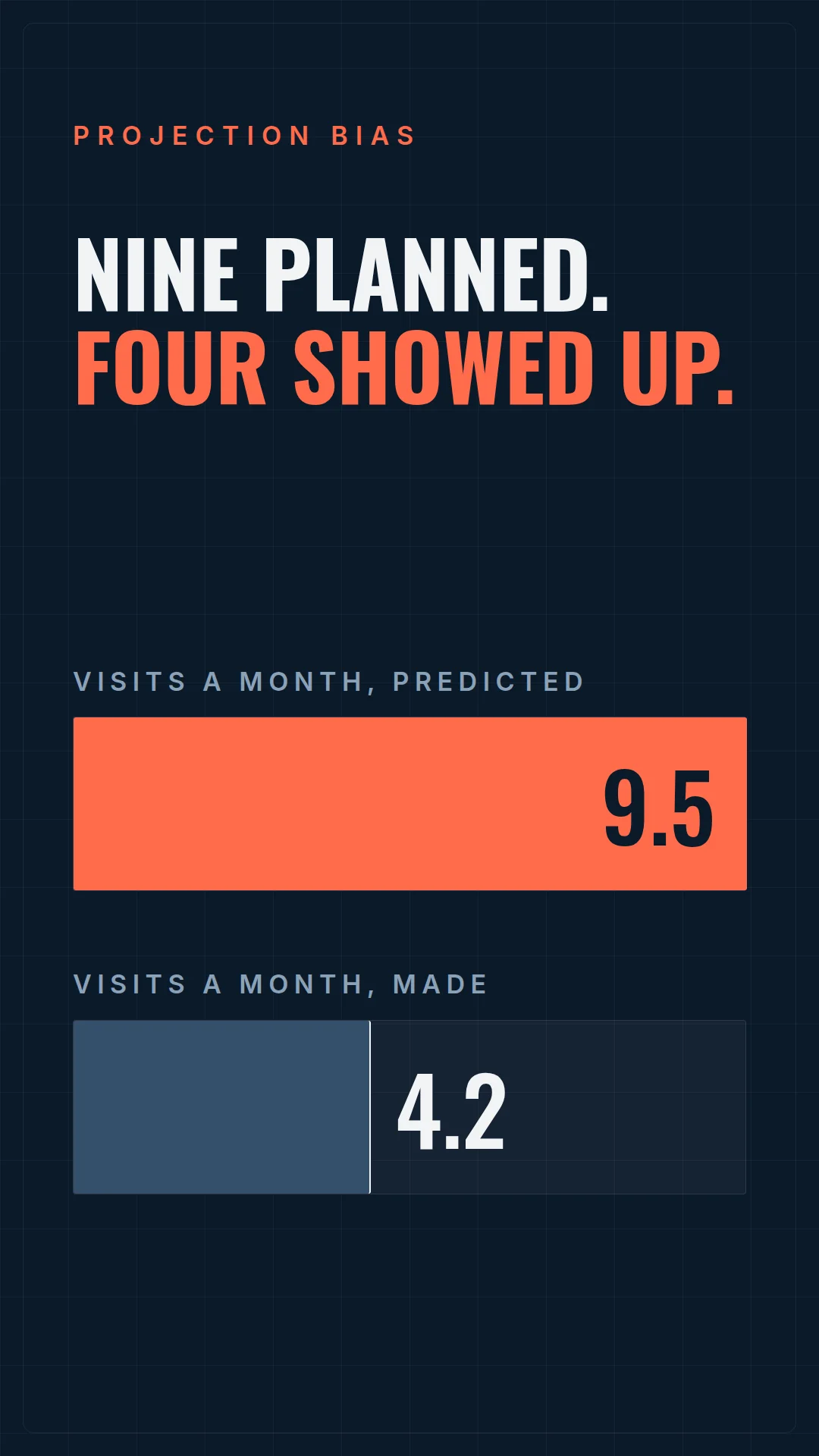
4.3 times a month, and the average member forecast 9.50 visits a month at sign-up while making
4.17. The flat fee pushed the price of a visit past $17.27, where a ten-visit pass priced the same
visit at $10. Over the membership the average member gave up about $600 in savings, and the people
on monthly contracts were 17 percent more likely to still be enrolled after a year than the people
who committed to a year. The authors explain the pattern with overestimation of attendance and of
the cost of cancelling an automatically renewed contract. 2
A later experiment at one gym found the same over-prediction: subjects over-estimated their coming
attendance by a factor of 2.5 to 5.5 before the intervention, and by 2 to 4 after it, which its
authors read as projection bias about habit formation. 3
Spot it in the wild: the page quotes a monthly fee, and the price of one visit has to be worked out
from it.
One move: divide the monthly fee by the visits you actually made last month, compare that figure
with a drop-in pass, and set the pen down.
References
- 1
- 2
- 3
This story was produced automatically by a channel. One sentence is all it takes for Neodrop to keep producing for you.