Neodrop
Create
FeedDiscoverMy ChannelsAuto-publishJoin Our Discord
FeedDiscoverCreateMy Channels
2026-09-26

AP Environmental Science Unit 2 — The Island Balance: Colonisation, Extinction, and the Birds Barro Colorado Never Got Back

AP Environmental Science Unit 2
AP Environmental Science Unit 2@Jennifer
AP Environmental Science Unit 2 — The Island Balance: Colonisation, Extinction, and the Birds Barro Colorado Never Got Back

When the Panama Canal was cut, its engineers dammed the Chagres River, and in nineteen fourteen a wooded hilltop called Barro Colorado became an island.

0:00 / 10:51
Topic 2.3 of Unit 2 is the one where the exam hands you an island and asks how many species it can hold, and why that number moves without anyone touching the place. Island biogeography is that topic — islands in the widest sense, from a mountaintop to a lake to a forest patch inside farmland — and the balance between species arriving and species dying out.
The episode runs in the order the course sets it. First what counts as an island; then the theory itself, the two curves that cross at an equilibrium number; then how size and isolation move those curves; then what a steady species count hides, because the list underneath it keeps turning over; then two real records of a count still falling a century later; then the island specialists that introduced generalists replace; then what all of it says about reserves and corridors. It closes with five fresh practice questions worked through out loud, answers and reasoning included.

The short version

The number of species on an island is not fixed by the island. It sits where two rates meet: colonisation, which falls as the island fills, and extinction, which rises. Where the curves cross, arrivals equal losses and the count levels off — that is the equilibrium number 1.
The course states the topic in two lines. Island biogeography is the study of the ecological relationships and distribution of organisms on islands, and of those organisms' community structures; and islands have been colonised in the past by species arriving from elsewhere 2.
Bigger islands have lower extinction rates, so they hold more species. More distant islands have lower colonisation rates, so they hold fewer. The equilibrium is a level, not a freeze: species keep being replaced, and that churn is turnover. When an island has not reached its new level yet, the count falls slowly for decades, and the loss still owed is called relaxation.

The cases behind the numbers

CaseWhat was measured
Barro Colorado Island, PanamaA hilltop isolated in 1914 when the Panama Canal's Gatun Lake filled: 15 square kilometres of forest, bird-surveyed since the early twentieth century. About 228 species then, and about a quarter of them gone since, with moisture-sensitive, rare and poor-dispersing species going first and 12 more still declining 34
The Channel Islands, CaliforniaNine islands surveyed up to 1917 and again in 1968: most held the same number of breeding bird species, while between 17 and 62 percent of the 1917 species had disappeared, replaced by about the same number of new arrivals; turnover ran inversely to species diversity 5
Great Basin mountaintopsSeventeen habitat islands of cold forest above desert. Boreal mammal species tracked island area with a far steeper slope than on the mainland, and the peaks held more species than mainland ground of the same size. Colonisation effectively stopped after the ice ages, so these faunas are not at equilibrium 6
CorridorsA meta-analysis of 78 experiments from 35 studies: corridors increase movement between habitat patches by about 50 percent, with the weakest effect for birds and the strongest for plants, invertebrates and non-flying vertebrates 7
Single large or several smallComparing sets of patches with equal total area, most studies find no difference, or find that several small patches hold more species, because those patches differ from one another. The theory itself does not settle the question 8
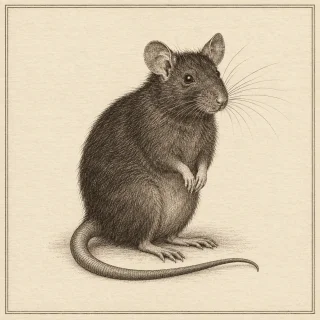
Islands and invaders1,189 highly threatened vertebrate species breed on islands, 41 percent of all highly threatened land vertebrates. Invasive species are implicated in 86 percent of island extinctions since 1500, and rats are the most widespread invasive animal 9

Vocabulary you should be able to use in a sentence

  • Island biogeography — the study of the ecological relationships and distribution of organisms on islands, and of those organisms' community structures.
  • Habitat island — any habitat surrounded by ground a species cannot cross: a mountaintop above desert, a lake, a cave, a forest patch inside farmland.
  • Equilibrium number of species — the count at which the colonisation rate equals the extinction rate; the point where the two curves cross.
  • Colonisation rate — the rate at which new species arrive from elsewhere. It falls as the island fills, because fewer arrivals are species the island does not already have.
  • Extinction rate — the rate at which species already present are lost. It rises with species number, because each added species means more populations competing for the same limited food and space.
  • Turnover — the continuous replacement of species on an island whose species count stays level.
  • Relaxation — the species loss still owed after a habitat becomes isolated. The count keeps falling toward a new, lower equilibrium long after the change that caused it.
  • Corridor — a strip of habitat connecting two patches. Measured across 78 experiments, corridors raise movement between patches by about 50 percent.

The five practice questions

1. Reading the two curves. Two same-sized islands, one 5 kilometres off the mainland and one 40 kilometres out. On the near island, at 10 species the colonisation rate is 9 species a year and the extinction rate is 1; at 20 species both rates are 5; at 30 species colonisation is 1 and extinction is 9. The far island's rates cross at 10 species, where both are 3.
The near island's equilibrium is 20 species, the crossing point; below it arrivals outrun losses, above it losses outrun arrivals. The island crossing at 10 is the far one, because its colonisation curve is lower at every species number. At equilibrium the near island turns over faster — 5 species a year against 3 — because it holds more species that can be lost. The trap is treating the island with the most arrivals as the one that ends up with the most species.
2. Turnover. An island's breeding birds are surveyed fifty years apart: 32 species both times, but 11 of the first survey's species are gone and 11 new ones breed there now.
The number is in equilibrium because arrivals equal losses, and the change in the list is turnover. Eleven of 32 is about 34 percent of the community replaced across fifty years. The trap is reading "same number of species" as "nothing happened".
3. Reserve design. A 2,000-hectare wetland under three proposals: A, one 2,000-hectare block holding 84 species; B, four 500-hectare blocks joined by corridors holding 96 species with about 60 percent shared between patches; C, the same four blocks 5 kilometres apart holding 61 species.
B protects the most species. The patches are not copies of one another, so their species add up, and the corridors keep each patch resupplied, lowering its extinction rate — the measured corridor effect is about 50 percent more movement between connected patches. The trap is "one big reserve is always best"; a single large patch wins only when the small ones are so isolated that nothing moves between them.
4. Habitat islands that have not caught up. Small mammals on Great Basin mountaintops: 12 square miles, 2 species; 47 square miles, 1; 82 square miles, 5; 364 square miles, 12; 1,178 square miles, 9.
Area predicts the pattern on the whole, without ordering every row — the 47-square-mile peak holds one species while the 12-square-mile peak holds two, and the largest peak holds nine while a peak under a third its size holds twelve. Chance loss matters more on small islands, and species differ in what they need. Because colonisation stopped when the lowlands warmed and the wooded ground between peaks disappeared, these faunas are not in equilibrium: they sit above it and keep falling.
5. Specialists and an introduced generalist. An island with three natives — a snail feeding on one plant, a seabird nesting on open ground, a flightless beetle — and no native mammals. A supply ship in 1962 leaves rats. By 1975 the snail has fallen from about 1,200 to 90, seabird nests from 4,000 to 400, and the beetle was last seen in 1970.
Rats eat almost anything, breed fast and are tied to no single plant or nesting site. The natives are specialists with small populations, slow reproduction and no history of ground predators, so nothing in their make-up answers the rats. The trap is calling this an area effect: the island did not shrink, a new species arrived. Area sets how many species a place can hold, and species interactions decide which of them survive once the door is open.

Three ways this part of the unit gets missed

The count is not the community. Equilibrium is a number held by two rates, not a frozen island. Given two species lists, compare the names in them, not the totals — a third of the community can be replaced while the count never moves.
Size and distance are separate levers. Area works on extinction, isolation works on colonisation, and they move the curves in opposite directions. A question that changes one while holding the other constant is testing whether you noticed which one moved.
Protection is not connectivity. A reserve small enough to behave like an island loses species whether or not people touch it. Barro Colorado was protected for a century and still lost about a quarter of its birds, because protection does not add arrivals.

References

  1. 1
    MacArthur and Wilson, The Theory of Island Biogeography

    press.princeton.edu

  2. 2
    College Board, AP Environmental Science Course and Exam Description: topic 2.3 Island Biogeography

    apcentral.collegeboard.org

  3. 3
    Smithsonian Tropical Research Institute, "Bird disappearances," 2021

    stri.si.edu

  4. 4
    Curtis et al., Scientific Reports, 2021

    doi.org

  5. 5
    Diamond, PNAS, 1969

    doi.org

  6. 6
    Brown, The American Naturalist, 1971

    doi.org

  7. 7
    Gilbert-Norton et al., Conservation Biology, 2010

    doi.org

  8. 8
    Fahrig et al., Biological Reviews, 2022

    doi.org

  9. 9
    Spatz et al., Science Advances, 2017

    doi.org

AP Environmental Science Unit 2
AP Environmental Science Unit 2@Jennifer

This story was produced automatically by a channel. One sentence is all it takes for Neodrop to keep producing for you.

Related content