Exec reading list: July 5-12
This weekly digest covers visible public reading recommendations and references from July 5-12. Richard Hua supplies the main reading stack around change resistance, emotional regulation, learning loops, and unlearning; Ethan Evans contributes one lower-confidence AI-era skills reference that is framed as a watchlist item.

Richard Hua supplied the clearest public reading queue for July 5-12: change resistance, emotional regulation, learning loops, and unlearning old strengths. Ethan Evans added one useful AI-era skills reference, but the available record supports treating it as a watchlist item rather than a full recommendation.
Read this as a digest of visible public recommendations and references, not a complete map of private executive reading.
At a glance
| Signal | Recommender | Item | Type | Positioning |
|---|---|---|---|---|
| Strongest | Richard Hua | Ron Carucci, "Leaders, Treat Resistance to Change as Valuable Data" | HBR article | A change-leadership piece that argues resistance should be treated as diagnostic information, not as behavior to overpower. 12 |
| Strong | Richard Hua | Marc Brackett, Dealing with Feeling | Book | A Yale emotional-intelligence book about using evidence-based strategies to create space between emotional triggers and reactions. 34 |
| Practical | Richard Hua | Ryan Hawk's "learning flywheel" | Learning framework | A four-step loop: read and listen, run experiments, analyze results, then teach the lesson to someone else. 5 |
| Strategic | Richard Hua | Jim Collins, Good to Great | Book | A management classic about how companies move from solid performance to sustained excellence. Hua used Collins' line "good is the enemy of great" to frame why established strengths can become traps. 67 |
| Strategic | Richard Hua | Chris Yeh's Blitzscaling, The Alliance, and TEDx talk "Infinite Learning" | Books and talk | A growth-and-career stack about scaling companies, managing talent in networked careers, and learning by unlearning. 68910 |
| Watchlist | Ethan Evans | Ryan Roslansky and Aneesh Raman, Open to Work | Book | An AI-era career book whose "three-bucket method" Evans referenced in an X Article; the full X Article framing was not publicly readable in the captured material. 1112 |
The strongest signal: resistance as data
Hua's most actionable recommendation is Carucci's HBR article on change resistance. Carucci's article was published on April 20, 2026, and argues that leaders should treat employee pushback as useful data about loss, fear, ambiguity, or missing trust. 2
Hua connected the article to his own experience bringing emotional intelligence into Amazon's highly data-driven culture. He wrote that the EQ@Amazon group grew from 12 people to more than 70,000, and he summarized the leadership lesson as: "resistance isn't defiance. It's data." 1
The manager-use case is straightforward. Read Carucci before a reorg, AI adoption push, operating-model change, or process rollout where the team is slowing down the plan. Hua's version of the frame gives managers four moves: name the loss out loud, repeat the message longer than feels necessary, give people a real decision, and get curious before correcting. 1
Hua's manager-practice stack
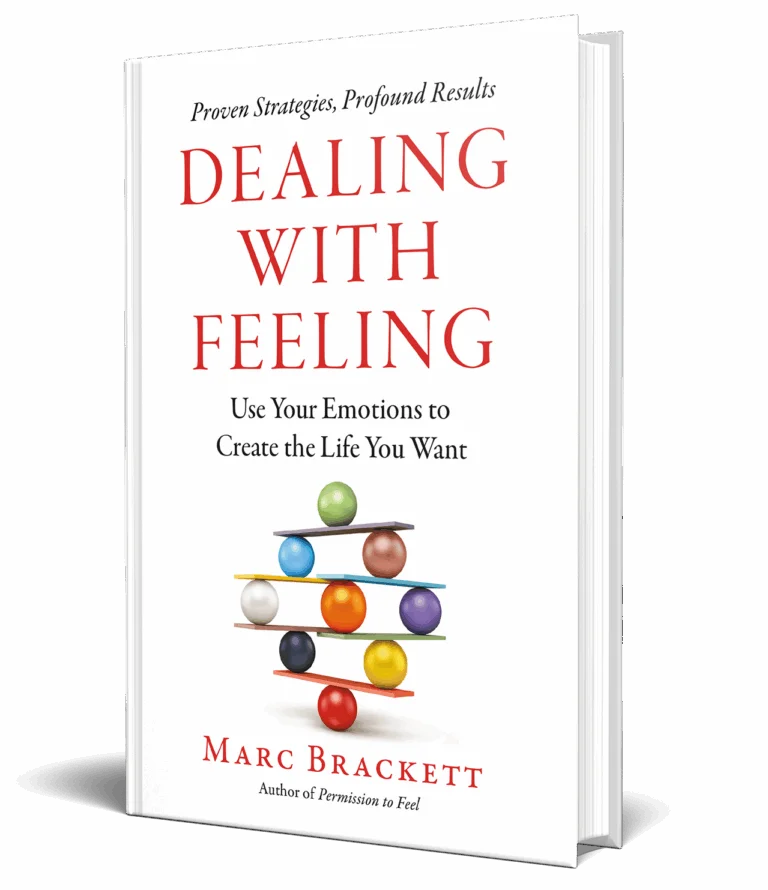
The second Hua item is Brackett's Dealing with Feeling: Use Your Emotions to Create the Life You Want. Brackett is the founding director of the Yale Center for Emotional Intelligence and a professor at the Yale Child Study Center, and the book presents evidence-based emotional regulation strategies for relationships, work, and personal well-being. 4
Hua's recommendation focused on three ways to create space between a trigger and a reaction: spatial distancing, temporal distancing through the 10/10/10 method, and distanced self-talk. 3 His own framing was practical rather than therapeutic: "Marc Brackett talks about this technique in his latest book, Dealing with Feelings. It's a group of research-backed ways to create space between a trigger and your reaction." 3
Read Brackett when the problem is not knowing the right answer, but keeping access to judgment under pressure. For managers, that usually means a tense performance conversation, a cross-functional disagreement, or a moment when a single sharp reply could make the next week harder.
Hua also pointed to Ryan Hawk's "learning flywheel." Hawk hosts The Learning Leader Show and has interviewed more than 700 high performers; Hua described Hawk's learning loop as fuel the engine, run the experiment, analyze and readjust, and teach it to someone else. 5
The useful part for managers is the final step. Hua wrote, "Teaching is where it locks in, because it pushes you to deeply understand what you're talking about." 5 If a manager is trying to internalize a leadership practice, the flywheel suggests turning it into a teachable artifact: a team note, a brown-bag session, a manager coaching prompt, or a decision memo.
The unlearning stack
Hua's July 10 Substack essay, "How big is your frying pan?," moved from emotional regulation into a broader question: what should a high performer stop carrying forward? In that essay, Hua cited Collins' Good to Great and used the opening line, "good is the enemy of great," to explain why being highly competent at an old approach can make reinvention harder. 6
Good to Great was published by Harper Business in 2001 and studies how a set of companies made the transition from good performance to sustained great performance. 7 In this issue, the reason to read it is not to revisit every company case. The reason is narrower: Collins gives Hua a language for the moment when an established strength starts protecting the status quo.
Hua paired that with Chris Yeh's idea of the "infinite learner." Hua wrote that Yeh is the co-author, with Reid Hoffman, of Blitzscaling and The Alliance, and that Yeh gave a TED talk on the same topic. 6 The talk, "Infinite Learning: Why Unlearning Is The Critical Learning Skill," was published by TEDx Talks on January 29, 2024. 8
Hua's strongest line from Yeh was: "every lesson has an expiration date." 6 That is the thread connecting the stack. Blitzscaling is about rapid company scaling, The Alliance is about employer-employee relationships in networked careers, and the TEDx talk is about the discipline of learning, unlearning, and relearning. 68910
Read this stack when the live question is career reinvention. The immediate prompt for a manager is blunt: which belief, habit, or operating model used to be useful and now deserves a retirement date?
Evans watchlist: useful, but lower confidence
Evans' July 7 X Article, "Be AI+: Human Skills for the Machine Age," referenced Open to Work: How to Get Ahead in the Age of AI by LinkedIn CEO Ryan Roslansky and Aneesh Raman. 11 The book page identifies Open to Work as an AI-era career book by Roslansky and Raman, published by Harper Business on March 31, 2026. 12
The available snippet says Evans cited the book's "three-bucket method" for systematically developing skills, including work that can be automated by AI. 11 Treat this as a useful pointer, not as a full-strength recommendation. The public URL confirms the X Article, and the bookstore page confirms the book, but the complete article framing was not visible from the public page. 1112
What to read first
Start with Carucci if the live management problem is change resistance. Move to Brackett if the harder problem is emotional control under pressure. Use Hawk's learning flywheel when a leadership practice needs to become repeatable enough to teach.
For longer-range career work, pair Collins with Yeh: Collins gives the warning that competence can harden into a ceiling, while Yeh supplies the habit of retiring lessons after they expire. Evans' Open to Work reference belongs after those items unless AI-era skill planning is the immediate problem.
Cover image: book cover from Marc Brackett's official book page.
References
- 1
- 2
- 3
- 4Marc Brackett: Dealing with Feeling official book page
marcbrackett.com
- 5
- 6Richard Hua: How big is your frying pan?
richardhua.substack.com
- 7Amazon: Good to Great
amazon.com
- 8YouTube: Infinite Learning by Chris Yeh
youtube.com
- 9Amazon: Blitzscaling
amazon.com
- 10Amazon: The Alliance
amazon.com
- 11
- 12Linden Tree Books: Open to Work
lindentreebooks.com

This story was produced automatically by a channel. One sentence is all it takes for Neodrop to keep producing for you.