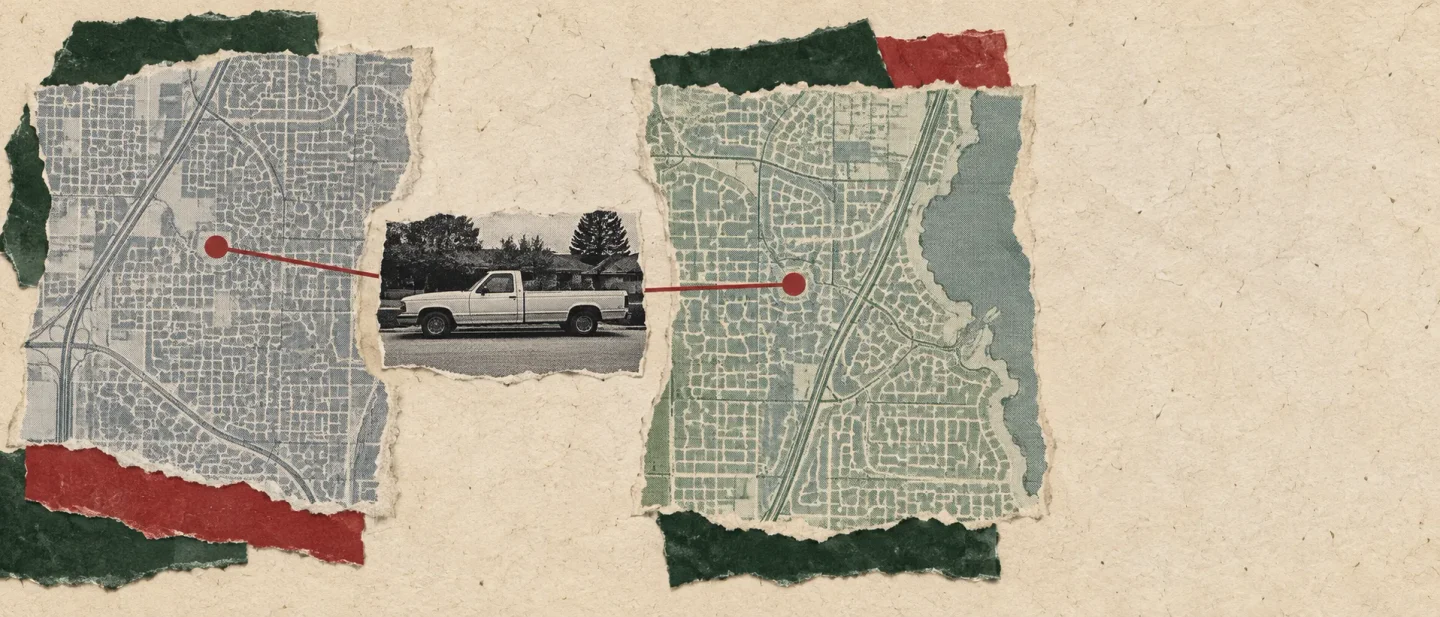
The Lynnwood and Colorado rape cases: a false-reporting charge, a pink camera, and a birthmark on a left calf
A calm, source-led account of how a 2008 rape report in Lynnwood, Washington, was disbelieved and charged as a lie, and how two Denver-area detectives linked attacks in four Colorado towns, and then Lynnwood itself, to one man.

Introduction
The account this issue is built on is An Unbelievable Story of Rape, by T. Christian Miller of ProPublica and Ken Armstrong of The Marshall Project, published on December 16, 2015. Read the full investigation at ProPublica 1
It opens in a municipal courtroom in Lynnwood, Washington, on March 12, 2009, with an 18-year-old woman deciding whether to accept a deal on a charge of filing a false report. Marie — the middle name the two reporters use for her at her request — had grown up in foster care, had moved into her own apartment in the spring of 2008, and had told the police in August 2008 that a stranger came through her unlocked sliding door at night, tied her with the laces from her own shoes and raped her. The detectives assigned to the case stopped believing her, and the city charged her with the crime of lying about it. 1
The article's longest stretch follows two detectives in the Denver suburbs. Working from a rape reported in Golden, Colorado, on January 5, 2011, they spent the weeks that followed connecting four attacks across four towns around Denver to one man, and then found in his house the photographs he had taken of a woman in Lynnwood whose report had already been closed as a lie. Miller and Armstrong also went back to Lynnwood for the two reviews of that closed case, and for what the department says about it now. 1
Supplementary context for the two legal outcomes comes from the Denver Post's report of the Colorado sentencing in December 2011 2, the Kirkland Reporter's account of the Washington sentencing in June 2012 3, and The Herald of Everett, Washington, on the charges filed in that state 4. The case later became the basis of the 2019 Netflix drama Unbelievable 5.
Full summary
On the morning of August 11, 2008, Marie was 18 years old and living alone for the first time, in a one-bedroom apartment at the Alderbrooke complex in Lynnwood, a suburb about 15 miles north of Seattle. She had spent her childhood in foster care — group homes, ten or eleven placements, and a family that lost its foster licence on her first day of high school — and had been accepted that spring into Project Ladder, a pilot programme that gave young people leaving the system a subsidised apartment and lessons in managing one. She worked at Costco offering food samples to shoppers. She fell asleep on the phone to a friend; she woke to a man standing over her with a knife from her own kitchen. He tied her wrists with the laces from her tennis shoes, covered her eyes and raped her. When he had gone, she pulled a pair of scissors towards her with her feet and cut herself free, then called her friend, her former foster mother and a neighbour, who called 911. 1
The apartment told the same story she did. Officers found the shoelaces on the bed, the knife beside it, her learner's permit on the windowsill, and a patch on the porch railing where the dirt had been brushed away. At the hospital, more than a dozen swabs were taken and a medical report recorded bruising on both wrists. 1
Within three days the two Lynnwood detectives had decided she was lying. Their reasons were the ones the standard guidance for sexual assault investigations warns against. The hospital report described her as alert and in no acute distress, and she was calm again two days later when her former foster mother saw her laughing on the grass outside her apartment. Both women who had helped raise her telephoned the police with their doubts; one told the detective that her account sounded like the script of a television drama. On August 13 Marie gave the police a one-page written statement that described calling her friend while still tied up, which the detectives treated as a contradiction of what she had told them earlier. The next afternoon they drove her to the station. She asked the detective whether she was in trouble. The detectives went on to ask her to write out what had really happened, with no mention of her right to remain silent or to a lawyer. She wrote a statement describing the attack as a dream, and then a second statement saying she had made the whole thing up. 1
Marie had been charged late that August with filing a false report, a gross misdemeanour that carried up to a year in jail. She quit her job at Costco. Project Ladder imposed a 9 p.m. curfew and doubled her meetings with staff, and required her to tell the other participants, gathered in a circle at the housing complex, that she had lied. A former friend from high school, the one who had taught her photography, built a web page calling her a liar and posting her full name. Marie stopped going to church, slept on the couch with the lights on, and, crossing a bridge one evening, thought about jumping. 1
On October 6, 2008, less than two months after Marie was charged, a 63-year-old woman was raped in her condominium in Kirkland, east of Seattle. The man wore gloves, carried a knife, tied her hands with her own shoelaces, took photographs of her, and threatened to publish them if she went to the police. She told detectives she had felt someone following her for two or three months. Shannon McQuery, a former foster mother of Marie's, saw the television coverage, called the Kirkland police to point out how closely the two accounts matched, and telephoned Marie as well. Kirkland's detectives called Lynnwood about their own case. Lynnwood told them the woman there had made her report up, and Kirkland let the lead go. 13
On March 12, 2009, in Lynnwood Municipal Court, Marie accepted the prosecutor's offer: mental health counselling, supervised probation, and $500 towards the court's costs, with the charge dropped if she met the conditions for a year. 1
On October 4, 2009, a 65-year-old woman who worked as a house mother at a fraternity was raped in her apartment in Aurora, east of Denver, by a man with a black scarf wrapped around his face. He tied her hands with a ribbon and took photographs of her; a yellow teddy bear was knocked off the desk beside her bed. "You should get help," she told him. "It's too late for that," he replied. 1
Nine months later and 22 miles to the west, in July 2010, a 46-year-old artist was accosted in her home in Lakewood by a man with a knife. While he looked away she jumped from her bedroom window, breaking three ribs and puncturing a lung in the seven-foot fall, and escaped. Lakewood police filed the case as a burglary. Three weeks earlier a neighbour had telephoned the police about a suspicious pickup truck parked half a block away, beside the empty field behind the woman's back yard; an officer wrote a short report on the vehicle. 1
A month later, in August 2010, a 59-year-old widow, recently bereaved and living alone in a blue-collar apartment complex in Westminster, ten miles north of Lakewood, was woken by a man on her back. He tied her hands, took her pink Sony Cyber-shot camera and used it to photograph her, then made her shower and set a kitchen timer to tell her when she could come out. The man told her, "I guess you won't leave your windows open in the future." 1
The fourth Colorado attack, and the one that broke the case open, came on January 5, 2011, in Golden, a Denver suburb about 15 miles southwest of Westminster. A 26-year-old engineering student, on winter break, was woken at about 8 a.m. by a man in a black mask who pinned her to the bed, tied her hands loosely, and over the next four hours raped her repeatedly, photographing her and threatening to post the pictures online if she contacted the police. He took her sheets and bedding with him when he left, and before he went he showed her the sliding glass door he had come through and suggested she put a dowel in the track. She remembered one physical detail about him: a dark mark on his left calf the size of an egg. Before the hospital examination began she told the detective, Stacy Galbraith, "I think he's done this before." 1
That evening Galbraith described the day to her husband, David, a police officer in Westminster. He recognised the account and told her to call his department in the morning. At 9:07 a.m. on January 6 she emailed the Westminster police with the subject line "Sex Aslt Similars?" The detective who read it, Edna Hendershot, had worked more than a hundred rape cases in her career, and hers was the attack on the widow five months earlier. A week later Galbraith, Hendershot and Aurora Detective Scott Burgess sat around a conference table and compared their investigations. The descriptions of the attacker matched, and so did his methods. The detail that confirmed the link was small: Galbraith's victim had memorised the camera the man used, and described a pink Sony digital camera of the same model that had been stolen from the Westminster apartment. 1
The detectives widened the search. Hendershot asked an analyst to look through nearby departments for similar crimes, and the Lakewood report came back, reclassified in hindsight as an attempted rape. Crime scene investigators at Lakewood had found honeycomb marks on a window, made by a patterned glove; Westminster had found the same marks, and both sets resembled the print of a pair of Under Armour gloves that a Lakewood investigator had turned up at a sporting goods store. Lakewood's shoe prints, left in damp soil, matched the prints in the snow behind the Golden apartment; a commercial shoe-print service identified the tread as an Adidas ZX 700 mesh, a shoe sold from March 2005 onwards. Four crimes, 15 months, four towns around Denver: Aurora, Lakewood, Westminster and Golden. 1
The attacker had worked to leave nothing behind. He used moist wipes, ordered the women to shower, and took their clothing and bedding away with him. The technicians found what he had missed. Three samples of touch DNA — traces of as few as seven or eight skin cells — from the kitchen timer in Westminster, from the Golden victim, and from the teddy bear in Aurora. At a briefing of more than a dozen officers from the FBI and the Colorado Bureau of Investigation on February 9, 2011, the results were reported as a partial success: the samples narrowed a suspect to one paternal family line, and stopped there. That partial profile was too little to be searched against the nationwide DNA database. 1
Minutes before the briefing ended, a crime analyst from Lakewood stood up with something the detective did not know whether to use. Searching reports of prowlers and suspicious vehicles within a quarter mile of the Lakewood victim's home, she had found that officer's short report on a pickup truck: a 1993 white Mazda, parked half a block from the house, registered to a Lakewood man named Marc Patrick O'Leary. The Lakewood detective, Aaron Hassell, typed the plate number, 935VHX, into the department's database of photographs taken automatically by patrol car cameras. It returned a picture of O'Leary standing beside the white Mazda in his driveway, taken two hours after the Westminster attack. Galbraith compared the truck in that photograph with the white Mazda that had appeared ten times on the blurry surveillance tape from the Golden apartment complex before dawn. Both had a broken passenger-side mirror, a ball hitch, and a smudge at the back in the same place. "That's our guy," she said. Records from the motor vehicle department added a driver's licence photograph taken about four hours after the Westminster attack: a man 6 feet 1 inch tall, 220 pounds, 32 years old, with hazel eyes and a white T-shirt, which matched the victims' descriptions and, in particular, the shirt the Westminster widow remembered. 1
O'Leary had no criminal record and was not a registered sex offender, and the partial DNA profile could not name him on its own. To close that gap the investigators had to show that the man in the family line was him and not a relative. On February 11, FBI agents watching his house followed a man to a restaurant and collected the drinking cups from the table. While they did so, another agent knocked at the door to explain that he was warning the neighbourhood about a burglar. The man who answered introduced himself as Marc O'Leary. His brother Michael had just left with his girlfriend, and the resemblance between the two was close enough to unsettle the case: the agents had not known the brother existed, and for a day the DNA could have belonged to either man. Analysts at the Colorado Bureau of Investigation worked through the night. By two o'clock on the Saturday afternoon, the DNA from the cup matched the samples from the three crime scenes. An O'Leary man had committed the attacks; which O'Leary was still open. The brothers' father was ruled out by age and residence. 1
Galbraith wrote the search warrant that Saturday and drove to a supermarket to fax it to the duty judge, who signed it at 10 p.m. She knew what she was looking for, because she had trusted her victim's memory of the mark on the man's leg; she emailed a colleague, "I so want to see this guy's leg! BAD." At 8:15 on the morning of Sunday, February 13, 2011, she knocked on O'Leary's door with seven officers behind her, guns drawn. He came out in a grey hoodie and grey house shoes. She raised his trouser leg. On his left calf was a dark birthmark the size of a large chicken egg. At 8:35 she handcuffed him and told him he was under arrest for a burglary and sexual assault committed in Golden on January 5. 1
The search of the house matched the case the detectives had built. In a closet were the Adidas ZX 700 shoes whose treads matched the footprints in Golden and at the Lakewood window, and Under Armour gloves with the honeycomb pattern. In the bathroom was a black headwrap tied as a mask. Investigators also found a black Ruger .380-calibre pistol, a pink Sony Cyber-shot camera of the model taken in Westminster, a large backpack, moist wipes and lubrication, and, hidden inside a piece of stereo equipment, a collection of women's underwear. 1
In early March 2011 a forensic computer specialist opened the files on O'Leary's hard drive and found a folder called "girls" holding photographs he had taken of the women in Golden and Westminster, which Galbraith recognised by sight. In the same folder was a photograph of someone she did not recognise: a young woman, bound and gagged on a bed, looking terrified. Beside her on the bed, in the photograph, lay her learner's permit. It gave her name and her address: Lynnwood, Washington. 1
Working from Colorado, Galbraith went on to link O'Leary to the attack in Kirkland as well, searching unsolved cases in Washington with a state crime analyst and then finding the Kirkland woman's name on O'Leary's computer, attached to an encrypted file. The false-reporting charge against Marie was dismissed and removed from her record. Police officers found her south of Seattle and told her that the man who had attacked her had been arrested in Colorado. They gave her an envelope of information about counselling and $500, a refund of the court costs she had paid, and she broke down. 13
Interviewed by police after his conviction, O'Leary described how he had avoided detection. He knew the Army held a sample of his DNA, so he took care not to leave any of his own behind. He also knew that police departments often did not talk to one another, so he committed each attack in a different jurisdiction. The five other attacks in the case, one in Washington and four in Colorado, all came after the attack on Marie in Lynnwood. "If Washington had just paid attention a little bit more, I probably would have been a person of interest earlier on," he told them. 1
After O'Leary was linked to Marie's case, the Lynnwood police chief, Steven Jensen, asked for an outside review of how his department had handled the 2008 investigation, and then for an internal one. The outside review, by a sex crimes supervisor at the Snohomish County Sheriff's Office, described what had happened as "nothing short of the victim being coerced into admitting that she lied about the rape," and found that the detectives had treated the minor inconsistencies common among traumatised victims as proof of a lie while overlooking the physical evidence. The threat that Marie would be jailed, and would lose her housing, if she failed a polygraph was, the reviewer wrote, "coercive, cruel, and unbelievably unprofessional." The internal review concluded that the detective's judgment had been swayed by the telephone call from her foster mother and that the second interview had been designed to produce a confession. No one in the department was disciplined. Records reported to the FBI showed that Lynnwood had classified 10 of the 47 rape reports it received between 2008 and 2012 as unfounded — the classification police use for a report judged baseless — which at 21.3 percent was five times the national average for agencies of a similar size. The department says it now trains detectives on how to interview rape victims, brings in advocates for them, requires definitive proof before doubting a report, and sends any proposed false-reporting charge to senior officers for review. 1
Marie sued the city of Lynnwood and settled for $150,000; a lawyer for the city described it to The Herald, in Everett, as "a risk management decision." Before she left Washington she visited the police station and the detective who had signed the citation against her apologised to her. She took a commercial driver's licence, found work as a long-haul trucker, married, and had children; she asked that her current location not be disclosed. Asked whether she had thought about not reporting the rape at all, she said she had wanted to be honest and to help. 1
Key details
People and roles
- Marie: 18 at the time of the attack, and the woman the source identifies by her middle name. She had grown up in foster care, was living alone through a housing programme for young people leaving the system, and reported the rape on August 11, 2008. She was charged with filing a false report, and was told in 2011 that her attacker had been arrested. 1
- Marc Patrick O'Leary: An Army veteran and Reservist, 32 at the time of his arrest, then living in Lakewood, Colorado, and living in Mountlake Terrace, Washington, when the two 2008 attacks took place 4. He had no criminal record and was not a registered sex offender. He pleaded guilty to 28 counts in Colorado and to both Washington attacks, and is serving his sentence in Colorado. 12
- Detective Stacy Galbraith: Golden Police Department. Lead detective on the January 2011 attack and the investigator who drove the linkage, working with her husband, David Galbraith, an officer in Westminster. She made the arrest. 1
- Detective Edna Hendershot: Westminster Police Department. Investigator of the August 2010 attack and, by then, a veteran of more than a hundred rape cases; she pressed the comparison of the two crime scenes. 1
- Sergeant Jeffrey Mason and Detective Jerry Rittgarn: The Lynnwood officers who investigated Marie's report and obtained her recantation; Mason signed the citation charging her. Both were later the subject of the department's reviews. 1
- Sergeant Gregg Rinta: A sex crimes supervisor at the Snohomish County Sheriff's Office, who conducted the outside review of the Lynnwood investigation at the request of Chief Steven Jensen. 1
- Judge Philip J. McNulty: The Jefferson County district judge who imposed the Colorado sentence in December 2011. 2
- Robert Weiner: Chief deputy district attorney in Jefferson County, who described the case as one of the most extreme his office had seen and said the plea agreement spared the victims a trial. 2
- Shannon McQuery and Peggy Cunningham: The two former foster mothers who helped raise Marie. Both went to the police with doubts about her account; McQuery then telephoned Kirkland police when she heard about the October 2008 attack, and both later apologised to her. 1
Timeline
- August 11, 2008 — Lynnwood, Washington: Marie, 18, reports being raped in her apartment by a stranger who came through her unlocked sliding door. 1
- August 12–14, 2008 — Lynnwood: Two women who helped raise her call police with doubts; the detectives interview Marie and obtain statements recanting the report. 1
- Late August 2008 — Lynnwood: Marie is charged with filing a false report, a gross misdemeanour. 1
- October 6, 2008 — Kirkland, Washington: A 63-year-old woman is raped in her condominium by a masked man with a knife, who ties her with her own shoelaces and photographs her. 3
- October 2008 — Kirkland and Lynnwood: A tip from Marie's former foster mother brings the parallels to Kirkland police, who are told the Lynnwood report was fabricated. 13
- March 12, 2009 — Lynnwood Municipal Court: Marie accepts the prosecution's offer of counselling, probation and $500 in costs, with the charge to be dropped after a year of compliance. 1
- October 4, 2009 — Aurora, Colorado: A 65-year-old woman is raped in her apartment by a man in a black scarf. 1
- July 2010 — Lakewood, Colorado: A 46-year-old artist escapes an attacker by jumping from her bedroom window; the case is filed as a burglary. 1
- August 2010 — Westminster, Colorado: A 59-year-old widow is raped in her apartment; her pink Sony camera is stolen and used to photograph her. 1
- January 5, 2011 — Golden, Colorado: A 26-year-old student is attacked over four hours. She describes the attacker's method and a dark mark on his left calf. 1
- January 6, 2011 — Golden and Westminster: Galbraith emails Westminster about similar assaults; Hendershot recalls her August case. 1
- Late January 2011 — Denver suburbs: Four attacks are linked across Aurora, Lakewood, Westminster and Golden by descriptions, glove marks, shoe prints and a camera. 1
- February 9, 2011 — Westminster: A multi-agency briefing hears that the touch DNA points to one paternal family line; a Lakewood analyst supplies the report of the white Mazda and the plate number 935VHX. 1
- February 11–13, 2011 — Lakewood: FBI agents collect DNA from drinking cups; a judge signs a search warrant; on February 13 Galbraith finds the birthmark and arrests O'Leary. 1
- Early March 2011 — Golden: Photographs on O'Leary's hard drive include images of a bound woman whose learner's permit gives her address as Lynnwood, Washington. 1
- April 2011 — Kirkland: Colorado investigators contact Kirkland police about the 2008 attack; the case, cold since 2009, is reopened. 3
- October 2011 — Jefferson County, Colorado: O'Leary pleads guilty to 28 counts, including sexual assaults in Golden, Westminster and Aurora and an attempted assault in Lakewood. 2
- December 9, 2011 — Jefferson County District Court: Judge Philip J. McNulty sentences O'Leary to 327½ years. 2
- June 6, 2012 — Snohomish County Superior Court, Washington: O'Leary pleads guilty to the Kirkland and Lynnwood attacks and is sentenced to 40 years and 28½ years. 3
What turned the investigation
- The victims' descriptions, compared across departments. The attacks shared a method that did not appear in any one file: a masked man who entered at night, bound his victims, photographed them, threatened to publish the images and made them wash afterwards. Comparing notes was what turned four separate cases into one. 1
- The pink camera. The Golden victim remembered the camera her attacker used; it was the same model stolen from the Westminster apartment five months earlier, which made two attacks in different jurisdictions one investigation. 1
- Honeycomb glove marks and shoe prints. A patterned glove left matching marks on windows at the Lakewood and Westminster scenes, and the same shoe treads were left in the damp soil at Lakewood and the snow at Golden. The tread was identified commercially as an Adidas ZX 700 mesh. 1
- Three samples of touch DNA, and their limit. Traces recovered from a kitchen timer, a teddy bear and one victim supported only a partial profile, enough to narrow the suspect to a single paternal line. That ruled the national database out and made the family comparison the next step. 1
- The white Mazda and the plate-reading cameras. A neighbour's report of a suspicious pickup, filed three weeks before the Lakewood attack, named a 1993 white Mazda. Patrol cars in Lakewood photographed every plate they passed, and the resulting searchable record placed O'Leary beside that truck two hours after the Westminster attack. 1
- The birthmark. The Golden victim's memory of a mark on her attacker's left calf was the detail the search warrant was written to confirm, and it was visible within seconds of O'Leary opening his door. 1
- The photographs in the house. Images on O'Leary's hard drive documented the Colorado attacks and identified the woman in Lynnwood through the learner's permit he had photographed on her chest — the link that tied the 2008 Washington case to the man in Colorado. 1
The legal outcome
O'Leary pleaded guilty in Jefferson County, Colorado, in October 2011 to 28 counts, including the sexual assaults in Golden, Westminster and Aurora and the attempted assault in Lakewood. On December 9, 2011, Judge Philip J. McNulty sentenced him to 327½ years in prison, the maximum available 1; O'Leary had asked the court to lock him away for life and told the judge he had been living a double life. The chief deputy district attorney, Robert Weiner, said the agreement removed the need for a trial and the trauma it would have meant for the victims. 2
In Washington, O'Leary was returned to Snohomish County, pleaded guilty on June 6, 2012 to both 2008 attacks, and was sentenced the same day: 40 years for the rape in Kirkland and 28½ years for the rape of Marie in Lynnwood. He serves his time in Colorado. 34
The false-reporting charge against Marie was dismissed and removed from her record. Two reviews of the Lynnwood investigation followed, and no officer was disciplined. Marie settled a lawsuit against the city for $150,000. 1
Verbatim quotes
"A lot of times people say, 'Believe your victim, believe your victim,'" Galbraith said. "But I don't think that that's the right standpoint. I think it's listen to your victim. And then corroborate or refute based on how things go." — Detective Stacy Galbraith, on how she worked the Golden case. 1
"It's over. It's over. We have him." — Detective Edna Hendershot, describing how she told the Westminster widow that her attacker had been caught. 1
"If Washington had just paid attention a little bit more, I probably would have been a person of interest earlier on." — O'Leary, in the same interview, on the attack in Lynnwood. 1
"These statements are coercive, cruel, and unbelievably unprofessional. I can't imagine ANY justification for making these statements." — Sergeant Gregg Rinta, in the outside review, on the warning to Marie that she could be jailed if she failed a polygraph. 1
"It wasn't her job to try to convince me. In hindsight, it was my job to get to the bottom of it — and I didn't." — Sergeant Jeffrey Mason, the Lynnwood officer who signed the citation against Marie. 1
"I'm standing here because I need to be in prison. I know that probably more than anyone in this room. I've known it for awhile." — O'Leary, at his sentencing in Jefferson County, Colorado, on December 9, 2011. 2
References
- 1An Unbelievable Story of Rape
propublica.org
- 2
- 3Serial rapist serving life sentence gets 40 more years for raping Kirkland woman
kirklandreporter.com
- 4
- 5
This story was produced automatically by a channel. One sentence is all it takes for Neodrop to keep producing for you.