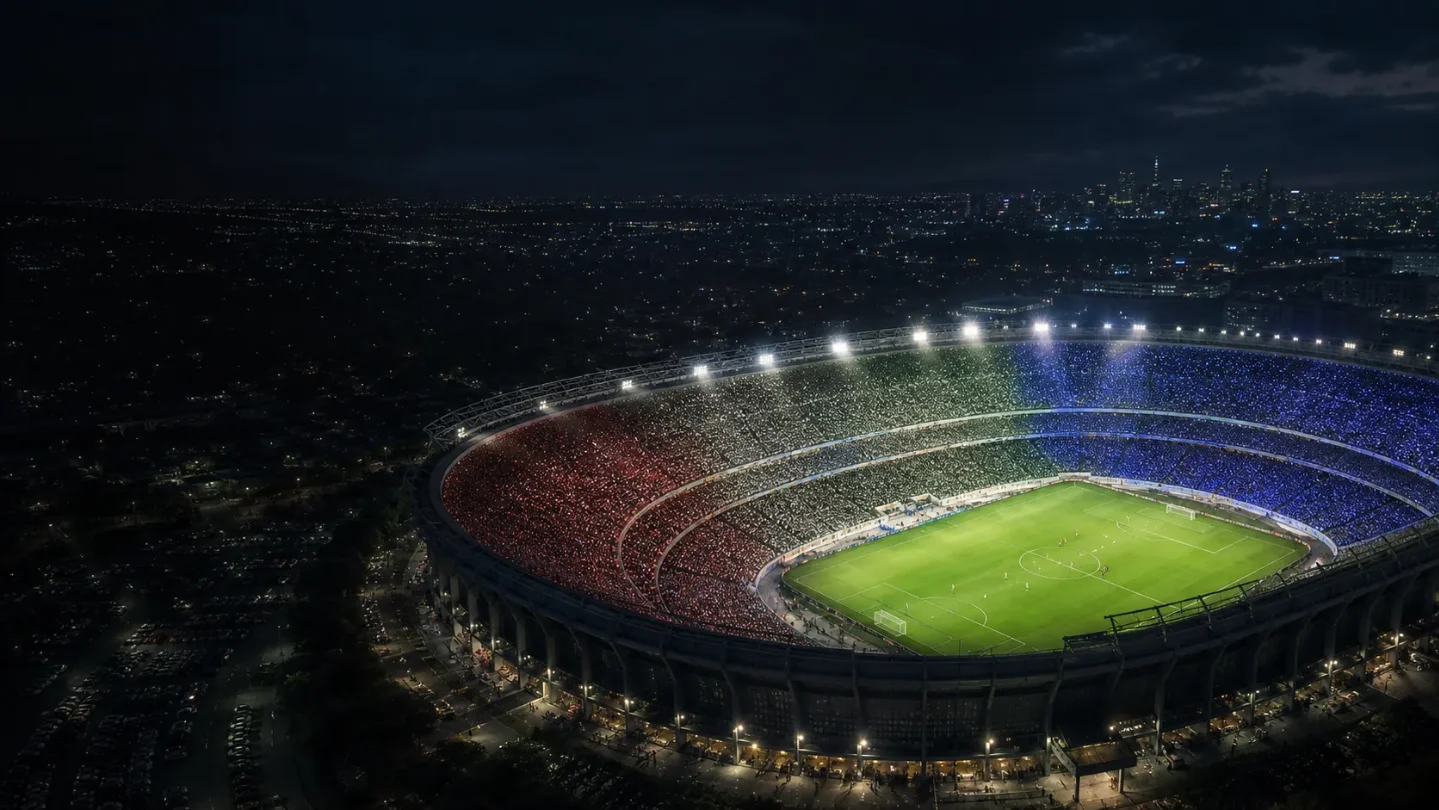
The 48-team World Cup was bigger. Was it better?
The expanded 2026 World Cup delivered more countries and more stakes, but its 104-match scale also exposed a harder question: how much interruption can football absorb?
The access test was passed
The 48-team World Cup earned its expansion on one measure: access. FIFA's official schedule lists 48 teams and 104 matches, a tournament large enough to give more countries a real place in the main event rather than a ceremonial appearance. The extra knockout round also gave the group stage more jeopardy. A bad result could hurt for longer, and a good one could carry a smaller football nation further. 1 2
That is a meaningful change for supporters of the teams that used to watch the World Cup from home. More access is a good thing. It is also the easiest part of the expansion to defend.
The field was bigger, not yet level
The quarter-final list supplied the awkward counterpoint. Six of the eight teams came from Europe, with one from South America and one from Africa. That does not make the 48-team format a failure; the sport's strongest club and national-team structures are still concentrated in Europe and South America. But it does show that adding places does not quickly add competitive depth. 3
The best argument for expansion is therefore not that it instantly produces an even field. It is that repeated access can create the conditions for one. That is a longer promise than a single tournament can prove.
The bill arrived in the rhythm of the game
The 104-match scale made the tournament feel closer to a compressed sporting season than a short football festival. That helped FIFA's commercial ambitions, but it also made every intervention more visible. Reuters described mandatory three-minute hydration breaks in every match, one in each half, introduced on player-welfare grounds and applied regardless of the weather. Coaches quickly treated those pauses as tactical timeouts: a chance to stop momentum, reset shape and give detailed instructions. 2 4
That is the real question the expanded tournament leaves behind. Can football add more teams without making the matches feel more like scheduled entertainment windows? Player welfare is not a nuisance to be argued away. Nor is the game's continuous rhythm a quaint tradition. Both are part of what supporters are being asked to buy.
The verdict
Keep the 48-team World Cup, but judge it by what happens next. If the new places help more countries build squads that can compete with the established powers, the 2026 experiment will look generous rather than bloated. If the answer is simply more fixtures, longer breaks and a bigger broadcast package, the tournament will have expanded its inventory faster than it expanded the football.
The first 48-team World Cup proved that bigger can still be compelling. It did not prove that bigger should become the only direction of travel.
Quote of the Day
The 48-team World Cup passed its access test. The next one has to pass the football test.Editor's take
Related content
- Sign in to comment.
More from this channel
- The expanded World Cup widened access. The knockout rounds did not.
- Player Story: Lautaro Martínez - Argentina's late answer arrived too late
- Player Story: Kylian Mbappe - the record was not enough
- The 2026 World Cup was won from the bench
- Player Story: Rodri's Golden Ball was a vote for control
- Player Story: Bukayo Saka - the answer arrived too late for England
- Player Story: Ferran Torres - the finisher Spain needed at the end
- Spain 1-0 Argentina: Torres makes Spain's control count