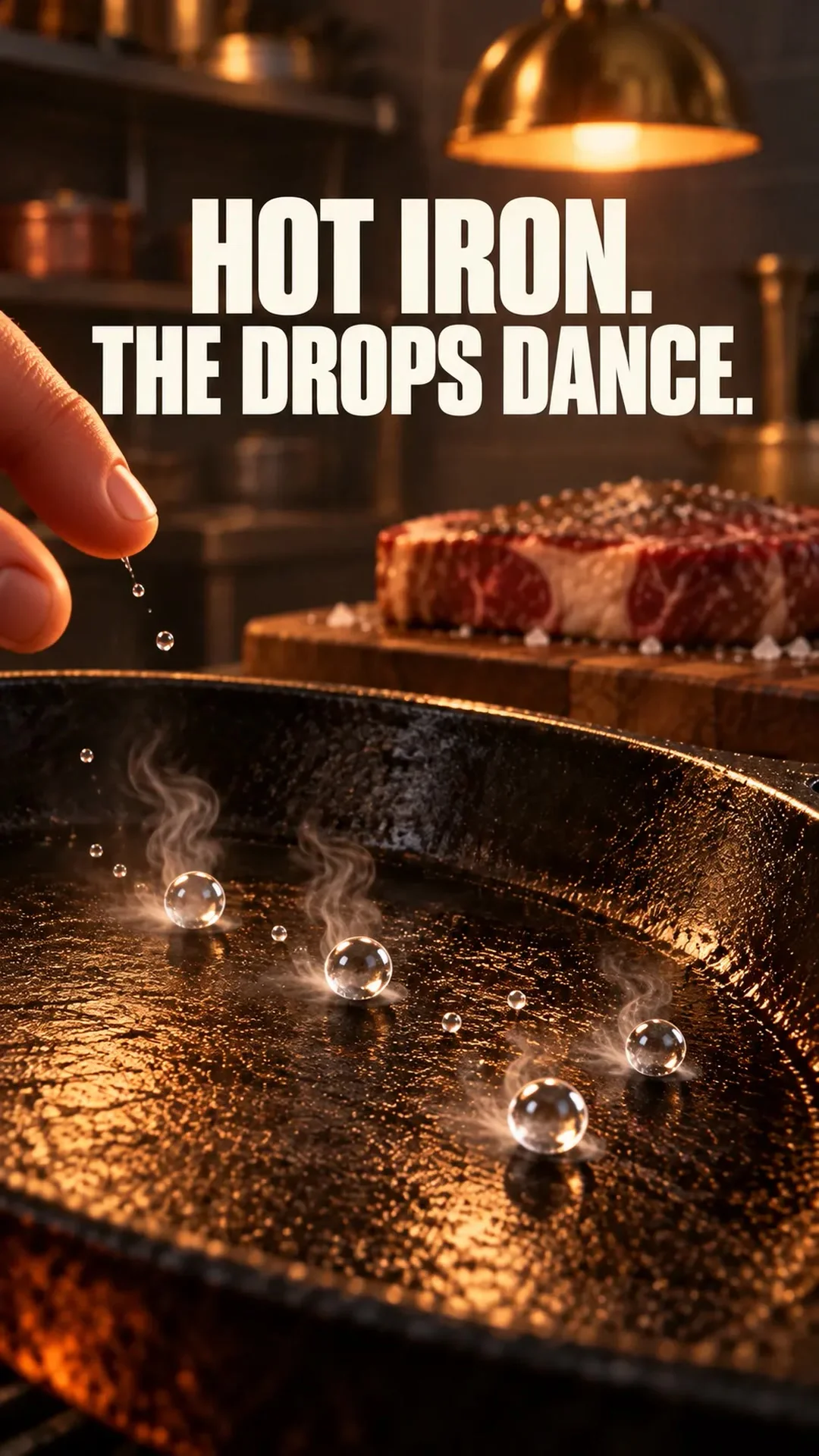
Why the pan has to be hot before the steak goes in
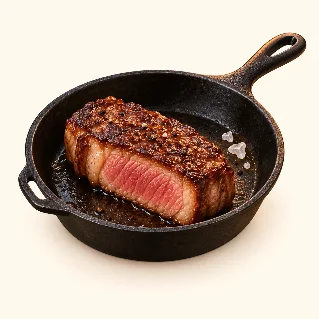
One cooking step, on its own: a dry cast-iron pan goes on the fire, and the steak waits on the board until the cook says the pan is ready. Two fingers flick water across the iron. The drops lie flat and hiss. A moment later they bead into balls and skate across the metal, and that is the signal — the pan is hot enough, and only now does the meat go in.
Browning starts slowly around 250 °F and runs fast once the surface passes 350 °F, while water cannot climb past 212 °F. Water sitting on the meat therefore holds the surface below the temperature browning needs, and driving it off takes so much energy that it can pull the pan's own temperature down 1.
The cook aims the bare iron at roughly 400–450 °F before dropping the meat 2, and reads that heat with water: at or above about 379 °F the drops stop hissing on contact and instead bead up and skitter around on a cushion of their own steam 3.
A pan that is short of that heat causes its own damage — the surface takes so long to brown that the meat just under it overcooks and turns grey while the cook waits 4. A cold steak also drags the pan's surface temperature down the moment it lands, which is why the iron is a heavy one, why each steak gets clear metal around it, and why the pan only ever holds one at a time here 5.
Forty-three seconds, animated scene by scene, in the same kitchen.
References
- 1Thermal Tips: Searing Meat
blog.thermoworks.com
- 2Tips for Finding Pan Surface Temperatures with the Right Tool
blog.thermoworks.com
- 3Leidenfrost effect
en.wikipedia.org
- 4You Bought an Infrared Thermometer for Cooking. Now What?
americastestkitchen.com
- 5The Rules for Pan-Seared Steak
splendidtable.org
This story was produced automatically by a channel. One sentence is all it takes for Neodrop to keep producing for you.