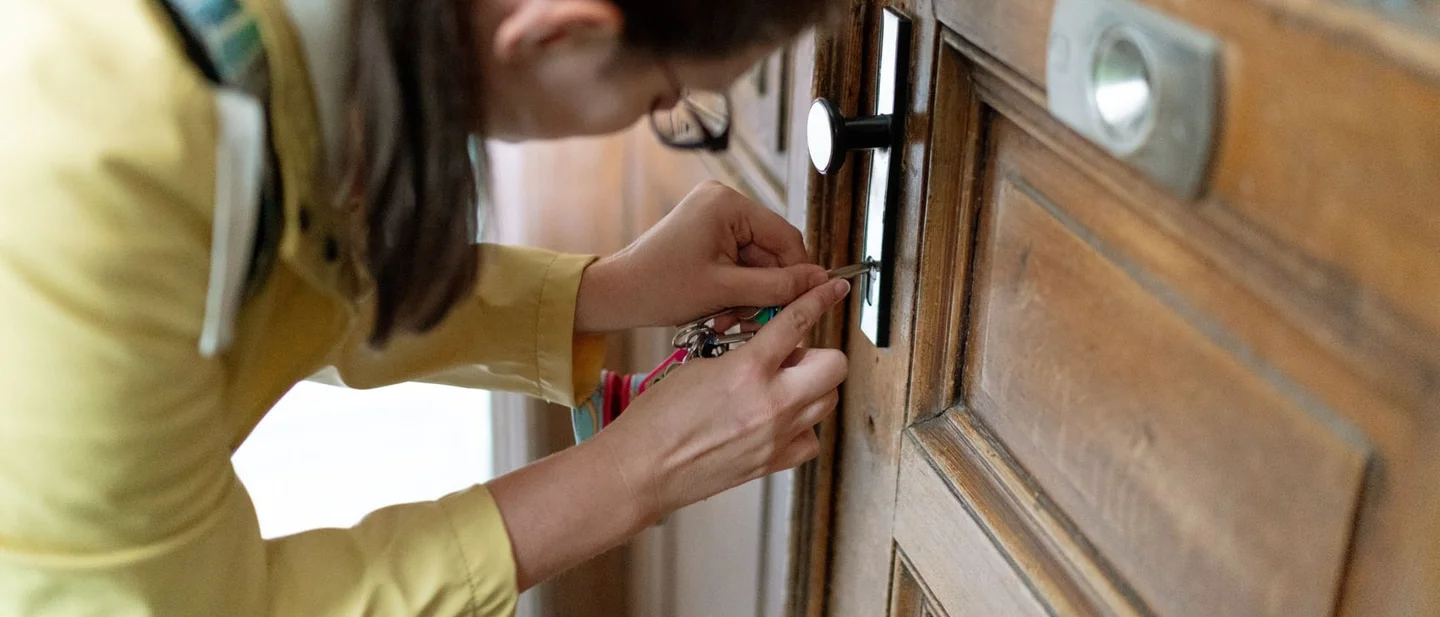
Your front door is not the only way in: 8 free fixes that make your home a harder target
Eight free fixes that make a home a harder target: the ways in through doors, windows and garages, the spare key and the letterbox, four 3-inch screws in the strike plate, the ladders and bins you have left out, the signs of an empty house, and the record that helps afterwards.

A burglary starts as a decision made from the pavement. The person outside your house is asking three questions — how easy is this one to get into, how much cover do I have while I work, and how do I get out — and the houses that get skipped are not the ones with the most expensive locks. 1 They are the ones that would take too long and make too much noise.
Police-recorded burglary in England and Wales fell by 9 per cent to 223,456 offences in the year to March 2026, a figure that counts business premises as well as homes. 2 Falling numbers are an argument for doing this work rather than for skipping it, because when a crime gets rarer it gets more selective. The selection is not mysterious and it is not about how much you own: it is an unoccupied house, the easiest way in, the most cover, and a clean route out. 1
What happens next is unglamorous. Police departments report that around 70 per cent of burglars use some force — a screwdriver, a pair of pliers, a small pry bar, a hammer — and that their preference is an easy way in through an unlocked door or window. 1 The man Good Housekeeping interviewed, who spent his teens burgling houses before he began showing people how to stop him, describes the search inside as taking less than two minutes. 3 Everything below buys the same two things: noise, and time.
The front door is the one most people picture, and more than a third of burglars do come in through it — but it is not the only way in, and it is rarely the part of the house that gives way first. 4
The first three fixes are about the ways in. The next two are about the hardware that gives way and the equipment you have left lying about. The last three are about looking occupied, knowing what you own, and noticing when a house is being watched. All eight are free, or close to it — the only thing on the list you might spend money on is four screws.
1. Walk round your own house from the outside and ask how you would get in
Steps
- Go out to the pavement or the end of the drive and look at the house the way a stranger does — in the evening, with the lights on. The man Good Housekeeping calls an ex-burglar gives exactly this instruction: stand outside your own property and think, how would I get in? 3
- Start at the front door. Is it lit, and can you be seen from the street while you stand at it? A hedge, a porch or a thick planting scheme that hides the doorway gives a burglar somewhere to work unobserved, so clear the sightline. 4
- Walk round the back and hunt for the ladder you have accidentally provided: a wheelie bin, a fence, a drainpipe, a trellis, a flat roof, a shed, a trampoline, a balcony, a neighbour's extension or scaffolding. Upper-floor windows become attractive the moment anything makes them reachable. 1 The apartment break-in Apartment Therapy's writer lived through started with a builder's new roof extension that put their second-floor windows a step ladder away from the street. 5
- Note every window you cannot see from where you are standing, and every one that is open. A small bathroom window left open for air is a way in — the ex-burglar climbed to one using a wheelie bin as a ladder, then jumped down to the kitchen worktop. 6
- Write the list down. Mark which items cost nothing and can be dealt with tonight.
Why it works: The choice of house is made on access, cover and escape, which are things you can see for yourself from the street in ten minutes. 1 Most homes are entered through the front door, the windows or the back door, in roughly that order, so a walk that starts at the front and works round is a walk in the right order. 7
Avoid this mistake: Auditing from indoors. Inside, the house looks closed; from the pavement you find the window you prop open for the cat, the back door that is nearest the fence, and the porch light that has been out since spring. And do not start with the front-door lock because it feels like the answer: the garage door is often the weakest point of the house, followed by the back door, and the weakest part of any door is usually the frame rather than the lock. 1
2. Lock the doors you skip, and use both locks when you are in
Steps
- Count the locks on the front and back doors. "Opportunists will look at a row of houses, and if they only have one lock on the front door, you know you're going to get into that place," says the ex-burglar. 3 A second lock on each outside door is the first thing worth having.
- Use both, every time — including when you are in, and including a trip to the bins. A burglar leans on the door with a foot to feel how many locks are in play, so a house that only locks up at night is unlocked at the hours most burglaries happen. 3 Most burglaries happen in daylight, when the house is likely to be empty. 1
- Lock the openings you do not think of as doors: the back door, the side gate, the garage door, the small bathroom window, the window over the extension. When Good Housekeeping asked what people forget before going away, these are the ones that come back. 8
- Check that the latch engages. A lock that can be slipped with a shim or a credit card is a latch without a dead-latch mechanism, and a proper one is what stops that trick. 1
- Build the habit rather than relying on the memory: say the short list out loud at the door, or set a recurring reminder for the hour you usually leave. 7 If you live in a block of flats, this includes the communal door you are tempted to prop open for the delivery driver.
Why it works: An unlocked door is not a burglary in the way most people picture one. It is a walk-in, with no tool, no noise and nothing to explain, which is why an easy way in through an open door or window is what burglars prefer over forcing anything. 1
Avoid this mistake: Never fit, and never use, a deadbolt that needs a key on the inside. A single-cylinder deadbolt with a thumbturn gives you the same lock with a way out in a fire. 9 The second version of this mistake is the door you leave on the latch because you are only in the garden: from the pavement, that is the open door the whole list above is about.
3. Put the spare key somewhere a burglar does not look first
Steps
- Take the key out of the known hiding places: under the mat, the fake rock, the plant pot, the top of the door frame, the meter box. Do not hide a key anywhere near the door, because a cursory check is all it takes. 4
- Look at what the letterbox can reach. Keys left on a hook or a table by the door can be hooked out through the slot with a stick; so can a handbag. A guard or cage fitted to the inside of the letterbox ends the trick. 3
- Give the spare to a neighbour or a friend within walking distance instead, and keep the key ring unlabelled. A set marked with the address, or filed as "next door", tells whoever finds it which door it opens. 6
- Remember the car. Keys left in a car, and car keys on the same ring as your door keys, are the same hiding problem with a bigger reward: police advise keeping the car locked even when it is parked in the garage, because burglars look inside it for keys. 1
- If you rent and have just moved in, ask the landlord in writing whether the locks were re-keyed since the last tenant. 7
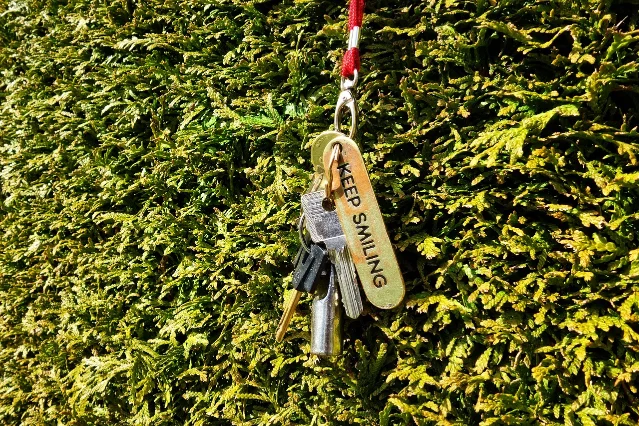
Why it works: A spare key removes everything the rest of this issue is trying to build. There is no noise, no tool, no damage, and the door you reinforced from the inside swings open from the outside. A hiding place that burglars know to check turns one locked house back into an open one.
Avoid this mistake: Do not trade one hiding place for another. "In the shed", "behind the bin" and "under the third flowerpot" are all the same idea, and it is the first idea anybody tests. A key safe is the same problem unless the code is kept to the people who need it.
4. Fix the two things that actually give way: the strike plate and the window
Steps
- Look at the metal plate the bolt slides into on the door frame — the strike plate. If it is held by two short screws into the softwood trim, that trim can be torn away with a firm kick. Replace the plate with a heavy-duty four-screw version and drive 3-inch screws through it into the stud behind the frame. 1
- Put one long screw in each hinge as well, and check the hinge side of the door is on the inside. Hinges on the outside let the door be lifted off. 7
- Check the bolt. A deadbolt should throw about an inch of itself into the frame, and a good cylinder is bevelled so that pliers cannot shear it off. Deeper screws also make a hinge harder to tear out. 4
- On a sliding patio door, do not trust the latch. A wooden dowel or an adjustable bar laid in the track stops the door sliding; screws half-driven into the upper track of a horizontal window, or a pin through the frame, stop the panel being lifted off its track; and the rollers should be adjusted so there is no lift to exploit. 1
- Treat every window the same way, because windows have latches rather than locks and are left unlocked more often than doors. A dowel in the track of a horizontal slider, a pin through the frame of a vertical one, and no more than six inches of opening for ventilation, with nothing within reach that can be used to open the door. 1 For a window you want to keep open for air, a folding wedge lock holds it wide enough to breathe and too narrow to climb through. 10
Why it works: The lock is rarely what fails. The strike plate is usually fixed only into the softwood moulding tacked around the door frame, and that is what a kick or a pry bar removes; screws long enough to reach the frame stud behind it are what stop the door opening. 1 The same logic covers the patio door and the window: the hardware that holds them shut is a latch designed to keep the weather out, not a person.
Avoid this mistake: Three of them are worth naming. Before driving 3-inch screws into a frame, check what is behind it — wiring and pipes live in walls, and a screw that reaches a cable is a different problem. 9 Any blocking device on a bedroom window has to come out easily from the inside: these devices are meant to be removable so that a window can still be used as a way out in a fire. 1 And if you rent, the frame, the door and the locks may not be yours to alter without asking first. 7
5. Take your own break-in equipment out of the garden and the garage
Steps
- Lock the shed, and treat it as the front door of a second house if it holds tools or ladders. The ex-burglar's summary of what burglars love is an unlocked shed full of tools and even ladders — no need to carry your own equipment. 6
- Move everything climbable away from the walls: the wheelie bin, garden furniture, the barbecue, the trampoline, the ladder, and any trellis fixed to the wall. Keep trees trimmed back from upper windows, because anything that reaches a window turns it into a ground-floor window. 10
- Deal with the garage door. Hang a blanket or a film over its glass panels so nobody can see or watch through them, keep the car inside it locked, and take the remote off the sun visor or out of the glovebox and put it on your keys — a car is easier to break into than a house, and a remote left in it is a way in. 110
- Deal with the manual release on an automatic garage door. The cord that lets you open the door by hand during a power cut can be fished for and pulled with a wire coat hanger from outside. A barrier fitted between the release and the door, or a small zip tie threaded through the release, blocks the trick. 10
- Test the release afterwards, by hand. A zip tie is strong enough to defeat a piece of wire and weak enough to break when you pull the cord properly, and the worst time to find out which it is, is a power cut. 10
Why it works: Ordinary household tools are what most burglars use, and a garden that supplies them is a house that provides its own entry equipment. 1 A wheelie bin under a bathroom window is the whole break-in in one object: it took the ex-burglar up to a first-floor window that had been left open. 6
Avoid this mistake: Do not secure a garage release so thoroughly that it stops working as an emergency release — that is what it is for. And put the bin back somewhere other than under the window after collection day; the tidy version of this mistake is the one that gets made every week.
6. Make the house look occupied at the hours that matter
Steps
- Going out for the evening: leave a light on in an upstairs room, and leave the television or the radio on. Most burglars will not risk a house where somebody might be in. 6
- Draw the blinds and curtains at night on the downstairs windows, and set venetian flaps downwards. A lit front room you can read from the street is a showroom; the ex-burglar reads a visible calendar through a kitchen window as a diary of when the house is empty. 36
- Going away for longer: put lamps on timer switches, and stagger them. A smart plug you already own does this from your phone; a mechanical timer does it without one, and two or three lights on different schedules look less like a machine than the same three lamps every evening. 8
- Clear the tells. Bins left out long after collection, mail and newspapers piling up, parcels stacked at the door, and the second car missing from its usual place are all the same message in different forms. Ask one neighbour to take the bins in and watch the front, and leave a car in its usual spot if there is one. 810
- Do not broadcast the trip. Post the photographs when you are back, not while the house is standing empty — even a private account is a place where dates travel. 8
- If there is a drive, park the car facing the house with the wheels turned. A burglar would much rather make a quick getaway than reverse out, so a car parked helpfully facing the road makes your neighbour the more attractive target. 6
Why it works: Occupancy is the first question a burglar settles, before locks and windows, and the answer is read off small things: whether a light is on, whether the bin is still out, whether a car has moved. Answer "somebody is here" convincingly and the reconnaissance moves on. 1
Avoid this mistake: The theatre is where this goes wrong. A burglar who is interviewed about how he chose a house says he looked for a security system first — a study of burglars found 83 per cent checked for one before selecting a house — so a sign, a sticker or a dummy camera without anything behind it buys less than the ten minutes you spent putting it up. 10 The same goes for the dog: a "beware of the dog" sign tells an experienced burglar that the household probably has an alarm switched off, and a cat flap is a weakened door panel, not a deterrent. 3 And if you have an alarm, set it — including when you go out for an hour.
7. Photograph the house and write down what you own
Steps
- Walk room to room with the phone and photograph each one, including the inside of cupboards and drawers where the valuables actually live, while everything is in its usual place. 3
- Photograph the serial-number plates on the things that have them — laptops, televisions, bikes, tools, instruments — or write the numbers down. 3
- Keep the record somewhere the house is not: a cloud account, an email to yourself, or the file your insurance documents live in. A list that exists only on the phone in the house goes missing with the phone.
- Read the policy once. Renters' policies typically cover burglary, and if you rent and have never looked, that is the paragraph to check. 7
Why it works: After a burglary, the confusing part is not knowing that things are gone; it is not being able to say which things. The ex-burglar's account of a ransacked room is that people "don't necessarily notice what's missing — you just know some things are missing", and a photograph of the room as it was normal is what turns that into a list for the police and the insurer. 3 It is also the fix with the smallest effort and the largest consequence, which is why it belongs in a list of things to do rather than in a list of things to worry about.
Avoid this mistake: Do not treat the record as prevention. Insurance pays afterwards and returns nothing; police departments clear only about 13 per cent of reported burglaries, which is the whole argument for the seven other fixes. 1 And do not save the photographs to the device most likely to be taken.
8. Be the neighbour who notices
Steps
- Know who lives on either side and opposite, and exchange the useful facts rather than the small talk: who is away, when the bins go out, whether a car should be on the drive. Talking to your neighbours is the original home security system and most landlords take security seriously too. 7
- Learn what a house being watched looks like, because burglars do case houses. Four things are worth acting on: a car parked in the same spot with somebody sitting in it, an occupied one with different people in it on different days, or people in it who appear to be watching; strangers coming to the door with a reason to get inside; small damage nobody has fixed, such as a broken pane or outdoor bulbs that have been unscrewed; and things left on the property as a test of attention, such as a flyer on the porch, tape across a door, or a mat flipped over. 11
- Deal with each of them the same day. Bring the flyer in, replace the bulb, board or repair the pane, and report the pattern — particularly the parked car — to the police non-emergency line rather than only to the household group chat. 11
- If you see a break-in happening, call the emergency number. If you come home to one, do not go in and do not confront anybody: the camera that recorded it is worth more than anything you could do in the doorway. 5
Why it works: Police departments clear a small fraction of burglaries, so the neighbour who notices a car that has been there all week is worth more than any single device, and a neighbour who has your spare key and your travel dates is the version of an alarm system that actually gets used. 1 Where a camera does earn its place is afterwards: in the apartment break-in Apartment Therapy's writer experienced, the live footage did not stop the thieves, but it gave the police a frame-by-frame account of two men entering and leaving. 5
Avoid this mistake: Confronting anybody. The ex-burglar's advice for a burglar in the house is to shout — "thief", "burglar", "help" — because most burglars want no physical confrontation at all, and a householder who goes looking for one is taking on the only part of this that was never about property. 6 The quieter version of the same mistake is posting the break-in or the casing details online before the police have them.
Done in order, the eight take one evening and one weekend. Tonight: walk round the outside with the lights on, lock both locks on the front and back doors, take the spare key out of the plant pot, and photograph the rooms. This week: four 3-inch screws and a heavy-duty strike plate, a dowel cut to the patio door, the shed lock, the timers, the garage release, and the neighbour who now knows when you are away. After that it is a habit, not a project — the doors at the moment you leave, the blinds at night, the bin away from the window, the trip posted when you get back.
Three jobs are not yours. A communal door in a block of flats, a re-key between tenants and window bars on an accessible window are the landlord's, and the request is easier to make in writing — one renter's landlord fitted bars to the windows a burglar had used only after they asked. 57 A door that no longer locks properly, or a frame that has gone soft around the strike plate, belongs to a locksmith. 4 A house that is being watched belongs to the police non-emergency line, not to the doorstep. 11
And the one line worth carrying out of all of it: if somebody is inside the house, get out and call. Nothing in it is worth walking towards.
References
- 1Residential Burglary Prevention
police.stpete.org
- 2
- 3How to protect your home from being burgled
goodhousekeeping.com
- 4Seven Ways to Make Your Home's Entryway More Secure
lifehacker.com
- 54 Things I Wish I Knew Before My Apartment Was Robbed
apartmenttherapy.com
- 69 surprisingly simple ways to stop burglars in their tracks
goodhousekeeping.com
- 7How to Secure Your Home When You're a Renter
lifehacker.com
- 810 crucial things to do to your home before a holiday
goodhousekeeping.com
- 9Seven Ways to Make Your Home's Entryway More Secure
lifehacker.com
- 1012 Low-Tech Ways to Protect Your Home From an Intruder
lifehacker.com
- 11Four Signs Thieves Are Casing Your House
lifehacker.com
This story was produced automatically by a channel. One sentence is all it takes for Neodrop to keep producing for you.