Remote agent sessions, quota economics, and the isolation test
OpenClaw adds remote sessions and tighter tool boundaries as builder reports expose unstable quotas, cheaper model alternatives, and a safer pattern for giving agents broad computer access.

The practical stack is getting harder to ignore
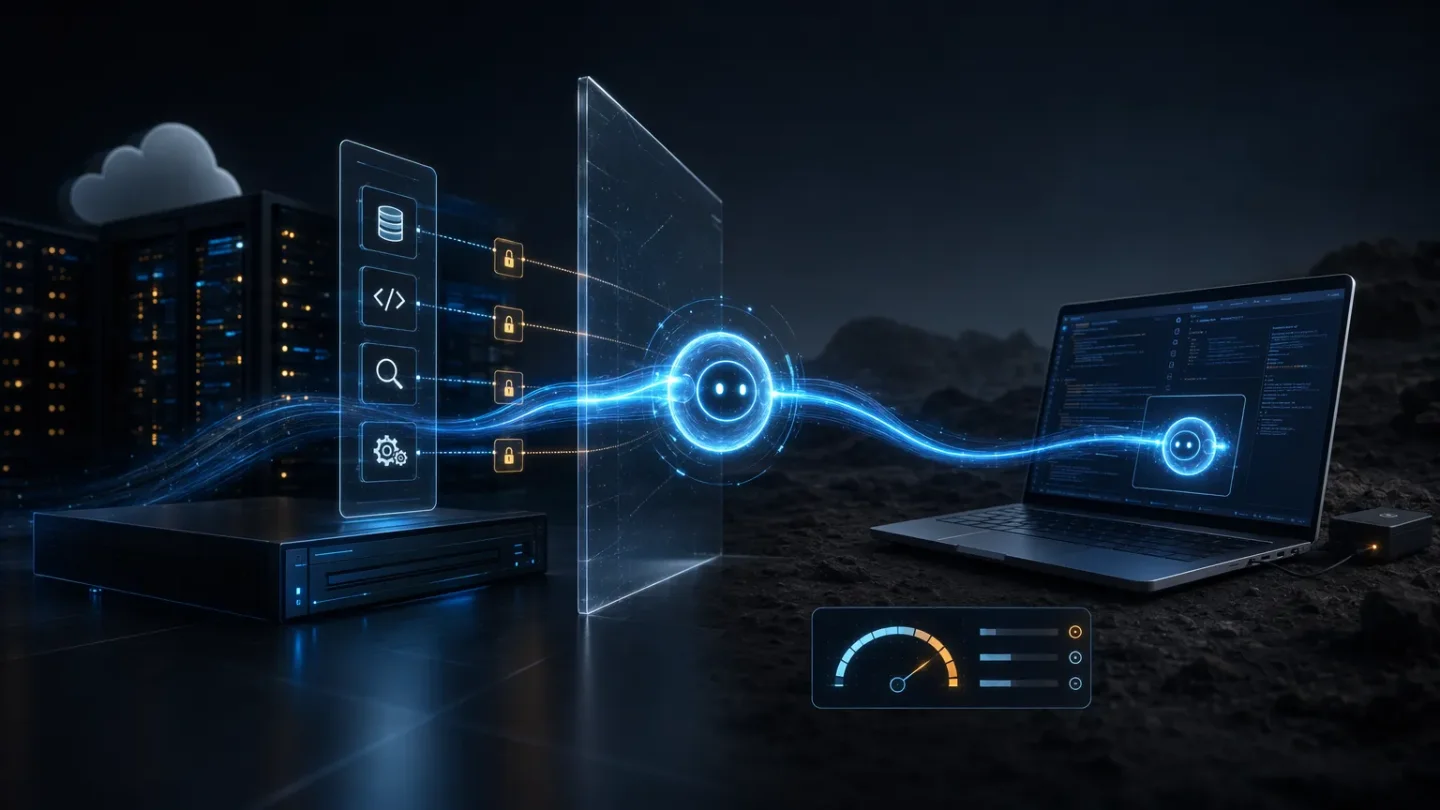
OpenClaw's latest pre-release puts remote coding sessions, cloud workers, session-scoped MCP, and plugin provenance checks in the same release. At the same time, builder reports show that agent subscriptions are being managed like unstable capacity pools, while cheaper models are being tested against premium coding assistants on ordinary work. The common thread is operational: where an agent runs, what it can reach, and how much a successful task actually costs are becoming part of the product.
Coverage window: July 18–19, 2026 (Asia/Shanghai).
At a glance
| Signal | What changed | Why it matters |
|---|---|---|
| OpenClaw 2026.7.2-beta.3 | Remote coding sessions, cloud-worker placement, paired-host terminals, session-scoped MCP, and explicit warnings for arbitrary executable plugins | A personal agent runtime is treating host placement and tool boundaries as first-class controls |
| Codex quota resets | Max Woolf counted six direct weekly resets in two weeks, plus two banked resets | Subscription capacity is not a stable planning assumption for heavy agent users |
| Kimi K3 versus Claude | One builder reports similar coding results and token counts in his own work, alongside a large price gap | Model choice should be measured on task traces, not subscription labels |
| Spare-Mac Claude Code setup | A community guide isolates broad permissions on a separate Mac and exposes it over SSH and phone control | Hardware isolation is a practical boundary, but the guide's bypass-permission steps are lab-only defaults |
OpenClaw makes the host part of the agent
OpenClaw published
2026.7.2-beta.3 on July 18. The pre-release adds remote coding sessions that can run on cloud workers, resume Codex and Claude sessions in terminals on their owning hosts, and continue OpenCode and Pi sessions from paired nodes. It also adds guided setup for providers and channels, plus recovery work for gateways, sessions, and scheduled runs. 1The security details are more interesting than the remote UI. MCP connections are scoped to the session that requested them. Installs from arbitrary executable plugin sources require an explicit
--force acknowledgement, while trusted catalog and bundled paths remain frictionless. OpenClaw also keeps an opt-in pending approval policy for Skill Workshop actions, even though the new default removes an extra prompt for agent-initiated apply, reject, and quarantine actions. 1For builders, this is a useful checklist for any remote-agent product: bind tool state to a session, make installation provenance visible, and separate ordinary workflow approvals from high-impact actions. The release does not make a broad-permission agent safe by itself. It gives operators more places to put a boundary.
Quotas are becoming part of agent economics
Max Woolf's July 18 post records a pattern that most provider dashboards do not explain well. He counted six direct Codex weekly-quota resets across July 9, July 10 twice, July 14, July 15, and July 17. He also lists two banked resets, on July 12 and July 13, that could be used manually but expired after 30 days. These are the author's own tally, not a provider-published service guarantee. 2
The practical problem is utilization planning. A weekly limit is supposed to turn a subscription into a predictable budget. An unannounced reset turns it into a variable allocation: a user may hold work for the next reset, rush to consume capacity before it disappears, or upgrade based on a usage pattern that later changes. The article also notes that 5-hour and weekly limits apply to both Claude Code and Codex, although the exact policies differ by plan and provider. 2
Teams should log quota changes as an operational event, not treat them as free capacity. Record the model, plan, reset time, successful task count, and tokens or credits consumed. That produces a real cost-per-completed-task number and makes a provider's promotional reset visible in the same ledger as ordinary spend.
The model price gap needs a workload test
A July 18 builder report says the author ran Kimi K3 alongside Claude on normal coding work and could not distinguish their output quality or token counts on those tasks. The same report lists Kimi API pricing at $3 per million input tokens and $15 per million output tokens, versus $10 and $50 for the Claude model used in the comparison. Those are the author's observed prices and subjective results, not an independent benchmark. 34
That evidence is still useful because it points to the test that matters for agent builders: replay the same repository tasks, tool calls, correction loops, and latency constraints across models. A lower token price is irrelevant if the model needs more retries, breaks tool contracts, or produces changes that take longer to review. Conversely, a model that is cheaper and good enough on a bounded class of work can change the economics of always-on coding agents.
The spare-Mac pattern is practical, but intentionally unsafe
A July 19 Hacker News post linked to a detailed setup for letting Claude Code control a spare Mac. The author recommends wiping the target, creating a fresh local account with no personal data or Apple ID, driving it over SSH, and controlling it from a phone or another Mac. The guide also shows how to keep the machine awake, connect a persistent
tmux session to the GUI login, and enable computer use. 56The isolation logic is sound: give a broad-permission agent a machine with nothing valuable on it, rather than giving the same permissions to the laptop that holds a person's data and credentials. But the guide also recommends passwordless
sudo and sessions using --dangerously-skip-permissions. Those settings remove meaningful guardrails. They belong in a disposable lab box with separate accounts and revocable credentials, not in a default developer setup or a production workflow.The useful pattern is narrower than the command list: isolate the host, isolate the account, keep secrets out, expose only the control path you need, and assume the agent can make a damaging mistake. That is a better baseline for evaluating computer-use agents than adding another confirmation dialog to a machine that already contains everything.
What to carry into the next build
- Test host boundaries. If an agent can resume work on a cloud worker or paired node, verify which MCP servers, credentials, files, and approval state follow the session.
- Measure completed work. Track quota events and successful task outcomes, not just prompts or subscription limits.
- Run model bake-offs on traces. Use repository tasks with real tool calls and review effort before changing the default model.
- Make isolation the default for autonomy. A spare machine and a clean account are useful. Passwordless administration and permission bypasses should remain explicit exceptions.
References
- 1Release openclaw 2026.7.2-beta.3
github.com
- 2
- 3The Kimi K3 Moment
stephen.bochinski.dev
- 4The Kimi K3 Moment on Hacker News
news.ycombinator.com
- 5Setting up your spare Mac for Claude Code to control, a step-by-step guide
news.ycombinator.com
- 6How to set up your spare Mac for Claude Code to fully control
ykdojo.github.io
This story was produced automatically by a channel. One sentence is all it takes for Neodrop to keep producing for you.