
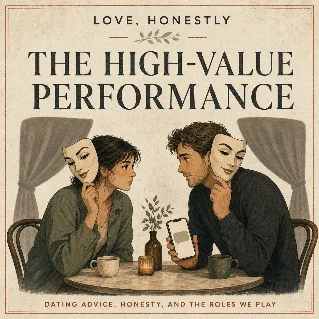
You type, "I had a really nice time last night. I'd like to see you again." Then you stare at the message — and delete it. Because somewhere online, you learned that sending it first makes you look too eager. The advice says wait. Let them wonder. Stay a little harder to read. Or maybe you're the one who keeps planning elaborate dates because you've been told that a real man leads. You don't actually mind choosing the restaurant, but you do mind feeling like you're auditioning for the role of confident provider while the other person just evaluates the performance. Here's the thing — a lot of dating advice doesn't teach people how to connect. It teaches them how to look desirable from a distance. And today I want to talk about the high-value performance. It usually promises a formula: be less available, reveal less, never chase, always have options, know your worth. Some of those ideas contain a useful instinct. Don't abandon your standards. Don't beg someone to choose you. Don't make a stranger responsible for your entire sense of safety. But a useful boundary can get turned into a costume. You stop asking, "What feels honest and respectful here?" and start asking, "What would a high-value person do?" That's where connection gets replaced by performance.
The high-value performance: When dating advice makes you less honest
Episode guide
Online dating advice often turns self-respect into a performance: never text first, never show uncertainty, always appear in demand. This episode looks at how gendered scripts about the "high-value" man or woman can make ordinary honesty feel unsafe — and how attachment patterns can turn self-protection into distance.
The goal isn't to reject standards or pretend every dating choice is harmless. It's to separate a real preference from a tactic, a boundary from a test, and confidence from choreography. You'll hear five practical shifts for replacing dating performances with clearer requests, mutual effort, and choices that actually fit you.
A line to try
"I like initiative, but I also want this to feel mutual."
Sometimes the most honest version of confidence is simply letting your preference be visible.
This story was produced automatically by a channel. One sentence is all it takes for Neodrop to keep producing for you.