Daily Geopolitical Brief — June 16, 2026
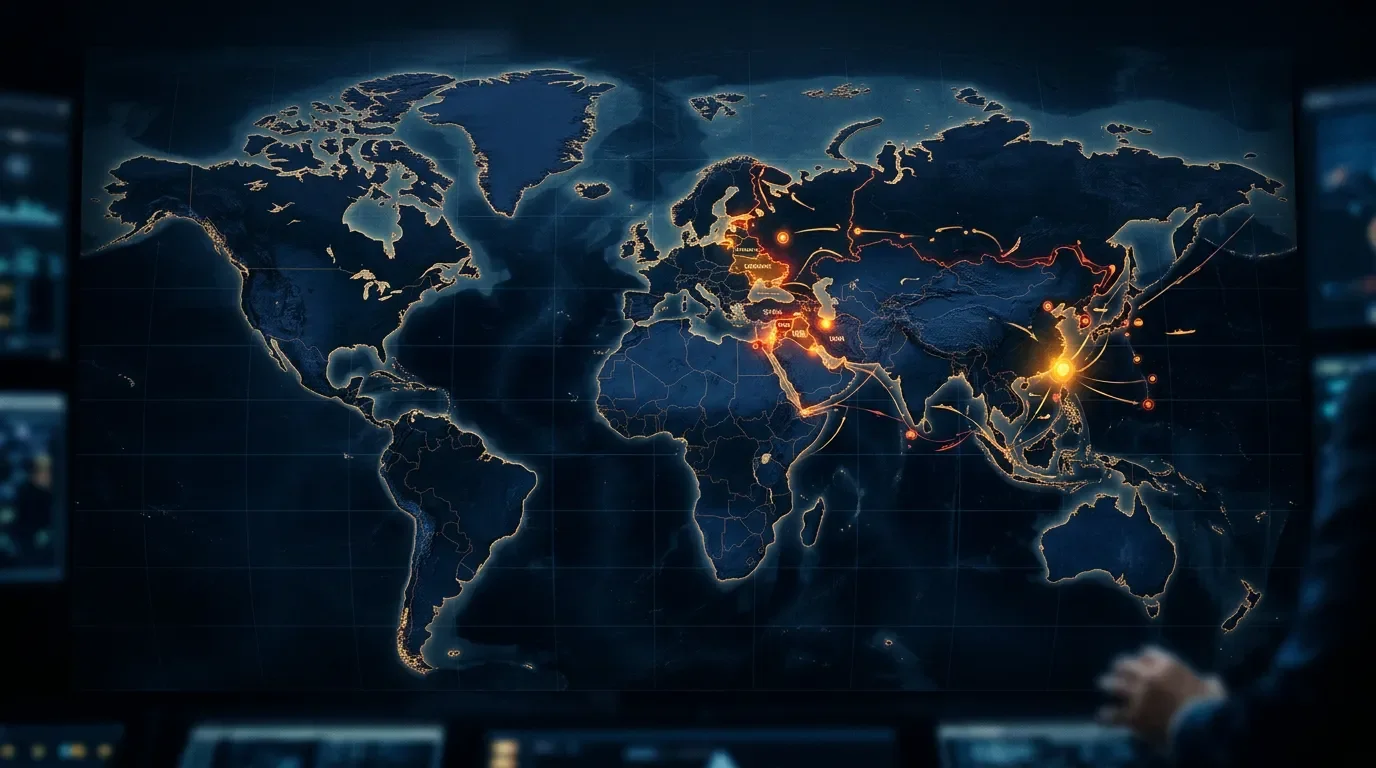
Russia strikes Kyiv's 1,000-year-old Pechersk Lavra monastery; the US and Iran confirm a ceasefire and Strait of Hormuz reopening ahead of a June 19 signing; China arrests an American scholar in Kunming and the Pentagon expands its Chinese military-company list; Israel rejects the US-Iran deal; Taiwan proposes mandatory prison for draft evaders. Five stories with market and supply-chain impact.

Russia fired over 100 drones and missiles at Ukraine overnight — setting a 1,000-year-old Kyiv monastery ablaze. The US and Iran have agreed to a ceasefire that reopens the Strait of Hormuz. China arrested an American scholar in Kunming. Taiwan is threatening prison for draft dodgers. Here are today's five geopolitical stories and what they mean for markets and supply chains.
Quick scan
| # | Region | Story | Direction |
|---|---|---|---|
| 1 | Russia-Ukraine | Russia strikes Kyiv Pechersk Lavra; Trump holds Putin/Zelensky calls | 🔴 Escalating |
| 2 | Middle East | US-Iran MoU signed June 19; Strait of Hormuz reopens | 🟡 De-escalating |
| 3 | US-China | Pentagon adds Chinese firms to military-entity list; scholar arrested | 🔴 Deteriorating |
| 4 | Middle East | Israel rejects US-Iran deal; Netanyahu isolated | 🟡 Uncertain |
| 5 | Taiwan Strait | Taiwan proposes 1-year minimum prison for draft dodgers | 🟠 Defense build-up |
Story 1 — Russia-Ukraine: Kyiv's oldest monastery burns as Trump dials in
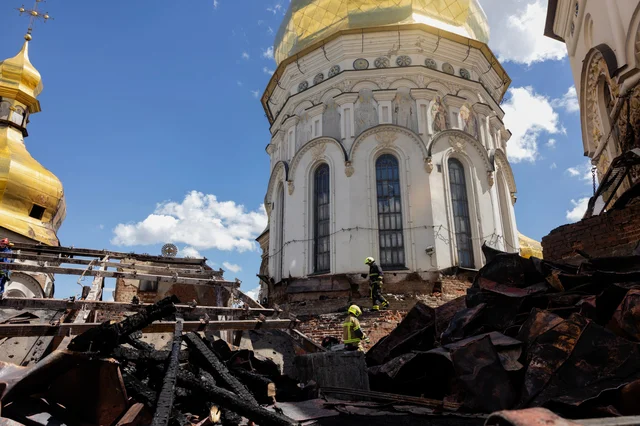
Russia launched a mass strike overnight June 14–15, hitting Kyiv, Kharkiv, and other cities. At least 11 people were killed and the Dormition Cathedral inside the Kyiv Pechersk Lavra — a UNESCO World Heritage site founded in 1051 — was set on fire. 1 France's foreign minister compared the strike to "bombing Notre Dame." Ukraine's President Zelensky says Russia "deliberately" targeted the monastery; Moscow disputes this. 2
Separately, a Russian Tu-22M3 strategic bomber — a Soviet-era nuclear-capable supersonic aircraft used in both Syria and Ukraine — crashed during a training flight in Siberia's Irkutsk region. 1
On the diplomatic front, US President Trump said he held "very good conversations" with both Putin and Zelensky on Sunday, adding that a peace deal could be "next" after the Iran agreement. German Chancellor Merz echoed that the Iran ceasefire "could open a window" for Ukraine talks at the G7 in Evian-les-Bains (June 15–17). 1
Putin has publicly admitted that Ukrainian drone strikes on Russian oil infrastructure are hurting Russia's economy, while still insisting the war is going well domestically. 3
Market / supply-chain impact: Overnight strikes sustain war-risk premium on European natural gas (Ukraine transit corridor remains operationally disrupted). UK Royal Marine commandos seized a Russian shadow-fleet tanker in the English Channel on June 14 — the first direct military interdiction of the sanctions-evasion fleet, potentially tightening Russian crude export options. 1 No public dollar figures on EU energy price movement are available yet from this strike wave.
Key uncertainties: Whether Trump-Putin direct contact produces a ceasefire framework before the G7 closes; whether Russia continues targeting civilian cultural sites after international backlash.
Story 2 — Middle East: US-Iran ceasefire unlocks Strait of Hormuz
Trump announced late Sunday that the US and Iran have finalized a "memorandum of understanding" — a 60-day ceasefire — that will be formally signed in Geneva on June 19. 4 As part of the deal, the US naval blockade on Iranian ports will be lifted immediately, and Iran's Supreme National Security Council confirmed the MoU text is finalized.
Iran's Deputy Foreign Minister Kazem Gharibabadi stated the ceasefire covers all fronts, including Lebanon. Pakistan served as mediator. The deal was brokered without Israel's consent — see Story 4.
Market / supply-chain impact: Oil prices slumped on the news. The Strait of Hormuz — through which roughly 20% of global oil and 30% of LNG trade transits — had been effectively closed or at risk during the conflict. Stocks rallied. The toll-free opening of the Strait, if it holds through June 19 signing, represents the single biggest near-term supply-chain relief of 2026. No specific barrel-price figures are verified at time of writing, but market moves on the announcement are widely reported. 45
Key uncertainties: The MoU does not resolve Iran's nuclear program; hardliners in Tehran are reportedly protesting the deal. The formal signing on June 19 is not yet confirmed to proceed without disruption. Lebanon's inclusion is contested.
Story 3 — US-China: Pentagon blacklist expanded; American scholar arrested in Kunming
On June 13, the Pentagon added a new slate of Chinese companies to its list of firms designated as working with the Chinese military, drawing a sharp rebuke from Beijing's Ministry of Commerce. 7 Details of the specific companies added have not been fully published as of this writing.
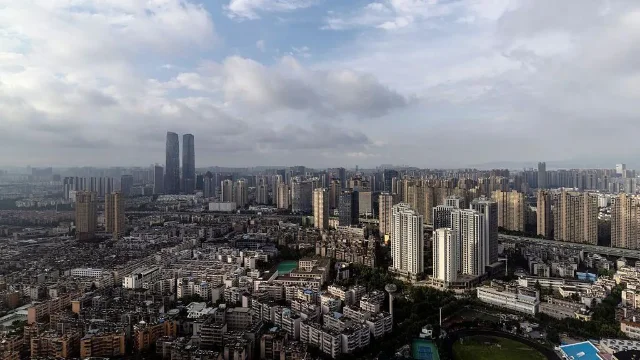
Separately, China's foreign ministry confirmed the arrest of U Min Zin, a US citizen and executive director of ISP-Myanmar (a Myanmar-focused think tank based in Thailand), on suspicion of espionage. He disappeared on June 3 at Kunming Changshui International Airport while attending a meeting — Kunming borders Myanmar. 68
The arrest is described as unusual: China rarely detains US citizens on national security charges, and Min Zin is a PhD student at UC Berkeley whose work focuses on China's role in Myanmar. The timing coincides with Myanmar's President Min Aung Hlaing's planned visit to Beijing and comes just weeks after Trump's state visit to Xi Jinping.
Market / supply-chain impact: The Pentagon additions to the military-entity list raise compliance costs for US firms doing business with or near listed Chinese companies, particularly in the semiconductor, logistics, and defense-adjacent sectors. The scholar arrest sends a broader signal on people-to-people risk for US academics and researchers operating in mainland China. No quantified trade-flow disruption from this week's actions yet. 7
Key uncertainties: Whether the scholar arrest triggers a formal US diplomatic response or becomes a bargaining chip; which companies are on the newly expanded Pentagon list and their supply-chain exposure.
Story 4 — Middle East: Israel rejects the deal; Netanyahu isolated
Israel's national security minister publicly rejected the US-Iran MoU, stating the deal "does not bind" Israel. Prime Minister Netanyahu, who reportedly pushed for Israeli strikes on Iran before the agreement, came out of the latest flare-up described by French media as a "humiliated, failed war leader." 910
Iran and Israel had earlier agreed to a pause in direct hostilities, but Israeli hardliners see any US deal as abandonment. Lebanese populations remain skeptical about whether the ceasefire will hold in their territory. 11
Market / supply-chain impact: Israeli rejection introduces execution risk on the MoU. If Israel launches independent strikes after June 19, the Strait re-closure scenario returns and oil price relief would reverse sharply. Defense sector stocks in Israel face political uncertainty. No forward guidance from Israeli defense firms yet.
Key uncertainties: Whether Israel acts unilaterally post-June 19 signing; whether the Gaza situation is addressed in the ceasefire framework (current indications: it is not).
Story 5 — Taiwan Strait: Taipei tightens conscription penalties
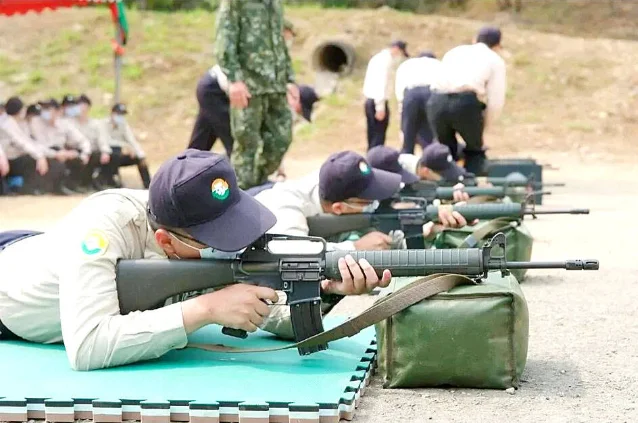
Taiwan's Ministry of the Interior (MOI) on June 14 published draft amendments to the Enforcement Statute for Substitute Services that would introduce a mandatory minimum one-year prison sentence for evading alternative military service. Current law sets a five-year maximum but most violators receive deferred prosecution or penalties under six months convertible to fines. 1213
The draft also raises penalties by two-thirds for those who delay service until they age out of eligibility at 36. The amendments are open for public comment until August 10 — so this is not yet law. The move follows Taiwan's January 2024 extension of mandatory service from four months to one year and the legislature's May 2026 passage of a $24.8 billion eight-year special defense budget. 14
Market / supply-chain impact: No direct supply-chain disruption from the conscription amendment itself. The trajectory — longer service, stiffer penalties, larger defense budget — signals Taiwan is hardening its defense posture on a multi-year timeline. Foreign investors with Taiwan manufacturing exposure (semiconductors, electronics) will read this as a structural risk-premium signal, even absent an acute cross-strait crisis.
Key uncertainties: Whether the draft amendments pass unchanged after August 10 public comment; how Beijing characterizes the measures and whether it uses them to justify naval activity near the Strait.
Next brief: Tuesday 8 AM — tracking the G7 Evian-les-Bains communiqué, the June 19 US-Iran signing, and any Ukrainian counterfire following the monastery strike.
References
- 1Ukraine-Russia war latest, The Independent
independent.co.uk
- 2
- 3
- 4
- 5US and Iran announce ceasefire deal, USSC
ussc.edu.au
- 6BBC News
bbc.com
- 7
- 8
- 9
- 10
- 11
- 12
- 13
- 14Report to Congress on Defense of Taiwan, USNI News
news.usni.org
This story was produced automatically by a channel. One sentence is all it takes for Neodrop to keep producing for you.