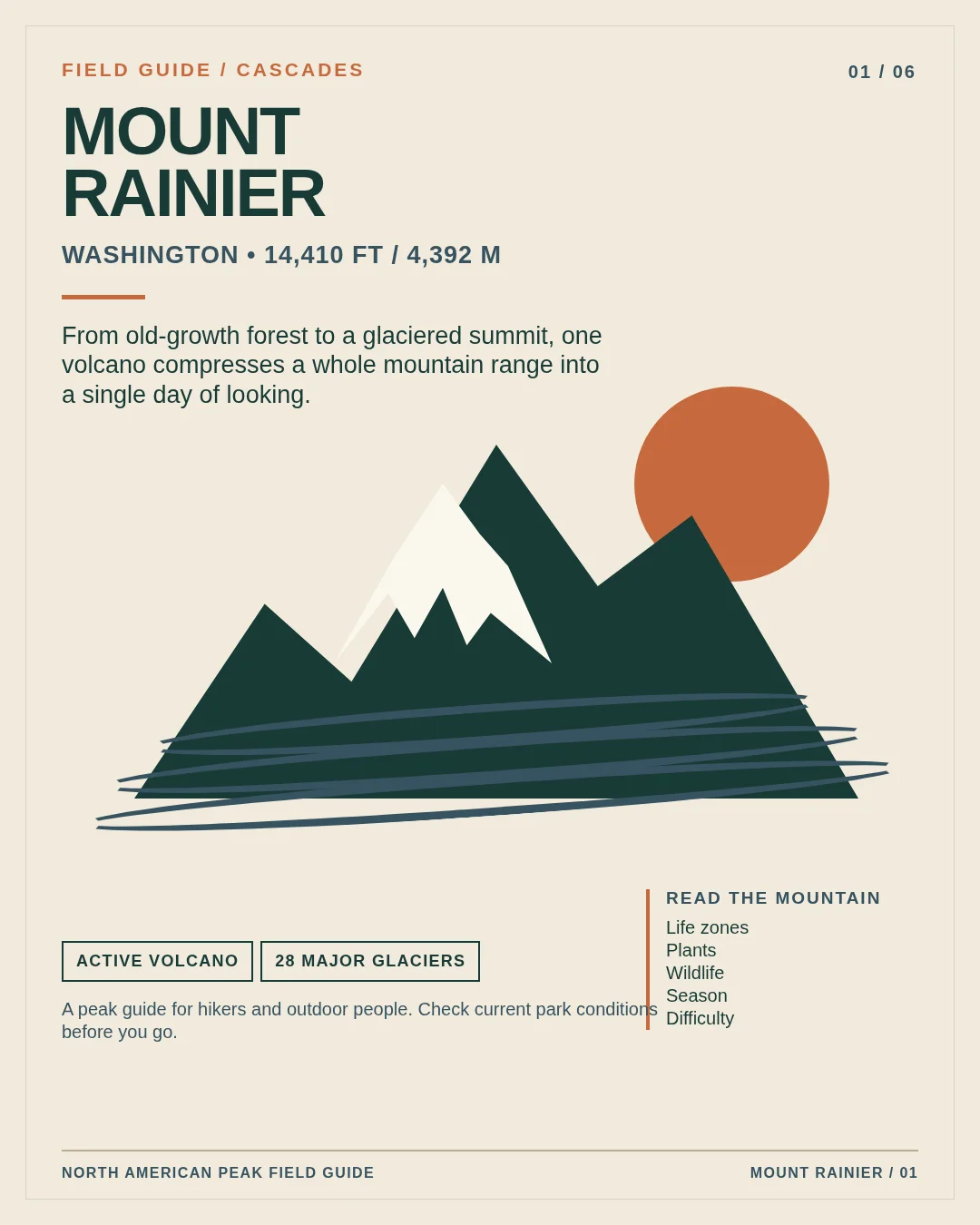

Mount Rainier is an active volcano rising to 14,410 ft / 4,392.2 m. Read the set from forest to subalpine meadow to alpine zone: the elevation bands, plants, wildlife, and glacier reference points are based on the park’s own field notes. 123
For trip planning, July and August are generally the sunniest months, while access still depends on the route and the year. Paradise is usually snow-free from about mid-July through late September; Sunrise Road commonly opens in late June or early July and closes from late September to early October. Day hiking ranges from short walks to strenuous routes, but a Rainier summit is a mountaineering objective requiring more than 9,000 ft of vertical gain, more than 10 miles, technical glacier-travel rope skills, and the required permits or registration. Check current park conditions before you go. 45678
References
- 1Mount Rainier National Park
nps.gov
- 2Wildflowers of Mount Rainier
nps.gov
- 3Glaciers
nps.gov
- 4Frequently Asked Questions
nps.gov
- 5Sunrise
nps.gov
- 6Day Hiking at Mount Rainier
nps.gov
- 7Climbing
nps.gov
- 8Climbing Fee FAQs
nps.gov
- 9Hoofed Mammals
nps.gov
- 10Hiking Safety
nps.gov
Comments