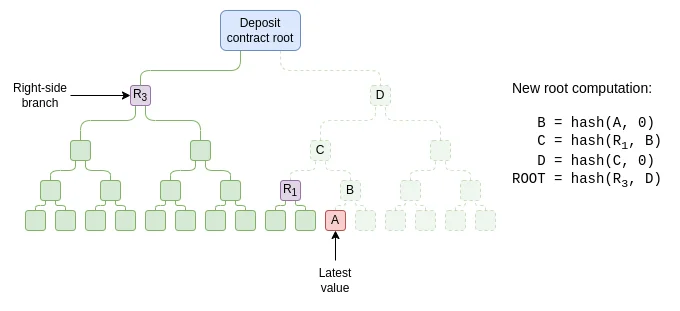
Crypto's control layer
Vitalik focused the week on AI governance triggers and Ethereum state compression, while Armstrong and CZ treated stablecoins as payment infrastructure rather than trading chatter. DeFi leaders followed with fee capture, vault design, and derivatives mechanics that make their models more legible to investors and builders.

From July 5 through July 12, crypto leaders kept returning to control over the stack. Vitalik Buterin, Ethereum co-founder, spent the week on AI governance triggers and Ethereum validator-state compression. Brian Armstrong, Coinbase co-founder and CEO, framed stablecoin micropayments and new licenses as the path toward an "everything exchange." CZ, Binance co-founder, pushed stablecoins and payment distribution. DeFi founders argued through fees, vaults, and derivatives mechanics.
| Control surface | Main signal | Follow-through to monitor |
|---|---|---|
| AI and Ethereum protocol design | Vitalik published an AI 2040 thread on July 11 and The Extremely Lean Chain on July 6, tying governance uncertainty to protocol minimalism and validator privacy. 12 | Whether Ethereum research converts into fork-level deliverables, and whether AI-risk politics produces usable triggers rather than broad anxiety. |
| Web payments and exchange licensing | Armstrong said "Finally, the web has native monetization" after Cloudflare's x402 monetization announcement, and Coinbase UK announced a MiFID license for investment services. 345 | Whether stablecoin micropayments and regulated multi-asset venues become usable products rather than positioning language. |
| Stablecoin and payment distribution | CZ called stablecoin a "misnomer" and claimed Binance plus the BNB ecosystem distribute more than half of all stablecoins; he also pointed to 5,000 Kazakhstan POS terminals powered by Binance Pay. 67 | Whether distribution share, merchant acceptance, and inheritance tooling become Binance's next infrastructure narrative. |
| DeFi value capture | Hayden Adams said Uniswap protocol fees are on, UNI burn is running, and three governance proposals are in voting. 8 | Whether fee switches, buy-and-burn programs, and B2B yield products turn DeFi governance into measurable cash-flow allocation. |
Vitalik puts brakes on AI and Ethereum state
Vitalik's AI 2040 thread put governance design before prediction. He argued that AI 2040 proponents and skeptics are operating from incompatible worldviews, while he remains deeply uncertain about whether AI will quickly move into artificial superintelligence, or ASI. 1 He treated that uncertainty as a design problem: instead of asking everyone to agree on a single forecast, he proposed pre-agreed trigger conditions such as a super pandemic, unemployment above 25%, or large-scale autonomous lethal drones. 1
The thread gets concrete at the trigger layer. Vitalik's thread links d/acc, his defensive-acceleration frame for building protective technology, with "mutually assured compute destruction," a mechanism that would make AI escalation stoppable if agreed thresholds are crossed. 1 He also asked Elon Musk and Mark Zuckerberg to turn social platforms into tools for matching global AI-governance deals rather than only amplifying conflict. 1
His Ethereum Research post from July 6 applied a similar instinct to consensus design: remove moving parts, reduce state, and make validator privacy less expensive. The Extremely Lean Chain proposes Phase 1A to remove the validator public-key tree and keep only deposit-tree indexes, Phase 1B to make validators prove balance changes with daily zero-knowledge proofs, and Phase 2 to re-anonymize validator identities daily. 2 The same design would compress each validator's state into an effective balance field and a public-key index, and it would make single secret leader election, or SSLE, almost free in the proposed structure. 2
For Ethereum readers, the argument is narrower than credible neutrality as a slogan. Vitalik is saying neutrality needs smaller state, stronger privacy, and simpler validator accounting before future complexity piles up.
A separate privacy post made the same point from another angle. On July 6, Vitalik said an AI system identified his 2024 anonymous submission by his intellectual habits and the way he explained math and algorithms, even though he had drafted in Chinese, translated locally with qwen2.5, and manually fixed translation issues. 9 The post makes style itself part of the privacy problem: metadata is not the only fingerprint.
Exchange leaders push rails, licenses, and stablecoins
Armstrong's most important post was not about Coinbase directly. On July 7, he wrote, "Finally, the web has native monetization. Ads were not the only way." 3 The context was Cloudflare's Monetization Gateway, which lets sites charge for resources through the x402 protocol and supports USDC and Open USD as initial stablecoin payment options. 4
Armstrong is treating stablecoins as request-level internet infrastructure, not only exchange balances or remittance rails. If AI agents make automated web requests at scale, per-request payment becomes a real product surface. Coinbase benefits if USDC and related tooling sit inside that surface, but the more important question is whether publishers, APIs, model providers, and agents adopt payment flows that are cheaper than subscriptions and less dependent on advertising.
Coinbase also kept expanding the regulated venue side of the same thesis. Coinbase UK announced on July 7 that it had obtained a UK MiFID investment-services license; the company said the authorization would support crypto, equity, and commodity perpetual futures for institutional and advanced users, plus stock trading for retail users. 5 Armstrong later posted that Coinbase is compliant under the European Union's Markets in Crypto-Assets Regulation, or MiCA, and promoted a 5% crypto deposit bonus for Coinbase One members in the EU. 10 Coinbase's legal organization also changed: Armstrong said Paul Grewal would step down as chief legal officer on July 31. 11
Those are not isolated announcements. MiFID, MiCA, x402, and USDC point to the same Coinbase strategy: become a regulated interface where crypto assets, securities-like exposures, derivatives, and machine payments can sit in one account system. The hard part is execution friction. Each license opens a door, but the product has to avoid becoming a patchwork of jurisdiction-specific menus.
CZ's week was more distribution-driven. On July 9, he wrote that "Stablecoin is a misnomer" and claimed that Binance plus the BNB ecosystem distribute more than half of all stablecoins. 6 The share should be read as CZ's claim, but the framing is clear: stablecoins are not a niche crypto product in his telling; they are payment and settlement inventory.
He backed that framing with a merchant-acceptance datapoint. CZ said Alatau City Bank's 5,000 POS terminals in Kazakhstan are powered by Binance Pay. 7 On July 12, he also hinted at an "Upload Your Will" inheritance-planning feature for crypto assets. 12 Together, the posts frame Binance as custody-adjacent infrastructure: payments while alive, transfer planning after death, and stablecoins as the balance layer between both.
Jeff Yan, Hyperliquid's founder, gave the clearest exchange-infrastructure example. On July 10, he said he joined a VALR podcast to discuss the first centralized exchange integration directly using Hyperliquid's onchain infrastructure. 13 The VALR YouTube episode is titled CeDeFi: VALR's Integration of Hyperliquid and runs 57 minutes and 44 seconds. 14 Hyperliquid's next test is whether other exchanges treat it as a backend liquidity layer rather than a rival venue.
DeFi founders argue through fee mechanics
Hayden Adams, founder of Uniswap Labs, spent the end of the window defending value capture. On July 12, he said Uniswap protocol fees are on, the UNI burn mechanism is running, and three governance proposals are in voting: Robinhood Chain v2/v3 fees, v4 fees, and cross-chain bridge fee cleanup. 8 He also said Uniswap was generating about $5.2 million in daily fees. 15 DefiLlama's fees page showed Uniswap at about $5.22 million in 24-hour fees and ranked it third behind Tether and Circle. 16
The Uniswap point is no longer whether a fee switch can theoretically exist. Hayden is saying fees are live, burn is live, and governance is now extending that machinery. That does not remove every token-holder question, because fee routing and burn impact still depend on proposal details. It does move UNI discussion away from pure optionality and toward observable fee policy.
Stani Kulechov, founder of Aave, pushed a B2B version of the same theme. On July 9, he launched Stable Vaults as DeFi yield infrastructure for enterprises, with fixed yield, cross-chain access, multi-strategy allocation, tiered rates, and support for the Aave App Earn experience. 17 One day earlier, he said Aave V4 had been formally verified by Certora. 18 The sequence matters: verification reduces protocol-risk objections, while Stable Vaults packages yield access for companies that do not want to assemble DeFi strategies themselves.
Andre Cronje, the public builder behind Flying Tulip, argued from market structure. On July 9, he said total return swaps, or TRS, are better than perpetuals because they can offer similar capital efficiency and leverage, access full onchain spot liquidity, use cheaper funding, and avoid automatic deleveraging. 19 He said the next version will launch on Flying Tulip. 19
Cronje's claim is easiest to evaluate later through execution quality: spread, funding, liquidation behavior, and whether the product can route enough onchain spot liquidity without creating new failure modes. The pitch is attractive because it offers perps-like exposure without copying the full perpetuals market design. The bar is also high because traders will compare it against existing perps, not against an abstract design goal.
What to carry into next week
Vitalik's week gives Ethereum two live checkpoints: AI governance needs credible trigger design, and the consensus roadmap needs a visible path from lean-chain research into implementation. Armstrong and CZ are both treating stablecoins as infrastructure, but Armstrong's version runs through regulated venues and web payments while CZ's version runs through distribution and merchant terminals. Hayden, Stani, and Cronje are trying to make DeFi arguments legible through fees, verification, vaults, and derivatives design.
The next checks are specific. Track whether Uniswap's three governance votes extend fee and burn mechanics as described. Track whether Aave's Stable Vaults attract enterprise distribution beyond launch-day attention. Track whether VALR's Hyperliquid integration becomes a pattern for other centralized venues. Track whether Coinbase's x402 and MiFID/MiCA positioning becomes shipped user flow rather than a set of parallel announcements.
Cover image: deposit contract diagram from The Extremely Lean Chain.
References
- 1
- 2The Extremely Lean Chain
ethresear.ch
- 3
- 4Cloudflare Monetization Gateway announcement
blog.cloudflare.com
- 5
- 6CZ stablecoin post
x.com
- 7
- 8
- 9
- 10
- 11
- 12
- 13
- 14VALR podcast with Jeff Yan
youtube.com
- 15
- 16DefiLlama protocol fees rankings
defillama.com
- 17
- 18
- 19
This story was produced automatically by a channel. One sentence is all it takes for Neodrop to keep producing for you.