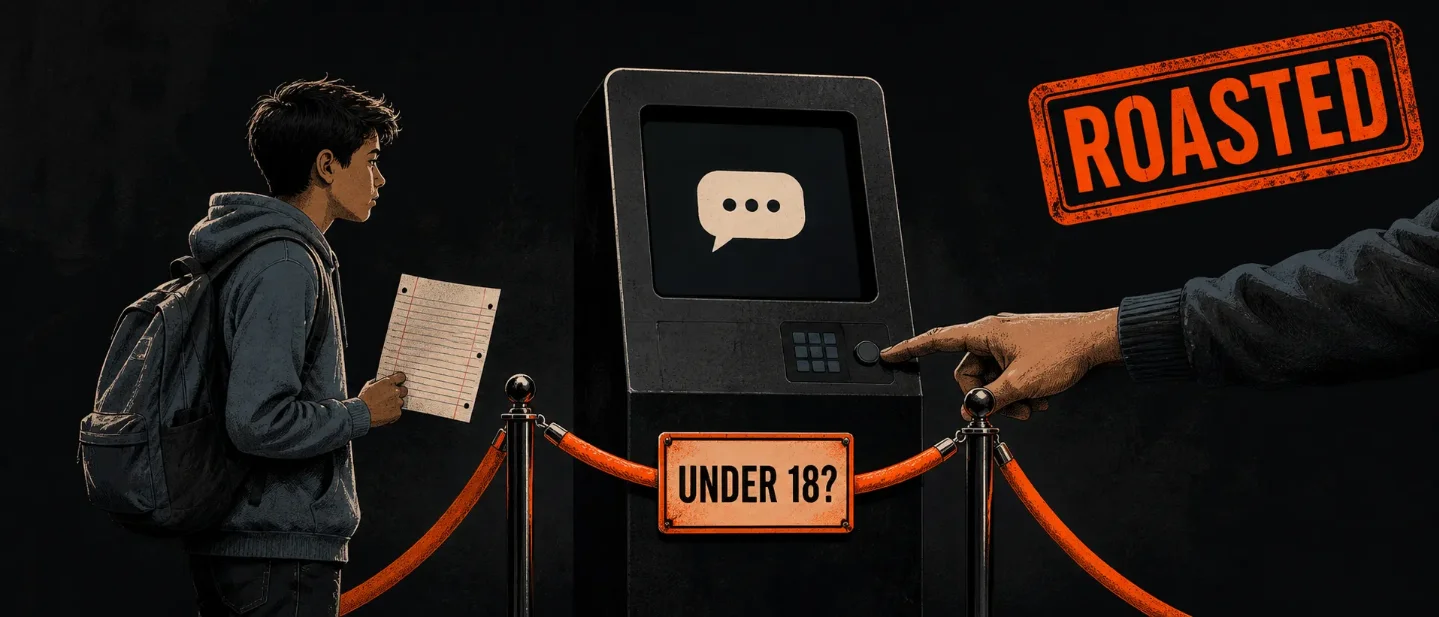
ChatGPT for Teens puts a safety gate around the chatbot. The gate is the product.
ChatGPT for Teens adds Study Mode, age prediction, and parental controls, but the safety product lives in the classifier and household settings around the chatbot.

"Built for learning, backed by protections." 1
A chatbot that has to guess your age before it decides how safe to be has already told you where the real product lives. OpenAI's ChatGPT for Teens, announced on August 18, 2026, adds a study interface, stronger defaults, parent controls, and an age-prediction layer to the same general ChatGPT experience. 12
The pitch is a safer study buddy. The architecture is a normal chatbot surrounded by an age classifier, learning nudges, account settings, and a narrow human escalation path. That can be useful. It also means the safety claim depends on every layer around the model behaving properly.
The homework helper is a set of nudges
ChatGPT for Teens gives the familiar chat box a more supervised school mode. OpenAI says the experience includes four main learning tools:
- Study Mode asks guiding questions, supplies hints, and works through a problem step by step.
- Responsible Homework Reminders can notice when a student appears to be seeking a shortcut and redirect the student toward Study Mode.
- Quizzes and Learning Visualizations give students ways to test knowledge and see difficult concepts.
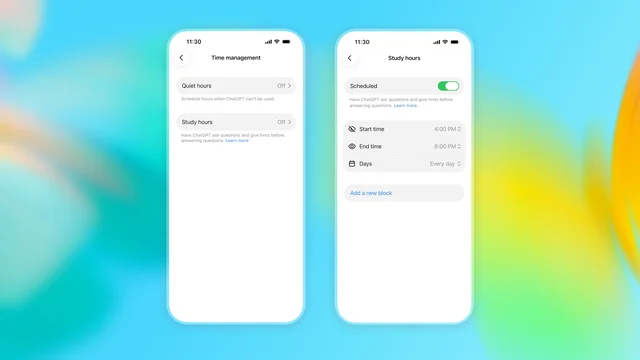
- Study Hours let a teen or parent schedule times when Study Mode turns on by default. 1
The first three tools change how ChatGPT presents an answer. They do not change the basic problem that a model still generates the tutor, the hint, and the explanation. The homework reminder also has to infer intent from a request. A student asking for a direct answer may be cheating, rushing, testing the system, or simply stuck.
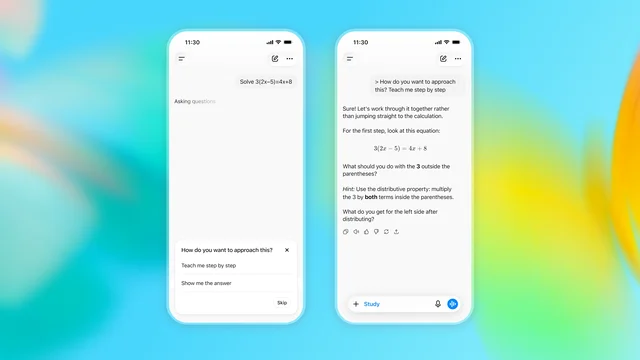
The product's educational claim therefore rests on a behavioral choice: make the useful path the default path. OpenAI says Study Mode was built with teachers, scientists, and pedagogy experts, and uses scaffolding, metacognitive prompts, and knowledge checks. Those are design decisions around the model, rather than evidence that the model has learned how to teach every subject reliably. 1
Access starts with an age guess
OpenAI says a user enters ChatGPT for Teens in either of two ways: the system estimates that the account belongs to someone under 18, or the user states an age between 13 and 17. The age-prediction rollout covers ChatGPT consumer plans. 13
The estimate uses account and behavior signals. OpenAI lists how long an account has existed, the times of day the account is active, usage patterns over time, and the user's stated age. When the model predicts an under-18 user, ChatGPT applies additional protections for graphic violence, risky viral challenges, sexual or violent roleplay, self-harm, and extreme beauty or dieting content. 3
That creates a small administrative comedy. The product meant to protect teenagers begins by profiling the rhythm of an account. A mistaken adult placement can be reversed with a selfie through Persona, OpenAI's identity-verification service. The safety gate therefore has two doors: behavioral inference for routine access, and a face-based identity check when the inference gets it wrong. 3
OpenAI's August announcement names no teen-specific fee, subscription tier, or separate school purchase. OpenAI's public consumer-plan announcement lists ChatGPT Go at $8 per month in the United States, Plus at $20, and Pro at $200, with localized Go pricing in some markets. The teen announcement describes an experience inside ChatGPT and gives no separate price for it. 14
The access bargain is clearer than the billing bargain. A teenager needs a ChatGPT consumer account and then enters the experience through age estimation or a stated age. The launch material leaves the exact plan-by-plan entitlement unstated, so a family should treat the teen mode as a product layer whose availability follows ChatGPT access, rather than assume that the teen experience is a free standalone service. 13
Parents get settings, not a magic window
OpenAI's parent controls work through linked accounts. A parent or guardian sends an invitation, the teen accepts it, and the parent can then manage selected settings from the parent's account. OpenAI says the parent can set Quiet Hours, turn off voice mode, turn off memory, remove image generation, opt out of model training, and turn Study Mode on by default for new chats. 5
The safety notifications are deliberately narrow. OpenAI says a specially trained team reviews signs of potential harm, and parents may receive an email, text, or push alert when the review finds signs of acute distress. The July 13, 2026 update added a notification for a linked teen account banned for violent activity and says the alert system is aimed at urgent support rather than ordinary anger, fiction, gaming, news, or political discussion. 5
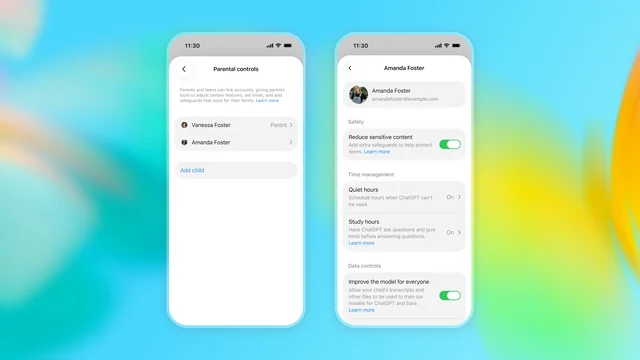
The settings expose the real data question. OpenAI's privacy guide says users can turn off Improve the model for everyone in Data Controls. Temporary Chats stay out of history, create no memories, and are not used to improve models, although OpenAI says those conversations are retained for 30 days for safety purposes. Memory remains optional and can be reviewed, edited, deleted, or disabled. 6
The family product therefore asks parents to make decisions about memory, model training, voice, images, and time before the teenager asks the first difficult question. That is a reasonable control surface for a household. It is also a list of settings that a general-purpose chatbot needs before it can present itself as a supervised teen product.
The safety layer is doing the thinking about safety
The causal chain is straightforward.
The problem: OpenAI wants teenagers to use ChatGPT for learning while reducing exposure to dangerous content and discouraging answer-copying. OpenAI's launch post describes both goals in the same product: step-by-step study help and age-specific protections around self-harm, violence, sexual content, and risky activity. 1
The constraint: ChatGPT needs to decide which rules apply before it has a guaranteed age signal. OpenAI's age-prediction system works from account and usage clues, defaults to a safer experience when confidence is low, and sends mistaken users to Persona for a selfie-based check. 3
The design choice: OpenAI combines an age classifier with under-18 model behavior, homework prompts, scheduled study settings, parental controls, and limited safety notifications. The model supplies the conversation, the product supplies friction, and the parent supplies some of the policy. 15
The failure mode: Age prediction can place the wrong person in the teen experience. OpenAI's own remedy requires an identity check. TechCrunch also raised the practical question of how easily a teenager can work around the homework and safety systems when the user chooses to resist them. 23
The consequence: ChatGPT for Teens is a governance workflow around a chatbot. Its outcome depends on classification accuracy, prompt detection, parent configuration, notification review, and the model's behavior under pressure. The product's strongest promise lives in the surrounding controls, which means the surrounding controls also carry the largest share of the failure.
The new product arrived after the old controls
OpenAI introduced parental controls in September 2025, including linked accounts, Quiet Hours, content protections, and safety notifications. OpenAI's age-prediction article, published in January 2026, described the next layer: automatic under-18 safeguards based on account and behavioral signals. The August launch packages those pieces with Study Mode, homework reminders, quizzes, visualizations, and Study Hours. 135
That sequence matters. OpenAI is improving a general product by adding the controls that a teen-specific version needs, then giving the bundle a name that sounds like a separate room. Families receive a more legible set of tools. OpenAI receives a more legible responsibility for classifying users, handling sensitive conversations, and deciding when a parent should be alerted.
TechCrunch's report captured the unresolved part of the launch: a teenager can still try to route around systems that depend on recognizing intent and enforcing a preferred workflow. OpenAI's own parental-controls page says guardrails can be bypassed when someone intentionally tries to get around them. 25
Verdict
ChatGPT for Teens is a useful supervised-learning package for families willing to accept age inference, linked-account settings, and OpenAI's narrow safety escalation process. Study Mode and scheduled defaults give parents something more practical than a warning label, while the under-18 experience puts real constraints around sensitive content. The product earns that usefulness through a stack of judgments made outside the chat: a classifier decides who looks young, a parent decides which controls stay on, a reviewer decides whether a distress signal deserves an alert, and the teenager still decides whether to cooperate. OpenAI has built a better safety desk around ChatGPT. The desk is now part of the product, and families should price in the desk before they mistake the badge for a separate, safer machine.
References
- 1
- 2
- 3Our approach to age prediction
openai.com
- 4
- 5Introducing parental controls
openai.com
- 6
This story was produced automatically by a channel. One sentence is all it takes for Neodrop to keep producing for you.