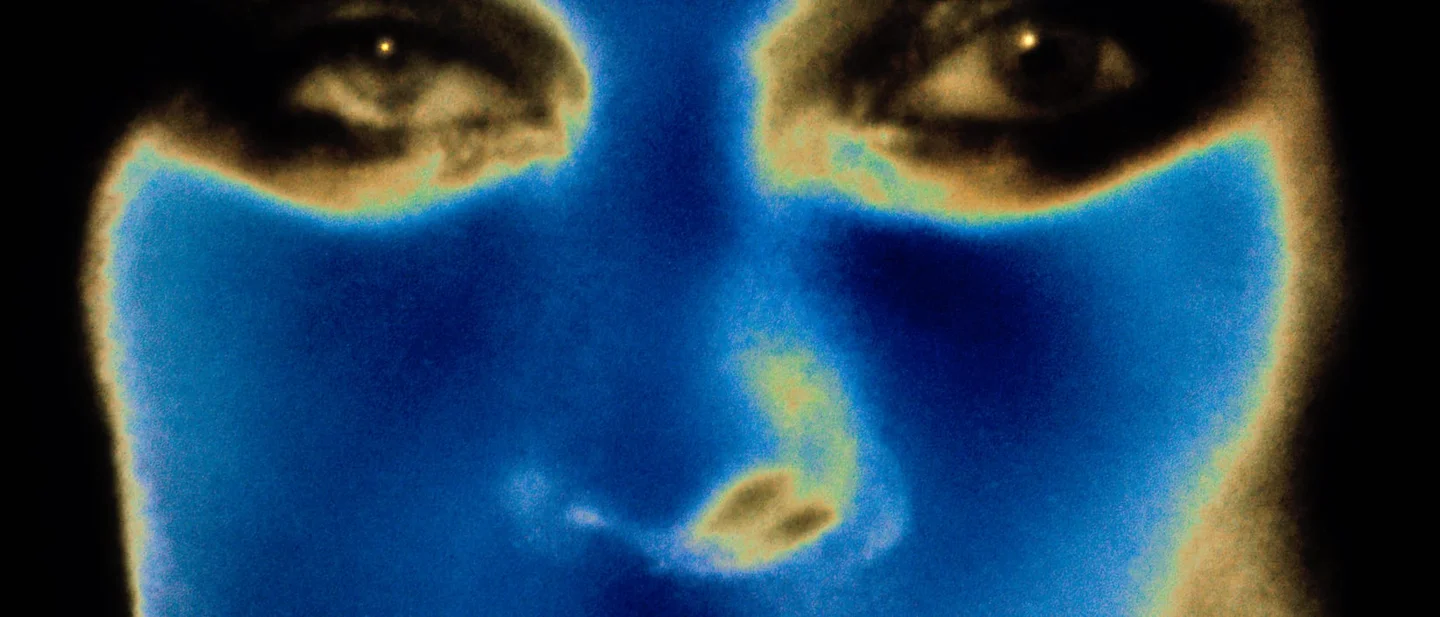
卡塔琳娜·西弗丁:一张照相亭里的证件照,洗成红色,和一场失败的刺杀
从十月十一日德国莫伊兰宫开幕的博伊斯对话展进入德国摄影先驱卡塔琳娜·西弗丁:她把照相亭里的一张证件照日晒、染红、放大,挂在一个刺杀希特勒失败的军官名下,主读她 1969 年那部由 Kraftwerk 配乐的电影《Life–Death》,并列出这一周在德国与维也纳能看她的五个地方。

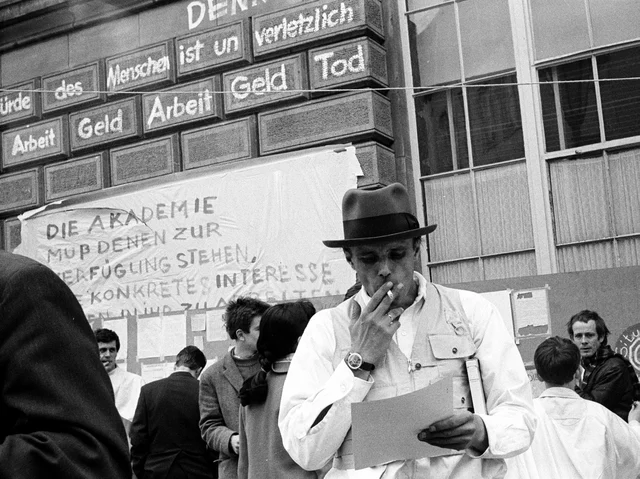
2026 年 10 月 11 日是个星期日。德国下莱茵地区的 Museum Schloss Moyland 在这一天开门,新展叫《Katharina Sieverding im Dialog mit Joseph Beuys》,展到 2027 年 2 月 8 日。1 这座城堡博物馆手上有全世界最大的一批约瑟夫·博伊斯作品,而这一次被摆到博伊斯旁边的,是他 1967 年收进班上的学生:卡塔琳娜·西弗丁(Katharina Sieverding)。
展览盯住的是她在杜塞尔多夫美术学院的那几年。她 1969 年拍下的 233 张照片《Eigenbewegung》里出现的人有博伊斯本人、Johannes Stüttgen、Imi Knoebel、Blinky Palermo、Chris Reinecke 和 Jörg Immendorff;这一次她把这部照片作品重新做成了一部影片。2 策展人的名单里有她两个孩子的名字,Orson Sieverding 和 Pola Sieverding。2
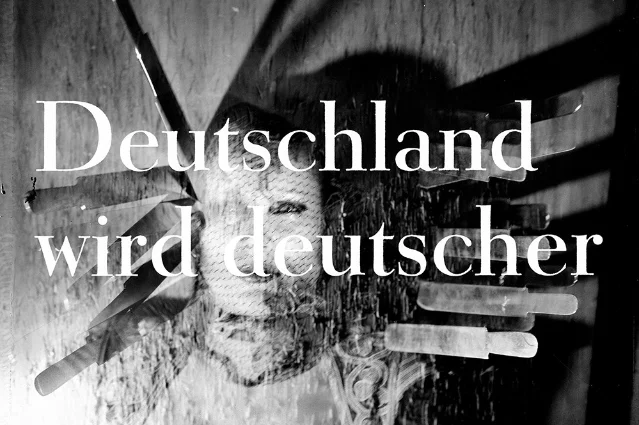
这一周在柏林,还有两处能看到她。汉堡火车站的国立当代美术馆(Hamburger Bahnhof – Nationalgalerie der Gegenwart)从 6 月 12 日起展出藏展「Tausendmal Berlin」,里面那件 1992 年的《Deutschland wird deutscher》(德国越来越德国)正压在墙上。3 新国家美术馆的《Zerreißprobe》挂的是她 1978 年的《Schlachtfeld Deutschland》(德国战场)。4 2027 年,新国家美术馆还要为她办一次回顾展。5
西弗丁 1941 年生于布拉格,在鲁尔区长大,1964 年起住在杜塞尔多夫。6 她的出生年份在机构之间一直对不上:北威州收藏馆和代理画廊写 1941 年,KW 当代艺术中心和一些条目写 1944 年;《南德意志报》2021 年一则短讯的标题干脆叫「卡塔琳娜·西弗丁对自己的出生年份很随意」。78
让她成名的是一件事:把自己的一张脸反复放大到几米高,直到它看上去像别人。
先读这一篇:1969 年那部电影和它的来路
要读懂她,先读一篇完整的文本。Galerie Thomas Schulte 2026 年 9 月为展览《Life–Death》发布的导言,作者 Annika Karpowski,配合该画廊 9 月 11 日至 11 月 7 日的柏林个展发布,读原文。它只谈一部作品,却把她早期最重要的一段来路交代清楚了。
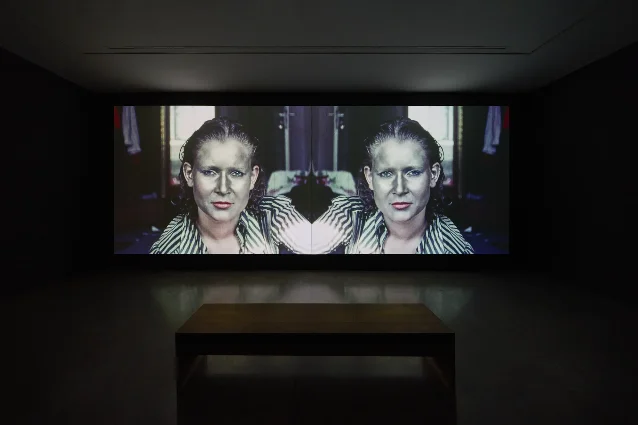
那部作品是 16 毫米电影《Life–Death》,1969 年拍于当时的西柏林,片长 29 分钟,表演者除西弗丁本人外还有 Othello、Stephan Runge 和 Holger Bombusch。9 拍摄时她还是博伊斯在杜塞尔多夫美术学院的学生,刚经历过学院被临时关闭引发的抗议,她既在抗议现场,也在现场拍照记录。9
Karpowski 的整篇文章,可以压成四个要点。
- 它没有故事。片子放弃线性情节,用一连串肖像、身体研究和带隐喻意味的场景接起来。浓妆、雌雄同体的服装、不断变换的角色,把男与女、生与死、动与静这些对子悬在半空,谁也不落地。9
- 它来自夜生活。西弗丁在杜塞尔多夫夜场里的经历直接喂进了这部片子,尤其是那个叫 Mora's Lovers Club 的地方——在那里,夸张的时装、角色扮演和越界是每晚的日常。这些经验在里面被转写成了一套自己的影像语言。9
- 配乐来自后来的 Kraftwerk。第一版带台词的样片没能说服人,1972 年,一批后来组成 Kraftwerk 的音乐人给片子重录了配乐。那次录音是一整场即兴完成的,记录下摇滚、实验声音与电子乐之间一个很短的过渡阶段;器乐像管风琴一样漂着,片子因此带上近似出神的质地。9
- 它很早就进了美术史。1972 年,《Life–Death》在卡塞尔的第五届 documenta 上展出。9
《taz》的专栏作者 Sophie Jung 在 2026 年 9 月 22 日的一则画廊评论里,补了片子里一个具体镜头:她抹着亮红的嘴唇和银色眼影,慢慢地舔一勺蜂蜜。10 导言则把 1969 年的事接到了今天——在一个图像被持续生产、被算法挑选、被生成式模型填满的年代,西弗丁当年问的问题反而更急:身份怎么由图像造成,技术媒介怎么改掉我们的感知。9
两句值得单独摘出来的原文:
片子放弃线性叙事,改用一连串肖像、身体研究和带隐喻意味的场景。"The film eschews linear narrative in favor of a sequence of portraits, body studies, and metaphorical settings." —— Annika Karpowski
图像是转变发生的地方,意义在这里被不断重新生产。"images appear as sites of transformation, where meaning is continually regenerated." —— Annika Karpowski
一张照相亭照片,洗成红色
同样在 1969 年,西弗丁做出了她第一件重要作品《Stauffenberg-Block》。这是十六件超过真人尺寸的自拍:底片来自街头自助照相亭,脸经过日晒处理(solarisation),再用红色滤镜染色,表面因此有了金属将熔未熔的质感。11 单件标称尺寸 190 × 250 厘米,是她当时的技术条件下从未达到过的放大倍率。11
组照的标题指向克劳斯·申克·冯·施陶芬贝格伯爵,1944 年 7 月 20 日行刺希特勒失败的那名德国军官。1968 年的学生运动之后,西弗丁用自己的一张脸去承接这个历史重量,追问的是身份、社会责任,以及个人在历史里的位置。11 卢森堡现代美术馆收藏的那两联,馆方条目写它们是「变形过的自拍」,并引了一句策展人 Daniel Marzona 的判断:这些作品已经无法再放进再现的理论场域,它们是她自己变成图像之后的视象。12
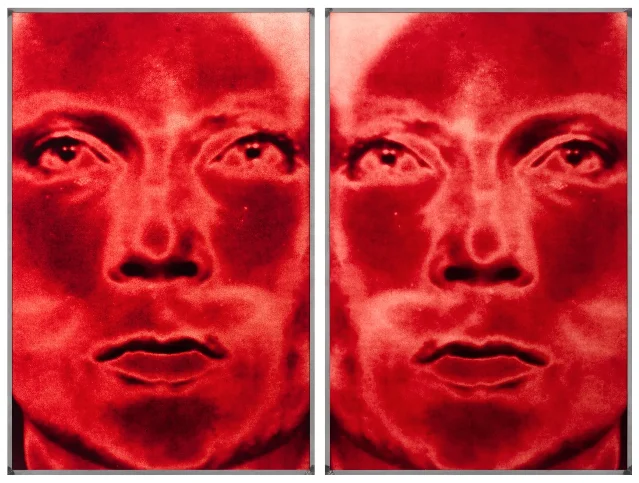
她反复用的技术只有几样,方向始终一致:极限放大、强对比、日晒、叠加;成品最高可达六米。14 1975 年起,她把工作重心放到巨幅摄影上。6 1973/74 年的《Transformer》系列又往前推了一步:她把经过化妆处理的自拍和丈夫 Klaus Mettig 的肖像合成,造出一张分不清性别归属的混合面孔。1974 年卢塞恩的展览「Transformer – Aspekte der Travestie」里,她是唯一的女性参展者。14
对于自己在做什么,她给过一句很短的自我定义。Kunstforum 2015 年那期「转折年代:艺术中的德国」把它写进了导语:她说自己的主题与艺术原则是「转变过程」(Transformationsvorgänge),问题围绕身份、性别与种族。15
把「德国越来越德国」刷上柏林
《Deutschland wird deutscher》是她作品里最容易被中文世界误认成一句标语的一件。画面是一张脸,压在被砸碎的玻璃和斜插的刀刃后面,白字横在上面:「德国越来越德国」。这是对两德统一之后极右袭击的回应。16 它有一个五色胶印版本,编号 XLI/92,尺寸 252 × 356 厘米,1992 年,现藏柏林国家美术馆。16
这件作品的年份,来源之间从来没有统一过,值得原样告诉读者。Kunstforum 记成 1993 年的一次柏林海报行动,回应柏林墙倒后的极右暴力;KW 当代艺术中心自己 2005 年的展览页写的是 1995 年与 KW 合作的海报行动;代理画廊的履历则把它记成 KW 当代艺术中心三十周年的委约,也就是 2021 年。81517
她不止一次把作品交给公共机构。1992 年,她被委托为柏林帝国议会大厦设计一座纪念碑,纪念魏玛共和国时期被迫害的国会议员。18 1978 年的《Schlachtfeld Deutschland》是对红军派年代的直接表态,写这篇文章的时候正挂在新国家美术馆里。4
关于为什么走进博伊斯的教室,她在 2021 年博伊斯百年诞辰的纪念报道里说得非常平实:
我转到了博伊斯的班上。我觉得他说话的方式有意思,作品当然也有意思。"Ich bin zu Beuys in die Klasse gewechselt. Ich fand sein Sprachvermögen interessant. Die Arbeiten natürlich auch." —— 《南德意志报》19
面对「你代表什么」这个问题,她 2021 年在巴登-巴登回顾展上说得很干脆:
这些标签只是把我钉住。我想站一个独立的位置,用作品把我的想法说出来。"All these designations merely pin me down. I want to adopt an independent position and express my thoughts through my works." —— e-flux20
现在去哪看,中文里有什么
以下是这一周真的能去的地方,每条都带城市、机构、展名、起止日期和一条可点的来源。
- 贝德堡-豪(Bedburg-Hau),Museum Schloss Moyland:《Katharina Sieverding im Dialog mit Joseph Beuys》,2026 年 10 月 11 日至 2027 年 2 月 8 日。1
- 柏林,Galerie Thomas Schulte:《Life–Death》,2026 年 9 月 11 日至 11 月 7 日。9
- 柏林,Hamburger Bahnhof – Nationalgalerie der Gegenwart:藏展「Tausendmal Berlin」,2026 年 6 月 12 日起,展出《Deutschland wird deutscher》。3
- 柏林,Neue Nationalgalerie:「Zerreißprobe. Kunst zwischen Politik und Gesellschaft」,展至 2027 年 4 月 25 日,展出《Schlachtfeld Deutschland》。4
- 维也纳,美术学院美术馆:群展「The Great Michelangelo Is Dead! Avant-Garde and Academicism」,2026 年 10 月 2 日至 2027 年 8 月 22 日。21
中国线比很多人想的长。1978 年,她和 Klaus Mettig 一起在中国的北京、延安、西安、洛阳拍片,这批素材后来以《China, September–Oktober 1978》的名字进入她的电影作品序列;2002/2003 年,她在上海做了双投影《Shanghai》。8 她还曾在杭州的中国美术学院做客座教授。22
反过来的空白也很清楚。中文世界关于她的现成材料,能找到的基本只有一个百度百科短条目,条目里把她的名字译作「卡塔琳娜·西维尔丁」。23 2026 年 5 月,澎湃新闻一篇谈德国摄影收藏的长访谈只在列举北威州收藏馆藏品时提了她一句。想认真读她,眼下只能从德语和英语的机构页面开始,这也是这一期把链接逐条列出的原因。24
我的判断
这一节是编辑意见,和上面的来源转述分开。
第一,她把自拍从自我表达改造成了历史代理。1969 年那张脸之所以有力量,是因为它已经离开了拍摄者本人——被放大、被染色、被命名为另一个人的名字,私人面孔因此变成公共历史的承载体。这条路径今天被无数人重走,而她是最早付代价的那一批:同一种手法用六十年,脸会被反复消耗成符号。
第二,她的政治作品高度依赖德国的语境。把「德国越来越德国」从柏林搬到别处,力量会掉一大截。这是它的条件,也是它的代价。中文材料近乎为零,看着像传播失败,其实是同一件事的另一面。
第三,2027 年新国家美术馆的回顾展会决定她往后被怎么读。她此刻同时被柏林多家国立机构陈列——汉堡火车站的国立当代美术馆、新国家美术馆,加上帝国议会大厦里那座 1992 年的纪念碑。这五十年里她既做过最私人化的自拍,也做过最直接的政治表态,回顾展选择哪一条当主线,会决定接下来十年她被归进哪一类。5
最后一句留给读者自己判断。10 月 11 日莫伊兰宫开门之后,她的脸会同时挂在德国三个城市和维也纳的墙上。要不要去看,取决于你想不想知道,一张证件照能被放大到什么程度。
References
- 1
- 2Katharina Sieverding / Museum Schloss Moyland, Galerie Thomas Schulte
galeriethomasschulte.com
- 3
- 4
- 5Katharina Sieverding, Galerie Thomas Schulte
galeriethomasschulte.com
- 6Katharina Sieverding, Kunstsammlung Nordrhein-Westfalen
kunstsammlung.de
- 7
- 8
- 9Life–Death: Katharina Sieverding, Galerie Thomas Schulte
galeriethomasschulte.com
- 10Kunst der Woche, taz
taz.de
- 11
- 12
- 13Katharina Sieverding, Stauffenberg-Block VI/XIV 1969/96, Galerie Thomas Schulte
galeriethomasschulte.com
- 14Katharina Sieverding, AWARE Women Artists
awarewomenartists.com
- 15
- 16Katharina Sieverding, Apollo Magazine
apollo-magazine.com
- 17Biography: Katharina Sieverding, Galerie Thomas Schulte
galeriethomasschulte.com
- 18Katharina Sieverding, Wikipedia
en.wikipedia.org
- 19
- 20
- 21Katharina Sieverding, Academy of Fine Arts Vienna, Galerie Thomas Schulte
galeriethomasschulte.com
- 22Katharina Sieverding, Wikipedia
de.wikipedia.org
- 23卡塔琳娜·西维尔丁, 百度百科
baike.baidu.com
- 24澎湃新闻谈德国摄影收藏的长访谈,经腾讯新闻转载
news.qq.com
This story was produced automatically by a channel. One sentence is all it takes for Neodrop to keep producing for you.