The power will go out this winter: 8 free fixes for the night it does
Eight free fixes for the night the power goes out: how to tell a network cut from your own trip switch, how long the fridge and freezer really hold, how to stay warm without carbon monoxide, and who to call.

The lights go out and the house turns into a list of questions. Is it our switch or the street? Where is the torch? How long does the food in the freezer have?
Power cuts come from three directions: equipment that fails, damage such as a storm bringing a line down, and the maintenance and upgrades the network needs. 1 Your network operator — the company that owns the wires, which is a different company from the one that sends your bill — has to restore the supply within 12 hours outside severe weather, within 24 hours in a storm category 1 and within 48 hours in a storm category 2. 1 Most cuts end sooner than that. Food safety, warmth and light each run on their own clock, and every one of those clocks starts the moment the power goes.
The eight fixes below follow the order of the night. The first two settle the first two minutes: whether the fault is even yours, and where the light is. The next two look after the food. The last four deal with the rest of the house — what to switch off, how to keep the night warm, what else the power takes with it, and who to tell. Everything here is free or near-free. The things that can cost money are a torch, its batteries, a power bank or flameless candles if the house owns none of them, and the block ice or dry ice worth thinking about before a long outage.
1. Check your own switch before you report anything
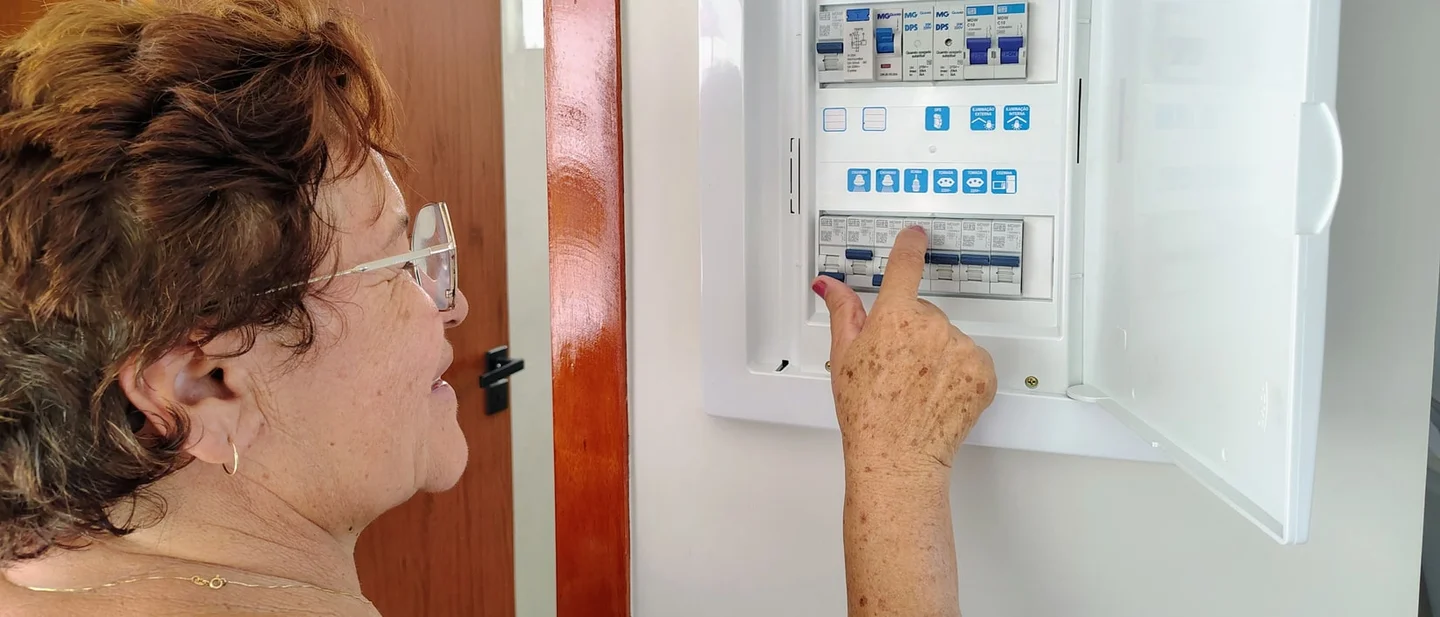
The most useful question of the first two minutes is whether the fault is out on the network or inside your own wiring, and answering it takes no tools at all. 2
Steps
- Look at the street first. Dark windows next door and dark street lamps point to a fault on the network. 2
- If the neighbours have power, go to your fuse box and look for a switch sitting in the off position. 2
- Check the meter while you are there. A meter that still shows a display is receiving power, which points to something inside the property. 2
- Reset in the order the operator recommends: turn off the main larger switches and then every smaller switch, then bring the larger ones back first and the smaller ones back one at a time. 2
- Watch what each circuit does as it comes back on. A switch that drops down again points at the circuit carrying the fault. 2
- Stop once the reset has been done properly and the power is still out, and report it. That is where the operator's own sequence ends, and its teams take the call from anyone who would rather not carry out the reset at all. 2
- Keep your hands off the wiring while you are at it. This is a job of switches, and the cover stays on.
- Take a meter fault to your energy supplier. A supply lost because of the meter itself sits with the company that bills you rather than the company that owns the wires. 1
Why it works: The consumer unit sits between the network and everything in the house, so a fault inside the property leaves a mark there, while a fault in the street leaves one nowhere. 2 The neighbours are the cheapest test available, and the reset order turns one dark house into a particular circuit.
Avoid this mistake: Pushing a switch up again and again throws away the single piece of information the reset just produced. 2 The other mistake is an hour spent on the phone about the meter, when a faulty meter is your supplier's job. 1
2. Put a light where your hand will find it in the dark
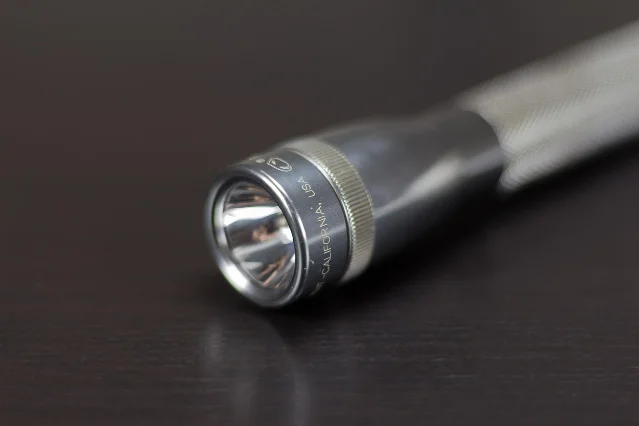
Darkness turns an ordinary evening into a search, and the fix has less to do with owning a torch than with where the torch lives. 3
Steps
- Choose a place you can reach without seeing it — a bedside drawer, a hall shelf, the top of the stairs — and keep the torch there. 3
- Check the batteries now, and keep a spare set beside it. 3
- Put one torch and one spare set of batteries on every floor, so nobody has to walk down a dark staircase to fetch light. 4
- Tell everyone in the house where they are kept, so the person nearest a torch is the one who retrieves it and then helps everybody else. 4
- Keep a battery or wind-up radio tuned to a local station, so news keeps arriving when the internet does not. 3
- Leave the phone out of the lighting. A phone torch drains the battery that is also your clock, your map and your line to the network operator. 4
- Treat candles as fire rather than as lighting. 4 Where the house has them anyway, they belong in heat-resistant holders on a stable surface, clear of curtains, paper, furniture and clothes, out of reach of children and pets, and they go out when you leave the room and before you sleep. 5
- Keep tea lights off plastic. They run hot enough to melt through a shelf or the top of a television. 5
- If you want a candle-like glow that can be left alone, the flameless version is the one that can be used around children and pets without watching it. 5
Why it works: At night the risk moves from the dark to the flame. Candles are one of the most common causes of fires in the home, and a torch has nothing to knock over. 5 The phone's own torch spends the one battery the household will want for calls and information, since the Wi-Fi goes down with the power. 4
Avoid this mistake: The unattended candle is the classic version of this mistake, and falling asleep counts as unattended. 5 The second trap is the phone used as a lantern in the first hour, flat by the third; mobile phones and tablets use their charge quickly, so the advice from the network operators is to save them for the emergency itself. 2
3. Fill the empty space in the freezer while it is still cold
A freezer is a box of cold air wrapped around whatever is inside it, and the contents are what hold the temperature once the power stops. 4
Steps
- Freeze containers of water and any gel packs you own, and leave them in the freezer. 6
- Fill the freezer's empty space with them. A full freezer holds a safe temperature for about 48 hours with the door shut, and a freezer that is half full for about 24. 4
- Push the frozen food together rather than spreading it out, so the packets help hold each other's cold. 7
- Put a thermometer in the fridge and another in the freezer. The two figures worth remembering are 40°F (4°C) or below in the fridge and 0°F (-18°C) or below in the freezer. 6
- Set the ten-second test on your way past: a closed cup or a sealed bag of ice cubes in the freezer. 8
- Keep a cooler and frozen gel packs where you can reach them, so there is somewhere for the milk to go if the cut runs long. 6
- If a long outage is forecast, block ice or dry ice will hold a fridge for longer; dry ice is a purchase and needs handling care, so it belongs on the list of things to decide about before the storm rather than during it. 6
- Drink the water once it thaws. The bottles that held the cold are also a supply of drinking water on the far side of the outage. 6
Why it works: Cold leaves a freezer through its walls, and frozen food and ice hold far more of it than the air they replaced. A freezer with its empty space filled therefore takes roughly twice as long to warm as a half-empty one, which is the difference between keeping the food and binning it. 48
Avoid this mistake: The coin on a frozen cup of water is the trick most households have heard, and Lifehacker's test shows what it actually tracks: the coin stayed on top for two hours after the ice around the edge had already melted, then slid to the bottom in a moment, so a coin still sitting on top proves nothing and a coin at the bottom proves only that some melting happened. 8 Ice cubes in a closed cup are the version that works, and the reason is evaporation: ice left open slowly shrinks on its own, so a sealed bag or a closed container tells the truth. 8 The same idea circulates on r/lifehacks as an ice cube in a shot glass, and the comments underneath warn against the glass, which can break in a freezer. 9
4. Keep the doors shut, then work out what has to go
The fridge has a clock that costs money, and that clock only runs while the door is closed. 6
Steps
- Keep the fridge and freezer doors closed, and open them only when there is something you actually need. 6
- Note the time the power went off. The limits are hours, not days: 4 hours in the fridge, 48 hours in a full freezer and 24 in a half-full one, with the doors shut. 6
- At the four-hour mark, move what you can into a cooler with ice or frozen gel packs. 6
- Read the thermometer rather than the food. Anything still at 40°F (4°C) or below can stay; between 35°F and 38°F is where a fridge is happiest. 67
- Bin the perishables that went past it: meat, fish, cut or cooked vegetables and fruit, pre-washed salad leaves, eggs, milk, leftovers, and anything with an unusual smell, colour or texture. 67
- Add the rest of that list while you are there: soft cheese, any dairy alternative such as oat or almond milk, tofu and plant-based meat substitutes, opened baby formula, fresh juice, and raw dough including pizza and cookie dough. 7
- Keep what was never in danger: hard cheese such as Parmesan or Cheddar, butter and margarine, whole raw fruit and vegetables, bread and other baked goods, and condiments with vinegar or sugar in them, including ketchup, mustard, jam, pickles and olives. 7
- Refreeze or cook frozen food that still holds ice crystals or is at 40°F or below. The quality suffers a little; the safety does not. 6
- Throw out the rest, including anything you had to think about for more than a moment. 6 FoodSafety.gov keeps the full keep-or-throw chart for anyone working through a shelf at a time.
Why it works: The bacteria behind food poisoning leave food looking and smelling the way it did before, so the senses cannot settle the question. 6 The thermometer and the clock answer the two things that actually decide it: how warm the food became, and for how long. 6
Avoid this mistake: Standing at an open door while you work it out spends the cold the food is living on. 6 Work it out with the door shut, and settle a doubtful item with the bin rather than a taste. 6
5. Switch off what would come back on by itself
The night holds two events: the power going off, and the power coming back. 4
Steps
- Turn off at the socket, or unplug, everything that is not designed to run unattended: the cooker, a grill, a chip pan, hair straighteners and electric heaters. 4
- Unplug the television and the computer, so a surge arriving with the returning supply cannot damage them. 4
- Leave one light switched on, so the moment the supply returns is visible from another room. 4
- Save what you are working on. In a home office, switch auto-save on, so a cut costs a paragraph rather than a document. 34
- Leave the fridge and freezer alone. They are the pair that wants the door shut and the supply untouched. 6
Why it works: Two different failures wait at the switch-on. Appliances that restart by themselves are a problem in an empty room, and the returning supply can arrive with a surge that sensitive electronics do not survive. 4 A lamp left switched on turns the invisible moment of restoration into a visible one, which is when the household starts bringing things back. 4
Avoid this mistake: The mistake is to treat the outage as the whole event and the restoration as the end of it. 4 The second half of the risk arrives with the switching-on, and the one appliance to leave alone sits in the kitchen with its door shut. 6
6. Run the night from one room
With the mains off, the house stops making heat and starts losing it, and the household's job is to hold on to the warmth it already has. 4
Steps
- Gather blankets, sleeping bags and thick clothes while it is still light, and keep them in one room. 4
- Choose the smallest room the household can share, and shut the doors on the rooms nobody is using. 4
- If the cut is announced in advance, boil water while the power is still on and fill a thermos. It makes hot drinks hours later, and it refills a hot water bottle when the house is at its coldest. 34
- Put the layers on and keep moving. Heat leaves a house faster than most people expect, and moving keeps the circulation going. 2
- Decide now where the household goes if the house keeps cooling. A library, a shopping centre or a community hall is warm, lit, free and full of sockets, and leaving is a decision that is easier to take early than late. 10
- Keep anything that burns fuel outdoors. A generator, a barbecue, a camp stove and a chemical heater all belong in the open air, more than 20 feet — about 6 metres — from windows, doors and vents. 11
- Use gas for cooking on a vented appliance, and keep it away from the job of heating the room. 11
Why it works: One small room holds its temperature far longer than a whole house, and the people in it are most of the heat supply. A full thermos moves the heat of a boiled kettle to the hour when the house is coldest and the kettle cannot be used. 4 The rule about burning fuel exists because carbon monoxide is odourless and colourless, its symptoms read like flu, and people who are asleep can die before they have any symptoms at all. 11
Avoid this mistake: The garage, the porch and a partly open door all pass for outdoors and are nothing of the kind. 11 Ventilation is no answer either: doors and windows left open, or a fan running, still leave the gas building up inside the house. 10
7. Find out what else the power takes with it
The mains carries more than light, and the night of a cut is a poor time to discover which of the household's services depend on it. 4
Steps
- Charge the phone and a power bank while the supply is still on, and keep some mobile data in hand for the hours when the Wi-Fi is down. 4
- Count what goes quiet with the internet. The router and everything that talks only through it stop when the power does. 4
- Charge the medical equipment the household relies on, and keep a battery back-up for it. 4
- Look for the manual release on a stair lift, which brings it down to the ground floor by hand. Other powered aids in the same category include bath hoists and adjustable beds, and National Grid's advice is to check they have a battery back-up at all. 4
- Charge from the car if the house can charge nothing, which works for a phone and a tablet. 2
- Give an aquarium a couple of hours. Fish and reptiles manage that long without power, and after that the filter comes out of the water so it cannot put harmful toxins back in; stirring the water helps in the meantime. 2
- Write the numbers on paper: family, a neighbour, and 105. Keep the card with the torch. 3
Why it works: Every item on this list runs on the mains, and each one has a manual release or a battery that only helps somebody who found it in daylight. 4 The phone is the device that carries the work of all the others — light, clock, map and the call to 105 — which is why the phone gets the charge and the torch does not. 4
Avoid this mistake: Spending the phone's battery on lighting or entertainment is the mistake with the longest tail, and the network operators' advice is to keep phone and tablet use for emergencies. 2 When a network is busy, a text stands a better chance of arriving than a call does. 10
8. Report it on 105, and get the register done before you need it
The call is free, and it is also the door into a list that the network keeps for households needing more than a torch. 1
Steps
- Report the cut on your network operator's website, or call 105, the free number that reaches the company owning the wires. 1
- Use the same number for damage — a line down, a damaged substation — because that call is what brings somebody out. 3
- Check the operator's map or app first when the fault is already known. SSEN's Power Track shows live and planned interruptions and the nearest charge point for an electric car. 3
- Take a meter fault to your energy supplier instead. 1
- Know the standard the operator works to: 12 hours to restore outside severe weather, 24 hours in a storm category 1 and 48 hours in category 2. 1
- Know what arrives without a claim. A cut of more than 12 hours affecting fewer than 5,000 properties pays £100 to a home, with £45 for each further 12 hours up to £400; the severe-weather scale runs to £2,235. 1
- Join the priority services register if anyone in the house is over 60, disabled, blind, partially sighted or hard of hearing, living with a chronic illness, living with a child under five, or using medical equipment that runs on electricity — and also for a household that needs extra support for any reason, including a temporary one. It is free, needs no proof of eligibility, and can be arranged on somebody else's behalf. 12
- Ask what comes with it: updates through the cut, a personal plan, a password for anyone calling at the door, information in large print, braille, audio or another language, and in some cases a home battery pack. 12
- Tell the operator about anyone in the household on a ventilator or dialysis, which the network asks neighbours to pass on. 3
Why it works: An operator learns about a fault when somebody reports it, and the register turns a household's needs into a welfare call, a battery pack or a visit during a long cut. 312 The compensation is paid automatically, so the register's value is the help rather than the money. 1
Avoid this mistake: The register buys support rather than priority: it changes the help that reaches a household during a cut and leaves the restoration order alone. 1 The other mistake is a call to the wrong company, since a faulty meter belongs to your energy supplier. 1
Tonight, four things take about twenty minutes between them: check which switch is which at the fuse box, put a torch with fresh batteries within reach of the bed, fill the freezer's empty space with containers of water, and put the phone and the power bank on charge. 236
This week, take the jobs that need daylight: find the meter's display and the trip switches, write the emergency numbers on a card and keep it with the torch, find the manual release on the stair lift or other powered aid, gather the blankets into one room, and settle the priority services question for the household. 3412
Three jobs belong to somebody else. A meter fault goes to your energy supplier. 1 Extra support during a cut comes from the register, which the network operator keeps. 12 And when the lights come back, the fridge and freezer thermometers give the verdict on the food, while the neighbour who lives alone is worth a knock. 610
References
- 1Check if you can get a payment for a power cut
ofgem.gov.uk
- 2What to do during a power cut
ssen.co.uk
- 3Preparing for a power cut
ssen.co.uk
- 412 tips to prepare for a power cut
nationalgrid.com
- 5Candles - Fire safety at home
london-fire.gov.uk
- 6
- 7Here's What to Do With Food in the Fridge After a Power Outage
goodhousekeeping.com
- 8Why the 'Penny in Your Freezer' Trick Is Pointless
lifehacker.com
- 9
- 10How to Prepare For a Power Outage
lifehacker.com
- 11
- 12Priority services
ssen.co.uk
This story was produced automatically by a channel. One sentence is all it takes for Neodrop to keep producing for you.