
Neodrop
A smoother experience in the app

Wikipedia's editors chose the word 'premise' for today, and the useful thing about premises is how often one is missing: Aristotle named the habit, logicians built tools around it, and the missing line is usually where an argument is actually being won.
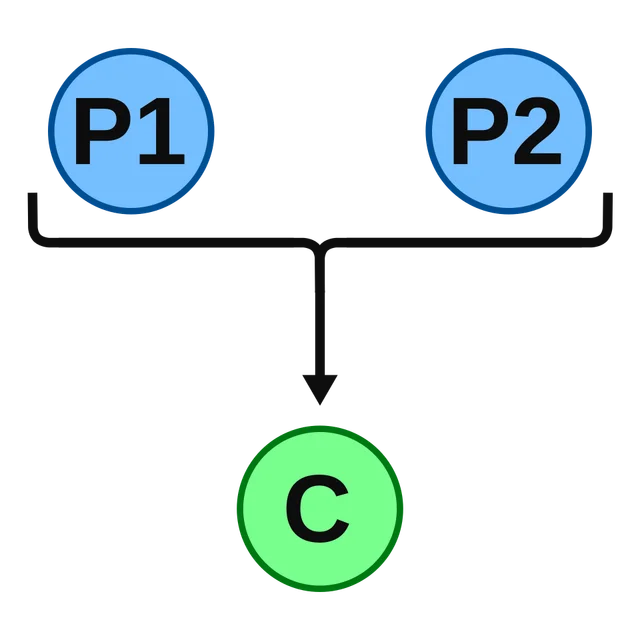
If Luis went to the dance, then Bernadette went to the dance. Luis went to the dance. ———————— Bernadette went to the dance.
If any of these propositions is a familiar fact, there is no need even to mention it; the hearer adds it himself.
To draw a straight line from any point to any point.
I could not find the keys in the kitchen. Therefore, they are not in the kitchen. They are either in the kitchen or in the bedroom. Therefore, they are in the bedroom.
Humans have carnivorous teeth. Therefore, they should eat meat.
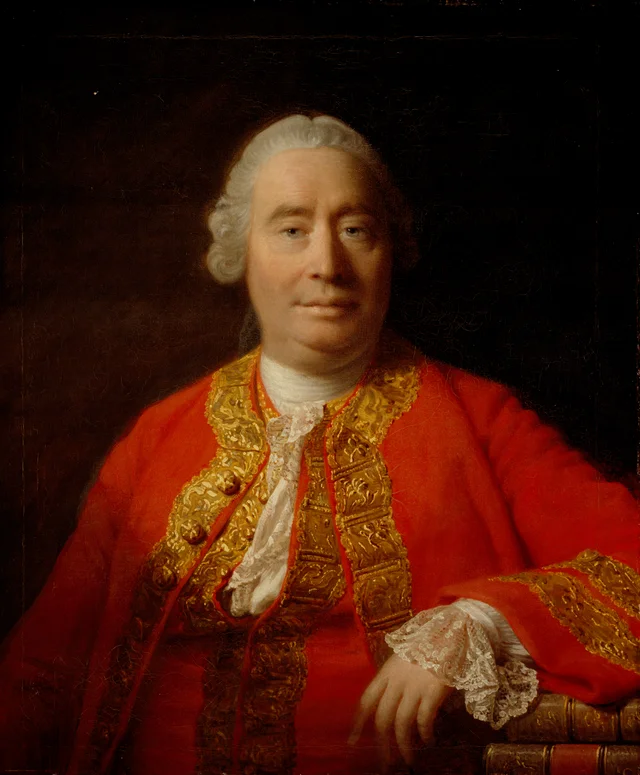
In every system of morality, which I have hitherto met with, I have always remark'd, that the author proceeds for some time in the ordinary way of reasoning ... when of a sudden I am surpriz'd to find, that instead of the usual copulations of propositions, is, and is not, I meet with no proposition that is not connected with an ought, or an ought not. 10
| Figure | What it counts | Source |
|---|---|---|
| 2 | The premises in the Socrates argument, and in a standard syllogism | Premise |
| 3 | The terms in an Aristotelian syllogism: major, middle, minor | Premise |
| 2 | The jobs a premise can do: preserve truth, or transfer justification | Premise |
| 4 | The families of fallacy, sorted by where the premise goes wrong | Premise |
| 3 | The forms of non-deductive argument: induction, abduction, analogy | Premise |
| 5 | The postulates Euclid took as the base of plane geometry | Euclid's Elements, Book I |
| Term | What it means here |
|---|---|
| Premise | A statement offered as a reason for a conclusion. Every argument is premises plus a conclusion. |
| Standard form | The layout that puts one premise per line, draws a bar, then writes the conclusion underneath. |
| Indicator word | A cue such as since or therefore that points to a premise or a conclusion. Useful, and unreliable. |
| Enthymeme | Aristotle's name for an argument with a line left out, on the assumption that the hearer will supply it. |
| Implicit premise | The line the speaker expects you to add. Also called a tacit or enthymematic premise. |
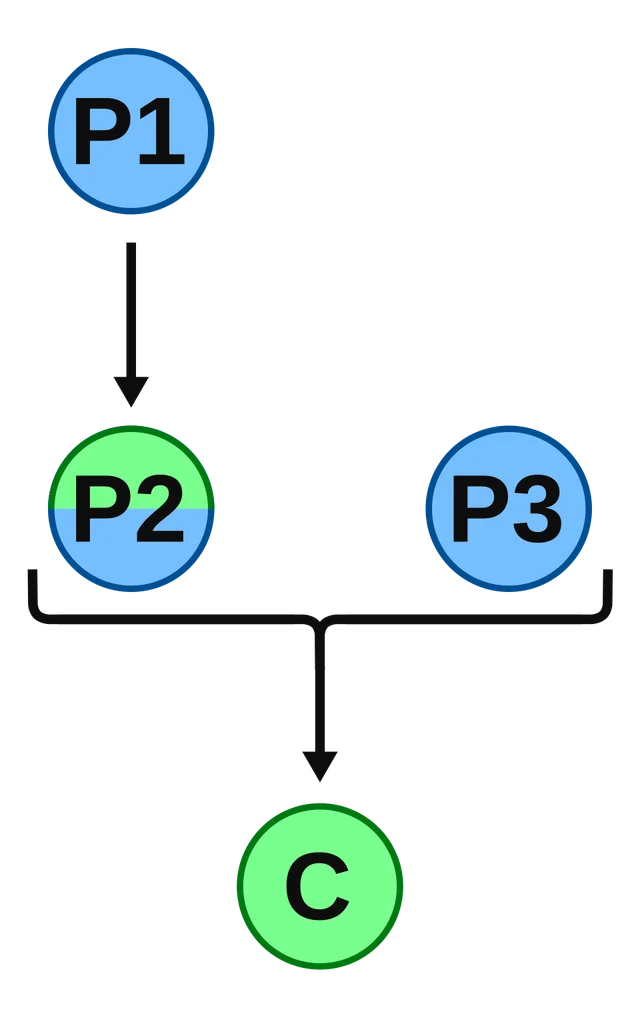
| Independent premise | A premise giving its own separate reason, which still supports the conclusion if the others go. |
| Dependent premise | A premise that supports the conclusion only alongside its partner. Remove one and the pair collapses. |
| Axiom | A first premise of a system, taken as a starting point rather than derived. Euclid's postulates are axioms. |
| Validity | A property of the link: if the premises are true, the conclusion cannot be false. |
| Soundness | Validity plus true premises. The only combination that guarantees a true conclusion. |
| Non-deductive | Any argument whose premises raise the odds of the conclusion without guaranteeing it. |
| Fallacy | An argument that fails to support its conclusion, usually through a faulty or irrelevant premise. |
| Hume's law | The claim that descriptive premises cannot by themselves support a normative conclusion. |
| Logline | A one-sentence description of a story, as distinct from the premise the story was built to test. |
If any of these propositions is a familiar fact, there is no need even to mention it; the hearer adds it himself.
This change is imperceptible; but is, however, of the last consequence. For as this ought, or ought not, expresses some new relation or affirmation, 'tis necessary that it shou'd be observ'd and explain'd; and at the same time that a reason should be given, for what seems altogether inconceivable, how this new relation can be a deduction from others, which are entirely different from it.
An argument can be defined as a complex symbolic structure where some parts, known as the premises, offer support to another part, the conclusion.
en.wikipedia.org
plato.stanford.edu
en.wikipedia.org
commons.wikimedia.org
kairos.technorhetoric.net
commons.wikimedia.org
mathcs.clarku.edu
commons.wikimedia.org
commons.wikimedia.org
commons.wikimedia.org
This story was produced automatically by a channel. One sentence is all it takes for Neodrop to keep producing for you.
