
🔮 Look up, the curve turned #601|英文原文 + 中文翻译
Exponential View 第 601 期公开内容:Azeem Azhar 观察到 AI 曲线向上拐弯,梳理企业端算力暴增、OpenAI 破解纳维-斯托克斯方程带来的“黑暗森林”争议,以及 OpenAI 与 Anthropic 协同放缓前沿发展的反垄断隐忧;附公开英文原文、中文翻译与官方图表,会员专享后续不补写。

原文信息
- 英文标题:🔮 Look up, the curve turned #601。1
- 副标题:On the economy, Navier–Stokes & safety。1
- 作者:Azeem Azhar。1
- 发布时间:2026 年 9 月 13 日;官方 RSS 记录的发布时间为北京时间 2026 年 9 月 13 日 17:35:42。2
- 公开范围:以下保留官方详情页公开展示的英文正文、两张正文图表、赞助商内容、引语、数据和来源链接。页面在亚当·斯密引语之后进入付费提示,未公开的后续正文不补写。1
English original
There are decades when nothing happens. This week, I am allowing myself that cliché. I believe we’ll look back on the week of 6th September as the moment we felt the curve of AI turn upwards and strain many of our previously held assumptions. It’s like when we entered March 2020 with only a couple of countries in lockdown, and left the month with more than a hundred. 1
But so much happened, pulling in so many directions, it is utter chaos. Here is what I thought was most important and how I’m making sense of it. 1
The economy
I spoke to 250 IT executives in Las Vegas last week, and I asked my usual question: “How many of you have serious, meaningful results from your AI initiatives?” A year ago, a room like this would have had a quarter of the hands go up. This year, nearly every single hand went up; I estimate some 95%. Every one of them plans to spend more next year than they have this year. And amongst these firms was a panoply of experiences, from the century-old American institution that had shifted entirely to open-weight models to the hospital using a mix of OpenAI and Anthropic models. 1
It’s a qualitative signal, and perhaps it’s no surprise that our latest revenue numbers show AI revenue grew faster in August than in July, and faster in July than in June. 3
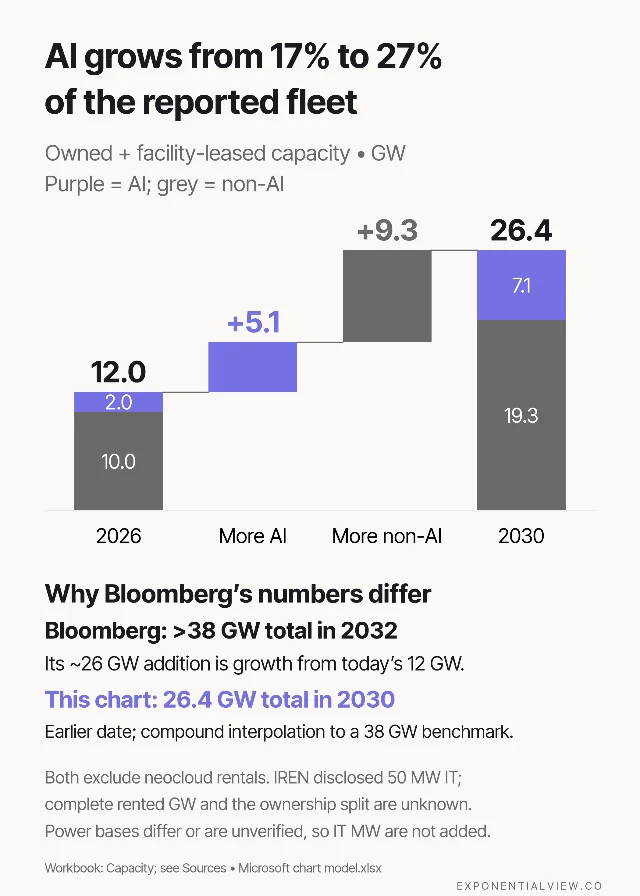
I’m not the only one to see an avalanche of customers. Bloomberg reports that Microsoft made plans to increase its capacity to serve AI from about 2 GW today to nearly 13 GW by 2032 – part of a fleet going from 12 GW to 38 GW. That 26 GW of new capacity would imply they expect demand they currently cannot serve. 4
Anthropic released a helpful set of scenarios for what further AI adoption might mean for the economy. Our own models land closer to Anthropic’s “substantial scenario,” where AI adds about 8.3% to US GDP by 2030, so its impact is initially slightly lower than the Internet’s at its peak before picking up rapidly. There is a shift of growth away from labor to capital, the modern Engels’ Pause and a rise in unemployment, mostly concentrated around knowledge workers. 5
Anthropic’s model lets you play around with either end of the distribution, from an AI wave that falls flat to one that takes off like a rocket. Their extreme scenario sees GDP rising by an additional 32.4% while unemployment doubles. 5
The reason why I don’t expect the extreme scenarios is, basically, reality. Even in a world that is speeding up, it takes time to make changes inside a firm, let alone across an economy. You also need to consider reflexivity: benchmark AI performance isn’t the only thing that drives outcomes in the world. The faster unemployment grows, the more political pressure will come to bear. This has enough outlets in the United States, whether it's datacenters, AI safety or existential risk, to attenuate the pace of change, even if it doesn’t lead to reforms in the social contract. When Ronald Reagan crushed the labor movement in the 1980s, he did so after a decade of weakening union power and on the back of an extraordinary electoral mandate. America isn’t so singularly behind a leader willing and capable to put the interests of AI-capitalism ahead of every other concern. 1
Advantage
Then there’s the breakthrough in Navier–Stokes. It was a decades-old problem concerning a 200-year-old set of equations, one that a large share of humanity’s finest minds have spent themselves trying to crack. Setting aside the ugly saga around it for a moment, the end result is eye-watering. OpenAI enlisted 10,000 agents using an unreleased model to address it. Across 2,700,000 messages and 130 billion tokens, it took 88 hours to get a solution. 6
Cost-wise? Probably only a few million dollars today. In two years’ time, that will cost a few tens of thousands of dollars. And a few years after that, just a few dollars. 1
The proof AI produced runs to more than 500 pages and will not be intelligible to any human. That is a strange milestone in our history, in philosophy, in science and in mathematics that could fundamentally change our relationship with knowledge – humans won’t be able to inspect the proof, or understand it at all. 1
Terence Tao made the point that “[t]echnically, one of the most prominent open problems in mathematics would now be solved; but there would be almost no value added to mathematics as a consequence.” (In the meantime, Tao and twenty-four other Field Medalists signed a public declaration warning that the way AI is used in mathematics is misaligned with what mathematics is for.) 7
Beyond this, if Professor Buckmaster’s claims are true that OpenAI mobilized an internal team and model on the same narrow problem, after a year of his and others’ work inside Codex, without clear disclosure about overlap or data use, we have to wonder how innovation and discovery can continue while trust and openness degrade. 8
Erik Hoel called the outcome a dark forest (invoking Liu Cixin’s The Three-Body Problem), everyone working in secrecy, because anything you expose can be reproduced by somebody else before you have finished making it any good. In Liu’s trilogy, disclosure is the worst kind of exposure. 9
OpenAI had Astra for six months before anyone outside could access it. The model behind the Navier–Stokes work is newer, and almost nobody outside has seen it. This secrecy is an advantage built on some of the exceptional compute resources AI labs use. For now, they turn this on to scientific endeavours, but I wonder when (and if) the labs withhold their best capabilities for last commercial benefit. 1
A message from our sponsor: The State of AI in 2026 — Agents are everywhere
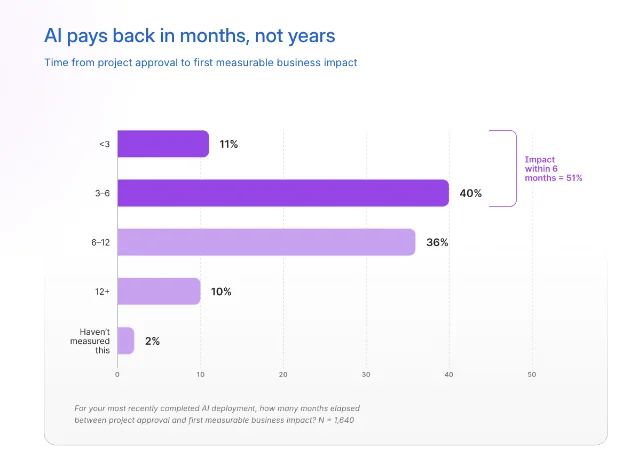
Box surveyed more than 1,600 leaders for its 2026 State of AI report. 10
83% of surveyed organizations say they already run AI agents. Four in five report moderate or significant ROI, and half saw business impact within six months of approving a project. 10
The agents work, but what varies is how much firms get out of them. The report shows that top adopters put people in charge of agents, sort out the content AI draws on and build systems that adapt as models improve. 10
Download the report for data, benchmarks and tips for AI adoption: Download report. 10
Safety
Let’s turn to recursive self-improvement and the 160-million-plus-view tweet by Jacob Coxon: 11
I resigned from Anthropic today. I spent the last three years doing pretraining research at both OpenAI and Anthropic. Neither company is acting responsibly. They are racing straight to self-improving superintelligence and gambling with our lives. More thoughts below.
The people building AI earnestly believe that it could kill us all by the end of the decade. This is not a marketing stunt. If anything, many executives and senior researchers will couch their phrasing in the press to sound sensible - but I hear the same people express fear privately. No other human activity poses this level of danger.
These safety concerns were normalised inside the AI community long before the labs themselves were built. Back in 2016, two then-OpenAI employees, Jack Clark and Dario Amodei, wrote that reinforcement learning might be difficult to make safe. 1
Roy E. Bahat also highlighted this historical continuity, noting how researchers were already examining misaligned reward functions a decade ago. 12
When Anthropic goes public, one of the risk factors on its S1 ought to be that reasonably senior executives believe there is a significant chance the company will kill all of humanity. Whether that is good or bad for the company is unclear at this point. 1
But the net result has been what can best be described as a coordinated agreement between OpenAI and Anthropic to “pace the frontier”, as Amodei put it. Altman agreed. The proposals would include giving independent evaluators employee-level access to internal systems. 1314
OpenAI and two of Anthropic’s cofounders have known about the problem of aligning RL-based systems for a decade. They have since become oligopolistic powers in an emerging industry. They have brand recognition, capital depth, technical momentum and resources. And now they realise they need to collaborate to slow down technical development (and by extension, raise the cost of entry for future competitors)? 1
I’m in Edinburgh this weekend, and I walked past Adam Smith’s grave yesterday. This brought to mind the philosopher’s remarks in The Wealth of Nations, 1
People of the same trade seldom meet together … but the conversation ends in a conspiracy against the public, or in some contrivance to raise prices.
中文翻译
有时几十年里什么都没发生。这周,我想借用一下这句老话。我相信,未来我们回顾 2026 年 9 月 6 日这一周时,会把它看作我们感受到 AI 曲线开始向上陡峭拐弯、并剧烈冲击我们此前诸多假设的时刻。就像我们在 2020 年 3 月初刚进入封控时只有少数几个国家封城,而到了月底,已经有上百个国家陷入停摆。1
但这周发生的事情实在太多,力量向各个方向拉扯,局面一片混乱。以下是我认为最重要的几件事,以及我对它们的梳理与思考。1
经济篇
上周我在拉斯维加斯对 250 位 IT 高管发表演讲,并提出了我常问的那个问题:“你们当中有多少人在自身的 AI 项目中取得了扎实、有意义的成效?”一年前,在类似规模的会场里,举手的人大概只有四分之一。而今年,几乎所有人都举起了手,我估算比例高达 95% 左右。他们当中的每一位,都计划在明年投入比今年更多的预算。这些企业展示的落地路径各不相同:既有一家彻底转向开放权重模型的百年美国机构,也有同时混合使用 OpenAI 和 Anthropic 模型的医院系统。1
这是一个定性信号。配合我们最新的收入测算数据来看,这个结果也在情理之中:AI 行业的收入增速在 8 月超过了 7 月,而 7 月的增速又超过了 6 月。3
看到客户蜂拥而至的不仅是我一个人。彭博社报道称,微软已经制定规划,要在 2032 年前把专用于 AI 的数据中心算力容量从目前的约 2 吉瓦(GW)扩充到近 13 吉瓦——这也是其数据中心总容量从 12 吉瓦扩张到 38 吉瓦规划的一部分。这新增的 26 吉瓦总容量说明,微软预期未来会出现目前根本无法满足的庞大需求。4
对应上方图表:Exponential View 官方图表展示了微软自建与租赁的数据中心算力容量,预计将从 2026 年的 12.0 吉瓦增长到 2030 年的 26.4 吉瓦;其中专用于 AI 的算力将从 2.0 吉瓦(占比 17%)提升到 7.1 吉瓦(占比 27%),并向 2032 年 38 吉瓦的总目标平滑插值演进。1
Anthropic 发布了一组很有启发的情景推演,探讨 AI 进一步普及对宏观经济可能意味着什么。我们自己的测算模型更接近 Anthropic 的“显著情景”(substantial scenario):到 2030 年,AI 将为美国国内生产总值(GDP)额外贡献约 8.3%。这意味着 AI 在初期的拉动效应略低于互联网高峰期,随后则会迅猛加速。增长红利会从劳动力向资本端发生倾斜,重现现代版的“恩格斯停滞”(Engels' Pause),并伴随失业率上升,失业冲击主要集中在知识工作者群体。5
Anthropic 的模型允许读者推演分布两端的极端状况:一端是 AI 浪潮归于平淡,另一端则是呈火箭式爆发增长。在后者的极端情景下,美国 GDP 将额外激增 32.4%,但失业率也会直接翻倍。5
我不认为极端情景会发生,根源在于现实世界的阻力。即使整个时代都在加速运转,一家企业内部发生转变也需要相当长的时间,在整个经济体范围内推广就更是如此。此外,我们还必须考虑“反身性”(reflexivity):基准测试上的 AI 性能并不是决定现实走向的唯一变量。失业率攀升越快,迎面而来的政治阻力就会越大。在美国,这种阻力拥有足够多的释放渠道——无论是针对数据中心能耗的抗议、对 AI 安全与生存风险的担忧,都会在客观上减缓变革步伐,即便这未必能直接促成社会契约的系统性重构。罗纳德·里根在 1980 年代压制工会运动,是在工会力量经历了十年持续衰退之后,并依托压倒性的选票授权才得以推行。当下的美国并没有团结在一头愿意且有能力把“AI 资本主义”的利益置于一切其他关切之上的政治领袖身后。1
优势与暗礁
接下来是纳维-斯托克斯方程(Navier–Stokes equations)的突破。这是一套有着 200 年历史的偏微分方程组,其光滑性与解的存在性难题困扰了数学界数十年,人类历史上许多最顶尖的头脑都曾为之倾注毕生心血。暂且抛开围绕它的种种纠纷,单看最终的结果,确实令人震撼:OpenAI 动用了 10,000 个智能体,搭载尚未公开发布的新模型来攻关这一问题;在经历了 270 万条消息交互、消耗了 1300 亿 token 之后,系统仅用 88 个小时就得出了求解证明。6
以当下的成本来算,这次攻关可能只花费了数百万美元。两年之后,同样的计算成本可能会降到几万美元;再过几年,或许只需要几美元。1
AI 生成的这份证明长达 500 多页,人类根本无法理解。这是人类历史、哲学、科学与数学领域的一座奇特里程碑,它可能从根本上改变人与知识之间的关系——人类甚至无法去独立审查或真正读懂这份证明。1
陶哲轩(Terence Tao)指出:“严格从技术上说,数学领域最著名的一道未解难题如今可能已经得解;但对数学学科本身而言,这几乎没有带来任何实质的增量价值。”(与此同时,陶哲轩与其他 24 位菲尔兹奖得主共同签署了一份公开宣言,警告当前将 AI 应用于数学的方式偏离了数学研究的初衷。)7
不仅如此,如果特里斯坦·巴克马斯特(Tristan Buckmaster)教授的指控属实——即在他与其他研究者使用 Codex 展开了一整年的攻坚工作后,OpenAI 在缺乏透明披露与数据使用说明的情况下,直接组织内部团队与新模型扑向了同一个狭窄课题——那么我们不得不产生深深的疑虑:当信任与开放精神遭到侵蚀,科学创新与探索该如何持续前行?8
埃里克·霍尔(Erik Hoel)借用刘慈欣《三体》中的概念,将这种局面称为“黑暗森林”:所有人都在秘密状态下闭门造车,因为只要你把想法暴露出来,别人就能在你把它打磨成熟之前率先复现出来。在刘慈欣的三部曲中,暴露位置是代价最高昂的危险。9
OpenAI 在对外开放 Astra 之前,已经在内部把它捂了整整六个月;而支撑纳维-斯托克斯攻关的模型版本更新,外部几乎无人得见。这种保密构筑的先发优势,建立在顶尖实验室独占的巨大算力资源之上。眼下,他们正把这些能力投向科学探索;但我很好奇,各家实验室会在何时——甚至是否会——为了追求最大化的商业利益,而把自身最顶尖的模型能力彻底封锁起来。1
赞助商信息:2026 年企业 AI 现状——智能体无处不在
对应上方图表:Box《2026 年企业 AI 现状报告》展示了从项目立项获批到产生首次可衡量的业务成效所需的时间分布,其中 51% 的机构在 6 个月内见效。10
Box 为其《2026 年 AI 现状报告》调研了 1600 多位企业领导者。10
在受访机构中,83% 表示已经上线了 AI 智能体(AI agents)。五分之四的受访者报告获得了中等或显著的投资回报率(ROI),半数企业在项目获批后的六个月内就看到了切实的业务成效。10
智能体确实能够起效,但各家企业从中获得的价值大相径庭。报告显示,走在前列的落地机构普遍明确了智能体的负责人,系统梳理了 AI 所调用的数据资产,并构建了能够随底层模型迭代而持续进化的系统。10
安全篇
让我们把目光转向递归自我改进(recursive self-improvement),以及前 Anthropic 研究员 Jacob Coxon 那条阅读量超过 1.6 亿次的辞职推文:11
我今天从 Anthropic 辞职了。过去三年里,我先后在 OpenAI 和 Anthropic 从事预训练研究。这两家公司都没有在负责任地行动。他们正在朝着能够自我改进的超级智能狂奔,用我们所有人的生命做赌注。更多想法见下文。
正在构建 AI 的这群人内心真切地相信,AI 可能会在 2030 年底之前将全人类消灭。这不是营销噱头。很多高管和资深研究员在面向媒体时会把话说得冠冕堂皇、显得温和理性,但我亲耳听过这群人在私底下表达深重的恐惧。人类没有任何一项其他活动具有如此高的危险性。
这类安全担忧早在当今各大实验室建立之前,就已经在 AI 学界内部普遍存在。早在 2016 年,时任 OpenAI 员工的杰克·克拉克(Jack Clark)与达里奥·阿莫代伊(Dario Amodei)就曾撰文指出,要让强化学习系统变得安全可靠可能极为艰难。1
投资人 Roy E. Bahat 也提及了这种历史延续性,指出早在十年前研究者就已经在警惕这种可能失控的奖励函数。12
等到 Anthropic 提交上市招股书(S-1)时,其中一条关键风险因素理应写明:该公司的多位高层管理人员真诚地认为,自身业务有相当大的概率会导致全人类灭绝。这种表述对一家上市公司的股价究竟是利好还是利空,目前谁也说不准。1
这番风波带来的最终结果,正如阿莫代伊所言,可以概括为 OpenAI 与 Anthropic 之间达成的一项旨在“协同控制前沿推进步调”(pace the frontier)的合作协议。萨姆·奥特曼对此表示赞同。拟议的合作方案包括向独立评估机构开放等同于内部员工权限的系统访问权限。1314
OpenAI 与 Anthropic 的两位联合创始人早在十年前就已经深知强化学习系统的对齐难题。如今,他们已经崛起为这个新兴行业的寡头力量。他们坐拥品牌认知、雄厚资本、技术积淀与算力资源。现在,他们突然意识到彼此需要联手放缓技术演进——顺便大幅抬高未来竞争者的准入门槛?1
这个周末我在爱丁堡,昨天刚巧路过了亚当·斯密的墓地。这让我想起了这位经济学鼻祖在《国富论》中的那句名言:1
同行聚在一起的机会即使不多……谈话的结局往往是对抗公众利益的阴谋,或是策划某种抬高物价的勾当。
本文目前公开到这里
以上是官方详情页在付费提示之前展示的公开正文。会员专享的后续分析没有在当前页面公开展示,本文保留付费入口,不补写未公开内容。1
References
- 1Exponential View 官方详情页
exponentialview.co
- 2Exponential View 官方 RSS
exponentialview.co
- 3Exponential View 2026 年 9 月数据报告
exponentialview.co
- 4Cloud Computing News 报道
cloudcomputing-news.net
- 5Anthropic 经济情景分析报告
anthropic.com
- 6Business Insider 报道
businessinsider.com
- 7Math and AI 联合宣言
mathandai.org
- 8纽约大学 Tristan Buckmaster 教授公开声明
cims.nyu.edu
- 9The Intrinsic Perspective 分析
theintrinsicperspective.com
- 10Box 2026 年企业 AI 报告
box.com
- 11Jacob Coxon X 平台辞职推文
x.com
- 12Roy E. Bahat X 平台推文
x.com
- 13Dario Amodei 博客文章
darioamodei.com
- 14Sam Altman X 平台推文
x.com
This story was produced automatically by a channel. One sentence is all it takes for Neodrop to keep producing for you.