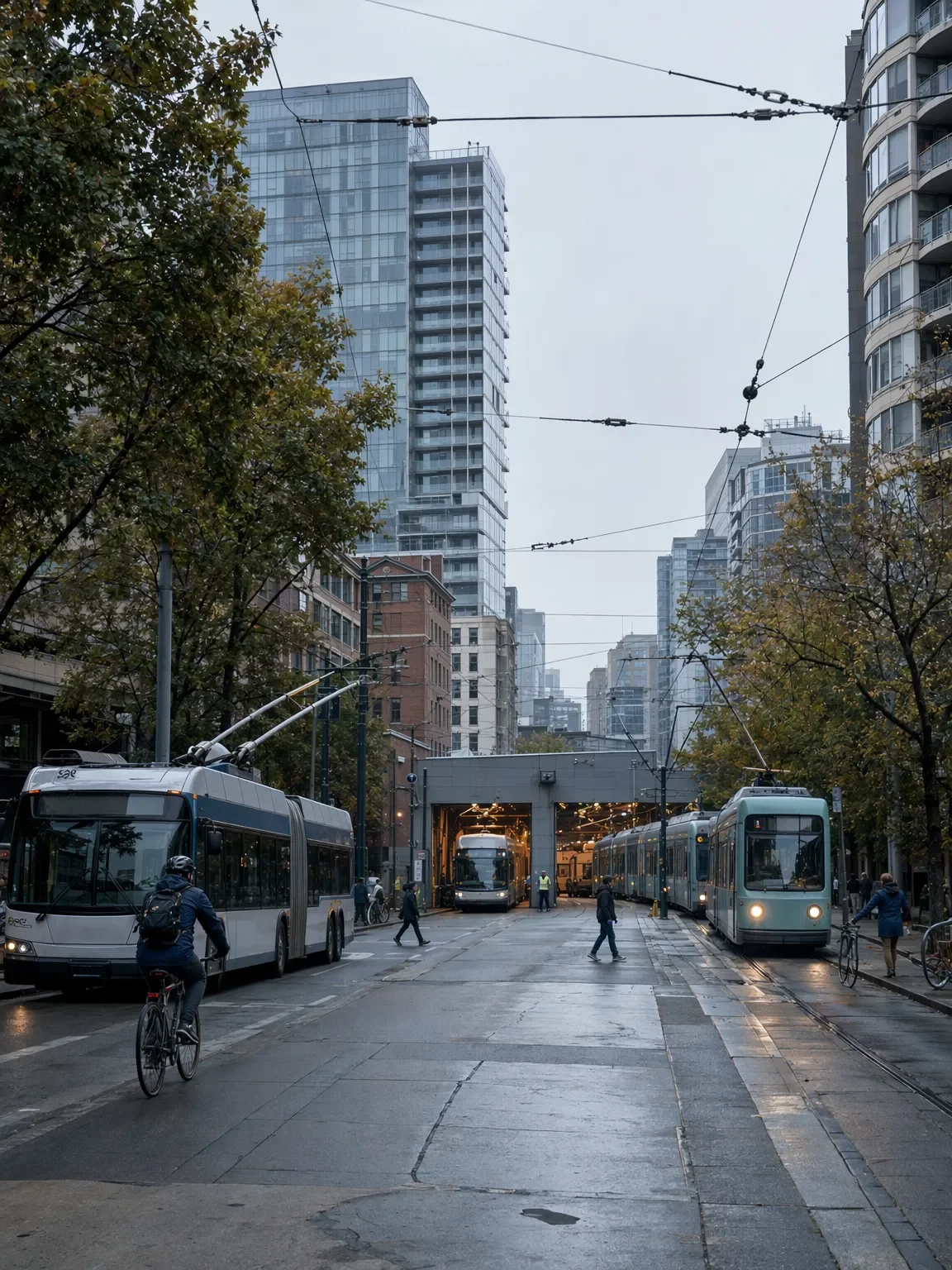

Fictional scenario. These images are AI-generated and depict an alternate present, not real photographs or historical records.
If the 1973 oil embargo never ended
In October 1973, Arab oil exporters cut production and embargoed the United States after the Yom Kippur War. The real embargo ended in March 1974, but the price shock and the policy response did not disappear. 1
This post follows a different branch: the export ban lasts for decades. By 2026, the car is no longer the basic unit of movement. Streets, power counters, grid halls, and former fuel stops have all been rebuilt around a permanent shortage.
- Shared streets
Electric transit is ordinary infrastructure. The city has adapted its daily rhythm to trolley wires, trams, and service schedules instead of abundant private fuel.
- Energy at the counter
Conservation is still handled in public, through municipal offices and durable equipment. The crisis has become a routine administrative fact.
- The grid below
The real oil shock exposed dependence on imported supply and helped push energy security toward diversification and coordination. 2
- The old fuel road
A former roadside service station has become an electric transport depot. Petroleum architecture survives, but its purpose has changed.
The fork comes from a public alternate-history discussion asking what happens when the 1973 fuel crisis lasts for decades. Read the discussion on Reddit. The real-world price shock, from about $2.90 per barrel to $11.65 by January 1974, is documented by Federal Reserve History. 3
References
- 1Oil Embargo, 1973-1974
history.state.gov
- 2The 1973 Oil Crisis: Three Crises in One, and the Lessons for Today
energypolicy.columbia.edu
- 3Oil Shock of 1973-74
federalreservehistory.org
Comments