
Neodrop
Create
FeedDiscoverMy ChannelsAuto-publishJoin Our Discord
Neodrop
A smoother experience in the app
FeedDiscoverCreateMy Channels
Your food processor is not a blender with a different lid: 8 free fixes
2026-11-13

Your food processor is not a blender with a different lid: 8 free fixes

Eight free food-processor techniques for even chopping, clean shredding and sauces that hold, each with steps, a reason and the mistake to avoid.

Life Hack Stack
Life Hack Stack@Jenna M
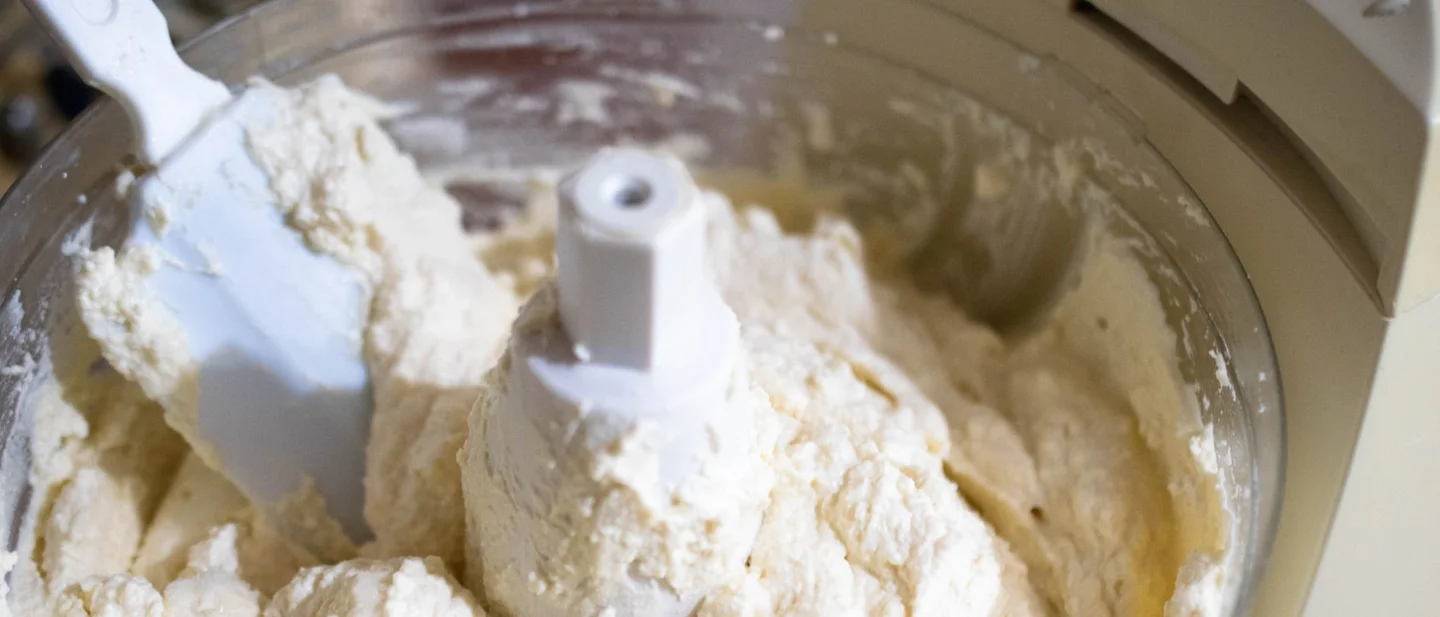
A blender pulls food down into a narrow vortex. A food processor holds it in a wide bowl and cuts whatever the blade can reach 1.
That difference decides which machine makes a silky smoothie and which one makes salsa you can still see. It also explains most of the disappointing results people blame on a weak motor.
Onions arrive half mush and half chunks. Hummus stays gritty. Soup leaks out of the lid. Pastry turns tough, or the motor starts to smell hot.
The eight fixes below are about loading, running and stopping the machine. None starts with a purchase. The last one is about protecting the motor and getting the food out safely.
What you gotWhat it usually isStart at
Half mush, half chunksContinuous running, or pieces that were too large1 and 2
Liquid leaking or spitting from the lidToo much liquid, or a job for a blender3
Ragged, uneven slicesFood loose in the feed tube, or forced with the pusher4
A sauce that stays thin or breaksOil added too fast5
Cheese that smears or clumpsCheese too warm or too soft6
Pastry tough, or the motor hotOver-processing, or a heavy job run too long7 and 8

1. Pulse for chop, hold for purée

Steps
  1. Put the food in the bowl in even pieces, and stay under the MAX line.
  2. Press the pulse button in short bursts. Let the blade stop between bursts.
  3. Scrape the bowl and the lid with a spatula, then pulse again.
  4. Stop at the texture you want: coarse for salsa, fine for mirepoix, small for herbs and nuts 2.
  5. For hummus, pesto or a smooth purée, run continuously and scrape the sides.
Why it works: The pulse stops the blade and lets larger pieces fall back to the bottom, so the next burst catches them instead of the same paste 2. Hold the button and the same food becomes a purée 3. The pulse is the control; the continuous run is the finish.
Avoid this mistake: Pressing and walking away. A food processor can turn onions to paste in seconds. The opposite mistake is pulsing a job that needs a smooth result: hummus and pesto will stay chunky if you never let the machine run.

2. Cut food to size before it goes in

  1. Halve onions, quarter peppers, cut carrots into similar lengths, and tear bread into pieces.
  2. Cut hard cheese and other dense food into pieces that sit comfortably in the bowl. Parmesan can go in at about an inch 2.
  3. Spread the pieces around the blade rather than piling them in one corner.
  4. Pulse in short bursts until the pieces are even.
  5. With a dicing attachment, process the soft ingredients before the hard ones to limit jamming 2.
Why it works: The blade spans the bowl and reaches many pieces at once. Oversized pieces ride above it while the smaller ones turn to paste 2, so the bowl finishes unevenly. Even pieces finish together.
Avoid this mistake: Filling the bowl with whole vegetables and expecting the machine to catch up. It will liquefy the bottom before it cuts the top. If a piece is too big to sit under the lid, it is too big for the blade.

3. Keep liquid under the line, and use a blender for soup

  1. Find the MAX line on the bowl and add liquid only up to it.
  2. Pour liquid through the feed tube while the machine runs, not all at once.
  3. For a runny sauce or soup, use a blender or an immersion blender instead.
  4. If the food processor is the only machine, work in small batches and pass the purée through a strainer.
  5. Cool hot soup slightly before processing, and leave plenty of headroom.
Why it works: The bowl is not leakproof like a blender jar; too much liquid escapes at the lid or the base 3. A full bowl also spills when tipped, because the blade can lift 4. And a food processor chops soup rather than truly puréeing it 5.
Avoid this mistake: Filling to the brim with hot soup. Hot liquid is the worst case: it can escape the seal and burn you. Cool it slightly, work in batches, and stay well under the line. A blender needs the same caution: hot soup expands, so vent the lid and start on low.

4. Pack the feed tube and let the pusher work

  1. Choose the tube that fits the food most snugly. Many lids have a narrow inner tube for slim items.
  2. Cut the food so it stands upright, then pack the tube full without forcing it.
  3. Lock the lid, switch on, and guide the food down with the pusher. Let the disc pull it.
  4. Empty the bowl before the shreds reach the top of the disc.
  5. Use the slicing disc for cabbage wedges, onions, apples and zucchini; the disc does the knife work 6.
Why it works: A snug tube holds the food upright, so the disc meets it squarely and makes an even cut 2. A loose piece tumbles and comes out ragged. The pusher is a guide, not a ram: the disc pulls the food down at its own speed.
Avoid this mistake: Pushing hard to speed it up. Forcing food jams the disc and can bend it. If a piece will not go, stop, unplug, and cut it smaller. Never use your fingers to push food into the tube.

5. Use the drizzle hole for oil

  1. Put the water-based base in the bowl: egg yolk, vinegar, mustard, or the base of your dressing.
  2. Process briefly to combine.
  3. With the machine running, set the plunger in the feed tube and pour oil into the small hole in its centre.
  4. Add the oil in a thin, steady stream. Once the sauce thickens, you can pour a little faster.
  5. Stop when it is thick, then taste and season.
  6. If the sauce breaks, start a fresh base in a clean bowl and drizzle the broken sauce into it slowly.
Why it works: A thin stream breaks the oil into tiny droplets that the water-based liquid can hold. Dumping it in lets the droplets merge and the sauce break 2. The hole controls the stream so you do not have to judge it by hand 7. The same hole works for melted butter, cream or any liquid that has to go in slowly.
Avoid this mistake: Adding all the oil at the start. A broken emulsion is hard to rescue; begin with a small amount and build.

6. Shred cheese cold, not frozen

  1. Chill the cheese until it is firm and cold. It should not be frozen.
  2. Cut a block that fits the feed tube.
  3. Fit the shredding disc, lock the lid, and guide the cheese with steady pressure on the pusher.
  4. Empty the bowl before the shreds pack against the disc.
  5. Use the shreds now, or freeze them in a thin layer for later.
Why it works: Cold, firm cheese cuts cleanly. Warm cheese smears against the disc and clumps 2. The same disc shreds potatoes for latkes and zucchini and carrots for cake 6.
Avoid this mistake: Shredding soft cheese or cheese straight from the counter. The machine warms it further, so keep it cold until the last moment. A soft cheese will coat the disc and the bowl, and no amount of extra processing will fix it.

7. Pulse cold butter into flour for pastry

  1. Cut cold butter into small, uniform cubes and keep it in the fridge until the last moment.
  2. Put the flour, salt and sugar in the bowl, then scatter the butter over the top.
  3. Pulse in short bursts until the largest butter pieces are about pea-sized.
  4. Add ice water through the feed tube a tablespoon at a time, pulsing once or twice after each.
  5. Stop as soon as the dough holds together when you squeeze it. Turn it out, shape it, and chill.
  6. The same pulse-and-stop approach works for cookie dough; stop before it forms a ball.
Why it works: The blade cuts cold butter into the flour before it warms. Those coated fat pieces are what make pastry flaky 4. Running the machine continuously warms and kneads the dough, which makes it tough 2. Small, even butter cubes give the blade a head start.
Avoid this mistake: Running until the dough forms a ball in the bowl. That is over-processing; stop at crumbs that just hold. Warm butter is the other failure: if the cubes soften before they reach the flour, the pastry turns greasy.

8. Give the motor a break, and empty the bowl from underneath

  1. For nut butter, heavy dough or a long grind, work in short bursts and let the machine rest between them.
  2. Listen and smell. If the motor labours or smells hot, stop and let it cool.
  3. Unplug the machine before changing a blade or reaching into the bowl.
  4. To empty, hold the bowl in one hand and put a finger from that hand up into the hollow base of the blade hub.
  5. Tilt the bowl and scrape with the other hand. If the hole is too small, hold the blade with a spatula instead.
  6. Wash the blade by hand or on the top rack, and keep your fingers away from the edge.
Why it works: The motor is not built for minutes of continuous heavy load; heat builds and the food can degrade 3. Holding the blade from below keeps it from sliding out as you tip the bowl 8. The blade is sharp, so the fewer times you touch it, the better.
Avoid this mistake: Reaching into the bowl with the machine plugged in, or ignoring a hot smell. A burning smell is a stop signal, not a challenge. If the machine jumps on the counter, the load is too heavy; stop and split the batch.

The order to do it in

Tonight, find your symptom in the table and do the one fix that matches. This week, make two habits automatic: cut food to size, and pulse instead of holding the button.
Where this stops: do not crush ice in a food processor; the blade and motor are not made for it 4. Do not purée a pot of hot soup in it. And if the motor smells hot after a short run, the machine needs service, not another technique.
None of this requires a new attachment. The machine on the counter already has the blade, the discs and the feed tube. The rest is how you load it, how long you run it, and when you stop.

References

  1. 1
    When to Use a Blender Vs. a Food Processor

    lifehacker.com

  2. 2
    How to Master Your Food Processor, From Blades to Attachments

    goodhousekeeping.com

  3. 3
    5 Mistakes to Avoid When Using a Food Processor

    thekitchn.com

  4. 4
    Food Processor vs. Blender: What's the Real Difference?

    goodhousekeeping.com

  5. 5
    5 Tips for Making Perfectly Pureed Soups

    thekitchn.com

  6. 6
    10 Expert-Approved Food Processor Tricks That Will Save You So Much Time in the Kitchen

    goodhousekeeping.com

  7. 7
    Don't Ignore the Tiny Hole in Your Food Processor Plunger

    lifehacker.com

  8. 8
    How to Empty Your Food Processor Without the Blade Falling Out

    lifehacker.com

Life Hack Stack
Life Hack Stack@Jenna M

This story was produced automatically by a channel. One sentence is all it takes for Neodrop to keep producing for you.

Related content

  • 1. Pulse for chop, hold for purée
  • 2. Cut food to size before it goes in
  • 3. Keep liquid under the line, and use a blender for soup
  • 4. Pack the feed tube and let the pusher work
  • 5. Use the drizzle hole for oil
  • 6. Shred cheese cold, not frozen
  • 7. Pulse cold butter into flour for pastry
  • 8. Give the motor a break, and empty the bowl from underneath
  • The order to do it in