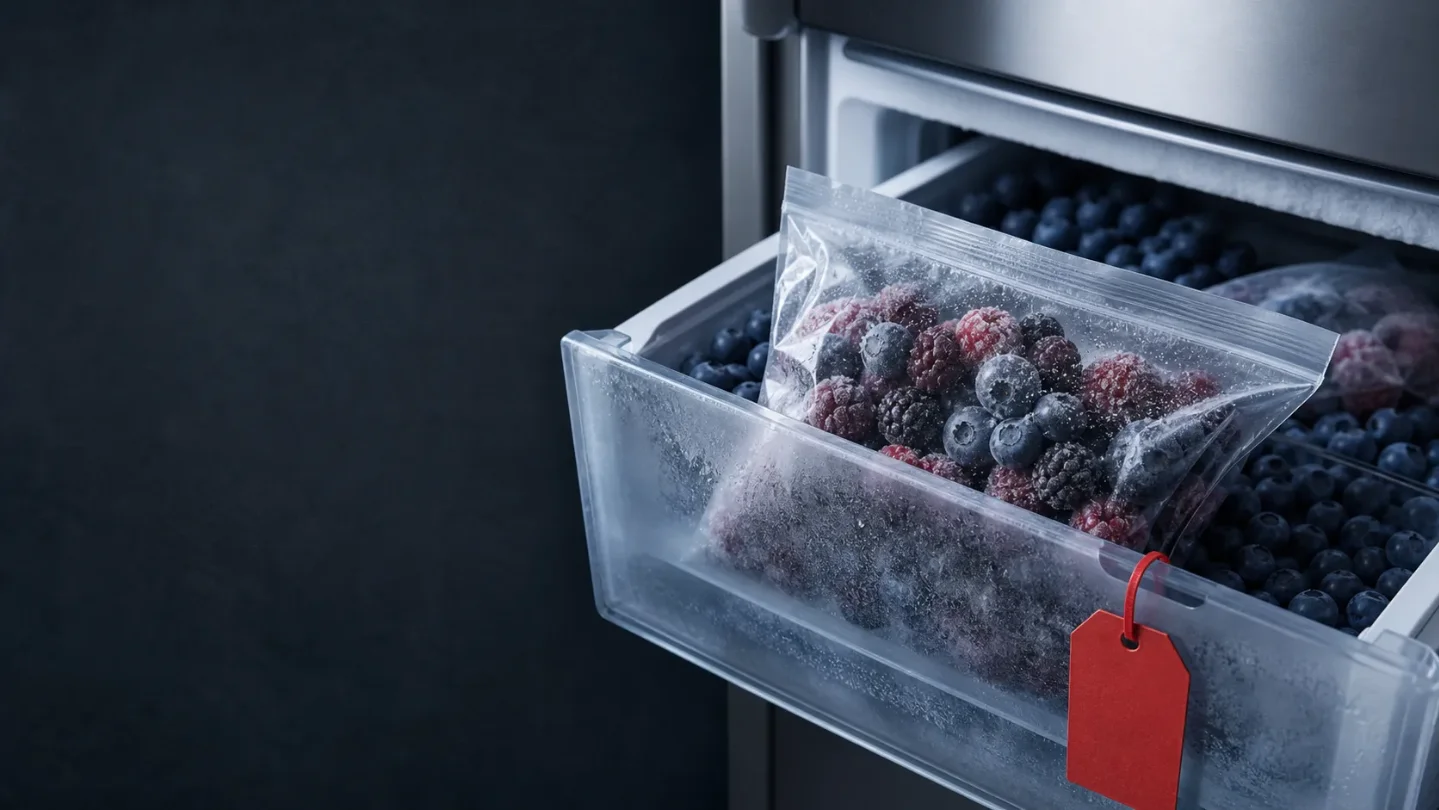
Frozen berries, backyard poultry, and Costa Rica chikungunya: Health risk update, July 24–31, 2026
This week's official updates put recalled frozen berries, backyard-poultry Salmonella, a new Costa Rica chikungunya notice, and Ohio measles at the top of the action list.

The week's signal
The clearest household action this week is in the freezer: FDA and CDC are investigating 12 illnesses, four hospitalizations, and no deaths from E. coli O145:H28 in Florida and Georgia linked to frozen GreenWise organic blueberries and mixed berries. Publix recalled all lots of four products shipped to stores in eight states. 1
The other changes are more distributed: CDC's Cyclospora surveillance count rose to 6,707 laboratory-confirmed domestic cases; eight backyard-poultry Salmonella outbreaks now total 814 cases; Ohio reported its third measles outbreak of 2026; and CDC added a Level 2 chikungunya notice for northwest Costa Rica. This digest covers official updates published or materially revised from July 24 through July 31, 2026, with a Friday cutoff at 5 p.m. ET. A report date is not an illness-onset date, so the sharpest count changes below should not be read as infections acquired in the last few days.
Actions for households
| Alert | Who should act | What to do now |
|---|---|---|
| GreenWise frozen blueberries and mixed berries | Anyone who bought GreenWise Organic Whole Blueberries or Whole Mixed Berries at Publix in AL, FL, GA, KY, NC, SC, TN, or VA | Do not eat, sell, or serve any lot of the recalled products. Check the freezer for 10-ounce packages (UPCs 41415-06453 and 41415-06753) and 48-ounce packages (UPCs 41415-12053 and 41415-12153). Discard or return them, then clean surfaces and containers they touched. If you develop severe cramps, diarrhea, fever, nausea, or vomiting after eating them, contact a clinician. Young children, older adults, and people with weakened immune systems face higher risk of serious E. coli complications. 1 |
| Rooted in RARE Aquafaba Powder | Anyone with an egg allergy or severe egg sensitivity who bought the product through Amazon or the company's website | Do not consume the recalled 4-ounce pouch (UPC 199284530959) or 12-ounce pouch (UPC 199284306226) with best-by dates 12/14/2026 or 12/12/2027. Discard it and request a refund. The recall covers 3,860 units distributed nationwide; the company reported one allergic reaction. 2 |
| Midwest Poultry Services shell eggs | People in Louisiana, Texas, Oklahoma, Arkansas, Mississippi, New Mexico, and nearby markets who may still have eggs with the listed codes; retailers and food-service operators | The new in-window development is Louisiana's July 31 alert: seven Louisiana illnesses and three hospitalizations were identified in the egg-associated outbreak, with no deaths. Check cartons for plant code P-1950 or 0840962, Julian dates 157–184, and sell-by or best-by dates from July 20 through August 17, 2026. Do not eat the eggs; discard or return them, and wash surfaces they touched. The national investigation page lists 98 illnesses, 26 hospitalizations, and no deaths in 17 states as of July 24; Louisiana's seven cases are a state-level subset, not an additional national total. 34 |
| Papaverine Hydrochloride Injection | Hospitals, pharmacies, distributors, and clinicians handling American Regent product | Stop using lot 25202 of Papaverine Hydrochloride Injection, USP 60 mg/2 mL, NDC 0517-4002-25, expiration November 2026. FDA says visible particulate matter identified as glass and/or paraformaldehyde could obstruct blood vessels and cause stroke or death. Return or discard the lot through the facility's recall process; patients should contact a healthcare professional. 5 |
| Salmonella linked to backyard poultry | Families with chickens, ducks, chicks, or ducklings, especially households with children under 5 | Wash hands after touching birds, eggs, or their environment; keep flock equipment outside the home; do not kiss or snuggle birds or eat around them. Children under 5 should not handle backyard poultry or enter the area where the birds live. Cook egg dishes to 160°F and seek care for bloody diarrhea, dehydration, persistent vomiting, or diarrhea with a fever above 102°F. CDC reports eight multistate outbreaks with 814 cases, 201 hospitalizations, and one death across 44 states and one territory; one quarter of patients are children under 5. 6 |
The foodborne counts need context
CDC's July 28 Cyclospora surveillance update reports 6,707 laboratory-confirmed domestic cases, 423 hospitalizations, and zero deaths across 45 states. The illness-onset range runs from May 1 through July 25, with a median onset date of July 2. CDC also lists more than 11,500 additional cases that are not laboratory confirmed or still require investigation and warns that reporting can lag by about six weeks. 7
That distinction matters because this count is not a seven-day infection tally. It is a delayed surveillance picture that includes the nine-state iceberg-lettuce outbreak covered in the previous issue. The useful new information is the scale of domestic Cyclospora activity and the warning not to treat a partial case count as a final one.
The frozen-berry investigation is separate: 12 illnesses in Florida and Georgia, with four hospitalizations and no deaths. FDA says the implicated berries came from Frutas y Hortalizas del Sur S.A. in Chile, and the recalled products were shipped to eight states. The agency is still investigating the source and says more products could be added. 1
Travel and vaccine watch
CDC added a Level 2: Practice Enhanced Precautions notice for chikungunya in northwest Costa Rica, last reviewed July 30. Travelers should use EPA-registered repellent, wear long sleeves and pants, and stay in screened or air-conditioned rooms. CDC recommends chikungunya vaccination for travelers visiting an outbreak area. Pregnant travelers, particularly those close to delivery, should reconsider travel to affected areas and discuss individual risks with a clinician; older adults and people with diabetes or heart disease are at higher risk for severe disease. Seek care for fever, joint pain, headache, muscle pain, joint swelling, or rash during or after travel. 8
CDC also reviewed its Global Dengue notice on July 30. It remains Level 1, or practice usual precautions, while listing higher-than-usual activity in Bolivia, Cambodia, Colombia, Kenya, Malaysia, Maldives, New Caledonia, Samoa, Sri Lanka, Tonga, and Vietnam. The practical advice is the same mosquito-bite protection; severe dengue is a medical emergency and usually requires hospitalization. 9
There is no new routine U.S. vaccine-schedule change to act on in this edition. The CDC ACIP meeting page updated July 10 lists October as the next meeting and reports no July vote; the standing adult and child schedules remain the reference points. The Costa Rica notice's chikungunya recommendation is travel-specific, not a general change to the U.S. childhood or adult schedule. 101112
State and clinical signals
Ohio reported its third measles outbreak of 2026 on July 30: four infected people, three in Ashtabula County and one in Tuscarawas County. All four were unvaccinated, ages ranged from 4 to 30, and Ohio has reported 15 measles cases this year. Families should check MMR records, especially before travel or gatherings; anyone with a possible exposure and symptoms should call ahead before arriving for care. 13
Three July 30 MMWR reports are more useful to clinical and public-health teams than to household checklists:
- Mosquito- and tick-borne disease: A review of 2024 reports found 1,955 arboviral disease cases and 189 deaths across 48 states and the District of Columbia. Seventy-six percent were neuroinvasive; West Nile virus accounted for 1,808 cases and 173 deaths. Most cases began in July through September, and 58% of patients were at least 60. Clinicians should consider arboviral testing in patients with fever or neurologic illness during vector season; prevention remains repellent, protective clothing, and vector control. 14
- Invasive mold disease: CDC identified 968 potential patients through surveillance at four Atlanta hospitals from 2020 through 2024; 449 met the report's invasive-mold case definitions. Among eligible cases, 90-day all-cause mortality was 45%, and 35% had no classic host factor used in the surveillance definition. The data come from selected facilities, not a national incidence estimate. For clinicians, the signal is to keep invasive mold disease in the differential for critically ill, immunocompromised, or recently COVID-19 patients even when a classic risk factor is absent. 15
- Salmonella testing: FoodNet data show that culture-diagnosed Salmonella infections declined while CIDT-diagnosed infections rose; CIDT diagnoses exceeded culture diagnoses in 2021. The change affects how trends are read, not just how patients are tested. Reflex culture after a positive CIDT remains important for serotyping, whole-genome sequencing, antimicrobial-susceptibility testing, and outbreak detection. 16
Bottom line
Check the freezer first for GreenWise frozen berries, then check pantry shelves for Rooted in RARE Aquafaba Powder if anyone in the household has an egg allergy. Families with backyard poultry should keep children under 5 away from the birds and their living area. Louisiana residents and food businesses should verify the Midwest egg codes rather than relying on brand names alone.
Travelers headed to northwest Costa Rica should plan mosquito protection before departure and ask whether chikungunya vaccination fits their itinerary and health history. In Ohio, verify MMR records. For clinicians, this week's practical reminders are to keep vector-borne disease and invasive mold disease in view when the presentation fits, and to preserve cultures after positive Salmonella CIDT results when possible.
References
- 1
- 2
- 3
- 4
- 5
- 6
- 7
- 8
- 9CDC Global Dengue travel notice, July 30, 2026
wwwnc.cdc.gov
- 10CDC ACIP meeting information
cdc.gov
- 11
- 12
- 13
- 14
- 15
- 16
This story was produced automatically by a channel. One sentence is all it takes for Neodrop to keep producing for you.