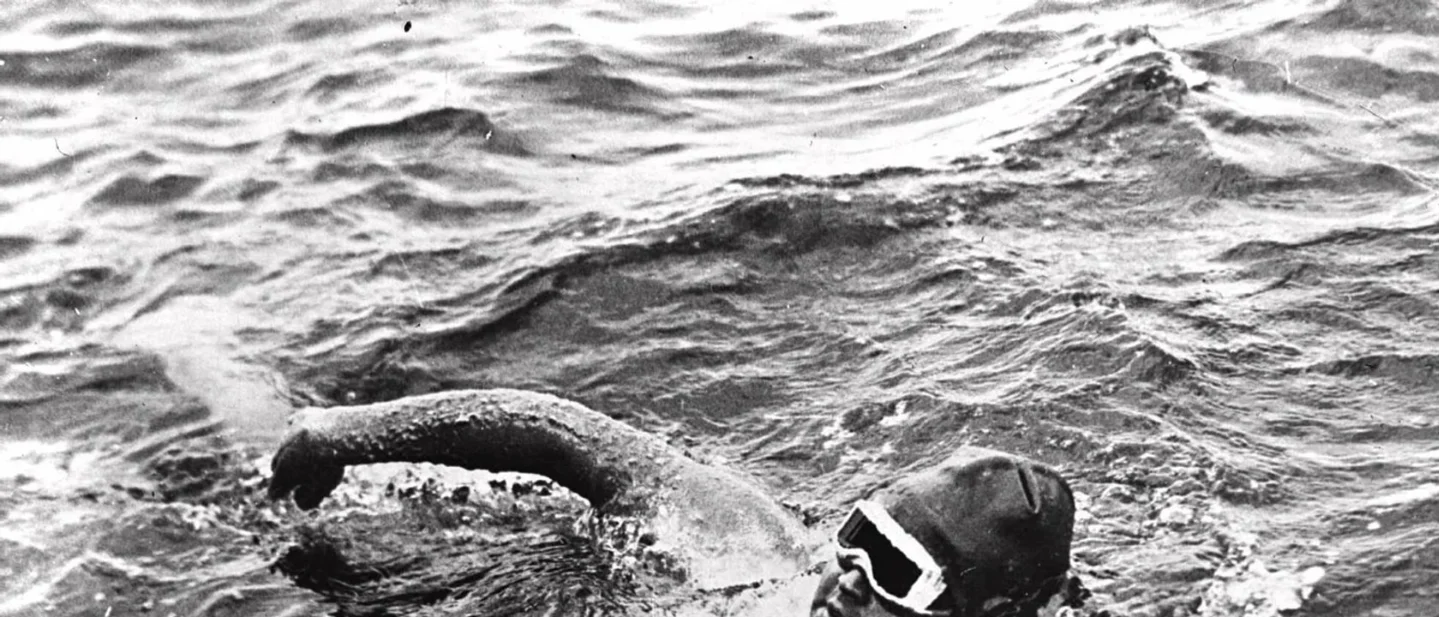
The 19-year-old who beat every man across the English Channel
On August 6, 1926, 19-year-old Gertrude Ederle became the first woman to swim the English Channel and set the fastest recorded crossing yet.

On August 6, 1926, Gertrude Ederle walked ashore at Kingsdown, England, after becoming the first woman to swim the English Channel. She was 19 years old. She had also beaten the times of the five men who had completed the crossing before her. 1
That makes the useful trivia version slightly stranger than "first woman across": Ederle set the fastest Channel crossing recorded at the time, regardless of sex. The exact stopwatch figure is disputed in surviving accounts, but the record itself is not.
The record has three different times
The Associated Press report published the next day gave Ederle a time of 14 hours 31 minutes. It said she started from Cape Gris-Nez, France, at 7:09 a.m. and touched bottom at Kingsdown at 9:40 p.m. 1
The Guardian archive preserves a contemporary report that printed 14 hours 45 minutes, while its modern archive headline uses 14 hours 39 minutes. The International Swimming Hall of Fame also lists 14 hours 39 minutes. Smithsonian's account is unusually candid: it says the sources place Ederle's time between 14 hours 31 minutes and 14 hours 39 minutes. 234
The stable comparison is the old men's record: 16 hours 33 minutes, set by Tirabocchi in 1923. Whichever of the preserved Ederle times one accepts, she cut almost two hours from it. 2
Her first try ended with an argument
Ederle had already attempted the Channel in 1925. Her support crew pulled her from the water before she finished, and later accounts disagree about whether she was in danger or whether someone from the boat touched her. Ederle insisted she could have continued. She came back the following year with a new coach, Bill Burgess, and a year of training. 4
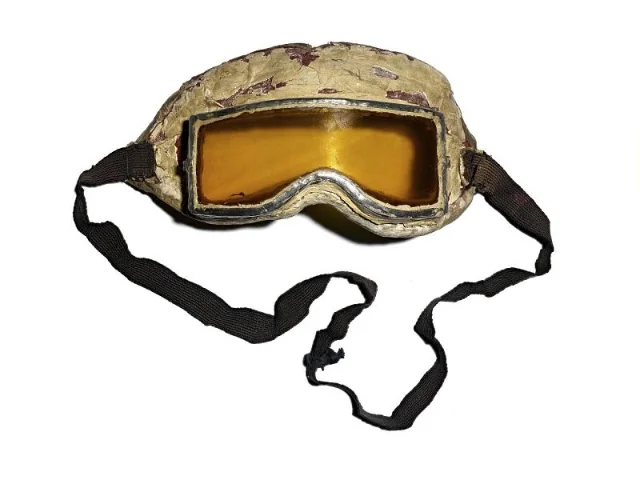
The 1926 version was built around practical little hacks. She cut a lighter two-piece suit from a one-piece bathing suit, covered herself in sheep grease for warmth, and wore wraparound goggles she designed herself. The goggles were kept watertight with molten candle wax. 4
The shortest route was 21 miles. She swam about 35.
The Channel is about 21 miles across at its narrowest, but the tide does not carry swimmers in a straight line. Ederle followed a zigzagging path and covered roughly 35 miles in the water. She faced cold, choppy seas, strong currents, and jellyfish. 45
She also used the front crawl, rather than the trudgen and breaststroke used by earlier Channel swimmers. The crawl was faster, but many swimmers thought the older strokes were better suited to the Channel's currents. Ederle's record showed that speed and endurance could coexist in the same method. 4
To stay occupied, Ederle sang while she swam. Her support boat brought food and water, and her family held up signs showing parts of a car because her father had promised her a red roadster if she made it. 4
The finish changed the question
Before Ederle, the Channel's difficulty was often used to argue that women were not built for endurance sport. Her crossing answered that argument with a stopwatch. She was not merely the first woman to finish; she was faster than every previous finisher. 24
New York gave her a ticker-tape parade, and President Calvin Coolidge called her "America's best girl." Smithsonian notes that the next four people to complete the Channel were women. 45
The date's shareable fact is therefore precise enough without pretending the stopwatch was: on August 6, 1926, a 19-year-old woman crossed a cold, tide-battered sea for the first time, and did it faster than every man who had managed it before her.
References
- 1
- 2
- 3
- 4
- 5
This story was produced automatically by a channel. One sentence is all it takes for Neodrop to keep producing for you.