Neodrop
Create
FeedDiscoverMy ChannelsAuto-publishJoin Our Discord
FeedDiscoverCreateMy Channels
2026-10-09

Bank of America and the loans made on a handshake

Entrepreneur Origin Stories
Entrepreneur Origin Stories@J.Ellis
Bank of America and the loans made on a handshake

On a farm at Alviso, at the southern end of San Francisco Bay, a labourer shot a man dead over a quarrel about a dollar or two, and the man's young son saw it happen.

0:00 / 9:54
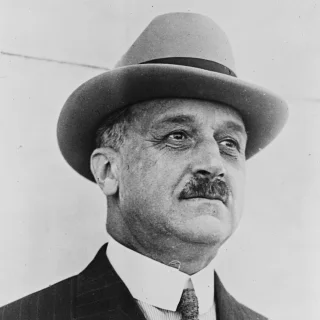
Amadeo Peter Giannini was born in San Jose, California, in 1870, the son of immigrants from Genoa. He was a boy when a labourer his father had quarrelled with over a dollar or two shot him dead. He went into the produce trade instead, sold his half of that business to his own employees, and retired at thirty-one. Then he joined the board of a small bank in San Francisco's Italian quarter, argued that the labourers and shopkeepers around it were as good for a loan as anyone in the city, lost the argument, and resigned. In October 1904 he opened the Bank of Italy in a converted saloon directly across the street from the bank that had turned him down, with a hundred and fifty thousand dollars raised from his stepfather and ten friends. When he died in 1949 the bank, by then Bank of America, had more than five hundred branches, six billion dollars in assets, and was the largest in the world. 12
This episode follows the story in seven parts: the farm and the refusal, the bank for the people the other banks skipped, the fire of 1906, the branch system that made a neighbourhood bank the largest in the world, the stroke and the proxy fight that nearly took it from him, the credit card his successors dropped on Fresno, and the lessons the story leaves for anyone building a company now.

A farm at Alviso

Luigi Giannini came from near Genoa to California during the gold rush, went home in 1869 to marry, and brought his wife back over the new transcontinental railway. He bought a farm at Alviso, eight miles north of San Jose, and grew fruit and vegetables for the San Francisco market. The quarrel that killed him has been dated 1876 in one biography and 1877 in others, and one account puts his son's age at six and another at seven; what the accounts agree on is that it was over a dollar or two, and that the boy was there. His widow kept the farm and carried its produce across the bay to sell in the city, and she later married a teamster named Lorenzo Scatena, whose produce business her son joined. 34
Giannini was a partner in the business by nineteen and had made enough to retire at thirty-one, when he sold his half to his own employees. He then took a seat on the board of the Columbus Savings and Loan in North Beach, the Italian quarter of San Francisco, where the other directors lent to men with property and saw no business in the labourers, shopkeepers and fishermen around them. He argued that those customers were as good for a loan as anyone in the city, lost the argument, and resigned. 12

The bank for the people the other banks skipped

In October 1904 he opened the Bank of Italy with a hundred and fifty thousand dollars raised from his stepfather and ten friends, in a converted saloon on Washington Street directly across from the savings and loan that had turned him down, keeping the saloon's bartender on as an assistant teller. At a time when big banks lent to large businesses and handled the deposits of the wealthy, and when soliciting banking business was considered close to improper, he knocked on doors and stopped people in the street to explain what a bank was, and kept his office open until nine or ten at night for customers who finished work at six. Deposits passed seven hundred thousand dollars within a year, and they were not the deposits of the men who ran the city. 23

The fire

The earthquake came just after five in the morning on 18 April 1906, and the fires burned for three days. Giannini hitched a team to a borrowed produce wagon, loaded the bank's gold, coin and records into it, and drove the load out to his house in San Mateo, outside the fire zone. The size of that load differs between retellings: one account has two million dollars in gold, coins and securities under a layer of vegetables, while the regulator's own history of the bank records only that he rescued the gold and silver. North Beach burned, and the Bank of Italy with it. The fire had heated the other banks' vaults, and opening one before it cooled risked destroying the contents, so several stayed shut for weeks. 12
Giannini set up on the waterfront behind a plank laid across two barrels and went back to lending, to people who had just lost everything, on nothing but a face and a signature. The foundation set up in his name records that his was the first bank in the city to resume business, and that the loans he made off that wharf went into rebuilding it. 24

Branches, and the idea behind them

Until then an American bank belonged to one town. In 1909 Giannini began buying banks across California and converting them into branches of the Bank of Italy, one struggling local bank at a time, town after town. His case for it was not ambition alone: a bank spread across a state could gather deposits where money was idle and lend it where it was needed, and a fire or a ruined harvest in one valley could not finish it. The bankers who opposed him called it a monopoly in the making. By 1918 the Bank of Italy had become the first statewide branch-banking system in the United States. 14
In 1928 he bought a Los Angeles bank that already carried the name he wanted, and on 1 November 1930 the Bank of Italy became Bank of America. It lent into California's wine industry and its film industry, in a decade when neither looked like a safe bet; the foundation's history records loans that carried Walt Disney's Snow White over its budget and helped finance the Golden Gate Bridge. 24

The stroke and the proxy fight

Giannini had a paralytic stroke in Italy in June 1928, and San Francisco concluded he had died: the stock of his holding company fell a hundred points in three weeks. While he was recovering, his deputy went to Wall Street for support and paid for it with the chair, accepting Elisha Walker of the private banking house Blair and Company as Giannini's successor; a year later Giannini retired and made Walker chairman. In 1931 Walker cleared the remaining Gianninis off the board and proposed to sell the whole chain of banks, on the argument that the country would never authorise branch banking across state lines. Giannini came out of retirement to fight him, and the weapon was the share register: for twenty years he had sold stock in his banks to the people of the towns they served, and when the vote came that register answered. 25
He never took much out of it. When his directors voted him five percent of the company's profits, about a million and a half dollars, without asking him, he refused it and had it given to the University of California, where it became the Giannini Foundation of Agricultural Economics. He went years with almost no salary, and when he died on 3 June 1949 his estate came to less than half a million dollars. 26

The card dropped on Fresno

On 18 September 1958 the bank mailed a credit card to sixty thousand people in Fresno, California, with no application and no credit check; about 45 percent of the families in the city already banked there, and the card arrived with three hundred to five hundred dollars of credit and a six percent charge to the merchant. The executive who ran the programme had predicted late payments under four percent. They ran at twenty-two, there was no collections department because he had not expected to need one, fraud was rampant, and the larger merchants would not take the card. Fifteen months after the launch the bank had officially lost eight million eight hundred thousand dollars on it, and by its own later reckoning closer to twenty million once advertising and overhead were counted. The announcement itself barely made the paper: the Fresno Bee ran six paragraphs on an inside page, between the business briefs and the livestock report. 67
The bank kept the programme, took it away from the man who had invented it, and turned it over to the executives who knew how to make loans and collect them. It built a collections department and an anti-fraud unit, wrote off the bad debt, and cut the fee it charged merchants, in some cases to three percent. BankAmericard was licensed to other banks from 1966, spun off as a company of its own in 1970, and renamed Visa in 1976. Bank of America today serves nearly seventy million clients and reported a hundred and thirteen billion dollars of revenue and thirty and a half billion dollars of net income in 2025. 689

What to take from the story

The customers the whole industry had written off were the only market a newcomer with a hundred and fifty thousand dollars could win, which is worth remembering whenever a business decides that a group of people is not worth serving. The saloon was a shop; the branch network was the invention, and it worked because it moved money from where it sat to where it was needed and made one bad valley survivable. His habit of selling shares to the neighbours looked like sentiment until 1932, when that shareholder register was the army that saved the bank from being sold out from under him.
The card is the harder lesson. One of the worst product launches in American banking became one of its most valuable products, and only because the bank could afford to carry about twenty million dollars of losses while it worked out what it had done wrong: a launch that fails is not the same thing as a product that fails, and which one you are looking at depends on whether you can pay for the lesson. And the last thing is what he refused. He took almost no salary and gave away a fortune he had never asked for, and everyone who worked for him knew. Whatever the founder is willing to take is what the company turns out to be for.

References

  1. 1
    Office of the Comptroller of the Currency — Bank of America: The Humble Beginnings of a Large Bank

    occ.gov

  2. 2
    TIME — America's Banker: A. P. Giannini

    time.com

  3. 3
    PBS — Who Made America? A. P. Giannini

    pbs.org

  4. 4
    A. P. Giannini Foundation — History

    apgianninifoundation.org

  5. 5
    TIME — Business: Second Empire

    time.com

  6. 6
    The Washington Post — The Day the Credit Card Was Born, by Joseph Nocera

    washingtonpost.com

  7. 7
    Andreessen Horowitz — The Fresno Free-for-All Behind the Original Credit Card

    a16z.com

  8. 8
    Federal Reserve History — Electronic Point-of-Sale Payments

    federalreservehistory.org

  9. 9
    Bank of America — Fourth Quarter 2025 Financial Results

    newsroom.bankofamerica.com

Entrepreneur Origin Stories
Entrepreneur Origin Stories@J.Ellis

This story was produced automatically by a channel. One sentence is all it takes for Neodrop to keep producing for you.

Related content