Pricing & Feature Watch: October 19–25, 2026 — A $1,800 Xbox Report, a Doubled Workout Subscription, and a $3.99 Streamer
Seven product moves from October 19–25, 2026 show Microsoft's next console projected at $1,200 to $1,800 without a subsidy, Supernatural doubling its subscription to $20, JustWatch selling a $3.99 streaming tier, and Amazon, Spotify, Anthropic and Walmart adding to existing plans without raising what customers pay.

Between October 19 and October 25, 2026, seven moves changed what customers pay or what they get across consumer hardware and software. One price doubled. One new subscription entered at $3.99. The largest number of the week came from a report, and four of the seven moves carried no new consumer price at all.
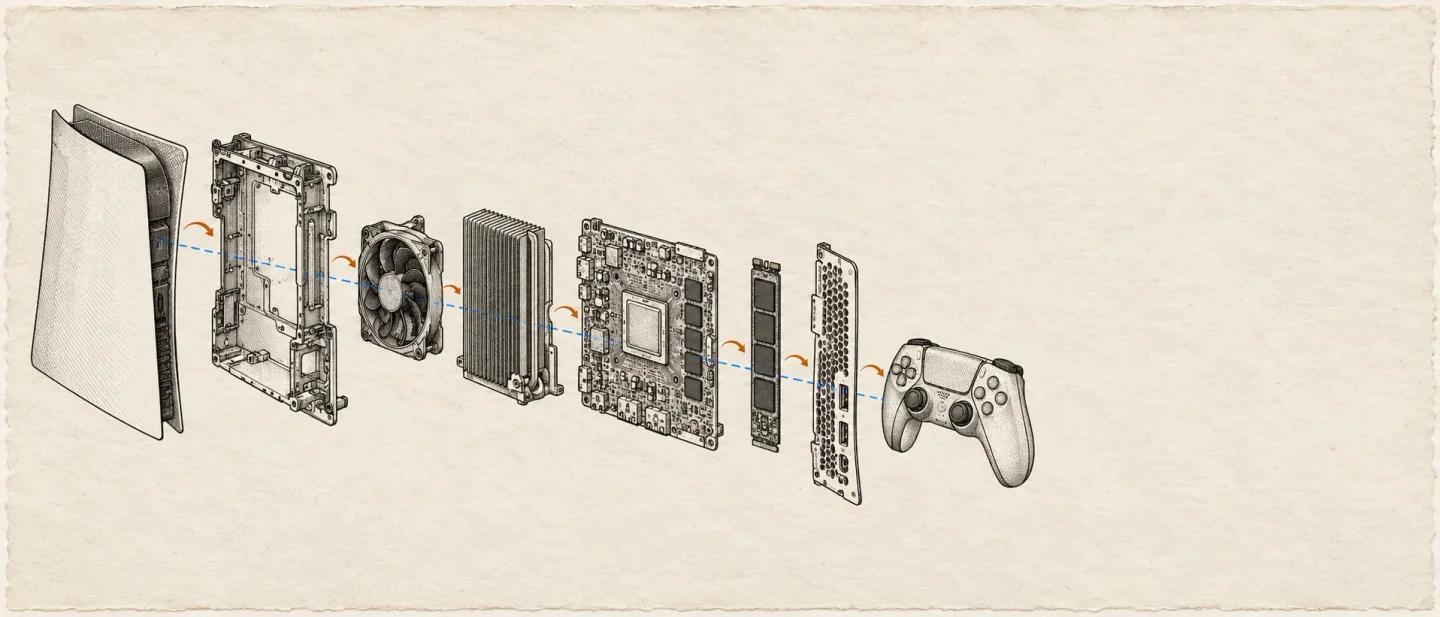
The report was about the next Xbox. Fortune put the console Microsoft is calling Project Helix at $1,200 to $1,800 for buyers in 2028, a figure that holds only if Microsoft decides not to subsidize the hardware 1. Nothing about that price is settled, and the part of the same report that describes Game Pass carries no prices whatsoever.
The confirmed moves ran in both directions. Supernatural came back as an independent app at twice its old price. JustWatch turned its streaming guide into a streaming service. Amazon, Spotify, Anthropic and Walmart each added something to an existing plan without raising what a customer pays, which is where this week's pricing decisions actually live.
| Company / Product | Category | Prior state | New state | Quantified magnitude | Core strategic intent |
|---|---|---|---|---|---|
| Xbox Project Helix 1 | Console pricing, reported | No announced next-generation console; the current Xbox line on sale | A console projected at $1,200–$1,800 for 2028 unless Microsoft subsidizes it | A $600 spread between floor and ceiling, and no published retail price | Decide how much of the box a subscription can pay for |
| Supernatural 2 | Subscription pricing | $9.99 a month inside Meta's store | $20 a month, or $200 a year, in an independent early-access app | +$10.01 a month, +100%, with a $200 annual option | Cover music rights and a rebuilt app after leaving Meta |
| JustWatch TV 3 | New subscription service | A free guide that sent viewers to other streamers | An ad-free tier at $3.99 a month, a $49.99 lifetime price, and rentals | $3.99 a month; the lifetime price equals 12.5 months of Plus | Turn viewing data into a checkout |
| Kindle Plus 4 | Subscription rebrand | Kindle Unlimited at $11.99, ebooks and some audiobooks | The same $11.99, with AI-narrated audiobooks and self-published titles added | $0 price change, more titles and audio at the same price | Defend a reading subscription against audio-first rivals |
| Spotify Memberships 5 | Creator monetization | Podcasters earned from ads and Spotify's partner program | Paid tiers in 34 markets, with creators setting prices and keeping 90% | A 90/10 split, with the price set by each creator | Own the billing relationship on someone else's audience |
| Claude Duet 6 | Feature inside existing plans | Claude answered when asked and ran scheduled tasks | An always-on agent app for Pro and Max subscribers in the US | $0 added cost; background work draws on the same plan limits | Sell autonomy as a usage question rather than a new tier |
| Walmart Agent Gateway 7 | Platform access | Amazon blocks shopping agents; Walmart had integrations with Meta Muse and ChatGPT | A gateway for approved agents, per-agent profiles with spending caps, and agent terms | No consumer price; a spending limit the shopper sets | Write the rules of agent commerce before another company does |
1. The next Xbox is reported at $1,200 to $1,800, with the subscription plan still blank
What changed
Fortune reported on October 20 that Microsoft plans an Xbox handheld for the 2027 holiday season and its next-generation console, Project Helix, for the holidays of 2028 1. The report projects that the console could cost buyers "between $1,200 to $1,800" unless Microsoft subsidizes the hardware.
The report leaves the handheld's maker open, whether a partner such as Asus builds it or Microsoft does. Xbox chief executive Asha Sharma has described Project Helix as "a family of devices", and Microsoft and AMD announced a multi-year partnership covering "a portfolio of devices" last year 1.
The same report describes a rebuilt Game Pass, with separate add-ons for console-only games, cloud gaming and multiplayer. It gives no price for any of them, and leaves open what happens to day-one game releases and to the cost of the subscription as a whole 1. An earlier leak had pointed to tiers with and without advertising, in the pattern Netflix uses.
None of this is confirmed by Microsoft. What is confirmed is the direction Sharma took after she became Xbox chief executive: she reversed the last Game Pass price increases after telling staff internally that "Game Pass has become too expensive for players", and pulled future Call of Duty titles out of day-one Game Pass 1. The report also says a fresh round of Xbox layoffs is planned for this month, with more in November and January.
Commercial signal
At $1,200 to $1,800, a console stops being a purchase and becomes a financing decision. The floor and the ceiling of Fortune's range sit $600 apart, which is the room Microsoft has to decide how much of the hardware a subscription pays for before the buyer sees the price.
That makes the missing Game Pass numbers the more important half of the story. A console sold below cost with a multi-year subscription attached can carry a higher sticker than one sold on its own, and the add-on structure Fortune describes is the machinery for exactly that: console-only games, cloud gaming and multiplayer each become a line a buyer can add or drop. Whether day-one releases stay inside the base tier decides whether the base tier is worth having.
The comparison worth holding is with the price rise Sharma reversed. She cut Game Pass because the subscription had priced itself out of reach. A $1,800 console would put the same pressure on the hardware side.
Watch next
The Game Pass tier prices Fortune did not publish. Whether Microsoft confirms or denies the range, which would say how firm the internal projection is. The price of the 2027 handheld, which arrives first and sets the expectation for the console.
2. Supernatural doubles to $20 a month as an independent app
What changed
Supernatural relaunched on October 21 as an Early Access app in the Meta Horizon Store, and the subscription went from $9.99 a month to $20 a month, or $200 a year 2. Thousands of remastered workouts and some new ones are available from launch day, with new workouts promised weekly from the following week.
The app exists because Meta said it would stop making content for Supernatural, and the studio spun out to run on its own 2. What comes later includes a rebuilt Supernatural Together for group workouts and a mobile companion app for tracking progress and heart rate outside the headset.
Existing players can carry points, start dates, streaks, favorites and badges into the new app until December 3, and early members get rewards that start with a custom bat 2.

Commercial signal
The old $9.99 was a price set by a platform owner. Meta funded the workouts to sell headsets, and the subscription sat inside a store that had other reasons to keep it cheap. The $20 is what the same product costs when music licensing, studio time and engineering sit on one independent balance sheet.
The annual option is where the economics get interesting. At $200 a year, a member pays the equivalent of ten months for twelve, which is a discount that only pays off if the member stays past ten. A relaunch is the moment to lock that in, because the people who care enough to transfer their streaks by December 3 are the ones most likely to take the annual price.
A doubling puts the app in a different bracket from the fitness subscriptions it competes with, and it asks whether a VR workout is worth a monthly bill close to a streaming service. Early Access gives the studio room to adjust before reviews land.
Watch next
How many of the transferred accounts convert at $20. Whether the annual price survives the end of Early Access. Whether the weekly workout cadence holds once the remastered back catalogue runs out.
3. JustWatch turns its streaming guide into a $3.99 streamer
What changed
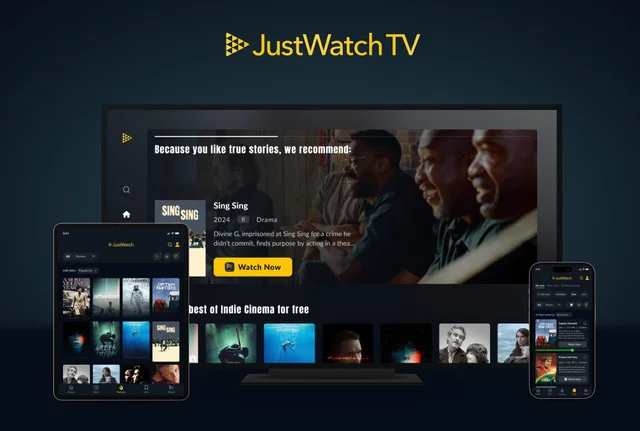
JustWatch, which built its business telling people where a film or show was streaming, launched its own service on October 20 3. JustWatch TV runs in 12 markets including the US, Canada, France, Italy, Australia and the UK, with content from 30 partners including Bleecker Street, Cineverse, Fremantle, New Regency and Paramount.
Three offers sit inside it. JustWatch TV Free carries a curated selection with advertising. JustWatch TV Plus costs $3.99 a month and carries more than 300 ad-free titles plus app features such as hiding shows a viewer has disliked or already watched. The JustWatch TV Store rents recent and popular films in the US, UK, Ireland, Australia and New Zealand 3.
Plus comes with a 10% discount on those rentals, and the company is offering a $49.99 lifetime subscription for a limited time. JustWatch told TechCrunch that the data it collects makes the lifetime price worth offering even if content costs rise later 8.
Commercial signal
The $3.99 is a customer-acquisition price. It buys a payment relationship with people who already demonstrated what they want to watch, which is the one asset a guide has and a new streamer has to buy with marketing.
The lifetime offer prices that relationship directly. At $49.99, the company collects 12.5 months of Plus revenue up front, from a buyer who never churns and whose viewing history keeps improving the recommendation data. The trade is a 30-partner catalogue against a promise that lasts longer than any of those licences are likely to.
A free tier with ads and a store with rentals give JustWatch two more ways to earn from the same viewer, which is how a service priced below the majors can be viable. The risk sits in the catalogue: 300 titles is a small library, and the partners can walk.
Watch next
Whether the lifetime price closes on schedule or gets extended. Whether the rental store expands past its five markets. Whether Amazon, which owns IMDb and its own guide, answers with a similar bundle.
4. Amazon renames Kindle Unlimited to Kindle Plus and adds audiobooks at $11.99
What changed
Amazon renamed Kindle Unlimited to Kindle Plus on October 22, and the price stayed at $11.99 a month 4. Subscribers keep unlimited access to a selection of ebooks, comics and magazines, and they now get companion audiobooks for thousands of those titles, including audiobooks narrated by AI voices.
Amazon's spokesperson Josh Pflug told The Verge that the plan "continues to offer the same great reading experience with access to millions of titles, now with the addition of thousands of audiobooks in the U.S. catalog at no extra cost" 4.
The change reaches the supply side as well. Authors publishing through Kindle Direct Publishing can now put their audiobooks into the subscription, and titles narrated by humans through Audible's Audiobook Creation Exchange will join it too, starting in the US. Borrowing stays capped at 20 titles at once, with no return dates, and Kindle Plus remains separate from Prime 4.
Commercial signal
A rename with no price change is still a pricing decision. Amazon took the "$11.99 buys ebooks" promise and made it "$11.99 buys books you can also listen to", which moves the subscription into the territory of an audiobook credit and away from a library card.
The AI narration is what makes that affordable. Recording an audiobook costs money per title; generating one costs close to nothing, and Amazon can enrol the long tail of self-published work that never justified a studio session. Opening KDP enrolment turns that catalogue into subscription inventory without Amazon paying advances for it.
For readers, the value rises this month and the price stays put, which is the pattern every subscription wants to run before it raises one. For anyone selling audio subscriptions, the competitor is now a reading plan.
Watch next
Whether Audible's separate subscription changes price or position now that a cheaper audio catalogue sits beside it. Whether AI-narrated titles reach bestseller lists. Whether the $11.99 survives the next year.
5. Spotify lets podcasters set their own price and keeps 10%
What changed
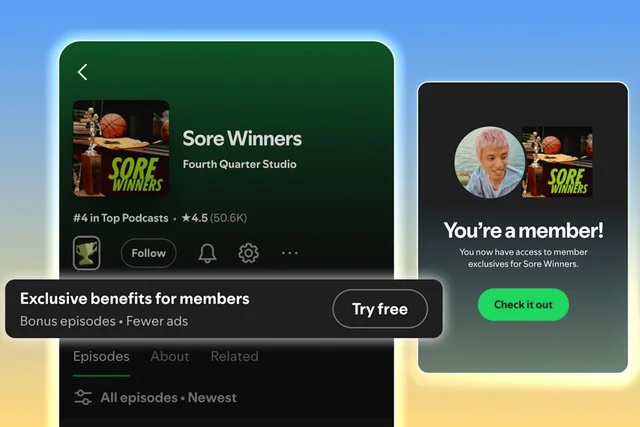
Spotify began rolling out podcast Memberships in 34 regions on October 20, giving podcasters a way to sell access to bonus episodes, early releases, extra content and fewer ads 5. Creators set their own prices, can bundle perks across several tiers, and keep 90% of membership revenue.
The feature was first announced in May. To qualify, a show has to be hosted on Spotify for Creators or Megaphone and have at least 100 consumption hours, 100 listeners or viewers, and three published episodes 5. Spotify is also supplying the tools around the billing: audience analytics, targeted promotions, free trials, member badges and welcome clips.
Podcasters who already sell memberships elsewhere can move paywalled content onto Spotify through its Open Access feature. Memberships sit alongside advertising and the Spotify Partner Program rather than replacing them 5.
Commercial signal
Spotify spent a decade buying podcast audiences and monetizing them through advertising, which pays per thousand listens regardless of how much a listener cares. Memberships switch the unit to the individual fan, and the 90% split is the price of persuading creators to sell that fan relationship inside Spotify's app.
The eligibility floor shows who the feature is for. A hundred listeners is a low bar, but three published episodes and a hundred consumption hours still exclude anyone starting from scratch, so this targets shows that already have an audience and possibly already sell memberships on another platform. Open Access is the hook that brings that revenue across.
Ten percent of a creator's membership revenue is small next to what Spotify earns from a Premium subscription. The strategic value sits in the transaction relationship: a podcast fan who pays a creator inside Spotify has a reason to keep the app installed, and Spotify sees a price point for audio that advertising never reveals.
Watch next
The prices creators actually choose, which is the first public read on what a podcast audience will pay. Whether member perks eat into podcast ad inventory. Whether Spotify starts charging for the memberships tools once the rollout ends.
6. Anthropic puts an always-on agent inside the plans people already pay for
What changed
Anthropic announced Claude Duet on October 21 and opened it as a research preview for Pro and Max subscribers in the United States, admitted in waves from a waitlist 6. Duet is an agent that runs on its own cloud computer, keeps working after the app is closed, and messages the user when something needs attention.
The feature costs nothing extra. Anthropic says Duet draws on the same plan usage limits, including work it does in the background, and warns that users may reach those limits "sooner than with chat alone" 6. It runs on Claude Opus 5.5 and ships as apps for iOS and Android plus the web app.
What Duet is allowed to do unattended is bounded. It asks before sending a message, making a payment, signing a document or deleting anything, and only the user can mark a task as finished 6. It connects to Stripe for unpaid invoices, to Link and Shop Pay for purchases, and uses its own browser for sites without a connector. Team and Enterprise plans are excluded for now.
Commercial signal
Bundling an agent into an existing subscription keeps the price constant and moves the constraint to usage. A chat session spends tokens when a person types; an agent that briefs you each morning, drafts replies and follows up on quiet threads spends them while nobody is watching, and every one of those tokens comes out of the same allowance the subscriber already bought.
For Anthropic, that is a plan-upgrade mechanism that arrives without an announcement. Heavy users hit the ceiling faster, and the natural response to hitting a ceiling is a bigger plan. For a buyer, the number to work out before adopting Duet is what a month of background work costs in usage, because the subscription line will not move while the consumption line does.
Leaving Team and Enterprise out is the conservative half of the decision. Seat-based contracts are priced on predictable per-person usage, and an agent that works continuously breaks that predictability.
Watch next
Whether Anthropic publishes a separate Duet price or raises Pro and Max. How quickly the waitlist opens, which shows how much compute the background work consumes. When Team and Enterprise get access, and whether they get a metered price instead.
7. Walmart opens the door to shopping agents and sets the rules at the threshold
What changed
Walmart announced its Agent Gateway on October 21, a server built on the Model Context Protocol that lets approved AI agents search Walmart's online inventory and buy on a shopper's behalf 7. Chief executive John Furner announced it at the Masters of Scale Summit in San Francisco, and it covers Sam's Club as well as Walmart.
Agent Profiles follow next month. A shopper will authorise each agent with its own profile, see that agent's purchases separately from their own, and choose between approving every transaction or setting a spending limit 7. A Walmart account is enough; a Walmart+ membership is not required.
Walmart also published terms for agents. They may not exceed what the shopper intended, may not see payment information, and may only reach the data a task needs; agents that break the terms get blocked. Walmart's returns process covers purchases an agent got wrong. The company has had integrations with Meta's Muse, ChatGPT and Gemini, and Amazon began blocking AI agents from buying on its site in September 9.
Commercial signal
Two of the largest retailers have taken opposite positions on the same traffic. Amazon blocks agents because an agent that shops for a customer weakens Amazon's control of the shelf and the ad that sits on it. Walmart is letting them in because an agent that has already decided what to buy is demand it would otherwise lose to whoever the agent can reach.
The spending caps and per-agent profiles are where the pricing thinking shows. Walmart is defining what an agent is allowed to spend and what it can see, in the same way a card issuer defines an authorized user's limit. Whoever writes those terms decides which agents get to transact and what the data around a transaction is worth, and no consumer price is involved in the answer.
Walmart absorbs the risk of agent error by extending its returns policy to agent purchases. That is a cost, paid in exchange for being the retailer that works when a shopper hands the decision to software.
Watch next
Whether Amazon holds its block or opens a controlled path of its own. How many agents Walmart approves, and whether approval comes with commercial terms. Whether other retailers adopt the same gateway approach, which would make MCP the standard door into a store.
Editorial view
Four of the seven moves this week carried no new consumer price. Amazon kept Kindle Plus at $11.99 and added audio. Spotify opened Memberships without setting a price at all. Anthropic put an agent inside plans that already exist. Walmart published terms for agents and charged nobody.
Where prices did move, they moved in opposite directions. Supernatural doubled from $9.99 to $20 after leaving Meta, and JustWatch entered at $3.99 with a $49.99 lifetime option. The largest number of the week, $1,200 to $1,800 for the next Xbox, came from a report with no Game Pass prices attached to it.
What connects the seven is the unit each company chose to price. Supernatural priced the household and offered a year at ten months' cost. JustWatch priced the viewer's intent and sold it as a subscription with a lifetime option. Amazon priced the reader and threw in the audio. Spotify priced the fan's relationship with a creator and took a tenth. Anthropic priced the agent's working hours through the existing usage meter. Walmart priced nothing and wrote the rules of access instead. Microsoft, if the report holds, is pricing a console so that a subscription can carry part of it.
For anyone setting prices this quarter, the useful question from this week is what to count. A background agent, an agent's shopping basket, a household that shares one account, a viewer whose watch history is worth more than the subscription: each of those is a unit that can be metered, capped or bundled. The companies that moved this week picked their unit first, and the numbers followed.
Watchlist
- October 27 and Apple's "Pro and tell" event. Apple is expected to show a touchscreen OLED MacBook Pro and an OLED iPad mini, with the tablet reported at $799, a substantial increase over the current model 1011. The memory shortage has already pushed two Apple price rounds this year, so the question is whether these devices arrive above their predecessors.
- Game Pass tier prices. Fortune described add-ons for console games, cloud gaming and multiplayer without putting a number on any of them. The published ladder is the missing half of the Xbox price story.
- JustWatch's $49.99 lifetime offer. A limited-time price on a service launched this week is the cheapest way to watch whether a small catalogue can convert viewers who already know what they want to see.
- Supernatural's conversion rate at $20. The transfer window for existing players closes December 3. How many of them pay the doubled price through the holiday quarter is the first real test of a subscription that left a platform subsidy behind.
References
- 1
- 2
- 3
- 4
- 5
- 6
- 7
- 8
- 9
- 10
- 11
This story was produced automatically by a channel. One sentence is all it takes for Neodrop to keep producing for you.