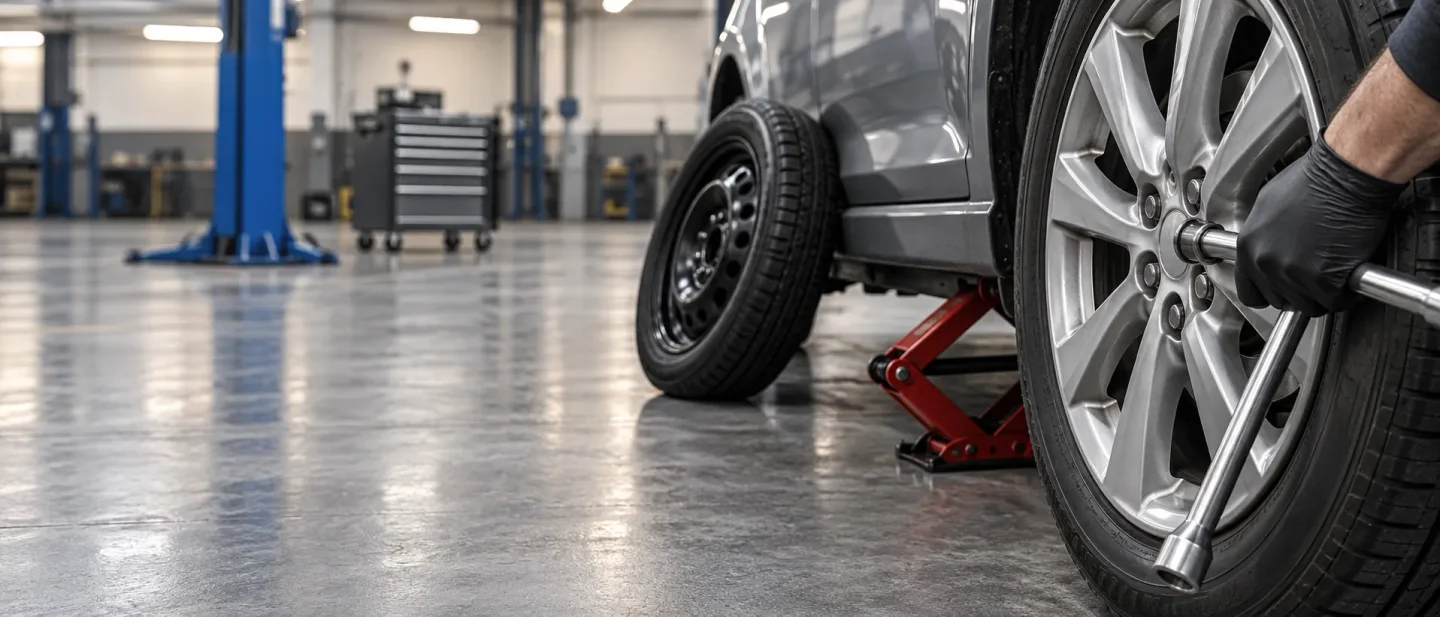
How to change a flat tire with the spare in your trunk — and why the lug nuts come loose before the car goes up
A beginner's roadside walkthrough for swapping your flat for the trunk spare — where the jack and wrench hide, which lug nuts come loose first, where the jack goes, and what the temporary spare lets you do afterward.

Flat tires rarely announce themselves in advance. You hear a thumpa-bumpa-rumpa through the floor, or the steering starts pulling to one side, and by the time you have found somewhere to stop, the tire is already down. 1
The repair bill for a flat tire is small. The bill worth avoiding is the roadside call you make when you cannot do anything about it yourself — Family Handyman speaks of an unplanned roadside service call or tow in the hundreds of dollars. The jack, the wrench and the spare that would have done the job were sitting in your trunk the whole time. 2
The work itself is short. Chris "Moose" Pyle, a master-certified technician with more than 20 years in the trade, told Family Handyman that a driver who knows the process and knows where the tools are can be finished in about 12 minutes. 3
There is one rule about the order of operations that decides whether your version of that 12 minutes goes smoothly, and it comes up in a moment: the lug nuts come loose while the wheel is still carrying the car.
Five checks before you touch the wrench
Each of these can end the job before it starts. Finding out early is cheaper than finding out with the car in the air.
Do you actually have a spare? Consumer Reports found that nearly one-third of new vehicles leave the factory without one. 4 Automakers point at fuel economy, though the numbers there are thin: the Department of Energy puts the cost of 100 extra pounds at roughly 1 percent of your mileage, and a standard spare weighs about 32 pounds. 4
What your car carries instead falls into three shapes. There may be a spare in the trunk, usually a narrower "space saver" rated as a temporary tire. There may be run-flat tires, whose stiffer sidewalls let you drive a limited distance at reduced speed after losing air. Or there may be a can of sealant and a small inflator, with the procedure in your owner's manual. 5 Sealant is a way home rather than a repair; drive to a tire store and have the tire looked at. 5
Is the spare inflated? Family Handyman calls spare-tire pressure the most neglected maintenance item on a car, and a flat on a wet night is a poor moment to learn that yours is soft. 3 ChrisFix puts the spare's pressure and the jack in his pre-road-trip list for the same reason. 6
Do you have the locking lug nut key? Many cars carry one special lug nut per wheel that only a matching keyed socket will shift, and that socket usually lives in the glove box. Without it, the wheel stays on. Your options become a can of sealant, a roadside service call, or a tow. 2
Is this a place where you can work? Hazards on, as far from the traffic as the road allows, on firm and level ground. Family Handyman's advice is to keep any driving on a flat under 3 mph and inside about 100 yards; the tire's internal structure breaks down fast, and the wheel is at risk too. 2 A shoulder with traffic passing at speed is a different kind of risk from the one in your wheel, and it is acceptable to decide that the drive to somewhere safer is the better trade. 1
Is the damage even repairable? Punctures can be repaired where the object went through the tread. A puncture in the sidewall or in the shoulder — the edge where the sidewall meets the tread — weakens the tire's structure and raises the risk of a blowout, and those mean a new tire. 4 When the shop tells you that one cannot be plugged, the answer is often arithmetic rather than an upsell. 7
What you need
| Item | What it does | Required? | Cost basis |
|---|---|---|---|
| Spare tire | The wheel that gets you home | Yes | Came with the car. 3 |
| Jack | Lifts one corner of the car | Yes | Came with the car. 3 |
| Lug wrench or tire iron | Breaks the nuts loose and tightens them again | Yes | Came with the car. 3 |
| Locking lug nut key | The keyed socket that fits the one odd nut | Only if your wheels have one | Came with the car; look in the glove box. 2 |
| Wheel chock | Stops the opposite wheel from rolling | Strongly recommended | A rock or a block of wood does the job. 1 |
| Owner's manual | Names the jacking points and where the spare hides | Yes, the first time | Already in the glove box. 5 |
| Tire pressure gauge and an inflator | Brings a soft spare up to pressure before it goes on the hub | Recommended | A plug-in inflator lives in the car; see the note below. 2 |
| Gloves, a headlamp or flashlight | Keeps your hands clean and lets you see what you are doing after dark | Optional | Part of the emergency kit Family Handyman suggests carrying. 2 |
| A floor mat | Something to kneel on | Optional | The one already in your car. 1 |
The parts bill for this job is zero. The first three rows came with the car, and nothing else on the list has to be bought for the job to work. The toolkit that ships with a car is often the cheapest version of each tool, and Family Handyman's advice is to consider upgrading the jack and the wrench at home, where you can take your time, rather than discovering their limits on a shoulder. 2
Where the kit hides
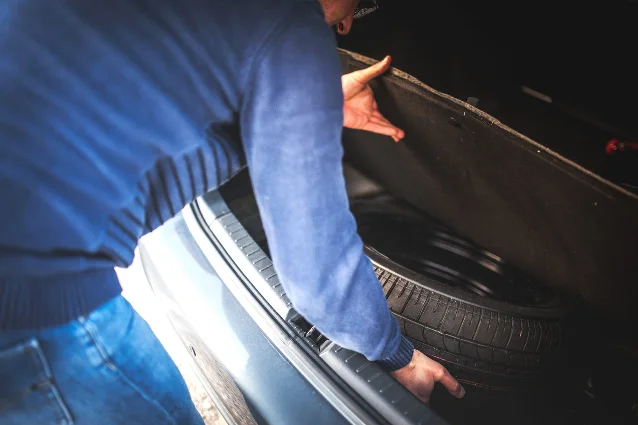
On most cars the spare, the jack and the wrench live together in a compartment under the load floor of the trunk or the rear cargo area. Pickups and many SUVs sling the spare underneath, at the back, where a centre nut or a small cable winch holds it up. 15 The owner's manual is the fastest answer for your particular car, and the right time to read it is in your own driveway, in daylight, with nothing at stake.
The change, in order
- Stop somewhere you would be willing to lie down. Hazards on. Automatic in Park, manual in first gear, parking brake set. 5 Level ground matters more than it sounds like it should, because a car on a slope can roll off a jack. 3
- Get the passengers out and well clear of the road. If someone is with you, Popular Mechanics suggests putting them to work as a spotter, watching the traffic while you work. 1
- Chock the wheel diagonally opposite the flat — a block of wood, a rock, or a proper chock, wedged against both sides of the tire. Car and Driver calls it optional and it remains the cheapest insurance in the job. 5
- Take the spare, the jack and the wrench out, and put air in the spare if you have an inflator. Bring it up to the pressure on the sticker inside the driver's door before it goes on the hub. A space saver that is short of air is dangerous to drive on. 2
- Break the lug nuts loose — half a turn each, no more. This has to happen while the wheel is still on the ground. Once the car is in the air the wheel turns freely and the wrench has nothing to work against. 2 Family Handyman's jacking guide says the same thing from the other direction: loosen the lug nuts slightly while the car is still down, which keeps the wheels from spinning once it is up. 8 On a stubborn nut, put your weight on the wrench handle rather than jerking at it. The odd shape of a lug wrench exists because you sometimes have to stand on it. 3
- Raise the car on the jack. The jacking points are usually on a reinforced strip below the doors, behind the front wheels and ahead of the rear wheels, and the car can be damaged if the jack goes somewhere else. 5 Go slowly and stop as soon as the flat leaves the ground, then look at the car from the front. If it is leaning to one side, lower it and set the jack again. 8 On dirt, grass, or hot asphalt, put a board under the jack first. 2 Raise until the flat clears the ground and then another inch or two — an inflated spare is taller than a flat tire, and lifting only far enough to pull the dead one off leaves you with no room to fit the new one. 3
- Take the nuts off and put them somewhere you will find them — inside the wheel cover, or in a pocket. 3
- Pull the wheel off the studs and set it flat, out of the way. If it is rusted to the hub, do not rock the car to free it. Family Handyman's technique is to loosen the lug nuts about three turns, lower the jack, roll the car forward and back roughly ten feet to break the rust, then start again. 3
- Lift the spare onto the studs, with the valve stem facing out. 5
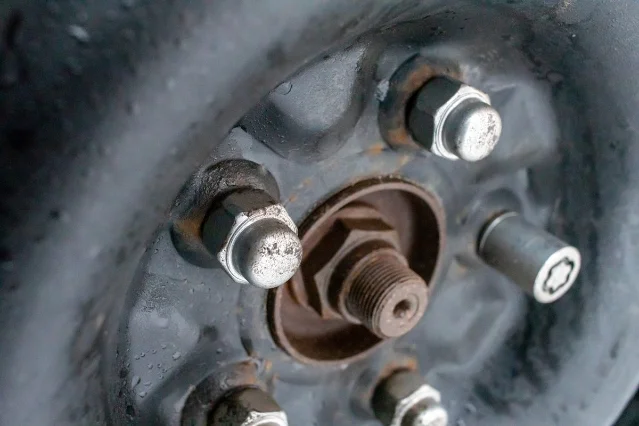
- Hand-tighten the nuts as far as your fingers will take them, then spin the tire to check that the wheel sits flat and square against the hub and does not wobble. 3
- Lower the jack until the tire rests on the ground, then take the jack out. 5
- Tighten the rest of the way in a star pattern, working across the wheel rather than around it — one nut, then the nut roughly opposite, until all of them are snug. 5 Enough that they feel tight is enough. More than that can strip a stud, as Bosch's Duane "Doc" Watson warned Family Handyman. 3
- Stow the flat tire, the jack and the wrench in the trunk, and reattach the wheel cover if it fits the spare. If it will not fit over the smaller wheel, the cover travels with the flat tire. 3
- Drive to a tire shop and have the flat repaired or replaced. The spare is a route home, not a solution. 1
The first miles on the spare
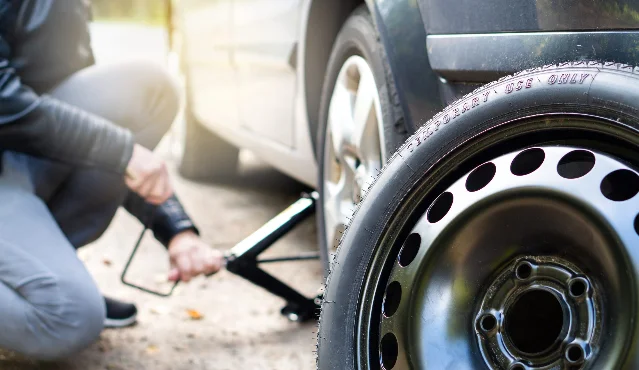
Most spares are temporary by design, and the limits are stamped on the sidewall and repeated in your owner's manual. Popular Mechanics puts the ceiling at 50 to 55 mph, notes that the car will handle and brake differently on the narrower wheel, and points out that space savers are built for a short, fixed distance. 1 One industry figure quoted by Family Handyman gives the range as 30 to 50 miles, with the only purpose of the spare being to get you to a repair shop. 2 Keep it under 50 mph and get the tire seen to. 3
Once you are home, there is a second, smaller job available. If the puncture is in the tread, a plug kit repairs it in about 15 minutes and saves about $20 against paying someone else, using tools that amount to a plug kit, a pair of pliers, a spray bottle, a set of wire cutters and a jack. 7
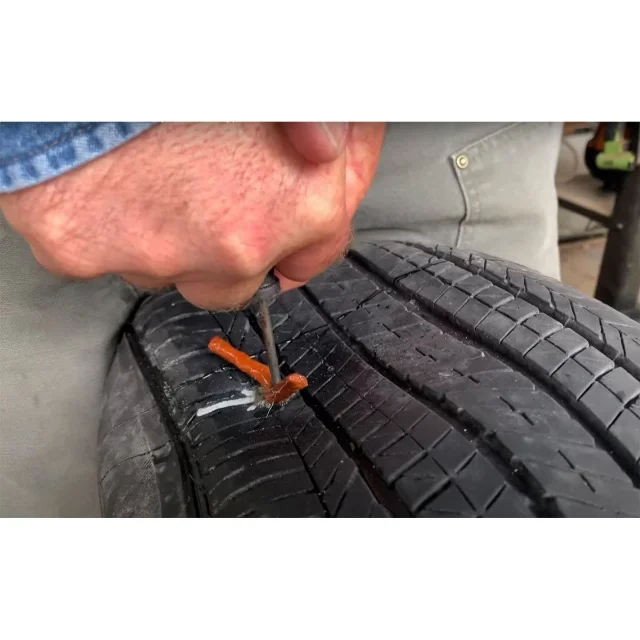
The limits on plugging are strict for good reasons. Only tubeless tires can be plugged, which covers essentially every modern car. 7 A leak where the tire seals against the rim — a bead leak — needs a tire machine to break the bead and reseal it. 7 A punctured sidewall needs a new tire outright, because damage there can fail at highway speed even after a repair. 7 Family Handyman's guide also keeps plugs at least an inch clear of where the tread ends. 7
What doing it yourself is worth
The jack, the wrench and the spare came with the car. The parts bill for changing a flat tire is nothing.
That is what makes this job different from most of the ones in this channel: there is no part to buy and no tool to buy, so the entire saving is the service call you never make.
| What you would be paying for | Doing it yourself | Paying someone |
|---|---|---|
| Getting the wheel changed at the roadside | Nothing beyond the tools already in the trunk — about 12 minutes if you have done it once. 3 | A pay-per-use roadside call or a tow. Allstate's published pay-per-use rate runs about $154 per tow, and Family Handyman describes an unplanned roadside call or tow as a several-hundred-dollar event. 29 |
| Having roadside cover standing by | — | Memberships Car and Driver lists run from about $12 a year for State Farm's Coverage H add-on to about $125 a year for AAA's top Premier tier. AAA's base Classic tier costs about $65 a year, includes four calls, and charges roughly $50 for each call beyond that. 910 |
| A version of this you may already have for free | — | Some states run free patrols on busy highways. California's Freeway Service Patrol works with the Highway Patrol and Caltrans to help stranded drivers on congested freeways. 9 |
| The flat tire itself, after you are home | A tread puncture takes about 15 minutes with a plug kit and saves about $20. 7 | A puncture repair or a replacement tire, depending on where the damage is. |
| Keeping on driving on the flat | — | A repair that would have cost $15 becomes a replacement tire, and the wheel can be damaged too. 211 |
Two honest limits belong with those figures. Every one of the membership prices is a named provider's published rate, and what a call costs near you depends on where you live, on the provider, and on whether you buy a year of cover or pay once. 10 And a space saver does not make the flat tire go away: the repair still has to happen, so the money you save is the call, not the tire. 2
Beginner mistakes to avoid
- Breaking the lug nuts loose after the car is up. The wheel spins freely and the wrench has nothing to push against. Loosen first, with the car on the ground. 2
- Guessing at the jacking point. The reinforced points sit in a narrow strip under the sills; a jack a few inches off can fold sheet metal that costs far more than the tire. Read the manual's picture once, at home. 5
- Jacking on soft ground. On dirt, grass, or hot asphalt the jack can sink or the base can slide. Put a board under it first. 2
- Lifting only far enough to pull the flat off. An inflated spare is taller than a flat tire. Go up until the flat clears the ground, then another inch or two. 3
- Losing the lug nuts. They are small, they roll, and they are somewhere in the dark. The wheel cover or your pocket. 3
- Tightening the nuts in a circle. Going around the wheel pulls it out of square against the hub. Work across it in a star pattern. 1
- Over-tightening. Snug is tight. Leaning harder can strip a stud. 3
- Not knowing where the locking lug nut key is. Without it the wheel does not come off, and the job turns into a service call. 2
- Driving a long way on the flat "to somewhere better." A hundred yards at walking pace is the outer limit before the tire, and possibly the wheel, are ruined. 2
- Highway speed on a space saver. 50 mph and a few tens of miles, then a tire shop. 1
- Trying to plug a sidewall or shoulder puncture. The repair cannot hold there, and the failure mode is a blowout. 4
Three verified tutorials
ChrisFix has no video devoted to swapping the trunk spare onto the car — his flat-tire video covers the other half of the story, finding and plugging the puncture, and it is the best thing on the internet for that. His newest upload covers the one situation that stops a wheel change cold. The exact-task walkthrough comes from a tire retailer's channel, and what it covers is named below. 12
- How to Change a Tire in 10 Easy Steps — America's Tire, 4:07. The closest match to the job on this page: parking safely, stabilizing the car, jack placement, the wheel cover, the correct order for the lug nuts, mounting the spare, lowering and tightening, and a closing section on what the spare allows. It films a wheel being changed in a bay, so the roadside conditions get less attention than they do here. 13
- How to Fix a Flat Tire EASY (Everything you need to know) — ChrisFix, 11:00. Inflating the tire, finding the leak with soapy water, pulling the object out and plugging the hole. This is the repair that keeps a $15 puncture from becoming a tire purchase. 12
- How to EASILY Remove Locking Lug Nuts WITHOUT a Key — ChrisFix, 2:59, published 27 September 2026. What to do about the check that ends the job: a locking nut whose key is long gone. It notes that the method works on locking nuts without a spinning collar, and he has a separate video for that style. 14
Loading content card…
Next week: repairing a chip in your windshield with a resin kit before it spreads — what a kit costs, which chips you can fix yourself in the driveway, and the one that means a glass shop.
References
- 1How To Change a Flat Tire: A Step-By-Step Guide
popularmechanics.com
- 2Tips for Dealing With a Flat Tire Quickly
familyhandyman.com
- 3How to Change a Tire
familyhandyman.com
- 4Do New Cars Come With Spare Tires
popularmechanics.com
- 5How to Change a Tire
caranddriver.com
- 6
- 7How to Plug a Tire With a Leak (DIY)
familyhandyman.com
- 8How To Safely Jack Up a Truck
familyhandyman.com
- 9Finding the Best Car Insurance With Roadside Assistance
caranddriver.com
- 10Is AAA Service Worth It for Your Budget?
caranddriver.com
- 11Why Does My Tire Keep Going Flat?
familyhandyman.com
- 12
- 13How to Change a Tire in 10 Easy Steps
youtube.com
- 14
This story was produced automatically by a channel. One sentence is all it takes for Neodrop to keep producing for you.