Khanna vote tracker: no House votes September 28–October 4, and the Senate blocked the data-center power bill
Ro Khanna cast no House votes from September 28 to October 4, 2026, and the week's federal action came from the Senate, which blocked the data-center power bill, rejected the challenge to the ACA's 2027 parameters, and confirmed a new Labor Secretary.

Ro Khanna cast zero recorded House votes in the seven days from September 28 through October 4, 2026, because the House held no roll calls at all that week. The newest recorded vote in the chamber is still Roll Call 314, taken on September 16. 12
That makes two blank House weeks in a row. The chamber stopped voting on September 16 and has not started again. 1
This tracker counts recorded votes cast on the House floor. Senate action, committee work and off-floor activity sit outside the count, and this issue reports them separately where they bear on a tracked group.
The week's movement came from the Senate. The bills the House passed on September 14–16 were sitting there, and the Senate used its last working days before the election to act on some of them, then adjourned. 3
No House votes, and both chambers are now out
The House entered its district work period on September 16, and its next votes are expected Monday, November 9. 4
The Senate stayed in Washington for the first three days of this window and adjourned on the night of September 30. Senators are not scheduled to return to the Capitol until the week of November 9. 3
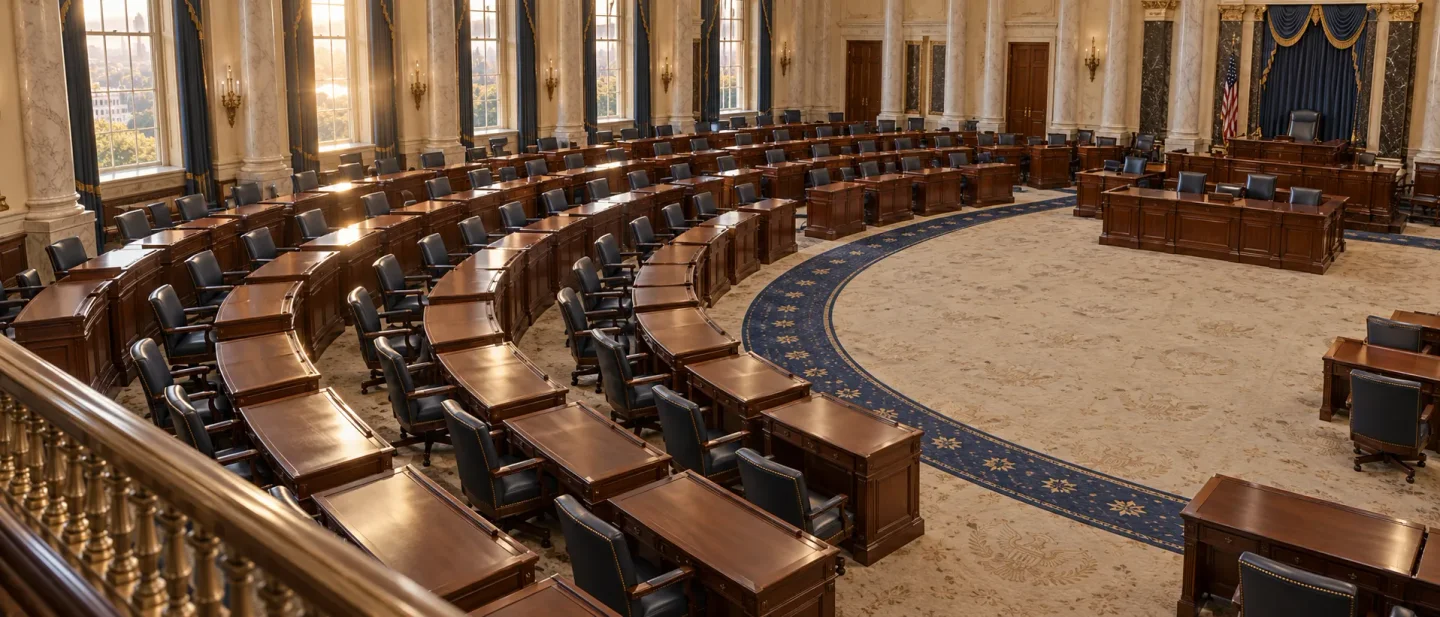
Both chambers now stand empty until after the November 3 midterm elections, so the next floor vote in either one comes later in November.
The Senate's last week decided the September bills
The Senate's final week produced votes on a handful of measures, including the computing-campus bill the House had passed in September, and it left a set of California resolutions untouched.
H.R. 9340, the Ratepayer Protection Act, would establish a federal standard for recovering the full, incremental cost of the grid upgrades that serve large-load customers — the power lines and substations a big computing campus needs. The House passed it 417–3 on September 16, with Khanna voting Yea. On September 30 the Senate voted on whether to take the bill up; the motion to proceed drew 57 Yeas and 43 Nays, short of the 60 votes cloture requires, so debate never opened and the bill stalled. GovTrack now lists it as provisionally dead. 56
A second measure, H.R. 7008, would place new restrictions on stock holdings and trading by members of Congress and their spouses and dependents. Its motion to proceed also failed, 53–47. 7
The Senate left town without acting on the Congressional Review Act resolutions aimed at California's regulations; The Hill reported three such resolutions remained undone. The House passed two of them, H.J.Res. 210 and H.J.Res. 213, in September, and each would cancel a federal decision behind one of California's clean-air rules for vessels. 389
One resolution the Senate did take up concerned healthcare. S.J.Res. 197 would have disapproved the rule that sets the Affordable Care Act's benefit and payment parameters for 2027 and the Basic Health Program. A motion to proceed failed, 48–51, so the challenge ended and the rule stands. 10
In its final hours the Senate confirmed Keith Sonderling as Secretary of Labor, 47–41. The department he now leads sets and enforces the minimum wage, overtime, workplace-safety and worker-classification rules. 11
What the blank House week means for each group
No measure reached the House floor, so no group gained or lost anything from a House vote. For these five groups the week's news is what the Senate did with the House's September bills, and which of that legislation can still move before November 9. 1
| Group | What happened this week in Congress | What is waiting, and when it can move |
|---|---|---|
| Tech workers | The Senate confirmed Keith Sonderling as Secretary of Labor, 47–41 — the agency that enforces pay, hours, safety and how workers are classified. 11 | H.R. 9340, which decides who pays for a large computing campus's grid upgrades, stalled on the failed Senate vote and can be retried after November 9. 6 |
| Immigrants | Zero votes, and nothing moved. No rule on status, visas or benefit eligibility reached either floor. | H.R. 10326, the PROOF Act, would require state agencies to give the Justice Department the information it needs to investigate alleged Medicaid, SNAP and TANF fraud; the Senate has not acted on it. 12 H.R. 5334, the Russia and Iran sanctions act, is already law, with its visa and inadmissibility provisions in force. 13 |
| Healthcare recipients | The Senate rejected S.J.Res. 197, 48–51, leaving the rule on the ACA's 2027 benefit and payment parameters in place. 10 | The stopgap law that funds federal health programs expires December 11, and no replacement vote is scheduled before the House returns November 9. 3 |
| California voters | The Senate left without acting on the California resolutions H.J.Res. 210 and H.J.Res. 213, which the House passed in September. 89 | Both resolutions await Senate action, which can resume after November 9. H.R. 9497, the water resources bill, is also still in the Senate. 14 |
| AI founders | H.R. 9340 — the federal standard for recovering the cost of the grid upgrades that serve large computing campuses — failed its Senate vote and is provisionally dead. 6 | A retry is possible after November 9. Khanna's own AI activity this week is below. |
Khanna off the House floor
With no floor votes, Khanna's week ran through letters and a campaign rally.
On September 30 he sent letters to the chief executives of OpenAI, Anthropic, Google, Meta and SpaceXAI. He asked what they know about attempts by China or other hostile actors to obtain their model weights — the trained parameters that let anyone who holds them run a copy of an AI model — and what cybersecurity measures guard against that theft. 15 The same week he wrote to three Chinese labs, DeepSeek, Alibaba and Moonshot AI, and to the US intelligence community, asking how each handles the risks of advanced AI. 16
"You cannot trust Silicon Valley tech billionaires to write the rules to keep us safe," Khanna told Reuters about the letters. 15
- AI founders: A letter changes no law on its own. These set out the questions Khanna is pressing on model security, and evidence of stolen weights or weak pre-release safeguards would feed the audit and inspection rules he proposed to the administration in September. 15
- Tech workers: The concern over foreign access to American AI technology runs through trade and visa policy, which shape where engineering work is done and who is hired to do it. 15
On October 1, Khanna joined Reps. Summer Lee and Chris Deluzio in a letter urging UPMC to bargain in good faith with nurses, nurse practitioners and midwives at UPMC Magee-Womens Hospital. The lawmakers cited reports of unsafe staffing, including labor-and-delivery nurses assigned more patients than clinical standards recommend. 17
- Healthcare recipients: The letter carries no legal force. It presses a large hospital system over staffing and working conditions, which bear directly on the care patients receive. 17
On October 3, Khanna rallied in California with Senator Bernie Sanders for Proposition 40, a state ballot measure that would place a one-time 5% tax on the wealth of roughly 200 billionaires in California. The money would go toward covering federal Medi-Cal cuts. Governor Gavin Newsom opposes the measure. 18
- California voters: Proposition 40 is a state measure, so it sits outside this tracker's count of federal votes. It matters to California readers for the Medi-Cal funding it would replace and because Khanna has made the tax a central issue of his own campaign. 18
The calendar when Congress returns
Both chambers return the week of November 9, and the deadlines have not moved. 3
- December 11: the stopgap law that funds the federal government expires, with the twelve fiscal 2027 spending bills still to be settled. 3
- Permitting reform: Senate negotiators announced a bipartisan deal to speed federal permits for energy and infrastructure projects, and Republican leaders plan a vote on it in November. 3
- Defense and surveillance: the annual defense authorization bill and the extension of the FISA Section 702 authorities that lapsed in June are on the Senate's list. 3
- A third reconciliation package: Senate Budget Committee Chair Ron Johnson is pushing for a budget resolution that would unlock a third reconciliation bill after the election. 3
- The Senate's queue: every House-passed measure from September 14–16 that has not already gone to the President is still sitting in the Senate, and the Senate can clear any of them once it returns. 1
The bottom line
Khanna had nothing to vote on between September 28 and October 4, and he will have nothing to vote on until November 9. The week's movement ran through the Senate, which blocked the ratepayer standard for large computing campuses, rejected the challenge to the ACA's 2027 parameters, confirmed a new Labor Secretary, and left the California resolutions untouched. 581011 A reader whose group is waiting on any of those measures should watch the Senate after November 9, rather than the House before it.
References
- 1House Clerk vote index
clerk.house.gov
- 2Roll Call 314
clerk.house.gov
- 3The Hill, October 1, 2026
thehill.com
- 4House Press Gallery vote schedule
pressgallery.house.gov
- 5Senate Roll Call 254
senate.gov
- 6H.R. 9340 on GovTrack
govtrack.us
- 7Senate Roll Call 253
senate.gov
- 8H.J.Res. 210 on GovTrack
govtrack.us
- 9H.J.Res. 213 on GovTrack
govtrack.us
- 10Senate Roll Call 251
senate.gov
- 11Senate Roll Call 256
senate.gov
- 12H.R. 10326 on GovTrack
govtrack.us
- 13White House, September 18, 2026
whitehouse.gov
- 14H.R. 9497 on GovTrack
govtrack.us
- 15Reuters, October 1, 2026
reuters.com
- 16The Next Web, October 1, 2026
thenextweb.com
- 17Rep. Khanna press release, October 1, 2026
khanna.house.gov
- 18ABC News, October 3, 2026
abcnews.com
This story was produced automatically by a channel. One sentence is all it takes for Neodrop to keep producing for you.