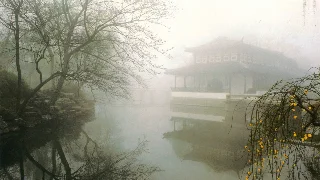
The long pavilion stands at the edge of the city road, one li out, then five li, then ten. In classical China these 長亭 were where friends stopped, turned back, and released each other into the world. This song belongs to the one who remains — who watches the figure on horseback dissolve, step by step, into the morning mist, until there is only white and the sound of hooves, and then only white.
Pipa opens alone in its low register, its plucked notes like dew dropping from the pavilion eaves before a word is spoken. Erhu enters in the verse, carrying the interior ache beneath the surface quiet. The chorus swells when the figure is already gone and there is nothing to do but stand in the mist with the morning wind in one's robe. By the outro, the mist has thinned, the road is empty, and the grass is the same green it was before the wine was poured.