
AP Environmental Science Unit 2 — Biodiversity, Tolerance, and Who Survives

AP Environmental Science Unit 2 — Biodiversity, Tolerance, and Who Survives

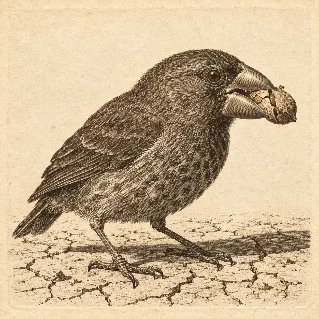
In 1977, a drought hit an isolated island, and almost every soft seed on it disappeared.

0:00 / 10:18
Unit 2 is the part of AP Environmental Science where the exam stops asking you to define biodiversity and starts asking you to predict what happens to a population when something goes wrong. This episode walks the whole unit in order — the three scales of diversity, resilience and the bottleneck, the four ecosystem services, natural selection from peppered moths to Galápagos finches, ecological tolerance, acclimation versus adaptation, and ocean acidification — then works the study guide's five practice questions out loud, answers included, so you can check yourself before the test.
Everything here comes from the Unit 2 study guide. Nothing outside it was added.

The short version

Variety is the buffer. An ecosystem with many species sharing similar roles recovers from a fire, a flood, or a disease outbreak faster than one without that overlap.
Selection changes populations, not individuals. A drought does not give a finch a deeper beak; it decides which beaks get to eat, and the next generation inherits the result.
Acclimation and adaptation are different events. Acclimation happens inside one organism, in one lifetime, and passes nothing on through genes. Adaptation is a shift in gene frequencies across a population over generations. A question that mixes them up is testing exactly this distinction.

The four ecosystem services

The exam's most reliable points, and its most reliable trap. Sort by asking what you could physically take away.
Service typeWhat it isUnit 2 examples
ProvisioningGoods you can harvestWild ginseng harvested for herbal medicine
RegulatingCycles and processes the ecosystem controlsWetlands filtering agricultural runoff and removing heavy metals; wild bees pollinating almond orchards
SupportingFoundational planetary mechanicsSoil formation through rock weathering and organic decay
CulturalNon-material value to peopleNational park visits for mental health and aesthetic value

Vocabulary you should be able to use in a sentence

  • Genetic diversity — the total genetic variation within a species; the reason a population can resist disease and adapt.
  • Species richness and evenness — how many species, and how evenly their numbers are spread.
  • Habitat diversity — how many kinds of habitat a region offers. Its loss hits specialists hardest.
  • Functional redundancy — several species performing similar ecological roles, so one loss does not break the system.
  • Bottleneck effect — a sharp population crash leaves a small, genetically narrow group of survivors.
  • Founder effect — a small group splits off to start a new colony and carries only part of the original gene pool with it.
  • Specialist versus generalist — a specialist needs a specific habitat or food; a generalist tolerates change, and often survives it.
  • Ecological tolerance — the range of temperature, pH, salinity, and sunlight within which an organism can survive, grow, and reproduce.
  • Epigenetics — chemical modifications such as DNA methylation that switch gene expression on or off without changing the DNA sequence.
  • Acclimation — a short-term physiological adjustment by one organism to environmental stress.

The five practice questions

1. Which forest recovers fastest after a fire?
Forest B — medium genetic diversity, high species richness, medium habitat diversity. It has the most species, so it has the most functional redundancy. When the fire removes one species, others keep the nutrient cycles and community interactions running while the system rebuilds.
2. A drought cuts a cheetah population from 2,000 to 15. Decades later it is back to 1,500. What is the lasting effect?
Very low genetic diversity. All 1,500 descendants trace back to the gene pool of 15 survivors, so the allele variation that existed before the drought is mostly gone for good. The population looks recovered in number and stays fragile in practice — a new disease or a shifted climate can reach every individual at once.
3. Classify each process.
Wetlands filtering runoff is regulating; wild bees pollinating orchards is regulating; harvesting wild ginseng is provisioning; soil formation is supporting; park visits for mental health are cultural.
4. Finch beak depth went from 9.2 mm before a two-year drought to 9.8 mm after. Why?
The selective pressure was the loss of soft seeds: the drought left mostly large, hard seeds. Finches with deeper, stronger beaks could crack them, survived at higher rates, and reproduced. Their offspring inherited the alleles for deeper beaks, which pushed the population's average beak depth upward.
5. How do industrial emissions disrupt salmon behavior?
Carbon dioxide from burning fossil fuels dissolves into seawater, forming carbonic acid and lowering ocean pH. In those more acidic waters, the olfactory receptors of juvenile coho salmon work poorly. The fish lose the ability to read chemical cues — including the alarm signals released by injured fish — which impairs their ability to detect predators, find food, and navigate home.

Three ways this unit gets missed

Graphs about evolution usually put a physical trait — beak depth, the share of dark versus light moths — on the vertical axis, not a population count. A rising or falling line is a statement about the trait, and only about population size when the axis says so.
Acclimation is one organism adjusting within its lifetime; adaptation is a population's gene frequencies shifting over generations. If a question describes an individual changing, it is asking about the first one.
For ecosystem services, ask what could be taken away and sold. If nothing physical leaves the system, it is not provisioning.

This story was produced automatically by a channel. One sentence is all it takes for Neodrop to keep producing for you.

Related content

More from this channel