
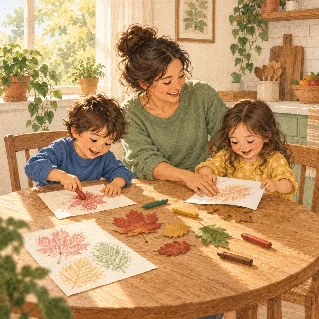
The five-minute family texture hunt

The five-minute family texture hunt

When the afternoon is half gone and nobody has the energy to start something, one sheet of paper and one crayon can still turn the table into a family project.

0:00 / 4:58
A zero-cost family game where a sheet of paper and one crayon turn leaves, bark, and household textures into a single rubbing page the family keeps.

What you need

  • Time: about five minutes
  • Materials: one sheet of paper and one crayon or colored pencil for each person, plus one flat textured thing to rub
  • Cost: $0 when paper and crayons are already at home; scrap paper from the recycling bin works
  • Ages: around three and up; a younger child can rub one big shape while an adult holds the paper steady
  • Setting: indoors at one table or on one clear floor patch, or outdoors in one safe spot away from traffic and water

How to play

  1. An adult chooses the boundary: one room or one safe outdoor spot where everyone stays together. Each person then looks for texture instead of color.
  2. Give everyone a turn to bring back one small textured thing, or to point at something too big to move, such as a wall or a wooden floor. A child can point, use a describing word like bumpy or scratchy, or pass.
  3. Place the paper over the texture and hold it still with one hand. Rub the side of the crayon across the paper in short strokes, keeping the crayon flat, until the pattern shows through. A leaf works best with its veins facing up.
  4. Bring every sheet to the middle of the table, and arrange them into one family page or a row of small windows.
  5. Ask each person for one word about how their rubbing feels, and write that word in a corner if the child wants it there.
For preschoolers, tape the paper down so it cannot slide, and hold the far edge while the child rubs. School-age children can rub the same texture in two colors and compare which one shows the pattern better. A shy, tired, or language-learning child can point at a texture, copy a word, or rub in silence. A child with extra energy can be the texture spotter who finds the next thing for the group.
Indoors, the textures are already there: a coin, a key, a woven basket, a rubber mat, or the grain of a wooden chair seat. Outdoors, stay in one spot and rub what is already in reach, such as a fallen leaf or a fence board. In fall, fallen leaves hold the strongest veins. In spring, try a fresh leaf or a flower petal, pressed flat first. In summer, work in the shade and rub bark or stone rather than anything hot in the sun. In winter, bring one leaf or a sprig inside, or rub household textures beside a window.
A grandparent can join by video to suggest one texture to look for, and then the screen goes away while the family rubs.
The hunt stays inside one adult-approved spot, and an adult decides what can be touched. Children do not pick unknown plants, berries, mushrooms, or anything sharp, rusty, or broken. Outdoor safety guidance keeps the plant rule short: leaves of three, leave them be. 1
Keep fingers away from faces and mouths while rubbing, and wash hands when the hunt is done, especially before eating. Crayons are for paper, so keep loose pieces and broken tips away from children who still mouth things. Rub on still surfaces within arm's reach, never on a hot grill, a car hood, or anything that can move. Stop if anyone gets itchy, picks up a splinter, or is simply finished.

This story was produced automatically by a channel. One sentence is all it takes for Neodrop to keep producing for you.

Related content

More from this channel