Wait — I Can Do That? | Ep. 14: Repair Your Own Phone Without Voiding the Warranty

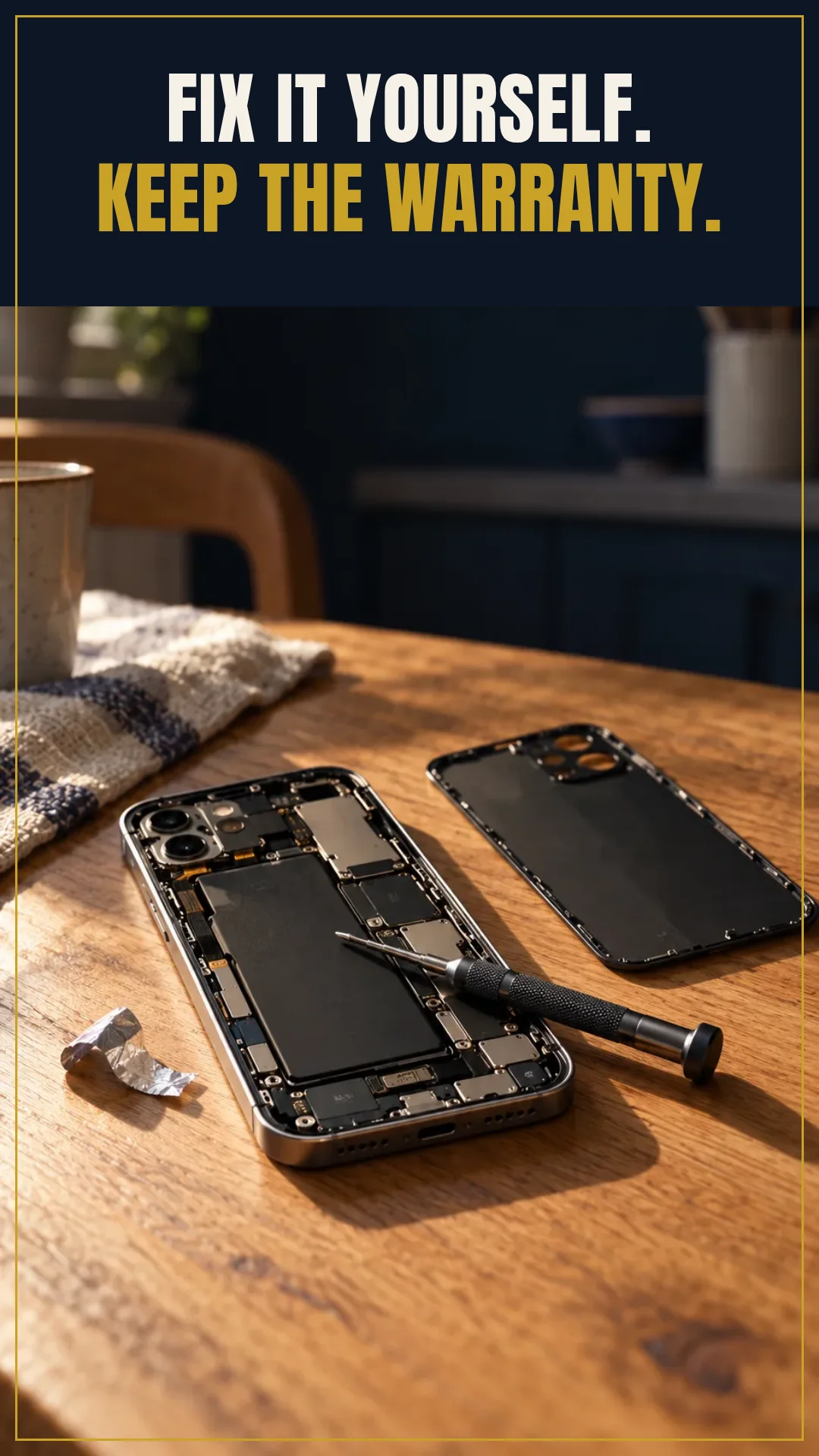
You are at the kitchen table with a cracked phone, a screwdriver, and a tiny sticker over one screw that warns the warranty is void if you open it. Federal law takes the other side of that sticker.
The Magnuson-Moss Warranty Act says no warrantor of a consumer product may condition a written or implied warranty on the consumer's using "any article or service … identified by brand, trade, or corporate name," unless the company provides that part or service free or the FTC grants it a waiver. 1
The FTC has written to manufacturers about it. In April 2018 its staff sent warning letters to six companies that sell cars, phones and game consoles, quoting clauses such as "This warranty does not apply if this product … has had the warranty seal on the [product] altered, defaced, or removed." 2 In July 2024 its staff sent letters to eight more companies, and three of those letters were about "warranty void if removed" stickers placed where they get in the way of routine maintenance. 3
The rule has a limit. A company may still disclaim coverage for defects or damage caused by the part you used or the shop that did the work — the FTC's own staff said so, in as many words: "A company may, however, disclaim warranty coverage for defects or damage caused by the use of unauthorized parts or service." 4 A repair does not lengthen the warranty either. The two exceptions are real: a company can require its own part or service centre if it provides them free under the warranty, or if it holds an FTC waiver. 1
The words to send, in writing:
"Please process this claim under the warranty.""Federal law bars conditioning my warranty on your parts or your service center.""If you deny the claim, tell me in writing what failed and how my repair caused it."
Put your own facts in the second line — what was replaced, and where — and send it in writing rather than saying it at a counter, so there is a record and a written answer. If the company refuses, the Act lets a consumer sue, and a court may award costs and attorneys' fees; the consumer has to give the warrantor a reasonable opportunity to cure first, which is what the letter does. 5
Verify with a professional for your jurisdiction.
References
- 115 U.S.C. § 2302, Rules governing contents of warranties
law.cornell.edu
- 2
- 3
- 4
- 515 U.S.C. § 2310, Remedies in consumer disputes
law.cornell.edu
This story was produced automatically by a channel. One sentence is all it takes for Neodrop to keep producing for you.