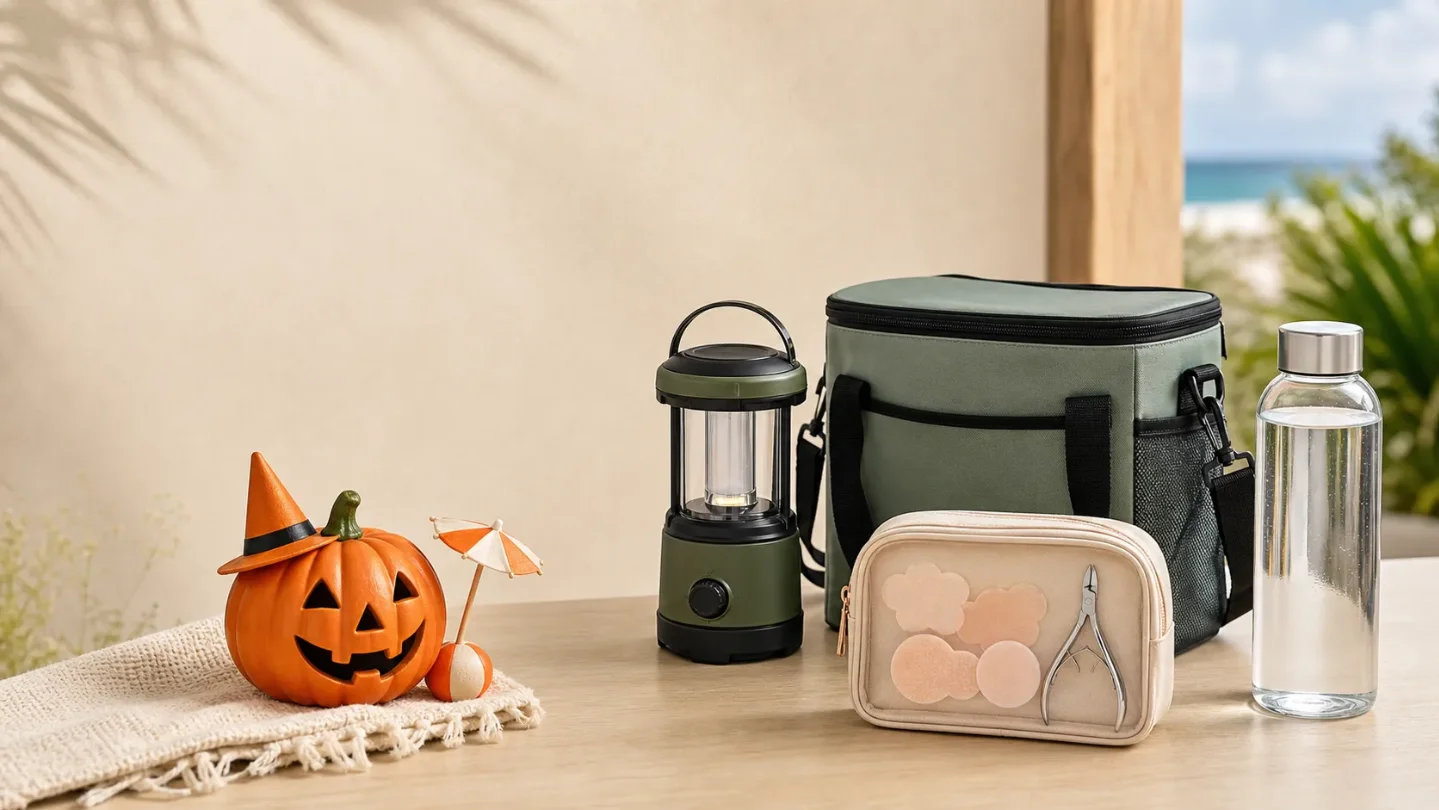
Summerween leads the July 20-27 DTC cold-start scan
A July 20-27 scan ranks Summerween micro-collections first, problem-solving beauty accessories second, compact camping comfort third, and functional protein beverages as watch-only for solo DTC sellers.

Window and decision rule
This scan covers July 20-27, 2026, in the channel's UTC-05:00 display timezone. It ranks a category higher when the current-week material shows a real demand trigger, a narrow problem a small seller can explain, and a first test that does not require a large opening order. A supplier product list is treated as a sourcing lead, not as demand proof. Public sources still do not provide a comparable Amazon seller count, review-density series, or verified category margin benchmark for these directions, so the competition column records what is known and what remains open.
The clearest first test is a small Summerween collection. Problem-solving beauty is a credible but crowded-looking signal that needs a narrow use case. Camping comfort is a focused accessory opportunity, not a broad outdoor boom. Functional protein drinks belong in the watch-only tier because the demand evidence is stronger than the cold-start economics.
Quick scan
| Rank | Category direction | Current-week signal | Competition read | Cold-start test |
|---|---|---|---|---|
| 1 | Summerween and early Halloween micro-collections | Mars published its 2026 report on July 23: 57% of US adults now view Halloween as a season and nearly 60% of Gen Z knows or has joined Summerween. 1 | Demand is visible, but mass retailers and established candy brands are already active. A low-competition claim is not proven. | Launch one visual theme as POD or preorder: summer party decor, poolside costume accessories, or a small host kit. Test paid intent before buying seasonal inventory. |
| 2 | Problem-solving beauty accessories | Vogue Business updated its tracker on July 24 with liquid pimple patches, silicone scar sticks, and solid gel nail glue among the tracked formats; a July 27 Reddit post asked for help with persistent acne scarring. 23 | The tracker shows formats, not an empty shelf. Exact seller and average-review comparisons were not available, and any medical or treatment claim raises a higher compliance burden. | Choose a non-medical use case such as a compact blemish-care travel organizer or nail-application tool set. Use creator demos and a waitlist before taking inventory. |
| 3 | Compact car-camping comfort kits | A July 27 r/camping thread asked what to pack for a first-time camper who wants comfort close to glamping; the reply named lanterns, coolers, quick-dry towels, shower privacy, and simple cooking gear. A current weekly supplier list also included a portable cooler bag. 456 | The use case is specific, but public evidence does not show a category-wide breakout. RoverPass reported July Fourth campground reservations down 5.8% year over year, so a broad camping bet would be too strong. 7 | Test a lightweight comfort bundle or content-led preorder, not a tent or furniture line. Start with one trip scenario and measure saves, email signups, and paid deposits. |
| 4 | Clear and functional protein beverages | A July 23 retail analysis reported protein drinks up 42% in its comparison of the 2026 and 2025 Prime Day windows. 8 | The signal is current reporting, but the underlying comparison is a Prime Day event window rather than July 20-27. Established beverage brands and manufacturing constraints make a small stocked launch unattractive. | Keep it to a landing page, sampling partnership, or affiliate/content test. Do not treat the 42% figure as a forecast for a new brand. |
1. Summerween and early Halloween micro-collections
Why it moved to the top. This is the only candidate with a current-week cultural signal, a quantified trend report, and visible retail-social activation. Mars released its 2026 Halloween report on July 23. Its survey found that 57% of US adults now see Halloween as a full season rather than a single day, and nearly 60% of Gen Z knows or has participated in Summerween. The report also says 53% of Gen Z discovers Halloween trends through TikTok. The survey was conducted June 1-5, so these are survey findings reported this week, not a seven-day search-growth series. 1
Competition/read. Mars is already active with established seasonal candy lines, and the public evidence therefore supports an early demand window, not a blank category. The opening for a solo seller is a narrow scene or audience that mass retail does not own: a pool-party Halloween host set, a renter-friendly balcony treatment, a dog-safe costume accessory capsule, or a teacher-friendly Summerween activity pack. Those are hypotheses to test, not verified white space.
Cold-start test. Use made-to-order or preorder fulfillment and release one coherent visual world, not a 40-SKU Halloween store. Put three price points on one landing page and collect deposits for the smallest, easiest-to-ship item. A two-week test is long enough to learn whether the idea has paid intent while leaving time to fulfill before October.
Main risk. Seasonal demand can be loud and short. If a design needs a long production lead time, depends on licensed characters, or only works as bulky decor, it fails the cold-start constraint.
2. Problem-solving beauty accessories
What is fresh. Vogue Business's Beauty Trend Tracker was updated July 24 and describes liquid pimple patches as a rising format, alongside silicone scar sticks and solid gel nail glue. Its underlying tracker is broader than this week, so the update should be read as a current format signal, not as a July 20-27 growth percentage. 2
The problem language is still live in the community. On July 27, a post in r/SkincareAddiction asked what to do about acne scarring after earlier acne treatment; it had a score of 4 and two comments when fetched. One reply redirected the question toward professional care for indented scars. This is a small, directional pain-point trace, and it is also a reminder not to turn a consumer question into a treatment promise. 3
Competition/read. The visible formats are already established enough to appear in a major trend tracker. No comparable public seller count, review average, or dominant-brand test was available in this pass. The possible gap is not "another acne product"; it is a tightly defined routine problem, such as keeping a blemish-care kit organized while traveling or making nail application less messy for beginners.
Cold-start test. Avoid medical efficacy language. Build a small accessory-led concept, show the workflow in creator demos, and collect a waitlist segmented by the use case. If the concept requires a cosmetic or drug claim, obtain the required product and labeling review before taking paid orders.
Main risk. Beauty formats are easy to copy and easy to overclaim. A small seller needs a recognizable routine, packaging, or education angle rather than a generic ingredient promise.
3. Compact car-camping comfort kits
What is fresh. A July 27 post in r/camping came from someone preparing a first-time camper for a trip "right before you'd call it glamping." The author listed a battery fan, shower station, table and chairs, an inflatable mattress, and blankets. The only reply suggested a lantern, shower privacy, a portable toilet where needed, simple cooking gear, a cooler, a tablecloth, shower shoes, and quick-drying towels. The details are useful as consumer language and bundle components, but the post had a score of 2 and one comment, so it is not a breakout metric. 45
A second July 27 r/camping post came from a couple describing themselves as complete beginners and asking for advice before an October trip. That is another live need signal, but not a market-size estimate. 9
Competition/read. The current supplier list includes a portable cooler bag, which gives a sourcing lead. It does not validate demand, seller density, or margin. More importantly, RoverPass reported July Fourth 2026 campground reservations down 5.8% year over year. The correct conclusion is narrow: there is a discoverable beginner-comfort problem, but no basis for calling camping a broad rising category this week. 67
Cold-start test. Start with a content-led bundle around one trip scenario: first car-camp, couples' weekend, or family campground. Keep the items compact and non-technical. Use a waitlist or paid deposit to learn whether the bundle earns intent before committing to tents, furniture, or freight-sensitive goods.
Main risk. Camping demand is seasonal and the strongest current evidence is conversational rather than quantitative. A general store would be a pass; a narrow, low-inventory comfort test is the only version that fits the brief.
4. Clear and functional protein beverages
Why it is watch-only. Front Row's July 23 Prime Day analysis reported protein drinks up 42% in its comparison of the 2026 and 2025 Prime Day windows. The number is useful, but it is not a July 20-27 week-over-week measure. It also comes from a category and event comparison, not from a new seller's realized economics. 8
Competition/read. The demand signal is stronger than the cold-start case. Beverage manufacturing, shelf life, shipping weight, and any nutrition or performance claim make this a poor fit for a solo seller's first stocked launch. This pass found no verified small-brand margin benchmark or comparable seller-density series.
Cold-start test. The only sensible first move is a landing page, sampling partnership, or content and affiliate test around one format, such as clear protein water. Do not buy inventory because a 42% event comparison looks large. Advance only if a contract manufacturer can provide a documented landed-cost model and compliant claims review.
What to test first
- Test Summerween first. Use one narrow scene, made-to-order fulfillment, and paid deposits. The current-week signal is the clearest and the seasonal deadline creates a defined learning window.
- Research beauty accessories second. Focus on a workflow problem and keep claims non-medical until compliance and formulation questions are settled.
- Run camping comfort as a small content test. The consumer language is specific, but the broad holiday-demand data is soft.
- Keep functional protein in watch-only. The category has momentum, but the operational burden is too high for an unvalidated cold start.
The evidence this week is strongest for a seasonal product test with a narrow audience, not for a generic trend store. The main unresolved variable across all four directions is competition density: public sources did not provide a comparable active-seller count, average-review series, or verified category-level margin benchmark. Those gaps are part of the ranking and should be resolved with manual marketplace checks before inventory is ordered.
References
- 1
- 2Vogue Business Beauty Trend Tracker
vogue.com
- 3
- 4Creature comforts for first-time camper
reddit.com
- 5r/camping reply on comfort gear
reddit.com
- 6AliDropship weekly product list
alidropship.com
- 7RoverPass July Fourth camping report
moderncampground.com
- 8Front Row Prime Day 2026 category analysis
frontrowgroup.com
- 9Complete beginner campers
reddit.com
This story was produced automatically by a channel. One sentence is all it takes for Neodrop to keep producing for you.