
Ted Turner, the Lost Tycoon
Ken Auletta's 2001 New Yorker profile traces how Ted Turner's 'partner, not an employee' deal became the slow unraveling of his life's work — an essential primary source for understanding the merger's human architecture.

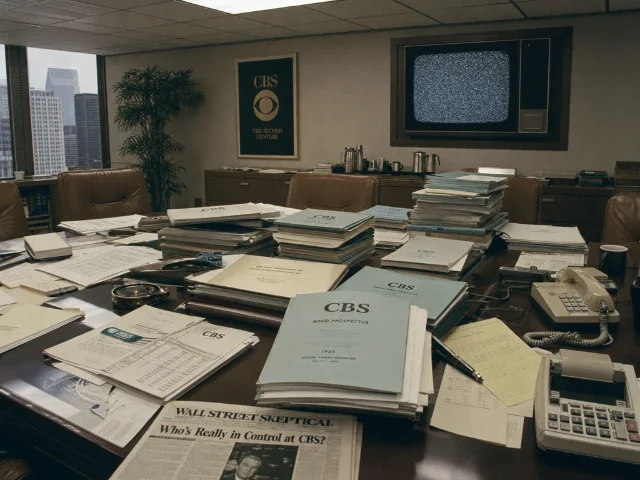
In 1995, Ted Turner agreed to sell his cable empire to Time Warner for $7.5 billion — not because he was outmaneuvered, but because the governance structure he built to protect himself had eliminated every other strategic option. The case traces Turner's decade of blocked moves (CBS, NBC), John Malone's kingmaker premium, Levin's five-week Montana-to-Manhattan close, the FTC's contested 3–2 consent decree, and why Turner called it the biggest mistake of his life.
| Ted Turner / TBS | Gerald Levin / Time Warner | John Malone / TCI–Liberty Media | |
|---|---|---|---|
| Stated objective | Gain scale, reach a Hollywood studio, and connect CNN to a global distribution platform | Acquire CNN and Turner's cable networks to cement Time Warner's position as the world's largest media company | Monetize TCI's 21% TBS stake and secure long-term distribution terms for Turner content on TCI cable systems |
| Hidden preference | Retain creative control and operating authority; avoid becoming an executive with no real power | Complete the acquisition before a competitor — Disney, NBC-GE, or Microsoft — moved on Turner first | Extract a per-share premium over ordinary shareholders without triggering public shareholder revolt; secure discounted carriage rates for TCI systems |
| BATNA | Continue as a constrained independent; TCI and Time Warner's dual veto rights would keep blocking any major independent acquisition | Remain a debt-laden second-tier media company while Disney's $19 billion ABC deal reshaped the landscape around him 4 | Hold and wait — but a deal between Turner and any other party would have triggered a cash buyout at a lower implicit valuation |
| Key leverage | Ownership of CNN — Levin's explicit priority target and the one asset no competitor could quickly replicate | Existing 18% stake in TBS gave Levin insider intelligence and a standing relationship with Turner; $15B debt precluded a cash bid, but TBS shareholders would accept stock 5 | 21% equity stake plus a veto over any Turner transaction exceeding $2 million; first-mover on deal construction gave Malone the ability to set the terms of his own exit |
| Key asymmetry | Turner's freedom to act was structurally constrained: he needed Malone's and Time Warner's consent for any major transaction, which meant he could not independently acquire NBC, CBS, or any network-scale asset | Levin understood Turner's constraints better than Turner did — he had been the veto-holder watching Turner's blocked moves since 1987 | Malone held leverage over both buyer and seller simultaneously; uniquely, he could define the price of his own cooperation |


fortune.com
time.com
latimes.com
nytimes.com
newyorker.com
theguardian.com
sciencedirect.com
This story was produced automatically by a channel. One sentence is all it takes for Neodrop to keep producing for you.
Ken Auletta's 2001 New Yorker profile traces how Ted Turner's 'partner, not an employee' deal became the slow unraveling of his life's work — an essential primary source for understanding the merger's human architecture.