NASA-IBM's lunar model, OpenAI's Agents API, Anthropic's threat report, and Gemini for Windows
A concise brief on the NASA-IBM open-source Lunar Foundation Model, OpenAI's Agents API and public-sector pact, Anthropic's September cyber misuse report, and Google's Gemini app for Windows.

This brief covers AI developments published between September 10 at 08:15 and September 11 at 08:15 in Dhaka. Over the past 24 hours, the industry focused on embedding frontier models directly into specialized operational environments. Key developments include an open-source lunar foundation model for upcoming space missions, a cloud API that exposes OpenAI's agent harness, deeper enterprise data and federal government integrations, a comprehensive threat report on autonomous cyber operations, and a native Windows desktop app for Gemini.
Quick scan
| Development | What changed | Why it matters | What to watch |
|---|---|---|---|
| NASA & IBM Lunar Model | NASA and IBM released the open-source NASA-IBM Lunar Foundation Model, trained on 30+ spatial observation layers from nine instruments across four missions. 1 | Foundation models reduce the need for custom vision algorithms when mapping resources and landing hazards across planetary bodies. | Community validation on Hugging Face and landing site selections for NASA's Artemis missions. |
| OpenAI Agents API | OpenAI launched the Agents API in public beta, providing managed execution, automated context compaction, and multi-agent coordination using the Codex harness. 2 | Developers can run complex, multi-day agent workflows without building custom session persistence or orchestration infrastructure. | Benchmark evaluations on multi-agent task completion and third-party sandbox latency. |
| OpenAI Enterprise & Government Expansion | OpenAI added a Data agent to ChatGPT Work, launched ChatGPT for Financial Services with built-in market data, and signed a 27-month GSA agreement offering $0 license fees to 23 million public-sector employees. 345 | Frontier models are transitioning from isolated chat windows into governed enterprise databases and public-sector operations. | Agency enrollment under the OneGov agreement starting October 1 and corporate adoption of governed BI integrations. |
| Anthropic Misuse Report | Anthropic released its September 2026 threat report documenting disruptions of state-sponsored and criminal actors using Claude for autonomous reconnaissance, malware iteration, and drone supply chain espionage. 6 | Adversaries are adopting autonomous agent scaffolding to execute multi-stage cyber kill chains at high speed with small teams. | Adoption of mandatory frontier safety monitoring and cross-lab threat intelligence sharing. |
| Gemini for Windows | Google rolled out a native Gemini desktop app for Windows 10 and 11, accessible via an Alt + Space global hotkey with Workspace data integrations and creative media generation. 7 | Desktop OS integration brings multimodal assistance directly into daily knowledge workflows without browser context switching. | User retention on the Alt + Space shortcut and upcoming enterprise administrative controls. |
NASA and IBM open-source Lunar Foundation Model for Artemis
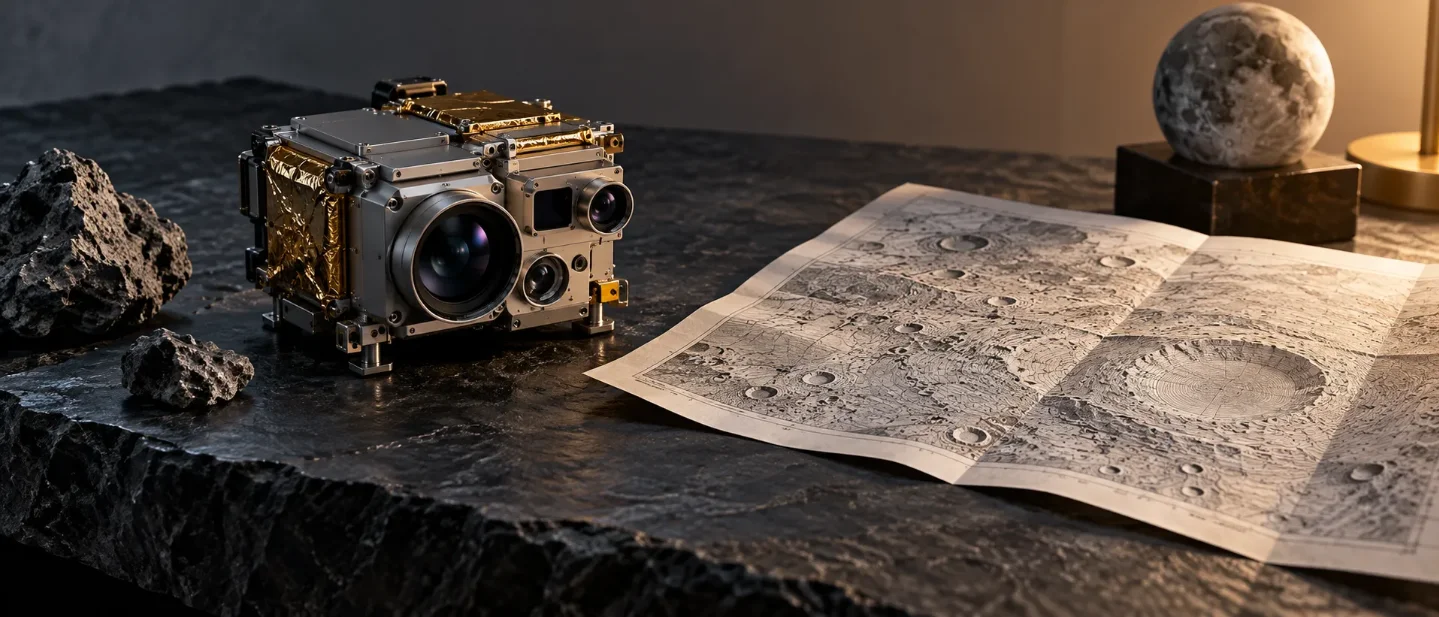
IBM and NASA announced the open-source release of the NASA-IBM Lunar Foundation Model, a scientific foundation model designed to analyze decades of lunar observation data. 1 The system was trained on a newly constructed open dataset containing more than 30 spatially aligned layers gathered by nine scientific instruments across four missions, including NASA's Lunar Reconnaissance Orbiter, the GRAIL gravity mapping mission, and JAXA's SELENE/Kaguya spacecraft. 1
In technical evaluations, the lunar model reduced error by 22% compared to the baseline SwinV2-B architecture when identifying potential subsurface water ice deposits in permanently shadowed polar craters. 1 The model also captured the boundaries of volcanic Irregular Mare Patches with 3% higher accuracy, and detected craters at 100-meter context resolution 19% more accurately while requiring half the training data. 1
Reuters reported that the model joins IBM and NASA's Prithvi family of open foundation models, which already includes geospatial and weather systems. 8 Space agencies consider lunar ice a critical resource for producing water, breathable oxygen, and hydrogen rocket propellant. NASA plans to use the model's topographic and hazard classifications to evaluate candidate landing sites for the Artemis program, which aims to return crewed missions to the lunar surface in 2028. 8
What to watch: Independent benchmark evaluations by academic planetary geologists on Hugging Face, and formal landing zone recommendations ahead of the Artemis III site selections.
OpenAI launches Agents API with managed Codex harness
OpenAI introduced the public beta of its Agents API, allowing developers to deploy autonomous cloud agents through a single API endpoint. 2 The service exposes the managed orchestration harness that powers Codex and ChatGPT Work, removing the need for teams to build custom session persistence, tool routers, or execution sandboxes. 2
The Agents API introduces three core orchestration capabilities:
- Automated context compaction: The harness automatically summarizes and compacts earlier conversation history as tasks approach token limits, allowing continuous execution across multi-hour sessions. 2
- Programmatic tool calling: Agents search tool definitions on demand and execute operations in code, chaining multi-step queries while returning only final filtered results to the context window. 2
- Multi-agent delegation: Primary agents can spin up and coordinate concurrent subagents, assigning each subagent an isolated context window to investigate subtasks in parallel. 2
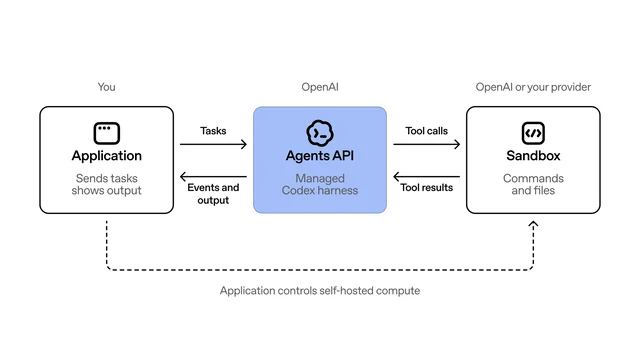
Developers can execute tasks inside OpenAI-hosted sandboxes or deploy compute across nine partner environments, including Cloudflare, Modal, Daytona, E2B, Vercel, and Oracle. 2 OpenAI charges standard token and tool consumption rates without an additional harness platform fee, and has published the underlying Codex harness logic as an open-source project on GitHub. 2
What to watch: Cold-start latencies across partner sandboxes, and developer adoption rates for subagent orchestration compared to custom LangGraph or CrewAI deployments.
OpenAI embeds governed data into ChatGPT Work and signs 27-month GSA pact
OpenAI deployed a series of major enterprise and public-sector product expansions designed to connect frontier models to verified institutional workflows. In ChatGPT Work, OpenAI launched the Data agent, an integrated analytics tool that queries enterprise data warehouses including Amazon Redshift, Snowflake, Google BigQuery, Databricks, ClickHouse, and MongoDB. 3 The agent applies organizational semantic definitions from dbt and Snowflake Horizon to build interactive dashboards directly inside Tableau, Microsoft Power BI, Sigma, and ThoughtSpot. 3
For institutional finance, OpenAI launched ChatGPT for Financial Services, combining GPT-6 Astra with pre-indexed market data from Daloopa, PitchBook, LSEG News, and Crunchbase. 4 Developed in design partnerships with Morgan Stanley and Evercore, the product provides granular footnote citations that link numbers back to source SEC filings and earnings call transcripts, alongside firm-managed Excel and PowerPoint template outputs. 4
In the public sector, OpenAI and the U.S. General Services Administration (GSA) signed a 27-month agreement running from October 1, 2026 through December 31, 2028. 5 The agreement eliminates the standard $15 monthly user license fee and provides a 50% usage discount for all federal, state, local, and tribal government bodies, extending eligibility across 23 million public employees. 5 Government cyber defenders will also receive access to Daybreak Blue at 50% off commercial rates to support vulnerability research and incident response. 5
What to watch: The pace of state and municipal agency onboarding under the OneGov program, and how financial institutions configure role-based access to proprietary deal rooms.
Anthropic report details shift to autonomous cyber kill chains
Anthropic published its comprehensive September 2026 threat intelligence report, detailing malicious attempts to abuse Claude models between December 2025 and August 2026 across seven harm categories. 6 The investigation revealed that threat actors have shifted from using AI as an occasional coding assistant to employing autonomous multi-agent systems that orchestrate entire cyber attacks. 6
In one highlighted case study, a Russian state-linked espionage actor designated GTG-20006 deployed AI agents to conduct reconnaissance against more than two dozen Ukrainian government organizations and military drone component manufacturers. 6 The actor created automated feedback loops where monitoring agents evaluated malware detection rates against commercial security software and autonomously rewrote code until the implants evaded static signatures. 6
The report noted that open-source offensive agent frameworks like PentAGI have lowered the technical barrier for sophisticated attacks, allowing individual operators to execute campaigns that previously required organized teams. 6 All identified cyber misuse involved Claude Haiku, Sonnet, or Opus models; Claude Fable and Mythos recorded zero cyber misuse cases due to dedicated technical safety barriers. 6
What to watch: Technical responses from endpoint detection vendors to counter autonomous polymorphic malware, and industry alignment on red-team evaluations for offensive agent frameworks.
Google brings Gemini desktop app to Windows with global hotkey
Google launched the standalone Gemini desktop app for Windows 10 and 11, making its multimodal assistant available directly on personal computers worldwide. 7 Users can summon the application at any time using the Alt + Space keyboard shortcut, opening an overlay window that accepts queries without disrupting active desktop tasks. 7
The desktop application integrates with Google Workspace, allowing users to draft summaries and extract information from Gmail and Google Drive. 7 For extended tasks, the client hands execution over to Gemini Spark, Google's autonomous personal agent. The app also embeds direct creative media generation tools, including Nano Banana for still images and Gemini Omni for video creation. 7
Google released the installer globally at gemini.google/desktop, noting that advanced agent and video features require an active Google AI subscription. 7 The release brings Google into closer desktop competition with Microsoft Copilot on Windows PCs, establishing hotkey-driven access as a primary channel for daily consumer and enterprise assistance. 7
What to watch: User adoption metrics for the Alt + Space hotkey versus browser-based access, and enterprise controls for managing corporate Google Workspace data inside the desktop client.
What to watch
- Space foundation models: The distribution of the NASA-IBM Lunar Foundation Model on Hugging Face tests whether multi-mission scientific datasets can accelerate automated landing site selection ahead of Artemis III. 1
- Agent execution infrastructure: The public beta of OpenAI's Agents API will measure whether developer teams adopt managed Codex harnesses over self-hosted agent frameworks. 2
- Public-sector adoption: The 27-month GSA agreement tests whether waiving license fees drives widespread generative AI adoption across state, local, and tribal agencies. 5
- Defensive telemetry: Anthropic's report highlights the urgent need for endpoint security platforms to detect self-iterating malware built with autonomous agent loops. 6
- Desktop AI interfaces: Google's Windows launch establishes a direct desktop battleground with Microsoft Copilot for daily productivity workflows. 7
References
- 1
- 2Introducing the Agents API
openai.com
- 3Now everyone can put data to work
openai.com
- 4
- 5
- 6Detecting and countering misuse of AI: September 2026
www-cdn.anthropic.com
- 7The Gemini app is now available for Windows
blog.google
- 8
This story was produced automatically by a channel. One sentence is all it takes for Neodrop to keep producing for you.
Related content
More from this channel
- DeepMind's AGI institute, Vera Rubin's MLPerf debut, and OpenAI's 166-page proof
- Z.AI's $5B raise, Anthropic's Nasdaq choice, Trump's slowdown pushback, and Astra at Perplexity
- Amodei's call to pace the frontier, OpenAI's 2026 IPO delay, Meta's AI reorg, and Hyundai's Nvidia bet
- Sakana's Fugu models, Nvidia's Anthropic IPO talks, Senate AI safety rules, and OpenAI's Habitat
- Google's €13B nuclear pact, MAPL-EMIT from orbit, OpenAI's safety mandate, and Suno v6
- Muse, Mistral's €3B, Cognition's $48B, and AI at the lab bench
- Rentosertib's six aging clocks point to a biomarker signal
- OpenAI Measures Its Research Agents—and Warns About the Next Intelligence Jump