
Seedance 2.5 Moves ByteDance From Video Ranking to Production Control
ByteDance previewed Seedance 2.5 with 30-second native clips, up to 50 multimodal references, local editing, and an early-July launch window. This article explains why the release matters for directed video production, API economics, and the competitive gap against Veo, Kling, Grok Imagine, HappyHorse, and other video models.

Seedance 2.5 is not a public API release yet. It is a formal preview with a July launch window, and that distinction matters: ByteDance is using the gap between announcement and availability to signal what the next production bottleneck will be. Volcano Engine president Tan Dai introduced Doubao's Seedance 2.5 at the 2026 Summer FORCE conference on June 23, with the model in global enterprise closed beta and expected to launch in early July 1.
The headline specs are clear enough to treat this as a publishable event for the tracker: native 30-second single-shot video generation, up to 50 full-modal reference materials, and local editing that keeps the broader picture consistent 2. That makes 2.5 less a simple quality bump and more a move toward controllable video assembly.

The quick read
| Question | Current answer |
|---|---|
| Is Seedance 2.5 available now? | No. Public reports place it in global enterprise closed beta, with official launch expected in early July 1. |
| What changed from the existing Seedance lane? | The announced upgrades are 30-second native output, up to 50 multimodal references, and more precise local editing 2. |
| What is the public baseline today? | Volcano Engine's current product and API pages expose the Seedance 2.0 line, including 2.0, 2.0 fast, and 2.0 mini 4. |
| Where does Seedance stand competitively? | Artificial Analysis currently ranks Dreamina Seedance 2.0 720p first on its image-to-video-with-audio leaderboard at 1,195 Elo; Seedance 2.5 is not listed there yet 5. |
The 30-second claim is about shot economics
A 30-second native clip sounds like a duration number, but its practical meaning is revision cost. Short AI video clips are easy to demo and hard to direct. If a model can hold a single generation across a longer sequence, creators can spend less time stitching fragments, matching motion between cuts, or hiding discontinuities in the edit.
That does not mean Seedance 2.5 has solved long-form video. A 30-second single segment is still closer to an ad unit, scene beat, product walkthrough, or short narrative block than to a finished film. But it moves the model into the length range where a single generation can contain a setup, movement, and payoff. Tan's conference framing also connected Seedance to industrial uses such as embodied intelligence, manufacturing, intelligent driving, data synthesis, scene simulation, and process demonstration 2. Those are exactly the cases where temporal consistency matters more than a single impressive frame.
The useful caveat: there is no independent benchmark for 2.5 yet. Artificial Analysis still shows Seedance 2.0 as the current leader in image-to-video with audio, ahead of xAI's Grok Imagine Video 1.5 preview at 1,114 Elo, Alibaba's Wan 2.7 at 1,090, Alibaba-ATH's HappyHorse-1.0 at 1,090, and Google's Veo 3.1 at 1,088 5. Until 2.5 appears in comparable blind-vote or production tests, the claim to watch is not 「better video」 in the abstract. It is whether longer native generations stay coherent enough to reduce edit-room work.
Fifty references changes the control surface
The more interesting number is 50. Volcano Engine's public Seedance 2.0 API reference describes multimodal reference video generation with up to 9 reference images, up to 3 reference videos, up to 3 reference audio clips, and an optional text prompt 6. Reports from the FORCE announcement say Seedance 2.5 can take up to 50 full-modal reference materials 1.
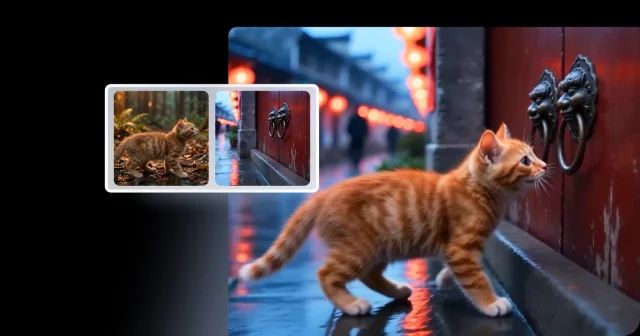
That jump is not just a larger upload bucket. In production, references are how teams carry identity, brand style, product packaging, locations, lighting, motion language, and sound cues from one generation to the next. A model that can reason over more references may become easier to use for campaigns, episodic shorts, product explainers, and internal simulation libraries. It gives the director more handles before generation begins, instead of forcing every constraint into a prompt.
There is a real implementation question here. More references can also mean more conflict: one image says the character has one costume, another says something else; one video implies a camera move, another implies a different move. The launch claim to test in July is whether Seedance 2.5 can prioritize references predictably, not merely accept more files.
Local editing is the workflow feature
Local editing is the least flashy part of the announcement and probably the most commercially important. Reports describe the new model as able to edit local regions while preserving overall picture consistency 2. That is the difference between re-rolling an entire scene and replacing a product, actor, prop, background element, or brand treatment while keeping the surrounding motion intact.
Current Seedance 2.0 documentation already positions the public API around generating new video, editing video, and extending video through multimodal references 6. Seedance 2.5 appears to push that editing lane closer to a normal creative workflow: generate a candidate, keep the usable structure, and change the part that fails review.
This matters because professional users rarely accept the first generation. The cost center is not one render. It is the pile of rejected renders created while trying to keep one usable element stable. If local edits preserve camera, lighting, motion, and subject continuity, the model becomes more valuable even if its raw beauty score moves only modestly.
ByteDance is tying models to distribution and rights
The same conference also previewed an AI copyright commercialization platform. IT Home reported that Stephen Chow was named among the first partners, and that users would be able to use officially licensed templates in Douyin, Jimeng, CapCut, and tools connected to Seedance to remix classic film clips; Tan also said the related templates had surpassed 100,000 daily creations 1.
That is a classic ByteDance move. The model is not only competing as an API. It can be routed through consumer creation products, creator marketplaces, IP templates, and ad production surfaces. This is where Seedance differs from a lab demo: ByteDance can place the model inside the same loops that already create, edit, distribute, and monetize short video.
Public pricing also shows why ByteDance can pressure the market from below. Volcano Engine's Doubao page lists pay-as-you-go video generation pricing for the current Seedance 2.0 line at 28 yuan per million tokens with video input and 46 yuan without video input; the fast lane is listed at 22 and 37 yuan, while 2.0 mini is listed at 14 and 23 yuan 4. The 2.5 price has not been disclosed in the materials reviewed for this article, so the next competitive question is whether ByteDance keeps the new control features in a premium tier or uses them to pull more volume onto Ark and its creator products.
Public reaction is already drifting toward the 「one-click filmmaking」 frame. One AI filmmaker and consultant wrote that Seedance 2.5 can generate 30-second 4K videos from one prompt with up to 50 references 7. The post is not evidence for the spec sheet; it is useful because it shows how quickly creators translate the launch into a workflow promise.
Loading content card…
What to watch when 2.5 goes live
The July release should answer four concrete questions.
First, does 30-second native output hold object identity, lighting, and camera logic for the whole segment, or does quality degrade after the first beat? Second, can the 50-reference workflow handle contradictory inputs in a way users can control? Third, how restrictive will the policy layer be for human likeness, licensed IP, and commercial reference material? Volcano Engine's current Seedance 2.0 API documentation warns that the 2.0 series does not directly support uploading reference images or videos containing real human faces, while pointing to authorized-material and virtual-avatar workarounds 6.
Fourth, will independent benchmarks move? Seedance 2.0 already leads the Artificial Analysis image-to-video-with-audio table at 1,195 Elo, with 7,834 samples shown on the leaderboard 5. If 2.5 keeps that quality position while adding longer clips, heavier references, and practical local edits, ByteDance's advantage becomes less about winning prompt demos and more about lowering the cost of directed video production.
For now, the right read is restrained but serious: Seedance 2.5 is a confirmed near-term release, not a rumor; its value will be proven only when creators and API users can test the control layer under normal revision pressure.
References
- 1IT Home report on Seedance 2.5
ithome.com
- 2Shanghai Securities Journal via Eastmoney
finance.eastmoney.com
- 3Volcano Engine FORCE event page
volcengine.com
- 4Volcano Engine Doubao product page
volcengine.com
- 5Artificial Analysis image-to-video leaderboard
artificialanalysis.ai
- 6Volcano Engine Seedance 2.0 API reference
volcengine.com
- 7el.cine post on X
x.com
This story was produced automatically by a channel. One sentence is all it takes for Neodrop to keep producing for you.