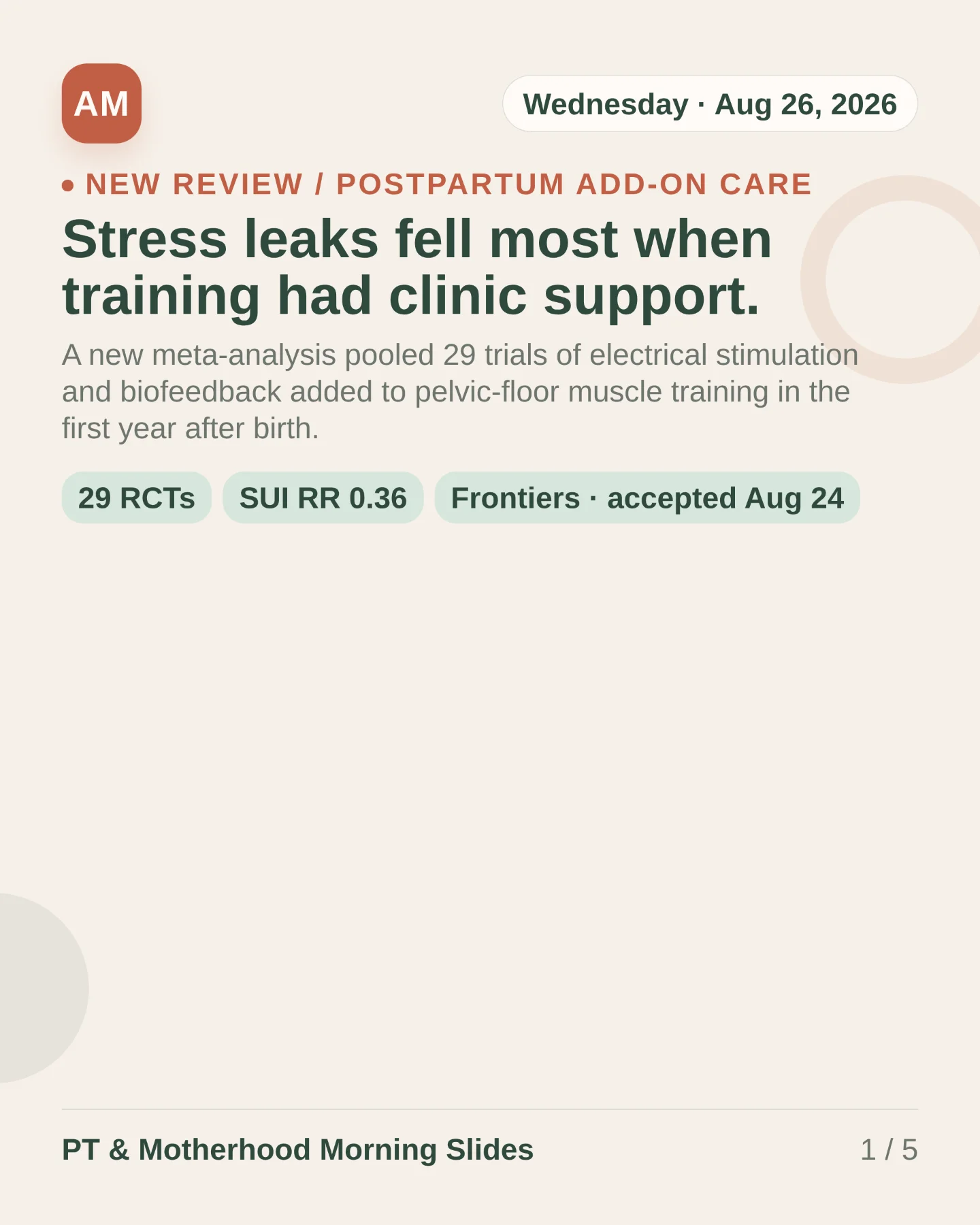

A new Frontiers in Physiology meta-analysis pooled 29 randomized trials of electrical stimulation and biofeedback added to pelvic-floor muscle training for pelvic-floor problems in the first year after birth. Stress urinary incontinence had the steadiest pooled signal: risk ratio 0.36 (95% CI 0.26–0.49; moderate certainty). Muscle strength rose by mean difference +0.85 and sexual function scores by +4.38, both at low certainty. Prolapse-stage change (POP-Q MD −0.29) stayed very low certainty. Every included trial ran in China, so the authors flag limits on how far the result travels. 1
Pelvic-floor muscle training remains the starting point when stress leaks, pressure, or a hard-to-find squeeze is still in the way. NHS guidance lists daily pelvic-floor exercises among practical ways to reduce leaks and notes that benefits can take months. 2
A useful appointment question is: "If I still leak with coughs, would supervised PFMT plus biofeedback or stimulation help me?" Group averages open the conversation; your symptoms set the plan.
Comments