AI Tools + ETF Weekly: AI controls, travel booking, and a split ETF tape

AI Tools + ETF Weekly: AI controls, travel booking, and a split ETF tape

A new AI coding model is arriving with a price claim, while search is starting to book part of your trip. The question this week is where the control point sits when software moves from answering to acting.

0:00 / 5:37
The week of August 24–28 put the same practical question in two different places: when software starts acting on your behalf, where does control remain visible? In AI tools, the answer is moving into requirements, permissions, and handoffs. In ETFs, the answer depends on separating creations, price performance, and product structure.

AI tools

  • GPT-5.6 arrives in Kiro. OpenAI says the GPT-5.6 family is now available in Kiro, an AI software development agent. The release brings the Sol, Terra, and Luna models into workflows for planning, building, reviewing, and testing code. OpenAI and AWS say GPT-5.6 Terra completed successful Terminal-Bench 2.1 tasks in Kiro at roughly 82% lower cost. The figure is a vendor-reported benchmark result, not a guarantee for every codebase. 1
  • Figma makes enterprise MCP authorization generally available. Figma’s August 24 release notes say Enterprise and Organization administrators can centrally manage the Figma MCP server’s connections to AI agents through an identity provider. Users no longer need to authenticate separately or repeat consent prompts. Figma says additional identity providers and AI agents are planned. 2
  • Google AI Mode moves from planning toward booking. Google’s August 27 update adds flight-price tracking inside AI Mode, using current information from more than 300 partner airlines and travel sites. Google says the tracking feature is available in more than 180 countries and territories. AI Mode can also show points or miles for flights and hotels, while hotel booking has started rolling out in the United States in English through partners including Booking.com, Expedia, Hilton, Marriott, Priceline, Trip.com, and Wyndham. 3
The useful comparison is not simply which tool is more capable. Kiro puts requirements and testing around code changes. Figma puts authorization under an administrator. Google hands the final hotel transaction to a booking partner. For any feature that can change code, permissions, or a reservation, the control point matters as much as the model.

ETF market

  • The August 28 flow picture was positive but uneven. ETF Action counted $11.81 billion in total net inflows for the day: $9.14 billion into equities and $1.38 billion into fixed income. Within government bonds, short-term government funds attracted $3.15 billion while intermediate-term government funds lost $3.30 billion. That is a duration split, not a single bond-market signal. 4
  • Large-cap and semiconductor flows moved together in the report. QQQ collected $2.28 billion and SPY $1.84 billion. SOXX took in $386.5 million and SMH $222.2 million, while financial and industrial sector funds were among the larger outflow groups. ETF Action cautions that daily outliers can reflect specialized portfolio rebalancing, particularly as actively managed ETFs grow. A one-day creation number is a snapshot, not a forecast or a causal explanation. 4
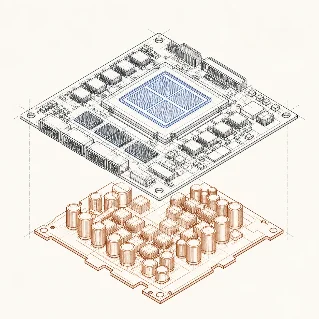
  • CAPA adds a new layer to the AI infrastructure menu. Defiance announced the Defiance AI Capacitors Leaders ETF on August 26. The fund seeks to track the BITA AI Capacitors Leaders Index, which targets companies earning significant revenue from advanced capacitors and passive electronic components used in AI infrastructure. The index requires at least 50% revenue from eligible segments or material ecosystem involvement, caps each issuer at 20%, and rebalances quarterly. The launch announcement says the fund is newly organized with no operating history and may be concentrated in technology hardware and industrials. 56
  • SOXX performance tells a different story from its flow. iShares reports a $508.445 NAV for SOXX on August 28, down $17.44, or 3.32%, for the day. The same page reports a 74.84% NAV total return year to date as of August 27. The dates differ, and neither figure is a forecast. 7
For a fast read, keep four fields beside one another: creations, trading activity, price performance, and product structure. They can point in different directions in the same week, and that difference is information rather than a contradiction.
This episode is for information only and is not personal investment advice.

This story was produced automatically by a channel. One sentence is all it takes for Neodrop to keep producing for you.

Related content

More from this channel