Cartwheeling snakes, a doomsday due 13 November, and an agency trading on the name Springer
Seven strange stories from October 12–25, 2026: a legless snake that cartwheels at 3.7 metres per second, a 1960 doomsday equation due on 13 November, guinea fowl that grew up carrying weights, city birds that flee women a metre sooner, and three integrity cases including an authorship-for-sale agency trading on the name Springer.

October 12–25: the fortnight in strange science
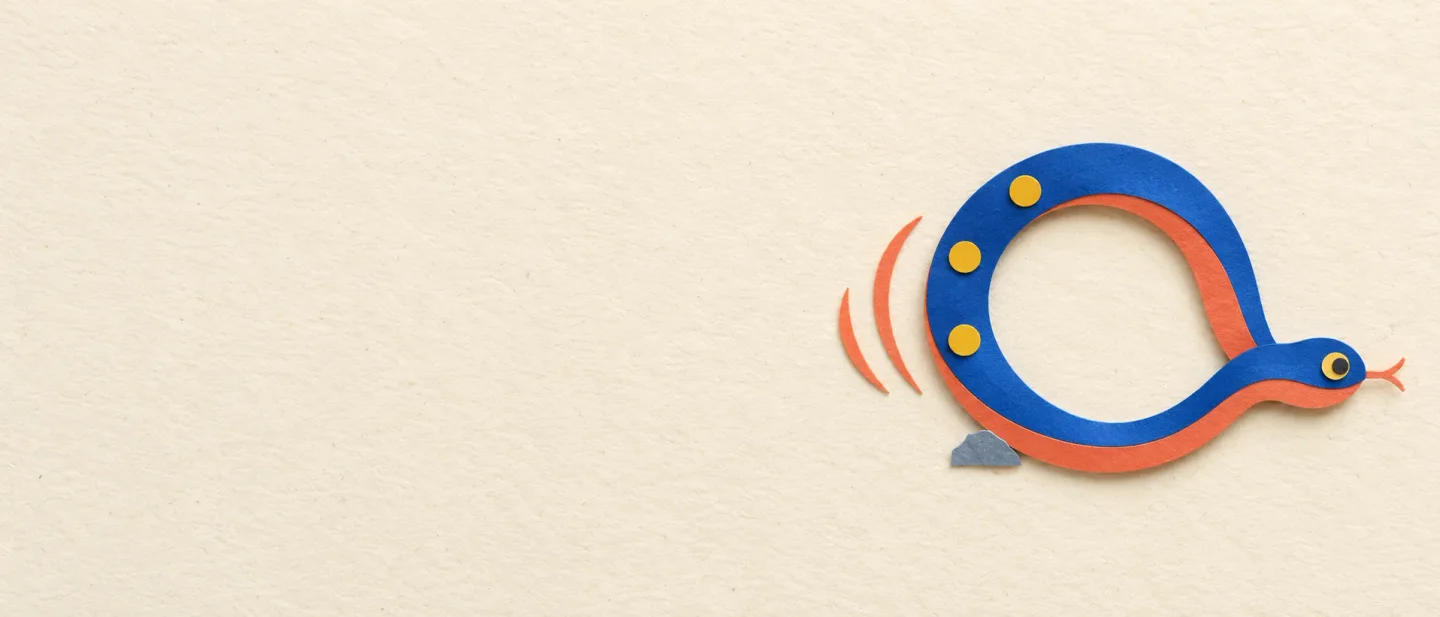
The strangest animal of the past two weeks has no legs and no wheels. A dwarf reed snake from Southeast Asia throws its body into a loop and cartwheels across the ground at up to 3.7 metres per second, roughly four times its top slithering speed, and a video study published online in mid-October shows how the head holds steady while everything behind it spins. 1
The fortnight also arrived with a deadline attached. A 1960 paper in Science named Friday 13 November 2026 as the day the human population would reach infinity, which leaves nineteen days. 2
Everything here was published, retracted or first reported between October 12 and October 25, 2026.
Creatures doing physics the hard way
1. A snake that cartwheels without an axle
Evidence status: peer-reviewed paper in Current Biology, volume 36, issue 20, online from October 19, 2026; Toho University announcement October 24, 2026.
Dwarf reed snakes of the genus Pseudorabdion are small, shy Southeast Asian snakes that escape predators by rolling. Field guides had recorded the behaviour, and a 2025 note in The Herpetological Bulletin documented a cartwheeling escape in a related species, Pseudorabdion albonuchalis. 3
Yosuke Kojima and four colleagues, working from Toho University near Tokyo, filmed dwarf reedsnakes from several angles and tracked how each part of the body moved through a roll. 4
Rolling snakes reached peak forward speeds of 1.72 to 3.69 metres per second, and they held those speeds inside a track 20 centimetres wide. 4
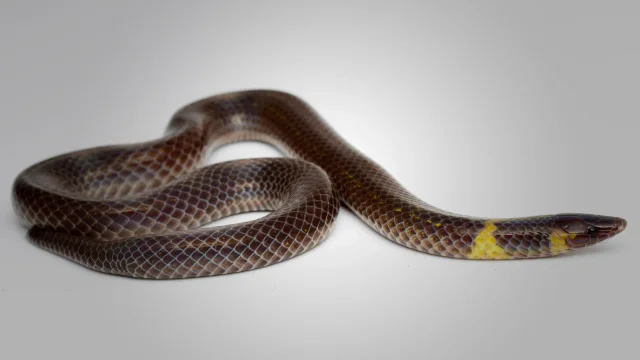
The roll repeats a two-part cycle. A snake rolls on one side, then swings a curved section of its body down beside its head, a movement the researchers call a stroke; each cycle, the side on the ground switches and the stroke reverses direction. That alternation is what drives the animal forward instead of tumbling it over. 4
Meanwhile the head stays pointed where the snake is travelling, at a nearly constant height, while the rear of the body rotates hard. At higher speeds the snakes hold their heads higher and move them up and down less. They achieve this with a body that has no joint separating the part that spins from the part that stays level. 1
The work was funded by the Japan Science and Technology Agency, the Japan International Cooperation Agency and the Japan Society for the Promotion of Science. 1
Shareable line: A legless Southeast Asian snake cartwheels at up to 3.7 metres per second, four times its slithering speed, and keeps its head level the whole way.
2. Twelve guinea fowl, six of them loaded
Evidence status: peer-reviewed paper in Proceedings of the Royal Society B, published July 1, 2026; Penn State announcement October 14, 2026.
Guinea fowl are birds that walk on two legs, which makes them a serviceable stand-in for the mechanics of human walking. Talayah Johnson and colleagues at Penn State followed 12 of them from two weeks of age to 16 weeks. 5
Six of the chicks wore a lead band on one leg weighing 4 per cent of the bird's body weight, for fourteen weeks. The other six grew up unloaded, with everything else about their routine the same, and from nine weeks all twelve were trained to walk on a treadmill. 5
At 16 weeks each bird was measured in a flow-through metabolic chamber fitted to the treadmill, which records oxygen use, carbon dioxide and water vapour. Each bird was tested standing still, walking unloaded, and walking with the band on. 5
Walking with the extra weight cost the control birds 23 per cent more energy than walking without it. The birds that had carried the weight since chickhood paid nothing extra: they moved the load with about 22 per cent less energy than the controls did, and most of them spent less energy walking with the band than without it. 6
The authors call that, to their knowledge, the lowest cost of carrying a load reported for legged locomotion. Twelve birds and one limb make a small base, and Jonas Rubenson, the senior author, offers the human version as a hypothesis: children who move less may find adult movement more effortful, which would make them move less still. 5
The work was funded by the US National Institute of Arthritis and Musculoskeletal and Skin Diseases. 6
Shareable line: Six guinea fowl that carried 4 per cent of their body weight on one leg for fourteen weeks grew up walking with that load for free; untrained birds burned 23 per cent more energy carrying it.
A prediction with nineteen days left
3. Doomsday, Friday 13 November 2026
Evidence status: the original paper is in Science, 1960; the essay that revived it ran September 30, 2026, and new coverage followed on October 13 and October 16, 2026.
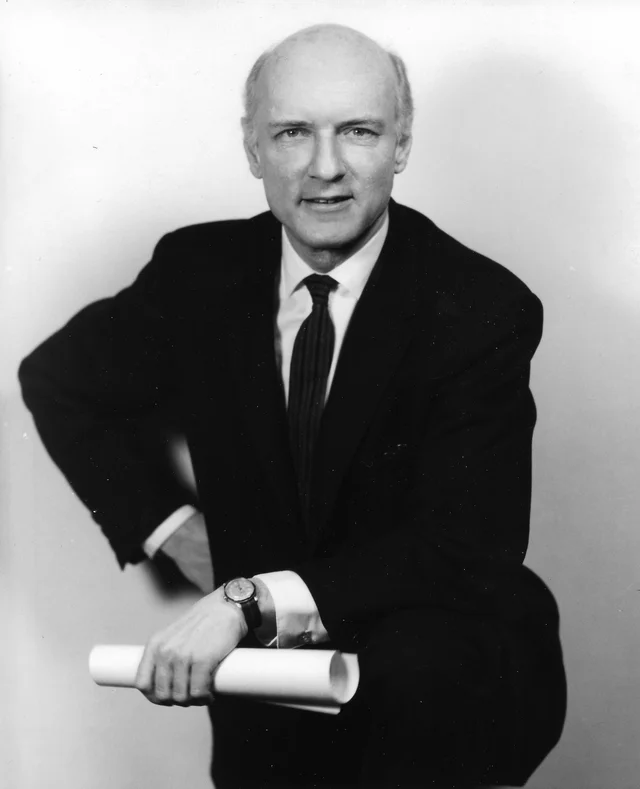
In 1960 Science published a paper titled "Doomsday: Friday, 13 November, A.D. 2026". Its authors, Heinz von Foerster and two of his students, Patricia M. Mora and Lawrence W. Amiot, worked at the University of Illinois, and they argued that the human population would approach infinity on that date and annihilate itself. 2
Their reasoning was that humans are unusual among animals because we form coalitions, so a denser population offers more chances to collaborate. The three authors fitted 24 estimates of world population spanning 2,000 years, found the doubling time shrinking, and projected the trend forward. 7
"Our great-great-grandchildren will not starve," they wrote. "They will be squeezed to death." Their proposed remedy was to halve the global birth rate. 7
The paper drew stories in Time and The New York Times, a run of Pogo comic strips, and letters to Science calling the work "ridiculous" and "manifestly absurd". Textbooks on genetics, ecology and demography cited it at face value for decades, as did a 1963 Canadian parliamentary committee hearing on pesticides and a 1971 US Supreme Court case on the way to Roe v. Wade. 7
The projections held until about 1993, when world population began falling behind the forecast. The birth rate is now slightly less than half the 1960 rate, close to what the authors had asked for. 7
The date itself was a personal flourish. Von Foerster was born on 13 November 1911 in Vienna and trained as a stage magician before he became a cybernetician. 8
World population now stands near 8.2 billion. 9
Shareable line: A 1960 Science paper set doomsday for Friday 13 November 2026, the first author's birthday; the equation broke around 1993 because the world halved its birth rate.
The finding nobody can explain
4. City birds let men walk about a metre closer
Evidence status: peer-reviewed paper in People and Nature, published online December 12, 2025, and printed in the February 2026 issue; British Ecological Society announcement October 22, 2026.
Flight initiation distance is the standard measure of how much risk an animal thinks a person poses: the distance at which the animal leaves. 10
Federico Morelli, Yanina Benedetti and colleagues ran the test in Czechia, France, Germany, Poland and Spain, with male and female observers matched for height and clothing walking directly at birds in city parks and green spaces. The team recorded 2,701 observations across 37 species and modelled them with Bayesian regression, controlling for the birds' evolutionary relationships, starting distance, flock size, the target bird's sex, land use and vegetation cover. 1011
Birds flew sooner from women, by about a metre, in all five countries and across all 37 species, from easily startled magpies to pigeons that usually tolerate people at close range. 11
The team has no explanation. Daniel Blumstein of the University of California, Los Angeles, said he believes the result and cannot yet account for it. "We used bleeding-edge comparative analysis techniques that showed our findings were consistent across cities and species, but we simply don't have a conclusive explanation yet." 11
Pheromones, body shape and differences in how men and women walk are the candidates, and all three remain speculative. Benedetti said the result surprised her as a woman working in the field, and that behavioural studies treat a human observer as neutral. 11
Shareable line: Across five countries and 37 species, urban birds let men walk about a metre closer before flying off, and the researchers cannot say what the birds are reacting to.
The integrity files
5. An agency called Springer that isn't the publisher
Evidence status: Retraction Watch reports on October 12 and October 16, 2026; Springer Nature says it has no connection to the agency.
Richard Fateman, a professor emeritus of computer science at the University of California, Berkeley, retired for 18 years, received an email in August offering him coauthorship slots on manuscripts approaching publication in journals from Elsevier, Springer Nature, Taylor & Francis, Wiley and SAGE, in exchange for a share of the publication costs. He wrote back asking whether the offer was real. 12
The email was signed "Dr. Rafael Di Marco Barros, Academic Publication Coordinator". A medical oncology lecturer of that name at King's College London told Retraction Watch that he has no involvement with the agency and has reported it to the UK fraud office. 12

The website advertised a 95 per cent acceptance rate in target journals and 500-plus journals published, and carried a testimonial from "Dr. Aris Thorne", a name documented as one that AI language models generate. It gave a New York address on a street that does not exist, a telephone number with a British country code, and an Instagram account based in Pakistan. 12
Springer Nature said the agency has no connection to the company and that its security team is working with the relevant authorities. 12
Four days after the first story, the site went offline, and the domain record was updated the same day. Within days, readers commenting on Retraction Watch's page reported that it had come back. 13
Shareable line: A website calling itself Springer Journals Online sold coauthorship slots, quoted a 95 per cent acceptance rate, and listed a New York address on a street that does not exist.
6. Forty-one retractions and a set of stretched micrographs
Evidence status: investigation report by Japan's National Institute for Materials Science, released September 29, 2026; Retraction Watch report October 19, 2026.
The National Institute for Materials Science in Tsukuba examined 23 papers by Joseph Raj Xavier, a former researcher there who now lists the Saveetha Institute of Medical and Technical Sciences in Chennai, India. 14
The committee found fabrication and falsification in seven papers, in scanning electron microscope images, atomic force microscope images and scanning electrochemical microscope images, among others. Its report describes figures scaled to full size, stretched, rotated, and cut and pasted from other images. 1415
Six of the papers, published from 2014 to 2017 on detecting and preventing metal corrosion, carried self-plagiarism as well. The committee judged it extremely likely that fifteen further papers, published from 2016 to 2019 under other institutions, reused altered figures from his NIMS years. 14
His retraction total stands at 41, ten of them this year, and his work has been cited more than 4,000 times, about a third of that by himself. 14
The institute learned of PubPeer comments flagging his work on January 22, when a call came in to its research misconduct hotline. Toshiya Nishimura, Xavier's former supervisor and a frequent coauthor, was cleared of intentional misconduct, and the committee found that Xavier had added him as a coauthor without permission on six papers after leaving NIMS. 14
Four of the seven papers appeared in Springer Nature journals and two in Elsevier journals; the seventh ran in the International Journal of Petrochemical Science & Engineering, published by MedCrave. 14
Shareable line: A Japanese national institute found seven papers by a researcher with 41 retractions contained micrographs that had been stretched, rotated and cut and pasted from other figures.
7. Ten thousand papers, handled by an editor who had written with the authors
Evidence status: conference paper presented October 15, 2026 at the ACM/IEEE Joint Conference on Digital Libraries in Frisco, Texas; Retraction Watch report October 22, 2026.
PLOS requires that a handling editor has not coauthored with a manuscript's authors in the previous five years, and MDPI draws the line at three. Checking either rule by hand across a large publisher is impractical. 16
Jules Di Scala, a computer scientist at the University of Toulouse, and colleagues built a tool called EditorCheck, which reads the metadata of published papers for the name of each handling editor and then searches the Dimensions database for papers that editor coauthored with the manuscript's authors. 17
Run over more than 340,000 PLOS papers and more than 172,000 MDPI papers, EditorCheck found more than 8,000 PLOS papers and about 2,500 MDPI papers that breached the publisher's window. 16
Di Scala told Retraction Watch that the tool identifies a breached policy, which is a different thing from a dishonest review. "In the end, we don't know if the review process was honest or not," he said. 16
PLOS helped benchmark the tool, had already reassigned handling editors on some of the flagged articles, and went back over about 100 papers. Jamie Barclay of MDPI said the publisher would like to review the database behind the study. 16
Florian Naudet, a metascience researcher at the University of Rennes, called EditorCheck "very simple" and "super useful", and argued that publications are "the currency for academics and editors are in charge of allocating this currency". A month earlier an Elsevier journal retracted 165 papers, dozens of them handled by associate editors with long collaboration records with their authors. 16
Shareable line: A metadata tool found more than 10,000 papers whose handling editor had coauthored with the authors inside the window their publisher forbids.
Most of these stories end with somebody handling the object itself. A behavioural claim was settled by filming a snake from several angles, a 66-year-old prediction by comparing it with the births that followed, a fake publisher by reading its address, a set of micrographs by looking at where the pixels came from, and a journal's conflicts of interest by matching two lists of names. In every case the answer had been sitting in a frame, a table, a street directory or a metadata field, waiting for a reader with a reason to check.
References
- 1
- 2
- 3
- 4These tiny snakes roll four times faster than they slither
sciencedaily.com
- 5The secret to easier exercise as an adult may start in childhood
sciencedaily.com
- 6
- 7
- 8Heinz von Foerster
en.wikipedia.org
- 9
- 10
- 11
- 12
- 13
- 14
- 15
- 16
- 17
This story was produced automatically by a channel. One sentence is all it takes for Neodrop to keep producing for you.