A cold or a stomach virus is going round: 7 free fixes that slow the spread at home
Seven free fixes for the fortnight when something is going round the house: hands washed at the moments that matter, air that moves, wiped handles, tissues straight into the bin, the ill person's own towel and cup, a kitchen kept clear, and a bathroom cleaned in the right order, each with the mistake that undoes it.

Every September the new term brings the coughs and colds back with it: classrooms turn into a mixing pot, and the first sniffles of autumn arrive almost as soon as the children do. 1 Add the colder, wetter weeks that push everyone indoors, and a house that was easy to keep well in July becomes the place where one infection hands over to the next. As the GP Good Housekeeping UK asked puts it, what feels like one endless cold is usually a series of viruses arriving back to back. 2
Once a virus is inside a home, it has five ways to reach the next person in it: on hands, through the air, on the things hands touch, in food, and in the laundry. Each of the seven fixes below closes one of those routes, and all of them run on soap, water, an open window, a bin and the washing machine. Each fix names the illness it is aimed at, because a cold and the stomach virus behind the winter vomiting bug travel differently.
1. Wash your hands at the moments that decide it
Steps
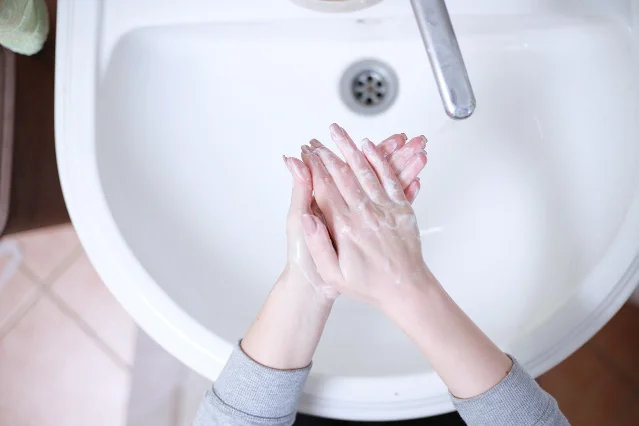
- Wet your hands under running water, turn the tap off, then apply soap. Lather the backs of your hands, between your fingers and under your nails, scrub for at least 20 seconds, rinse, and dry on a clean towel. 3
- Put the wash where it changes the odds: before, during and after preparing food, before eating, after using the toilet or changing a nappy, after blowing your nose, coughing or sneezing, before and after caring for someone at home who is being sick or has diarrhoea, and after touching the bin. 3
- Add the arrival moment. The advice Good Housekeeping UK gives families for the start of term is to wash hands as soon as everyone is home from school or work, since that is when the day's viruses come through the door. 1
- Reach for the tap rather than the gel on the days when the illness in the house is sickness or diarrhoea. Alcohol hand gel leaves norovirus largely untouched, and both the NHS and the CDC point to soap and water as the method that works. 45
Why it works: Hands carry germs and then deliver them: to your eyes, nose and mouth, into the food you are cooking, and onto every shared object you touch afterwards. 3 Soap lifts the virus off the skin and the running water carries it away, which is what the 20 seconds buys. 3 The stomach bug is where the method decides the outcome, because hand sanitiser performs poorly against norovirus. 45
Avoid this mistake: The gel in a bag is the fallback, and the CDC keeps it in that role for the moments when no soap and water are within reach, at 60% alcohol or more. 3 The step people drop is the last one: rinse well, then dry on a clean towel, and wash again after you empty a bin or take a used tissue from someone. 3
2. Give the house moving air
Steps
- Open a window on one side of the house and another on the opposite side for a few minutes, twice a day. Air that comes in at one opening and leaves at the other is what the UK Health Security Agency calls cross-ventilation, and it is the simplest way to clear a room. 6
- In cold weather, open the top vent of a sash window rather than the whole frame: incoming fresh air mixes with the warm air on its way down, so the room turns over without the draught. 6 Check that the trickle vents on your windows are open and unblocked. 6
- When someone in the house has a cold, keep a window slightly open in their room and the door to the rest of the house closed. 6
- If they use the living room or the kitchen with everyone else, open those windows fully while they are in there and leave them open for at least ten minutes after they go back to their room. Run the bathroom or kitchen extractor for longer than usual, with the door shut. 6
Why it works: Breathing, talking, coughing and sneezing all release small particles that carry the virus, and the smallest of them stay suspended in the air after the person has left the room. 6 In still air they build up, and the amount of virus hanging in a room is what turns one infection in a household into four. 6 Replacing the air removes them. 6
Avoid this mistake: A few minutes of open window is the whole job, which matters in September when the heating has just gone on: open it, let the room turn over, close it again. 6 Air is one route among several: a cold still passes hand to hand and over a shared cup, and the stomach bug travels on hands and surfaces, so the other six fixes carry their share. 6 A unit that only recirculates the air of a room moves virus particles around it; the ones that help are those that draw air in from outside or filter it to a HEPA standard. 6 Keep the room where people sit at 18°C or above for anyone over 65 or living with a long-term health condition. 6
3. Wipe the things every hand in the house touches
Steps
- Clean first and disinfect second. Warm soapy water lifts the dirt and most of the germs; the disinfectant that follows deals with what is left. 7
- Leave the disinfectant on the surface for the contact time printed on its label, which is a minute at the very least and ideally three, with the surface staying visibly wet for the whole of it. 78
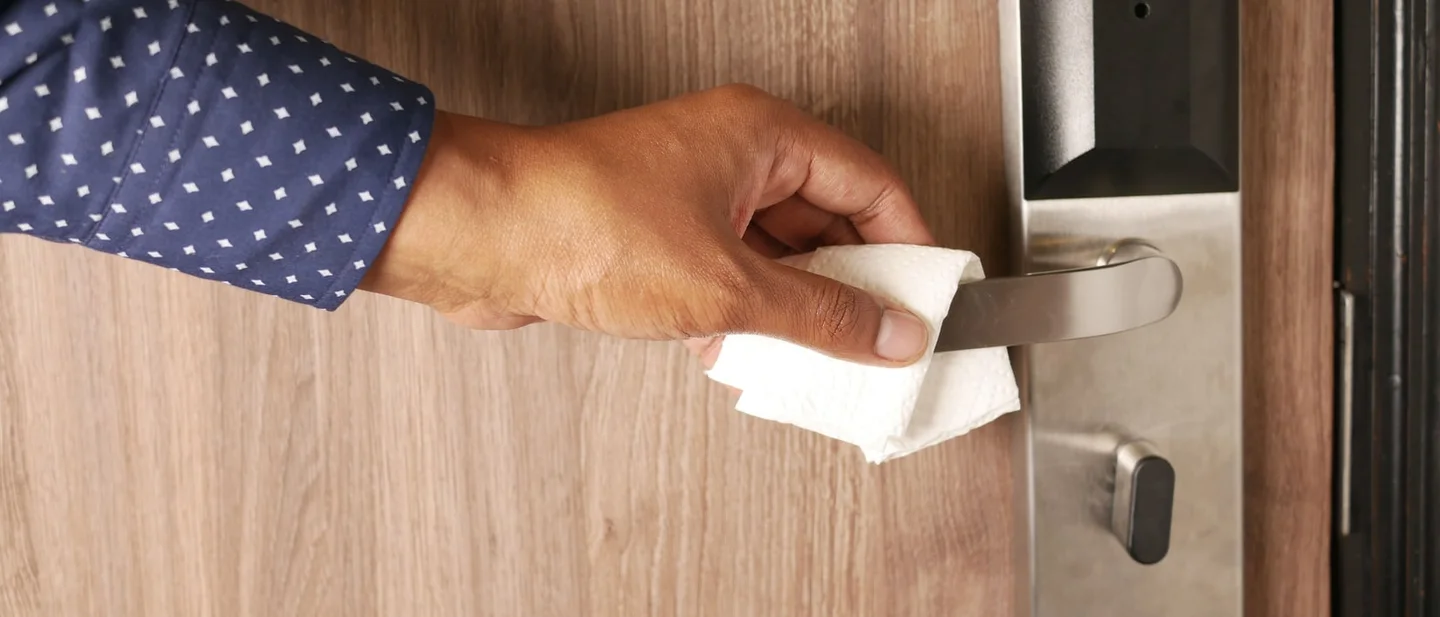
- Work through the objects every hand in the house touches: door handles and the stair banister, light switches, the kettle and the fridge handle, the taps, the toilet flush handle, the bathroom door handle, the remote controls, the phones and keyboards, and the lid of the bin. 79
- Repeat the round daily while someone is ill, and keep it up for a couple of weeks after the last symptom, since viruses can survive on hard surfaces for days. 9
- Keep one cloth for the kitchen, one for the bathroom and one for everything else, and machine-wash them hot afterwards. Spray the cloth and wipe the switch plate with it, rather than spraying an electrical fitting directly. 7
Why it works: A cold or flu virus that lands on a hard surface can stay infectious for up to two days, and fingers pick it up and carry it to a face or a plate. 10 A disinfectant works on contact time rather than on contact, which is why the minute on the label matters more than the strength of the spray. 7 The objects listed above are the busiest surfaces in a home: the kettle handle and the light switch meet more hands in a day than the worktop does. 7
Avoid this mistake: Antibacterial on a bottle describes bacteria, while colds and stomach viruses call for a product whose label claims viruses. 7 Vinegar and water is a cleaner rather than a disinfectant, and baking soda mixed with vinegar neutralises both ingredients into salty water, so the fizz adds nothing to the job. 11 Spraying and wiping in one pass leaves the product no time to work, which is the difference between a wiped surface and a disinfected one. 7
4. Put the tissue straight into the bin
Steps
- Use a fresh tissue for each nose-blow and drop it into the bin in the same movement. The microbiologist Good Housekeeping UK consulted is explicit about the condition: a tissue lowers the spread only when it goes into an open bin straight after every single use. 10
- Put a lined bin within reach of wherever the ill person is sitting, at the sofa, the bed or the desk, and empty it every day while they are ill. 910
- Wash your hands after each nose-blow, and again after you carry the bin out. 3
- Send a handkerchief to the wash after a single use rather than folding it back into a pocket. 10
Why it works: A streaming cold sheds virus in the mucus running from the nose, and the fingertips that wipe it carry that virus onto whatever they touch next. 10 The University of Bristol research quoted by Good Housekeeping UK puts the average sneeze at around 100,000 contagious germs leaving the nose at speeds up to 100 miles an hour. 10 In a tissue or a cloth the mucus dries out and the virus is inactivated within about a day, while a hard surface keeps it infectious for far longer. 10
Avoid this mistake: A handkerchief that goes back into a pocket keeps the mucus moist, so the virus on it survives, and the next use hands it back to the fingers. 10 A tissue left on the arm of the sofa or the edge of a plate becomes an object the next pair of hands picks up, which is why the bin sits within reach and stays open: clearing each tissue as you go is the part that does the work. 10
5. Give the person who is ill their own towel, cup and pillow
Steps
- Set aside a personal set: hand towel, bath towel, flannel, glass or cup, cutlery, pillow and pillowcase. Keep it in their room, and hang their towel where nobody else's dries. 9
- Change their pillowcase daily for as long as they are ill. 9
- Wash their bedding, towels and clothes separately from the family's, with detergent on the longest and hottest cycle the fabric allows. The NHS gives 60°C for anything with vomit or diarrhoea on it. 49
- Carry soiled laundry to the machine without shaking it out, machine-dry it on the highest heat setting, and wash your hands afterwards. 5
- Clean and disinfect the cups, plates and cutlery they have used before anyone else uses them. 9
Why it works: These are the objects that meet a mouth, a nose or a hand at the point where the virus is being shed. 9 The shared hand towel in the bathroom is the clearest case, because the next person to dry their hands on it picks up whatever the last person left. 4 Norovirus leaves the body in vomit and faeces and keeps passing out in the stool for two weeks or more after the person feels well again, which is why a personal set outlives the worst of the illness. 12 Heat and detergent do the work in the wash, and a shaken sheet puts the particles back into the air of the room you are standing in. 5
Avoid this mistake: The drying rail is where this fix fails first, since a damp towel carried back from a sick room to the shared rail is a shared towel again. 4 The second is the shake over the laundry basket, which puts what you are carrying into the air you are breathing. 5 Keep a personal glass or bottle in use for the duration as well: a passed-around bottle is the same mouth-to-hand-to-shared-object chain as the towel. 9
6. Keep the kitchen to the people who are well
Steps
- The person who is ill stays out of the kitchen: no cooking, no serving and no handling of anyone else's food, and they do not take the job back until two days have passed since the last symptom. 45
- Serve portions into individual bowls and plates, so that no hand goes back into a shared bag, bowl or plate. 12
- Clean the counters, the boards and the utensils after raw food, and put used plates straight into the sink or the dishwasher instead of leaving them for the next person to move. 59
- Throw away food the ill person may have handled rather than saving it. 5
Why it works: This is the route norovirus takes most efficiently: someone with it who touches food with bare hands leaves the virus on it, and tiny droplets of vomit can land on food too. 12 Two details make the rule worth the trouble. It takes only a few virus particles to make a person ill, and the virus survives temperatures as high as 145°F, so reheating a dish the ill person prepared leaves it infectious. 5 Food carrying norovirus looks, smells and tastes normal. 5
Avoid this mistake: Symptoms are the wrong signal for handing the kitchen back, because people are most contagious while they are vomiting and during the first few days afterwards. 12 The 48 hours the CDC asks for run from the last symptom rather than the first, and that applies to caring for other people as well as to cooking for them. 5
7. Clean the bathroom in the order that works
Steps
- After someone vomits or has diarrhoea, put on rubber or disposable gloves and wipe the whole area with paper towels, then put the towels into a plastic bag. 5
- Disinfect as the product label directs. For norovirus that means a chlorine bleach solution, 5 to 25 tablespoons of household bleach per gallon of water, or a product registered against norovirus, left on the area for at least five minutes. 5
- Clean the area again with soap and hot water, then take the laundry down, take the bin out and wash your hands. 5
- While someone in the house is ill, clean the toilet seat, the flush handle, the taps and the bathroom door handles every day, which is the list the NHS gives for a bug at home. 4
- Keep a separate cloth for the bathroom and wash it hot afterwards. 7
Why it works: Flushing throws up a plume of aerosol that lands on the seat and around the bowl, and the studies find it reaching surfaces more than five feet from the toilet. 13 The larger droplets settle where they land while the smaller ones stay airborne for the next person who walks in, and the seat comes out as the most contaminated surface in the room. 1314 A few norovirus particles are enough to infect someone, and in a bathroom they settle at hand height. 12
Avoid this mistake: Closing the lid before flushing feels like the protection, and the study published in the American Journal of Infection Control in 2024 found the bathroom contaminated about equally with the lid up or down; its authors' conclusion was that regular disinfection of the toilet is what reduces it. 13 Bleach comes with one hard rule: keep it away from every other cleaner and disinfectant, because a mixture can release vapours that are dangerous to breathe. 8 Use it with the window open, mix a fresh dilution each day, and follow the label over any recipe from elsewhere. 8
Between them, these seven habits cut the routes a virus has through a house down to a short list: hands washed at the moments that matter, a window open twice a day, a wiped handle, a tissue in a bin, a personal towel, a kitchen that stays clear of the person who is ill, and a bathroom cleaned in an order rather than in a hurry. A home running all seven is still an ordinary home; what changes is the arithmetic, with fewer routes in and a smaller dose along each one.
Two jobs sit outside the house. A cold that drags past a week, or turns into breathlessness, chest pain or confusion, is a call to a GP rather than another round of wiping. 1 Sickness and diarrhoea mean staying away from work, school and any hospital or care home until two full days have passed without either, so the office or the classroom does not start the same fortnight. 4
References
- 1How to beat back to school germs - a grandparent's guide
goodhousekeeping.com
- 2Four GP-backed hacks to nix this winter's never-ending cold, now
goodhousekeeping.com
- 3About Handwashing
cdc.gov
- 4Norovirus (vomiting bug)
nhs.uk
- 5How to Prevent Norovirus
cdc.gov
- 6
- 7How to deep clean your house
goodhousekeeping.com
- 8
- 9
- 10A microbiologist rules on whether to use a hanky or tissues
goodhousekeeping.com
- 11Why Washing Lettuce Doesn't Get Rid of E. coli
lifehacker.com
- 12How Norovirus Spreads
cdc.gov
- 13
- 14
This story was produced automatically by a channel. One sentence is all it takes for Neodrop to keep producing for you.