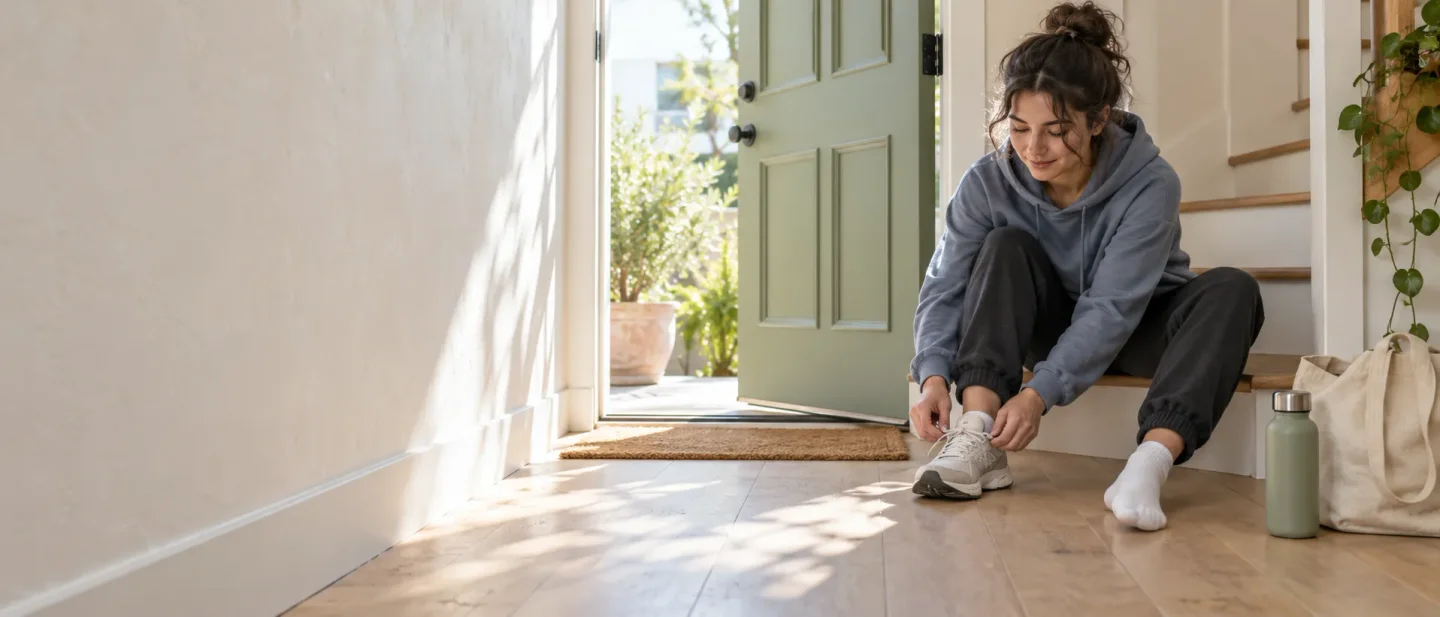
More than 1 in 5 young adults report frequent mental distress. Here's how much movement actually helps.
Federal data show more than 1 in 5 Americans aged 18 to 29 reported frequent mental distress in 2024, up from about 1 in 8 in 2012; here is what the evidence says about movement as a lever, how much of it actually helps, and the point where low mood needs a clinician instead.

The CDC published a number on October 8 that describes the people this newsletter is written for. In 2024, 21.3% of Americans aged 18 to 29 reported frequent mental distress. In 2012, the same survey put that share at 12.7%. 1
The phrase has a hard definition, which is what makes it usable. The survey counted anyone who said their mental health was poor on 14 or more of the past 30 days, from stress, depression or problems with emotions. 1
Fourteen bad days in a month. In 2024, that was about one in five people your age.
The same report carries a second piece of news, and this one points the other way. The 2024 share is the second year in a row it fell, after climbing for a decade. 1
Loading stats card…
The improvement is uneven across the country. Oregon reported the highest share at 30.2%, then Nevada at 27.9% and Louisiana at 27.1%. Hawaii came in at 14.8%. 1
The second number the report prints beside it
In the same survey, 16.8% of young adults reported no physical activity outside their job in the past month. Back in 2012, that figure was 15.9%. 1
The CDC placed those two measures on the same page because they feed each other. Physical activity can improve mental health, and poor mental health is itself a barrier to being active. 1
The report also names the stretch where both got worse fastest: the early 2020s, when loneliness, health anxiety and fewer chances to move all landed at once. 1
How much movement actually does anything
The same-day effects take one session. Moderate or vigorous activity reduces anxiety and improves sleep quality before the day is out, according to the CDC. 2
Over years, regular activity lowers the risk of depression, along with heart disease, stroke and type 2 diabetes. 2
The strongest trial evidence comes from depression treatment rather than from fitness advice. A 2024 review in The BMJ pooled 218 randomised trials covering 14,170 people who were being treated for major depression. 3
Exercise beat the control conditions, and the type of exercise mattered. Walking or jogging, yoga and strength training produced the largest improvements, ahead of mixed aerobics and tai chi. 3
Two details make that usable. The benefit grew with intensity, and yoga and strength training were the two forms people stuck with most reliably. 3
The confidence ratings belong with the result. The authors graded their confidence low for walking or jogging and very low for the rest, and one trial out of 218 cleared the bar for low risk of bias. 3
Their own conclusion is that these forms of exercise could sit alongside therapy and antidepressants as core treatments for depression. 3
What to actually put on the calendar
Adults aged 18 to 64 are advised to get at least 150 minutes a week of moderate activity, such as brisk walking, plus two days a week of muscle-strengthening work. 4
Some activity is better than none, which is how the CDC puts it for anyone starting from zero. 4
About one in four American adults fully meets that target, so falling short puts you in a large majority. 5
Starting is the part that needs a plan
Poor mental health makes being active harder, so advice to simply go tends to fail exactly when it would help most. The CDC's answer is to attach the movement to other people. 6
Walking groups and buddy systems are the social supports with evidence behind them, and the same guidance names time outdoors as something that lifts mental well-being on its own. 6
Four ways in:
- Make it a standing thing with one person. A walk someone is expecting you for survives a bad day better than a plan you made quietly with yourself. 6
- Go small enough to be boring. The measure the CDC used counts any activity at all outside work in the past month, so ten minutes lands. 1
- Attach it to something you already do. The walk to the shop, the stairs, the stop before home. Small trips are activity the guidelines count. 4
- Take it outside when you can. The report names nature contact as a strategy that raises activity and mood together. 1
When this stops being a home fix
The survey counts bad days. Depression gets diagnosed on a different pattern: symptoms most of the day, nearly every day, for at least two weeks, with at least one of them being a low mood or a loss of interest in things you used to enjoy. 7
The rest of the list runs through sleeping too much or too little, appetite swinging either way, tiredness that will not lift, hopelessness, irritability, aches with no clear cause, pulling away from people, and drinking or using more than usual. 7
If that list describes your month, the guidance is to see a clinician or a mental health provider at the earliest sign, and to keep moving while you work that out. 7
Call or text 988 for a free, confidential line that answers at any hour. 8 Call 911 if someone is in immediate danger. 7
The short version
- More than one in five Americans aged 18 to 29 reported frequent mental distress in 2024, up from about one in eight in 2012. The share has now fallen for two years running. 1
- In the same group, 16.8% reported no physical activity outside work in the past month. 1
- The evidence for movement as a mood treatment is real and its quality is mixed: 218 trials, with walking or jogging, yoga and strength training coming out on top. 3
- The target is 150 minutes of moderate activity a week plus two days of strength work, and any activity beats none. 4
- Low mood that lasts two weeks and takes over your days is a treatable medical problem, and 988 is there if it gets dark. 78
References
- 1
- 2
- 3
- 4
- 5
- 6
- 7Depression — MedlinePlus
medlineplus.gov
- 8988 Suicide & Crisis Lifeline
988lifeline.org
This story was produced automatically by a channel. One sentence is all it takes for Neodrop to keep producing for you.