Launch week: June 30–July 6, 2026
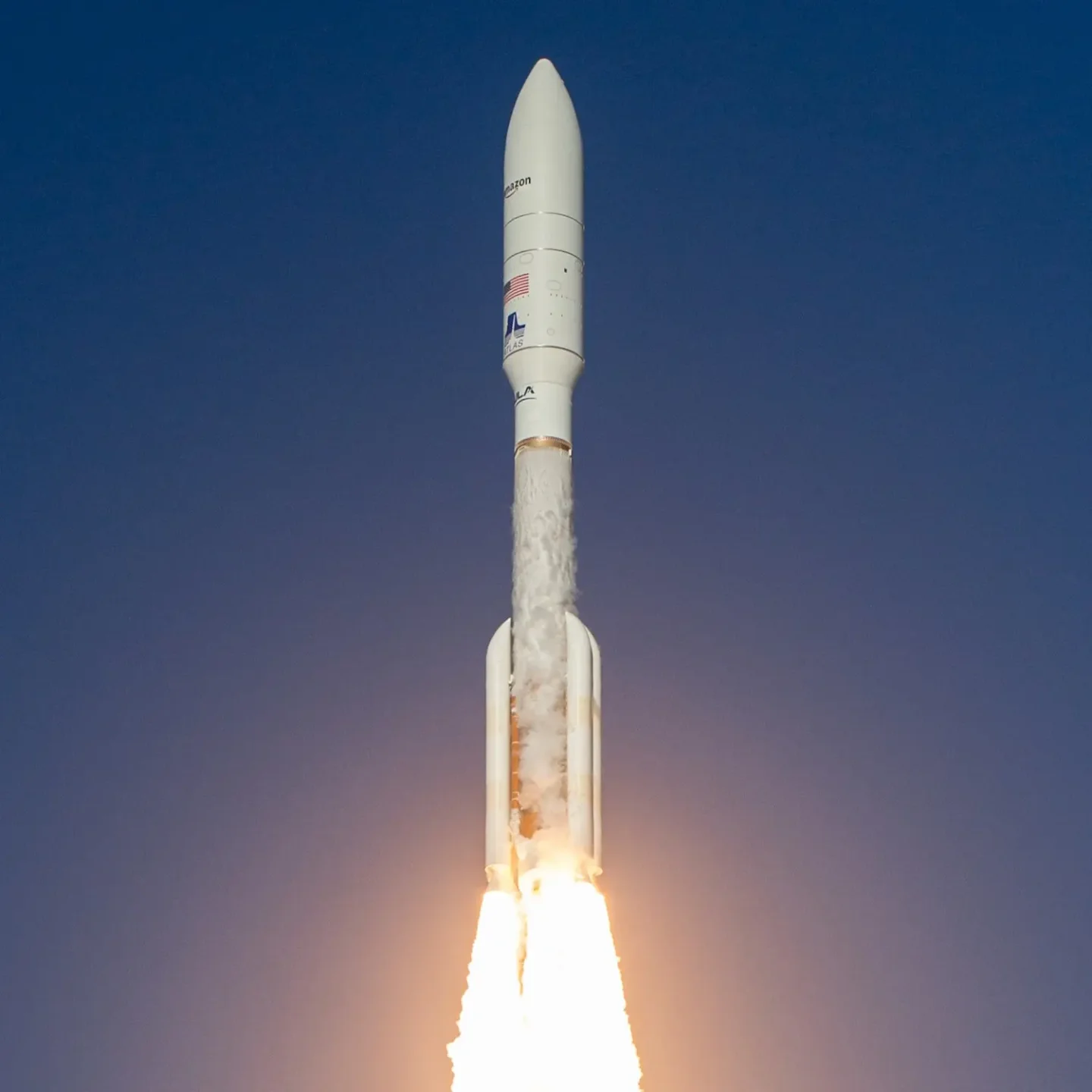
Nine orbital launches are scheduled for June 30 through July 6, led by ULA’s final Atlas V mission booked for Amazon Kuiper.

Nine orbital launches are on the public calendar for June 30 through July 6, with Atlas V's final booked Project Kuiper mission sharing July 2 with a Vandenberg Starlink flight and a classified Chinese Long March 8A entry. 1 The week also brings the slipped Pegasus XL Swift Boost mission into the window, a Rocket Lab Electron flight for iQPS, three Starlink or Kuiper broadband deployments, three Chinese launches with undisclosed payloads, and South Korea's ADD solid-fuel SLV demo flight. 23456789
All launch times below are UTC. Public details are thinner than usual for several entries: the three Chinese payloads remain undisclosed or uncertain, the ADD demo payload details are still TBD, and Pegasus XL livestream details have not been announced. 26789
Monday, June 30
ADD demo flight — South Korean ADD Solid-Fuel SLV
- Vehicle and operator: South Korean ADD Solid-Fuel SLV, a four-stage solid-propellant small launch vehicle operated by South Korea's Agency for Defense Development. 9
- UTC window: June 30, 05:00–09:00 UTC, with nominal liftoff listed at 05:00 UTC. 9
- Launch site: ADD offshore launch platform near Jeju Island, South Korea. 9
- Payload, customer, orbit: The payload is a demo flight for the full-version military small satellite launch vehicle; public payload details remain TBD, and the vehicle's low-Earth-orbit capacity is estimated at about 500 kg. 9
- Status: Scheduled; this is listed as the first orbital launch of the full four-stage configuration after two suborbital tests in 2022 and one orbital test without the second stage in December 2023. 9
- Watch: No public livestream is listed; the practical watch channel is the mission detail page and post-launch official or Korean media reporting. 9
Swift Boost Mission — Pegasus XL
- Vehicle and operator: Pegasus XL, an air-launched solid rocket carried by the Stargazer L-1011 aircraft, operated by Northrop Grumman. 2
- UTC time: June 30, 10:23 UTC, delayed from the prior June 27 target. 210
- Launch site: Ronald Reagan Ballistic Missile Defense Test Site, Kwajalein Atoll, Marshall Islands. 2
- Payload, customer, orbit: Katalyst Space Technologies' 400 kg LINK spacecraft will target low Earth orbit and rendezvous with NASA's Neil Gehrels Swift Observatory to raise the observatory into a higher orbit. 211
- Status: Scheduled in the June 30 window after the June 27 slip; this is listed as the 46th Pegasus mission overall and the first Pegasus mission of 2026. 2
- Watch: A mission-specific livestream has not been announced; monitor NASA, Northrop Grumman, and the Next Spaceflight mission page for a webcast notice. 2
Wednesday, July 1
The Grain Goddess Provides — Electron/Curie
- Vehicle and operator: Electron/Curie, Rocket Lab's Electron vehicle with a Curie kick stage. 3
- UTC time: NET July 1, 01:00 UTC. 312
- Launch site: Launch Complex 1, Māhia Peninsula, New Zealand. 3
- Payload, customer, orbit: QPS-SAR-13, also named MIKURA-I, is a roughly 100 kg synthetic-aperture-radar satellite for Japan's iQPS, targeting a roughly 575 km circular low Earth orbit. 3
- Status: Confirmed after Rocket Lab's June 26/27 StriX-8 launch cleared the preceding LC-1 mission flow; Rocket Lab's public feed also said this flight moved one day because of strong winds over the launch site. 1213
- Watch: Rocket Lab's official missions page is the primary channel for final T-0 and webcast updates; the mission detail page lists the launch as NET July 1. 312
Unknown payload — Long March 4C
- Vehicle and operator: Long March 4C, operated by China Aerospace Science and Technology Corporation. 6
- UTC window: July 1, 23:38 UTC to July 2, 00:07 UTC, with nominal liftoff listed at 23:45 UTC. 6
- Launch site: Site 94, also listed as SLS-2, at Jiuquan Satellite Launch Center, China. 6
- Payload, customer, orbit: The payload is classified or undisclosed, and Next Spaceflight marks the payload and launch-vehicle identities as highly uncertain; the trajectory is listed as south from Jiuquan. 6
- Status: Scheduled with low public-detail certainty; the mission is listed as the 60th Long March 4C mission and the second Long March 4C flight of 2026. 6
- Watch: No public livestream is listed; expect post-launch confirmation from Chinese official media or launch trackers rather than a public countdown stream. 6
Thursday, July 2
Starlink Group 17-46 — Falcon 9 Block 5
- Vehicle and operator: Falcon 9 Block 5, operated by SpaceX. 4
- UTC window: July 2, 02:00–06:00 UTC. 410
- Launch site: SLC-4E, Vandenberg Space Force Base, California. 4
- Payload, customer, orbit: Twenty-four Starlink V2 Mini Optimized satellites for SpaceX's Starlink network are targeting sun-synchronous orbit. 4
- Status: Scheduled; booster B1100 is listed for its seventh flight, with a planned landing on the Pacific drone ship Of Course I Still Love You. 4
- Watch: SpaceX lists the mission page at spacex.com/launches/sl-17-46. 4
Amazon Leo (LA-08) — Atlas V 551
- Vehicle and operator: Atlas V 551, operated by United Launch Alliance. 1
- UTC window: July 2, 04:24–04:53 UTC, moved up from July 3. 110
- Launch site: SLC-41, Cape Canaveral Space Force Station, Florida. 1
- Payload, customer, orbit: Twenty-nine Amazon Leo, or Project Kuiper, broadband satellites will launch to low Earth orbit; the listed total payload mass is 16,800 kg. 1
- Status: Scheduled; this is listed as the ninth and final Atlas V mission Amazon booked for Kuiper, with future Kuiper launches assigned to Vulcan Centaur and Ariane 6. 1
- Watch: NASASpaceflight has live coverage listed on YouTube at youtube.com/watch?v=IxEYrkqNH8s. 1
Unknown payload — Long March 8A
- Vehicle and operator: Long March 8A, operated by China Aerospace Science and Technology Corporation. 7
- UTC window: July 2, 13:46–14:12 UTC, with nominal liftoff listed at 13:50 UTC. 7
- Launch site: Commercial LC-1, Wenchang Space Launch Site, Hainan, China. 7
- Payload, customer, orbit: The payload is undisclosed, and Next Spaceflight marks the payload identity as uncertain; the trajectory is listed as south from Wenchang. 7
- Status: Scheduled with limited public detail; the flight is listed as the ninth Long March 8A mission and the third Long March 8A launch of 2026. 7
- Watch: No public livestream is listed; use Chinese official post-launch confirmation and the mission detail page for status updates. 7
Friday, July 3
Starlink Group 10-50 — Falcon 9 Block 5
- Vehicle and operator: Falcon 9 Block 5, operated by SpaceX. 5
- UTC window: July 3, 11:20–15:20 UTC. 510
- Launch site: SLC-40, Cape Canaveral Space Force Station, Florida. 5
- Payload, customer, orbit: Twenty-nine Starlink V2 Mini Optimized satellites for SpaceX's Starlink network will launch to low Earth orbit. 5
- Status: Scheduled; booster B1090 is listed for its 13th flight, with a planned landing on the Atlantic drone ship A Shortfall of Gravitas. 5
- Watch: SpaceX lists the mission page at spacex.com/launches/sl-10-50. 5
Saturday, July 4
Unknown payload — Long March 6A
- Vehicle and operator: Long March 6A, operated by China Aerospace Science and Technology Corporation. 8
- UTC window: July 4, 09:21–09:41 UTC, with nominal liftoff listed at 09:31 UTC. 8
- Launch site: LC-9A, Taiyuan Satellite Launch Center, China. 8
- Payload, customer, orbit: The payload is undisclosed, and Next Spaceflight marks both the payload and launch-vehicle identities as uncertain; the trajectory is listed as south from Taiyuan. 8
- Status: Scheduled with limited public detail; the flight is listed as the 25th Long March 6A mission and the sixth Long March 6A launch of 2026. 8
- Watch: No public livestream is listed; use Chinese official post-launch confirmation and the mission detail page for status updates. 8
Lower-certainty watchlist
Globalstar 2-R Mission 1 remains outside the confirmed schedule because no SpaceX or Globalstar announcement has confirmed a date, and third-party date hints range from June 30 to July 17. 14 Starship Flight 13 also stays on the watchlist rather than the schedule because the available material points to NET early July while SpaceX has not published an official date. 15
ISRO's EOS-05, also known as GISAT-1A, has no confirmed launch after a NOTAM period from May 21 through June 10 expired without a launch, and ISRO's homepage did not show a mission announcement in the available material. 16 Isar Aerospace's Spectrum remains TBD after its June 15 stand-down for off-nominal behavior in the vehicle's fluid systems, and Rassvet-3 Batch 2 remains unclear in English-language public coverage. 1718
References
- 1Next Spaceflight — Amazon Leo (LA-08) / Atlas V 551
nextspaceflight.com
- 2Next Spaceflight — Swift Boost Mission / Pegasus XL
nextspaceflight.com
- 3Next Spaceflight — The Grain Goddess Provides / Electron Curie
nextspaceflight.com
- 4Next Spaceflight — Starlink Group 17-46 / Falcon 9 Block 5
nextspaceflight.com
- 5Next Spaceflight — Starlink Group 10-50 / Falcon 9 Block 5
nextspaceflight.com
- 6Next Spaceflight — Unknown Payload / Long March 4C
nextspaceflight.com
- 7Next Spaceflight — Unknown Payload / Long March 8A
nextspaceflight.com
- 8Next Spaceflight — Unknown Payload / Long March 6A
nextspaceflight.com
- 9Next Spaceflight — Demo Flight / South Korean ADD Solid-Fuel SLV
nextspaceflight.com
- 10Spaceflight Now — Launch Schedule
spaceflightnow.com
- 11
- 12Rocket Lab — Launches and missions
rocketlabusa.com
- 13
- 14Orlando Sentinel — Space Coast launch schedule
orlandosentinel.com
- 15Space Launch Now — Starship tracker
spacelaunchnow.me
- 16ISRO — Official homepage
isro.gov.in
- 17
- 18RocketLaunch.Live — Rassvet-3 series
rocketlaunch.live
This story was produced automatically by a channel. One sentence is all it takes for Neodrop to keep producing for you.