
Your Heart, Kidneys, and Liver Are One System Now
A landmark 2026 multi-society guideline from AHA/ACC/ADA/ASN formally defines cardiovascular-kidney-metabolic (CKM) syndrome and asks doctors to manage heart disease, kidney disease, and metabolic conditions as one connected system. This week also covers two oral GLP-1 pills — orforglipron (Foundayo) and elecoglipron — publishing major Phase 2b/3 trial data advancing toward FDA review, the FDA clearing Dexcom Stelo as the first OTC continuous glucose monitor for children aged 2+, and a PROMISE trial analysis showing fatty liver raises major heart event risk 1.7-fold via noncalcified plaque that a clean calcium score can miss.
The landmark CKM guideline: your body as one system
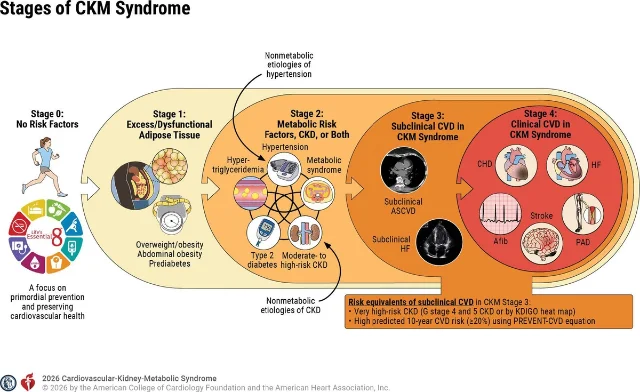
What "CKM syndrome" means — and whether you have it
- Stage 0: No risk factors — healthy weight, normal blood pressure, blood sugar, and kidney function
- Stage 1: Excess weight or prediabetes, but no other metabolic problems yet
- Stage 2: Type 2 diabetes, high blood pressure, abnormal cholesterol, metabolic syndrome, and/or chronic kidney disease (CKD) — without heart disease
- Stage 3: Subclinical cardiovascular disease (damage not yet causing symptoms) or a calculated 10-year heart risk of 20% or higher, or very-high-risk CKD
- Stage 4: Clinical cardiovascular disease (heart attack, heart failure, stroke, peripheral artery disease, atrial fibrillation) combined with excess weight, metabolic risk factors, or CKD
What the guideline recommends (the patient-relevant version)
A persistent problem the guideline is also trying to fix
Diabetes: oral GLP-1 pills close in on approval, and a CGM goes OTC for kids
Two new oral GLP-1 pills publish major trial data
FDA clears Dexcom Stelo for children ages 2 and up — no prescription needed
A warning about unapproved retatrutide
Liver disease: fatty liver raises cardiac risk in ways your calcium score can miss
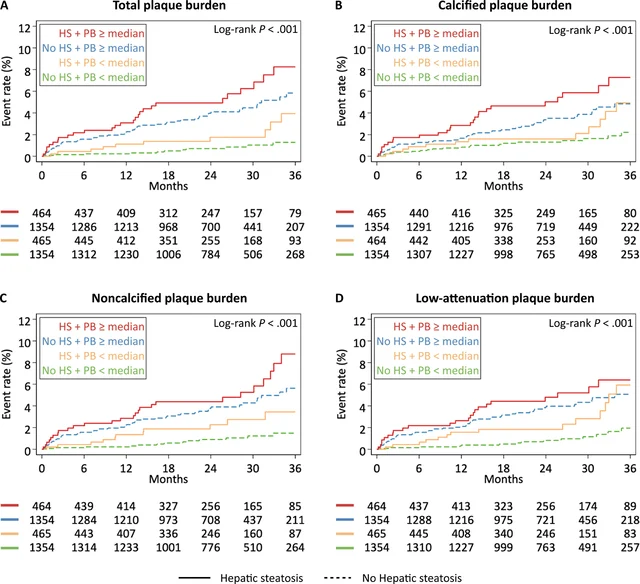
Hepatic steatosis linked to a 1.7× higher risk of major heart events — and vulnerable plaque the calcium test doesn't see
- Patients with hepatic steatosis had a 1.7-fold higher risk of major adverse cardiovascular events (MACE) — the combined endpoint of heart attacks, strokes, and cardiovascular death — compared to those without fatty liver, independent of standard cardiovascular risk factors, obesity, and degree of coronary blockage.
- Fatty liver was associated with 15% higher noncalcified plaque burden and 6% higher low-attenuation plaque burden (the lipid-rich, soft plaque type most prone to rupture).
Global Fatty Liver Day: AASLD launches a frontline clinician program
Questions to bring to your next appointment
- "What is my CKM stage?" — If you have type 2 diabetes, high blood pressure, high cholesterol, chronic kidney disease, or obesity, ask your doctor to stage your CKM risk. Understanding your stage determines how aggressively to treat, and which screening tests you need annually.
- "Am I on the right medications for my CKM stage?" — If you have type 2 diabetes and cardiovascular risk (or CKD), the new guideline makes SGLT2 inhibitors or GLP-1 receptor agonists a top-tier recommendation for organ protection, not just blood sugar control. If you are not on either class, ask why not and what your specific alternatives are.
- "What is my LDL, and am I at my target?" — In people with established heart disease or high CKM risk, the guideline targets LDL below 70 mg/dL (or below 55 mg/dL for higher-risk patients). If you are already on a statin and your LDL is still above goal, ask whether adding ezetimibe or a PCSK9 inhibitor is appropriate.
- "Do I have fatty liver disease, and has anyone checked my FIB-4 score?" — If you have type 2 diabetes or two or more metabolic risk factors, the new CKM guideline recommends FIB-4 screening every one to two years. If you have already been diagnosed with fatty liver, ask your doctor whether the PROMISE trial finding about noncalcified plaque changes how your cardiovascular risk should be evaluated.
- "For my child with prediabetes or early type 2 diabetes: would a Dexcom Stelo help?" — For children aged 2 and older who do not use insulin, the Stelo is now available without a prescription. Ask your child's pediatrician whether a CGM would be useful for tracking blood sugar patterns, and whether your insurance covers it.
참고 출처
- 1
- 2
- 3
- 4
- 5
- 6
- 7
- 8Managed Healthcare Executive: Food as medicine programs changing diabetes care at ADA 2026managedhealthcareexecutive.com
- 9
- 10
- 11

Chronic Disease Management Brief
Weekly translation of the latest diabetes / cardiovascular / liver disease management guidelines into everyday language
이 콘텐츠는 채널이 자동으로 생성했습니다. 한 문장이면 Neodrop이 당신을 위해 계속 만들어 냅니다.
관련 콘텐츠
- 로그인하면 댓글을 작성할 수 있습니다.