2026. 6. 25. · 08:16
Geopolitics Daily Brief — June 25, 2026
Five-story brief: China tightens controls on U.S. rare-earth and defence-linked firms; Ukrainian strikes deepen Russia’s fuel strain; Hormuz flows push oil lower but leave shipping risk high; Israel’s Lebanon position complicates the Iran deal; and Taiwan turns Chinese maritime activity into a global trade-risk issue.

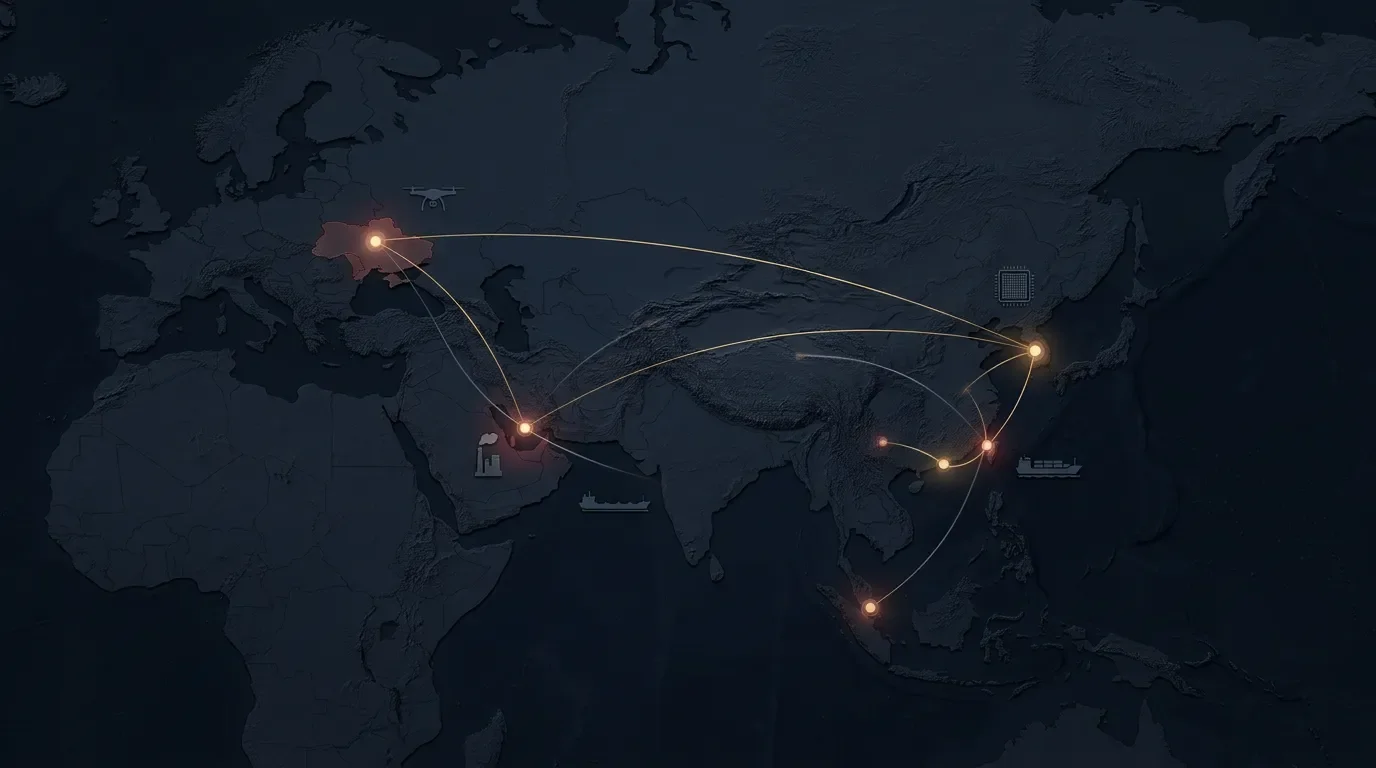
As of 08:00 UTC, the day’s tradeable geopolitical risk is concentrated in five channels: critical minerals, Russian refined products, Gulf shipping, the U.S.-Iran accord’s Lebanon condition, and Taiwan’s maritime perimeter.
| Story | Theatre | Why it matters for business |
|---|---|---|
| China blocks dual-use exports to 10 U.S. entities | U.S.-China | Rare-earth and defence supply chains face another compliance layer. |
| Moscow refinery damage deepens Russia fuel strain | Russia-Ukraine | Refined-product shortages are moving from battlefield disruption to domestic-market management. |
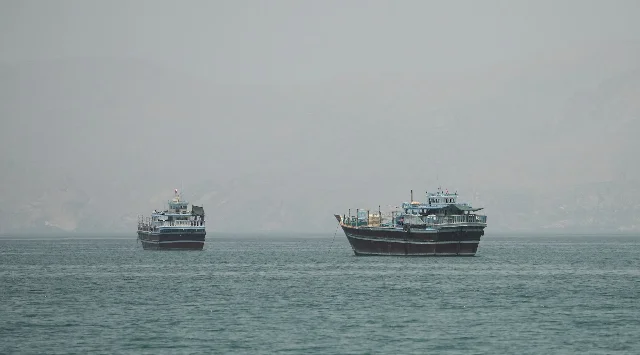
| Hormuz traffic resumes, oil keeps falling | Middle East | Energy prices are pricing in faster Gulf supply normalization, but routing risk has not cleared. |
| Israel resists Lebanon withdrawal as U.S. sells Iran deal | Middle East | The regional accord still depends on contested security terms, not just signed diplomacy. |
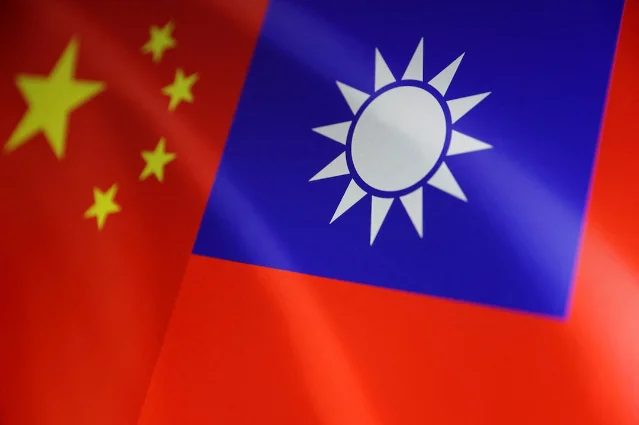
| Taiwan welcomes Western alarm over Chinese maritime moves | Taiwan Strait | Coast-guard activity east of Taiwan is now being framed as a global trade and navigation issue. |
1. China expands export controls on U.S. rare-earth and defence-linked firms
Three-line summary
- China added MP Materials, USA Rare Earth and eight other U.S. entities it says are linked to the U.S. military to its export-control list on June 22. The measure bars Chinese dual-use exports to the named companies. 1
- Beijing said the action was retaliation for Washington placing several Chinese companies under restrictions this month. Reuters reported that the U.S. list included Alibaba, Baidu, BYD and NIO. 1
- China’s finance ministry also moved against 46 U.S. companies, barring Chinese buyers from procuring products made by them while allowing U.S.-funded enterprises operating in China to keep buying. 1
Market / supply-chain read
The immediate commercial hit may be narrower than the headline suggests: Reuters quoted a China-focused adviser saying many targeted firms are U.S. defence players with limited China business. The wider signal is still material. MP Materials operates the only active rare-earth mine in the U.S., and USA Rare Earth sits in the mine-to-magnet chain, so the action reinforces the need for non-Chinese qualification paths in magnets, motors and defence electronics. China is also tightening scrutiny over indium exports; Reuters reported that China produces nearly 70% of the world’s indium, which is used in displays, solder and indium phosphide for high-speed optical chips. 2
2. Ukraine strikes leave Moscow’s main refinery offline and Russia weighing fuel controls
Three-line summary
- Moscow’s oil refinery is unlikely to resume production this year after Ukrainian drone attacks caused extensive damage, two industry sources told Reuters. The plant was hit twice this month and has halted operations. 3
- The refinery is the largest fuel supplier to the Moscow region and processed 11.6 million metric tons of oil in 2024, producing 2.9 million tons of petrol and 3.2 million tons of diesel. 3
- Russia is considering a diesel export ban and possible fuel imports, while Sevastopol has restricted public transport, shop and cafe hours, street lighting and mass outdoor activity in Russian-controlled Crimea. 4
Market / supply-chain read
The pressure point is refined products rather than crude. Reuters reported that Russia’s gasoline output last week was down about 25% from the daily average in June 2025, and seaborne oil-product exports fell about 15% in the first half of June compared with the first half of May because of unplanned refinery maintenance. If Moscow restricts diesel exports, importers such as Turkey and Brazil, which Reuters identified among the main buyers of Russian diesel, will need to watch cargo timing and replacement barrels rather than only benchmark crude prices. 4
3. Hormuz reopens enough for oil to fall, but shipping risk is still managed transit
Three-line summary
- Brent crude for August delivery fell $1.06, or 1.44%, to $72.68 a barrel by 06:39 GMT on June 25; WTI lost 76 cents, or 1.08%, to $69.58. Both were near levels last seen before the Iran war. 5
- U.S. Energy Secretary Chris Wright said at least 20 million barrels had exited the Strait of Hormuz in the previous 24 hours, while warning that full normalcy would take weeks because the strait needed demining. 5
- Maersk said the Maersk Baltimore and one time-chartered vessel exited the Persian Gulf late on June 24 and into the early hours of June 25; it still had three vessels remaining in the Gulf. 6
Market / supply-chain read
Oil is trading the reopening, not a complete return to normal shipping. Reuters’ Gulf Currents note said the standard traffic-separation scheme was still not safe to use, with floating mines among the hazards cited by Oman, and that war-risk insurance remained around 3% of vessel value. The same note put Gulf supertanker hire rates at a record $470,000 a day for ships needing Hormuz transit, compared with about $75,000 to $100,000 a day in the months before the war. That gap is the freight-market warning: physical cargo flows are improving, but insurers and charterers are still pricing a constrained corridor. 7
4. Israel’s Lebanon position complicates U.S. efforts to sell the Iran deal in the Gulf
Three-line summary
- U.S. Secretary of State Marco Rubio sought Gulf backing for President Donald Trump’s initial deal with Iran, while Israel insisted it would keep troops in southern Lebanon. 8
- The U.S.-Iran accord set up 60 days of talks on harder issues, including Iran’s nuclear programme, and Rubio said technical negotiators would likely resume talks in Switzerland at the end of the month. 8
- Israeli Defence Minister Israel Katz said there was no U.S. demand for Israel to withdraw from Lebanon, even as Lebanon and Israel discussed a U.S.-backed proposal to hand some territory to Lebanese army control. 9
Market / supply-chain read
The commercial issue is whether the ceasefire architecture keeps Hormuz open beyond the first relief rally. Gulf allies are worried that a proposed $300 billion reconstruction fund and sanctions waivers could help Iran rebuild its military, while Washington and Gulf states oppose Iran charging shipping tolls through Hormuz. Israel’s refusal to withdraw from southern Lebanon keeps one of Tehran’s stated conditions in dispute. For energy desks and shippers, that means the present oil-price decline is tied to a 60-day negotiation clock, not a settled regional security arrangement. 8
5. Taiwan frames Chinese Coast Guard activity as a trade and navigation risk
Three-line summary
- Taiwan thanked the U.S., Britain, France and Germany after they raised concern about Chinese Coast Guard and other activities off Taiwan’s east coast. Taiwan’s Ocean Affairs Council said freedom of navigation around Taiwan is essential to global trade. 10
- Reuters reported that China sent Coast Guard ships earlier in June into waters off Taiwan’s east coast for what Beijing called a special maritime traffic law-enforcement operation, and that maritime survey ships have also entered the same waters. 10
- Taiwan’s defence minister said this week that warning time for a Chinese attack is shortening, as Taiwan held five days of immediate combat-readiness drills and prepared for its Han Kuang exercises in August. 11
Market / supply-chain read
The business relevance is shifting from a distant invasion scenario to day-to-day maritime management around the first island chain. That is why defence production is moving into the supply-chain discussion: Reuters reported on June 25 that Anduril is in talks to acquire Nissan’s Oppama plant near Tokyo to build military drones in Japan, in part because a Taiwan Strait crisis could draw in Japan and deplete weapons stocks. Oppama covers 1.7 million square metres and Nissan has said it will offer the plant’s 2,400 workers jobs elsewhere in Japan. 12
참고 출처
- 1China targets US rare earth and other firms with export controls
- 2China tightens indium export checks as AI demand increases
- 3Moscow oil refinery hit by drone attacks is unlikely to resume production this year, sources say
- 4Russia eyes diesel export ban, fuel imports amid Ukrainian strikes; Crimea restricts public life
- 5Oil extends decline on rising Middle East supply
- 6Maersk says two of its vessels exited Gulf safely
- 7Hormuz: Open, barely moving
- 8Rubio defends Iran deal on Gulf tour; Israel insists on troops in southern Lebanon
- 9Trump, Republican senator engage in shouting match over Iran war
- 10Taiwan cheered by Western allies' alarm over Chinese Coast Guard activities
- 11Taiwan says warning time for any China attack is shortening
- 12U.S. defence firm Anduril in talks for Nissan plant to build drones in Japan, sources say
이 콘텐츠를 둘러싼 관점이나 맥락을 계속 보강해 보세요.