Heat can kill you faster than almost any other weather event in the US. Here's what actually happens to your body, and what to do about it.

Heat can kill you faster than almost any other weather event in the US. Here's what actually happens to your body, and what to do about it.

Heat is the #1 weather killer in the US — and young people account for more than 1 in 5 heat deaths, mostly because they're the ones outside at festivals, working outdoor jobs, and drinking in the sun. This article breaks down what heat exhaustion and heat stroke actually are (they're different), why being young doesn't make you immune, and exactly what to do when things go wrong.
Gen Z Health Daily
2026. 6. 14. · 23:11
구독 4개 · 콘텐츠 11개
It's the deadliest weather hazard in the country — deadlier than hurricanes, tornadoes, and floods combined on average each year — and most people in their 20s treat it like a minor inconvenience. You get hot, you sweat a little, you grab a Gatorade. But heat illness doesn't announce itself in a straightforward way, and it can go from "I feel kind of off" to an ambulance call surprisingly fast. 1
More than one in five heat-related deaths in the US occur in people aged 15 to 44. 2 That's not because young people are especially fragile — it's because they're the ones actually outside at festivals, doing manual jobs, running noon workouts, and drinking alcohol in the sun. This summer, that's probably you.
통계 카드를 불러오는 중…
Here's what you need to know.

What heat actually does to your body

Your body is trying to stay at roughly 98.6°F (37°C) at all times. In hot conditions, your main tool for doing that is sweat: moisture evaporates off your skin and pulls heat with it. That's why humid days feel so much worse than dry ones — high humidity slows evaporation, so your cooling system gets less efficient.
When the heat coming in (from the air, sun, and your own metabolism) outpaces what sweating can handle, your core temperature starts to climb. Your heart works harder to pump blood toward the skin. Your kidneys start to strain. If things go far enough, your brain gets involved — and that's when the situation becomes a medical emergency. 3
This is the basic chain that makes heat dangerous: dehydration → heat exhaustion → heat stroke. Each step makes the next one more likely.

Heat exhaustion vs. heat stroke — the distinction that actually matters

These two get lumped together, but they're not the same thing, and treating them differently matters.
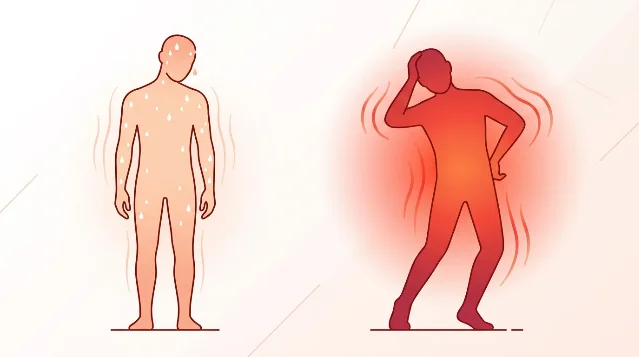
Left: pale sweating figure (heat exhaustion). Right: red flushed confused figure (heat stroke)
Heat exhaustion (left) vs. heat stroke (right) — the confusion and red skin on the right are the signals to call 911. AI-generated illustration.
Heat exhaustionHeat stroke
SkinCool, pale, clammyHot, dry (or may still be sweaty if exertional)
SweatingHeavy sweatingMay stop sweating entirely
Mental stateNormal, maybe a bit foggyConfused, agitated, slurred speech, or unconscious
Body tempElevated but usually under 104°FAbove 104°F
Is it an emergency?Rest + fluids usually fixes itCall 911 immediately
Heat exhaustion is your body's alarm. You'll feel weak, nauseous, dizzy — your skin looks pale or flushed and feels clammy. The fix is pretty straightforward: get somewhere cool, lie down, drink water or an electrolyte drink, and apply cool cloths. Most people recover within 30 minutes. 4
Heat stroke is different. The defining feature isn't the temperature number — it's the brain. 3 Someone with heat stroke may act confused, aggressive, or bizarrely calm. They might have slurred speech, seizures, or pass out. If you see those signs in someone, call 911 before you do anything else. While you wait, get them out of the sun, pour cool water over their skin, and fan them. Do not give them anything to drink — a person with altered consciousness can inhale liquid and choke.
One thing that catches people off: exertional heat stroke (the kind from physical activity) can happen while you're still sweating heavily. Dry skin is a sign of classic heat stroke but not a guarantee in the athletic context. The brain confusion is the red flag either way.

Being young and healthy doesn't make you immune

There's a useful distinction in emergency medicine between two types of heat stroke. Classic heat stroke happens when the environment overwhelms you — a hot room, a parked car, standing in direct sun for hours. That mostly hits elderly people and young children.
Exertional heat stroke is the one that targets young, fit people. It happens when physical activity generates more heat than the body can shed, usually in hot and humid conditions. Athletic training, construction work, raving at an outdoor festival, hiking — all qualify. 3
Some things common in the Gen Z lifestyle specifically amplify the risk:
  • Alcohol dehydrates you and disrupts your body's thermoregulation. It also blunts how hot you actually feel, which means you don't notice you're overheating until it's worse than it should be.
  • MDMA (ecstasy) causes hyperthermia directly — it's a known trigger for heat stroke even in normal temperatures. Mixing it with a hot crowded venue has been fatal.
  • Cocaine and amphetamines also raise core body temperature. These aren't just "bad for your health in general" — they directly interfere with your cooling system.
  • Caffeine is mildly dehydrating. Energy drinks before a workout on a hot day compound your fluid deficit.
  • Antihistamines (like Benadryl), SSRIs, and some other medications reduce sweating or increase fluid loss. If you take any of these regularly, you're more heat-sensitive than baseline. 3
Your body also needs time to adapt to heat. It takes about one to two weeks of regular heat exposure for your body to acclimatize — your plasma volume expands, you start sweating earlier, and your heart works more efficiently. If you're jumping from an air-conditioned apartment to a three-day outdoor festival with no buildup, your body isn't ready for that stress load.

If you're going to a festival, concert, or outdoor event

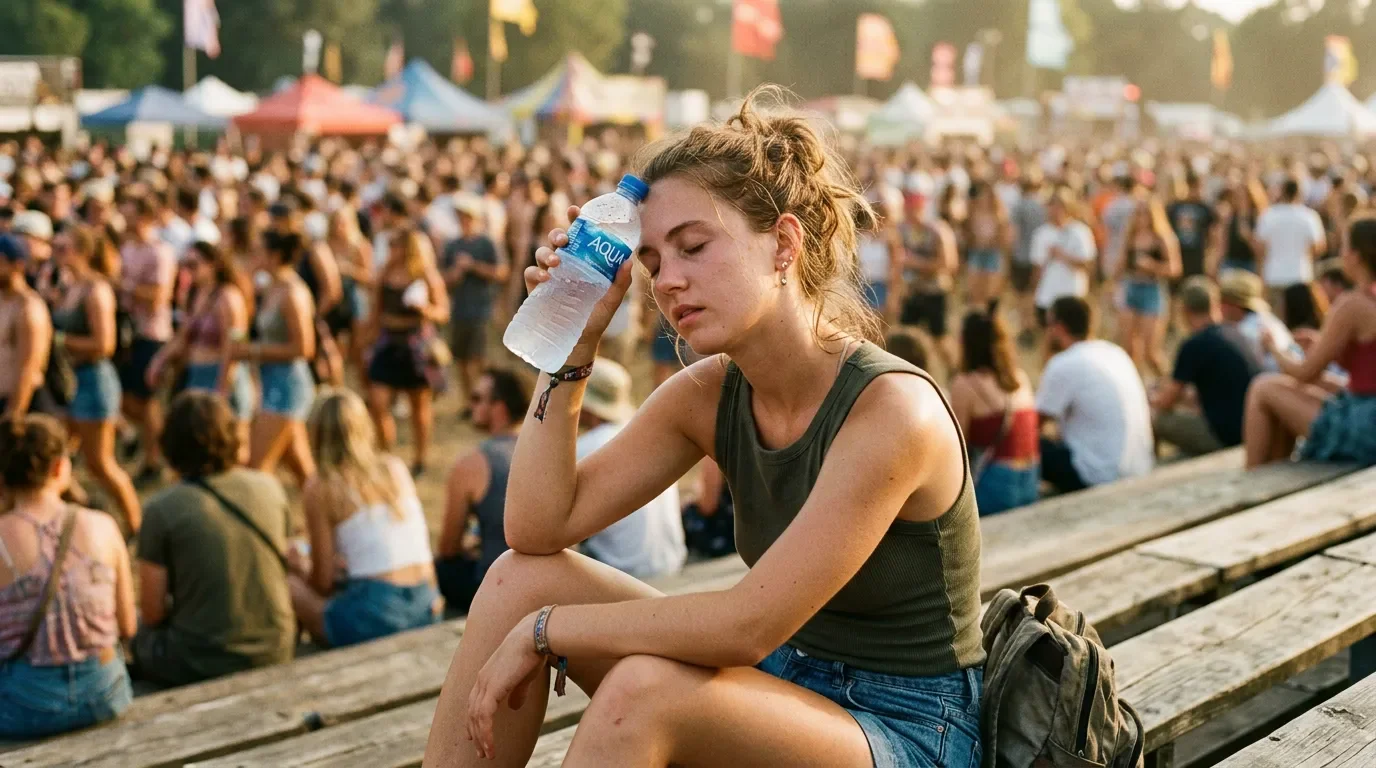
A 2026 study that analyzed four major Japanese rock festivals found that all of them posed substantial heat-related health risks, with three of four recording temperatures at the highest danger threshold. Emergency medical transports for heat illness spiked on the opening days of two of the festivals. 5
The researchers specifically called out younger festival crowds for two reasons: they tend to skip buying drinks when prices are high (leading to inadequate hydration), and they may be drinking alcohol and dancing — an elevated or euphoric state that makes it harder to recognize early overheating symptoms.
A few things that actually help at multi-hour outdoor events:
  • Front-load your hydration. Thirst is a lagging indicator — by the time you're thirsty, you're already slightly dehydrated. Drink 8 oz. of water every 20 minutes if you're active in heat. 4
  • Identify the shade and first aid points when you arrive. Before you're deep in the crowd feeling off, know where to go.
  • Check on your friends. Heat stroke affects your ability to recognize that something is wrong with you. Someone around you noticing you're acting confused is genuinely how a lot of these situations get caught in time.
  • Limit alcohol during peak heat hours (roughly noon to 3 pm). Drink water between drinks.
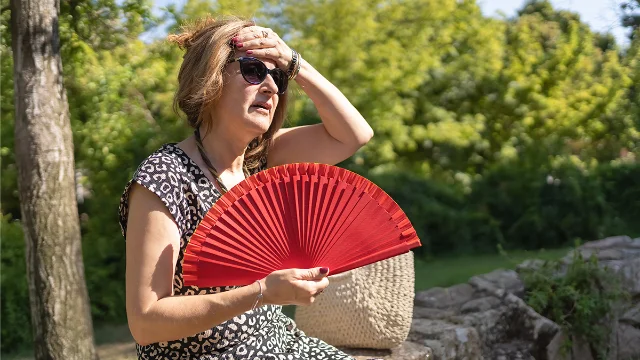
  • Fans don't help much above 90°F indoors. The CDC notes that fans actually increase body temperature when ambient temps are above 90°F (they just circulate hot air). Actual cooling — cold cloths, shade, air conditioning — is what works. 6

The practical prevention checklist

For hot days generally, the things that actually move the needle:
Watch for symptoms of overheating when you're outside on hot days.
Symptoms can sneak up. Dizziness, weakness, and heavy sweating mean it's time to stop, sit down, and cool off. 6
Time it right. Do outdoor activity before 10 am or after 6 pm if you can. The hottest hours are usually noon to 3 pm.
Wear the right clothes. Loose, lightweight, light-colored. Avoid synthetic fabrics that trap heat (polyester, nylon). Natural fabrics breathe.
Hydrate before you need to. People working or exercising in heat should aim for 8 oz. of water every 20 minutes. Even sitting still, your fluid needs are higher on hot days. 4
Check your urine. Clear to light yellow means you're hydrated. Dark yellow or amber means you need more water now.
Take breaks. At least 10 minutes of shade per hour of outdoor activity. More if you're older, less fit, or have any medical conditions.
Give your body time to adapt. If you're starting a job that involves outdoor labor, or training for a summer event, build up gradually. Short exposures first, longer ones as your body adapts.

When it's actually an emergency

Go somewhere cool and call 911 if you or someone around you has:
  • Confusion, agitation, bizarre behavior, or loss of consciousness
  • Slurred speech or seizures
  • Hot skin, rapid heart rate, and they've been in the heat a while
  • Stopped sweating despite heat exposure and physical activity
  • Passed out and hasn't come to quickly
These are heat stroke signs. Do not try to "walk it off" or wait to see if they improve. Every minute of elevated core temperature increases the risk of organ damage. The goal in first aid is to start cooling the person immediately and get emergency help on the way.
For heat exhaustion — weakness, heavy sweating, dizziness, nausea, no mental confusion — rest, cool environment, and fluids are usually enough. If they don't improve in 30 minutes, or if symptoms get worse, go get checked. 4
The line between heat exhaustion and heat stroke isn't always obvious in the moment. If you're uncertain, err on the side of calling for help.

이 콘텐츠를 둘러싼 관점이나 맥락을 계속 보강해 보세요.

  • 로그인하면 댓글을 작성할 수 있습니다.