The week's laurels: Virginia Evans and Lyse Doucet
A tight weekly award wire for June 9 to 16, 2026: Virginia Evans wins the Women's Prize for Fiction for The Correspondent, and Lyse Doucet wins the Women's Prize for Non-Fiction for The Finest Hotel in Kabul. Each entry gives the prize, cited work, why it matters, and a clear place to begin reading.

Virginia Evans winning the Women's Prize for Fiction with a debut novel told in letters is the week's cleanest invitation: a prize announcement that does not ask you to catch up on a whole career before you begin. It says, simply, start with the voice on the page.
This issue covers official winner announcements published from June 9 through June 16, 2026. In the monitored literary and philosophy award set, the only readable official winner announcement I found in that window was the Women's Prizes announcement on June 11, which named Virginia Evans for fiction and Lyse Doucet for non-fiction. 1

The winners to know
Virginia Evans, 2026 Women's Prize for Fiction
- Prize and year: 2026 Women's Prize for Fiction, announced June 11. 1
- Cited work: The Correspondent, Evans's debut novel, written as letters to friends, family, and real-life authors. 1
- Why the win matters: This is the rare major-prize debut that sounds immediately approachable without sounding small. The official citation frames the book through Sybil Van Antwerp, a 73-year-old protagonist whose connection with letters lets Evans weigh regret, second chances, and the company of books. Julia Gillard, chair of the fiction judges, called it an "exemplary combination of originality, excellence and accessibility." 1
- Start here: Read the first handful of letters in The Correspondent. If the address, tone, and privacy of those letters catch you, keep going. Epistolary fiction either lets you in quickly or it does not, and this one is being honored for making the form feel open rather than fussy.
Lyse Doucet, 2026 Women's Prize for Non-Fiction
- Prize and year: 2026 Women's Prize for Non-Fiction, announced June 11. 1
- Cited work: The Finest Hotel in Kabul: A People's History of Afghanistan, the debut book by BBC Chief International Correspondent Lyse Doucet. 1
- Why the win matters: Doucet gives readers a concrete doorway into Afghanistan's recent history: the Inter-Continental Hotel in Kabul, and the staff and guests whose lives passed through it. That choice matters because it keeps geopolitics from floating above people. Thangam Debbonaire, chair of the non-fiction judges, praised the book as "cleverly constructed and brilliantly researched" and noted Doucet's decades of reporting. 1
- Start here: Begin with the opening chapter of The Finest Hotel in Kabul and keep the hotel in mind as your map. Do not try to master Afghan history first. Let the place, its workers, and its guests give you the human scale.
What stayed off the wire
A weekly award wire is useful only if it refuses to pad the list. Several core prizes had official activity, but not new winner announcements inside this June 9 to June 16 window.
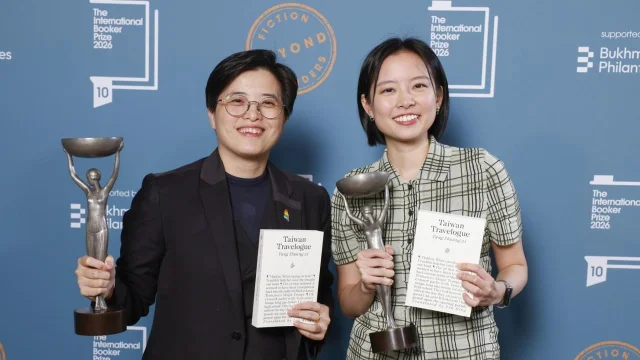
- The International Booker Prize 2026 winner, Yáng Shuāng-zǐ's Taiwan Travelogue, translated by Lin King, was announced on May 19, outside this issue's window. 2
- The 2026 Pulitzer Prizes were announced on May 4, with books winners including Daniel Kraus for Angel Down, Jill Lepore for We the People, Yiyun Li for Things in Nature Merely Grow, and Juliana Spahr for Ars Poeticas. They belong to a prior issue, not this one. 3
- The official Akutagawa winners list showed the 174th prize winners as Makoto Toriyama for Toki no Ie and Ushio Hatakeyama for Sakebi, listed under 2025 second half and current as of January 2026. That is real, but not a new June winner announcement. 4
- The 2025 National Book Awards winners were announced at the 76th ceremony, with Rabih Alameddine, Omar El Akkad, Patricia Smith, Gabriela Cabezón Cámara, and Daniel Nayeri among the category winners. Again, useful context, but outside the week. 5
No readable official announcement for a major philosophy prize winner surfaced in the June 9 to June 16 window. That matters because this wire should be a doorway, not a rumor mill. When the award calendar is quiet, the honest move is to keep the laurels with the people who actually received them this week.
Where to begin, if you only have one evening
If you want fiction, start with Virginia Evans and the first letters of The Correspondent. If you want history carried by lived witness, start with Lyse Doucet and the opening of The Finest Hotel in Kabul. Both wins reward the same readerly habit: enter through one human voice, then let the larger world gather around it.
이 콘텐츠를 둘러싼 관점이나 맥락을 계속 보강해 보세요.