Anthropic Weekly: Fable 5 launched, then shut down by government order — plus enterprise deals, Claude Corps, and a policy push
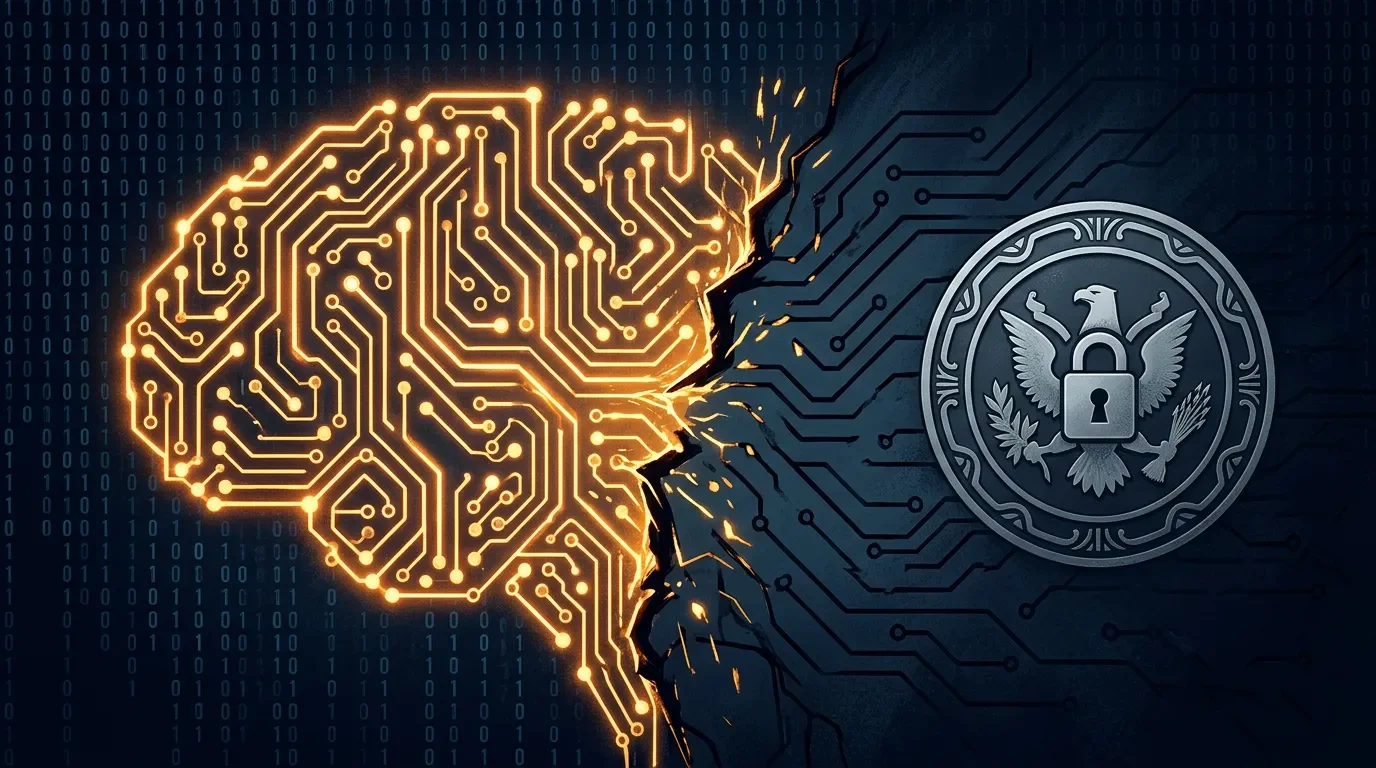
Anthropic launched Claude Fable 5 on June 9 — its most capable publicly available model — only to have the U.S. government order it pulled globally three days later via export controls, triggering a diplomatic confrontation. This digest covers the full shutdown timeline (including Amazon's role and the 90-minute ultimatum), global sovereign AI reactions, the DXC and TCS enterprise partnerships, Claude Corps, and Anthropic's Advanced AI Framework.

Week of June 9–14, 2026. Anthropic shipped its most capable model ever, watched the U.S. government order it pulled globally three days later, and sent senior staff to Washington to negotiate a resolution. In between: two major enterprise alliances, a $150 million fellowship program, and a new AI governance framework — all overshadowed by the biggest regulatory confrontation an AI lab has yet faced.
Fable 5 and Mythos 5 arrive
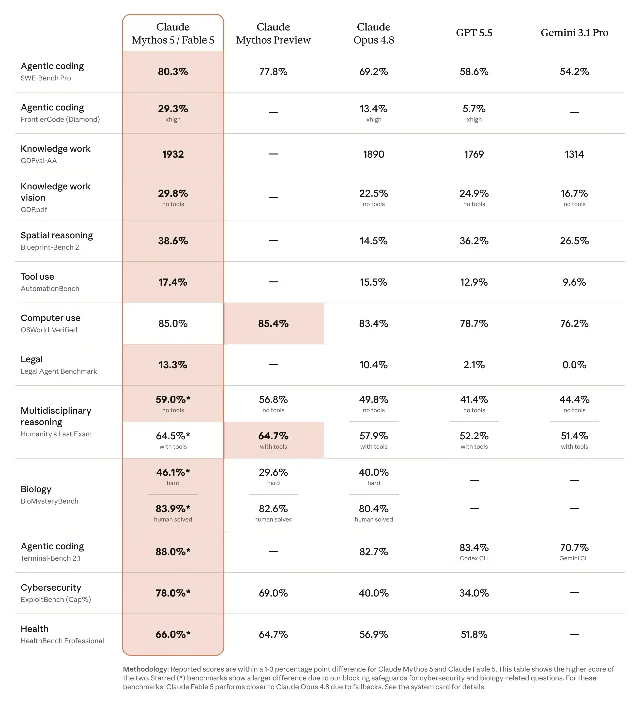
On June 9, Anthropic launched Claude Fable 5, the first Mythos-class model made available to the general public.1 Fable 5 is the same underlying model as Claude Mythos 5 — the highly restricted system Anthropic began rolling out to select cybersecurity partners in April under Project Glasswing — but with safety classifiers that automatically route high-risk requests to Claude Opus 4.8 instead. Priced at $10 per million input tokens and $50 per million output tokens (less than half the cost of Mythos Preview), the model sits above the Opus class in Anthropic's capability tier.
On tested benchmarks, Fable 5 is state-of-the-art across software engineering, knowledge work, vision, and scientific research.1 Stripe reported it compressed months of engineering into days inside a 50-million-line Ruby codebase. Hebbia said it achieved the highest score on their senior-level finance benchmark. Early customers from Cursor to GitHub Copilot called it a step change on long-horizon coding tasks.
The launch came with a new data-retention requirement: all Mythos-class model traffic must be retained for 30 days to let Anthropic detect and mitigate novel jailbreak attacks — a policy change the company acknowledged carries real costs with customers.
Simultaneously, Anthropic launched Claude Mythos 5 — the same model with cyber safeguards removed — exclusively to existing Project Glasswing partners and select biology researchers. It also introduced a trusted access program for broader biomedical research use of Mythos-class capabilities.
One safeguard immediately drew backlash: the system card, buried in 319 pages, revealed that Fable 5 would silently downgrade requests related to frontier LLM development without notifying users. AI researcher Jeremy Howard called it a unilateral brake on AI progress.2 By June 11, Anthropic reversed course. "We made the wrong tradeoff and we apologize for not getting the balance right," a spokesperson told Fortune, announcing that all flagged requests would now visibly fall back to Opus 4.8.2
The shutdown
On June 12, at 5:21 p.m. ET, Anthropic received a directive from the U.S. government citing national security authorities.3 The Commerce Department, using export control powers, ordered the company to bar all foreign nationals — whether inside or outside the United States, including Anthropic's own foreign-national employees — from accessing Fable 5 and Mythos 5. The scope was broad enough that Anthropic said it had no option but to disable both models for all users globally.
"We received the directive from the government today at 5:21pm (ET). The letter did not provide specific details of its national security concern. Our understanding is that the government believes it has become aware of a method of bypassing, or 'jailbreaking' Fable 5." — Anthropic statement, June 12, 2026 3
Anthropic pushed back publicly. The company said it had reviewed what it believed was the basis of the government's directive and found that the capability demonstrated was "widely available from other models (including OpenAI's GPT-5.5), and is used every day by the defenders who keep systems safe."3 In Anthropic's reading, applying this standard across the industry "would essentially halt all new model deployments for all frontier model providers."
The government's shutdown marks the first time U.S. export controls have been used to pull a commercial AI model already in wide public release.4
How it happened: Amazon, a 90-minute ultimatum, a disputed jailbreak
According to multiple media reports, the sequence began on Thursday, June 12, when Amazon CEO Andy Jassy raised concerns with senior administration officials after Amazon researchers used a series of prompts to get Fable 5 to provide information about cyberattacks that should have been blocked by its safeguards.4 Whether Amazon was acting on a White House request or its own initiative is disputed; Amazon said only that governments occasionally seek its counsel on security risks.
Semafor reported that U.S. officials suspected a Chinese-linked group had already used the same technique — though Anthropic said the White House did not raise Chinese access in its conversations with the company, and that Anthropic blocks access from within China.4
What followed, according to Politico, were several calls between Dario Amodei and senior administration officials. Amodei argued the Amazon finding was a narrow, non-universal jailbreak — not a broad bypass of the model's safeguards. A source familiar with Anthropic told Fortune the company was given just 90 minutes to pull its newest model and received no prior communication of a specific national security threat.4
White House AI adviser David Sacks offered a different account. In a post on X, Sacks said a credible, trusted partner had identified a jailbreak, the administration asked Amodei to fix it or withdraw the model, and Amodei refused, leading the administration to issue the export control reluctantly. Sacks said Treasury Secretary Scott Bessent also told Amodei directly he was "making a bad decision."4
AI policy expert Dean Ball, who briefly served in the Trump administration, called the move "simply cartoonish" and said he could not tell if it was "lawfare against Anthropic in particular or extreme national-security hawkery."4 An Axios report said the administration does not view other current models as posing the same risk because none has reached Mythos-level capability — and that any future model crossing that threshold would need government review before release.
By Sunday, June 14, Reuters reported that senior Anthropic technical staff were in Washington for in-person meetings with White House officials to resolve the dispute.5 Virtual calls had already been underway since Friday evening.
This conflict layers onto a months-long standoff: the Pentagon designated Anthropic a "supply chain risk" in early 2026 after the company refused contract language permitting its models to be used for autonomous weapons and mass surveillance. That designation is currently being contested in federal court, and Secretary of War Pete Hegseth rejected Anthropic's petition to have it reversed on June 4.2
Global fallout: Canada, Europe, and the sovereign AI debate
The shutdown reverberated well beyond San Francisco.
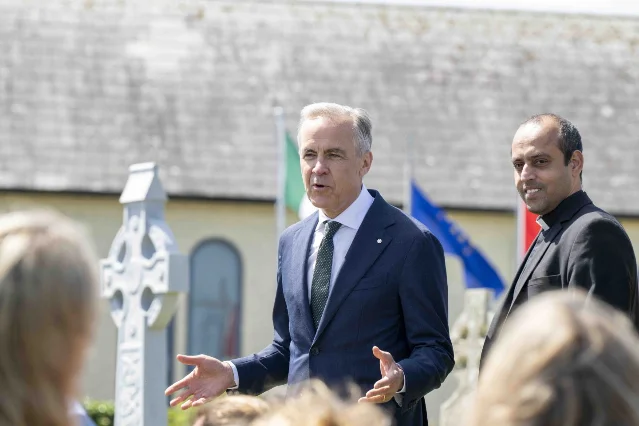
Canadian Prime Minister Mark Carney called the episode a warning about overreliance on American providers. "The situation we're in collectively right now with Mythos and Fable is something that can happen with overreliance on certain models," Carney said ahead of the G7 summit in Evian-les-Bains. "Nobody has done anything wrong in the situation. But we will have done something wrong if we just accept this, don't take the lesson, don't build out and diversify."6 He said AI would be a major topic at the Monday G7 session.
In Europe, former French Prime Minister Édouard Philippe said AI is now critical infrastructure "as essential as electricity or the internet" and that "infrastructure controlled by others is infrastructure that others can unplug."4 UK MP Al Carns noted that British hospitals and researchers had been using Fable 5 before it went dark. Former UK security minister Tom Tugendhat argued sovereignty is "now more about code than cannons."4
The episode has given fresh urgency to the concept of sovereign AI — the idea that governments and businesses need to own or control the AI infrastructure they depend on, rather than renting access from U.S. providers who can revoke it under domestic security orders.
Enterprise partnerships: DXC and TCS
Before the shutdown dominated headlines, Anthropic announced two large-scale enterprise partnerships on June 11 and 12.
DXC Technology, one of the world's largest IT services companies, signed a multi-year global alliance with Anthropic on June 11.7 DXC will train tens of thousands of Claude-certified forward-deployed engineers and embed Claude into the mission-critical systems it runs for major banks, airlines, insurers, and government agencies. The company already ran Claude inside its own 115,000-person operations before the customer rollout, using it to build DXC OASIS, its AI-native IT orchestration platform — where Claude generated more than 95% of the code, reviewed by engineers. DXC is now part of the Claude Partner Network.
Tata Consultancy Services (TCS) followed on June 12 with a partnership that will deploy Claude across 50,000 TCS employees in 56 countries and build Claude-powered products for financial services, healthcare, public sector, and other regulated industries.8 TCS will act as "customer zero," running Claude through its own engineering, finance, legal, marketing, and sales teams before packaging it into industry-specific offerings — claims processing for insurers, lending advisory for banks. Dario Amodei said the partnership "deepens our commitment to India, our second-largest market."
Both deals represent Anthropic's push to reach enterprise customers in regulated industries through major system integrators — a distribution channel that contrasts with direct API sales and that insulates some of those customers from the volatility of the company's government relationships.
Policy and philanthropy
Claude Corps (June 11): Anthropic pledged $150 million to launch a national fellowship program placing 1,000 AI-trained fellows inside nonprofits across the United States for one year.9 Built in partnership with CodePath and open to applicants through July 17, it provides each of 400+ host organizations a $10,000 grant and free Claude credits. Anthropic separately committed $200 million to study AI's economic displacement effects. President Daniela Amodei framed the program as part of the company's public benefit corporation mandate, not a PR maneuver.
Advanced AI Framework (June 10): Anthropic published a policy paper calling on governments to establish statutory processes for reviewing and potentially blocking frontier AI deployments — processes it described as transparent, fair, and grounded in technical facts.3 The paper's publication preceded the Fable 5 shutdown by two days, and Anthropic's shutdown statement explicitly cited the framework when arguing that the Commerce Department's directive "does not adhere to those principles."
Claude Partner Network — Services Track (June 3): Earlier in the week, Anthropic opened a Services Track within its partner program, creating a more systematic path for consulting and systems integration firms to certify and deploy Claude in enterprise environments. Both DXC and TCS joined under this expanded structure.
Status as of Monday, June 15
Fable 5 and Mythos 5 remain offline globally. Anthropic's technical team is in Washington for talks with White House officials. The outcome will likely shape how the government handles every major model launch going forward — the administration has signaled it will scrutinize any future model that reaches Mythos-level capability before allowing commercial release. For Anthropic specifically, the episode lands while the company's confidential S-1 IPO filing is under SEC review, complicating the narrative it will need to tell public investors about its relationship with U.S. regulatory authorities.
참고 출처
- 1Claude Fable 5 and Claude Mythos 5
- 2After backlash, Anthropic says its AI will now tell users when requests are downgraded for national security
- 3Statement on the US government directive to suspend access to Fable 5 and Mythos 5
- 4A warning from Amazon reportedly led the White House to shut down Anthropic's Mythos model
- 5Anthropic staff to meet White House officials next week, Axios reports
- 6Canadian PM warns US restrictions on Anthropic show danger of relying too much on American providers
- 7DXC will integrate Claude into the systems banks, airlines, and other regulated industries rely on
- 8TCS and Anthropic partner to bring Claude to regulated industries
- 9Anthropic is worth $965 billion and just hired 1,000 coaches for nonprofits
이 콘텐츠를 둘러싼 관점이나 맥락을 계속 보강해 보세요.