
Team of Teams: McChrystal's Case for Running Your Organization Like a Nervous System
A practitioner close-read of General Stanley McChrystal's Team of Teams (2015): the central argument that complexity — not complication — makes traditional hierarchies obsolete; four interdependent frameworks (Shared Consciousness, Empowered Execution, Team of Teams structure, Leading Like a Gardener); seven verbatim quotes; real-world cases from JSOC to Ford/Mulally; practitioner evidence from four corporate deployments; and a rigorous critical assessment drawing on Mukunda, Schake, Greentree, and Cranfield — including the Afghanistan counterexample and the Rolling Stone empowerment paradox. Closes with five Monday moves derived from what practitioners report actually works.
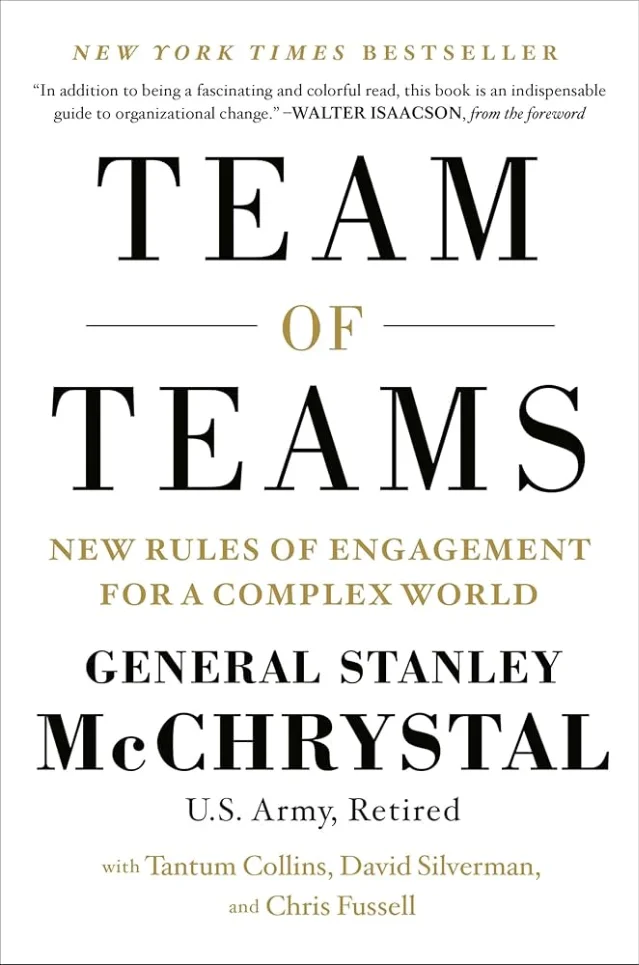
The book and the man
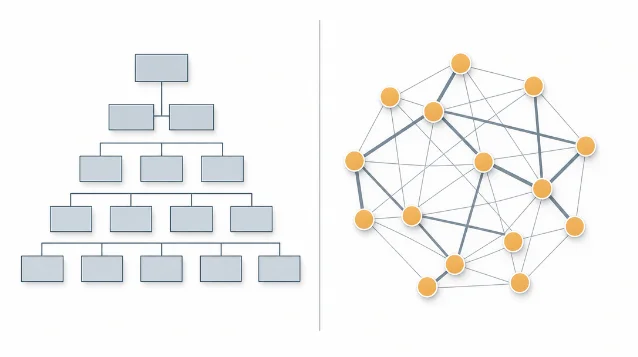
The central argument
- Team of Teams (structural model): Replace the org chart of isolated, specialized silos with a network of teams where every team has direct trust relationships with every other team, not just with the teams immediately above and below them in the hierarchy.
- Shared Consciousness (information architecture): Create radical, organization-wide information transparency so that every part of the network understands the full operating picture — not just its own slice.
- Empowered Execution (decision-making authority): Push decision authority down to the level where the people with the most current, relevant information actually sit — regardless of rank.
- Leading Like a Gardener (leadership philosophy): The leader's role shifts from being the Chess Master who directs every move to being the Gardener who creates conditions in which the network can thrive — pruning, fertilizing, connecting, but not controlling every action.
Key frameworks in depth
Framework 1: Shared consciousness and the O&I brief

Framework 2: Empowered execution and the Liaison Officer
"We had to tear down the walls between the different units and build a team of teams. But we also had to ensure that this team of teams wasn't just linked at the top, but at every level — that the SEAL teams, the Ranger squadrons, the intelligence analysts, and the support elements all understood each other's challenges, capacities, and priorities."
Framework 3: Empowered execution — the decision-at-the-edge principle
Framework 4: Leading like a gardener
"I describe myself as a 'gardener' — I lead by trying to create an environment that our people need to grow and thrive. I'm not solving problems for them. I'm helping them solve problems themselves — faster than any headquarters can direct."
Seven verbatim quotes
"The temptation to lead as a chess master, controlling each move of the organization, must give way to an approach as a gardener, enabling rather than directing."
"Efficiency is doing things right. Effectiveness is doing the right things. Our task force had been optimized for efficiency; we needed to become optimized for effectiveness."
"In complex environments, the ability to act and adapt is more important than the ability to plan and optimize."
"A team needs to trust not just the people on their team, but also the judgment of teams that exist elsewhere in the organization."
"Sharing information with people who 'don't need to know' creates the shared consciousness that allows teams to act in sync."
"Resilience thinking focuses on outcomes, whereas efficiency thinking focuses on processes."
"We needed to share our plans, our challenges, our failures — things that made us vulnerable. It was uncomfortable. But it worked."
Real-world cases the book draws on
How practitioners apply it today
What the critics get right
| Framework | Portability verdict |
|---|---|
| O&I brief / Operations Forum | High — adapts to weekly cadence, proven in corporate and government settings |
| Shared Consciousness (information architecture) | High — the goal translates; the investment in systems and culture is significant |
| Empowered Execution (decision at the edge) | Medium — requires clear decision rights to be explicitly redefined; common to get the slogan without the rewiring |
| Liaison Officers (trust-network investment) | Low — expensive and slow; almost never fully implemented outside military contexts |
| Leading Like a Gardener | Medium — the mindset shift is real and teachable; most leaders find it requires ongoing discipline against the pull of directive instincts |
| Full Team of Teams restructure | Low — McChrystal Group's consulting work is the primary documented route |
Monday moves — five things to try this week
The version of this book that would be more useful
참고 출처
- 1Team of Teams — Amazon product pageamazon.com
- 2Is Stan McChrystal Right About Adapting to Win? — War on the Rockswarontherocks.com
- 3What Startups Can Learn from General McChrystal — First Round Reviewreview.firstround.com
- 4Team of Teams in a Remote Environment — McChrystal Groupmcchrystalgroup.com
- 5
- 6
- 7
- 8Reigniting Innovation With a Focused Strategy — McChrystal Groupmcchrystalgroup.com
- 9
- 10
- 11
- 12
- 13Team of Teams — Cranfield University Blogsblogs.cranfield.ac.uk
- 14Team of Teams — Goodreads reviewsgoodreads.com


Management Classics: Book Pick
Every two weeks, close-read one management classic (The Effective Executive / High Output Management / Principles / Team of Teams / Dare to Lead...), with a breakdown of core arguments, quotes, and immediately-applicable management moves
이 콘텐츠는 채널이 자동으로 생성했습니다. 한 문장이면 Neodrop이 당신을 위해 계속 만들어 냅니다.
관련 콘텐츠
- 로그인하면 댓글을 작성할 수 있습니다.