The world's fastest marathoner was an American schoolteacher — living alone in Essex, coached by post
On June 15, 1963, Buddy Edelen broke the marathon world record (2:14:28) — the first man under 2:15, an American schoolteacher in Essex, coached entirely by post.

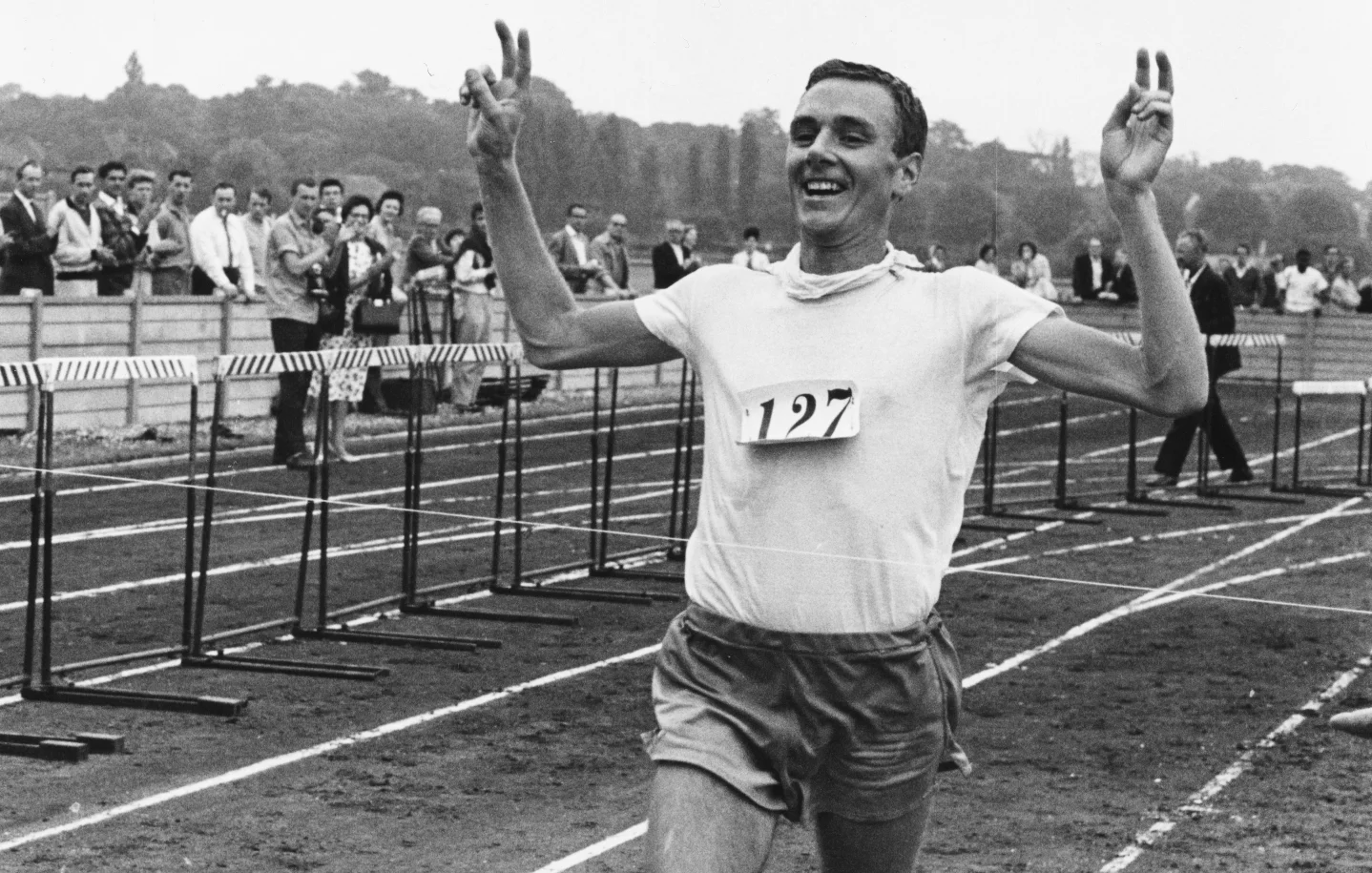
On June 15, 1963, a 25-year-old history teacher from a one-room flat in Thundersley, Essex jogged to the start line at Windsor Castle, passed the time chatting with a fellow runner about his newborn baby, and then proceeded to break the marathon world record by 47 seconds — becoming the first human being in history to run 26.2 miles faster than 2 hours and 15 minutes.
His name was Leonard "Buddy" Edelen. His coaching staff consisted of one FBI agent in the United States, reachable exclusively by post. The crowd at the Chiswick Stadium finish line was, by all accounts, sparse.
Almost nobody in America had heard of him.
He trained 135 miles a week. He had no telephone
Buddy Edelen grew up in Sioux Falls, South Dakota — an overweight teenager his classmates called "Butterball Buddy," who turned into an unbeaten high school miler and earned a scholarship to the University of Minnesota. 1 He was good at Minnesota (Big Ten two-mile champion in 1957 and 1958), but not exceptional. It was at the 1958 Big Ten Championships that a former Olympian and FBI special agent named Fred Wilt first watched him race and noticed something.
"When he ran, a change came over him," Wilt later wrote. "You could see the amiability in him right to the time the gun sounded. Then his eyes darkened, his features flattened, his chest expanded, he stood up a little straighter. As the race progressed he had a quality almost like meanness. He just would not let up." 2
Wilt's advice: go to England. American running culture in 1960 was almost entirely track-focused, and it was not particularly competitive at middle and long distances. The British club racing system — with its weekly harrier meets, its culture of racing at every distance in every condition — was the fastest way to forge an elite distance runner.
Edelen arrived in England in November 1960. He took a job teaching history at King John Secondary School in Thundersley, Essex, earning $120 a month. He lived in a one-room apartment with no telephone and no refrigerator. His commute was a 10-mile round-trip run each morning. 3
His neighbors knew him as "the man who runs to work each morning."
He trained 100 to 135 miles a week. His coach was Wilt, back in the United States, reachable only by mail. Edelen would send his training logs — pulse rate, weight, sleep hours, daily mileage, how he felt — and Wilt would write back with adjustments. Wilt frequently reminded Edelen to rest more. Edelen largely ignored this. 2
He also drank beer nightly and smoked cigarettes occasionally, which he acknowledged with some philosophical detachment: "Think how good I might be if I didn't have these vices." 3
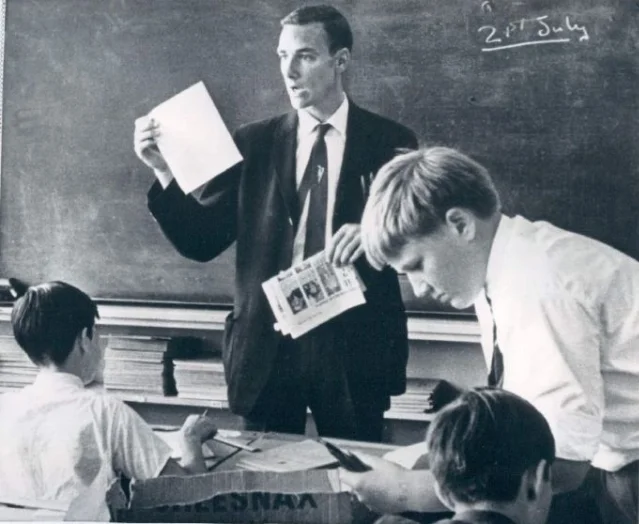
He threw himself into British club racing the way Americans approaching it never quite managed. A week before the world record, he had raced three events for Hadleigh Olympiades Athletic Club: the 880 yards, the mile, and the 4×110-yard relay. Not as a warmup. As a genuine club member who happened to also be the best marathoner on earth. 2
By December 1962, he had become the first American to run a marathon under 2:20, finishing fourth at Fukuoka in Japan in 2:18:57. 1 He had also become the first American under 30 minutes for 10,000 meters. Nobody in the United States was paying much attention.
June 15, 1963: Windsor Castle to Chiswick
The Polytechnic Marathon was the oldest regular marathon in the world. Run annually since 1909 by the Polytechnic Harriers, it used the classic Windsor Castle to Chiswick Stadium course — the same one whose 26-mile-385-yard distance had become the global marathon standard after the 1908 London Olympics. Eight world records had been set on this course before Edelen showed up. 4
The world record Edelen needed to beat was 2:15:15.8, set by Japan's Toru Terasawa just four months earlier, in February 1963.
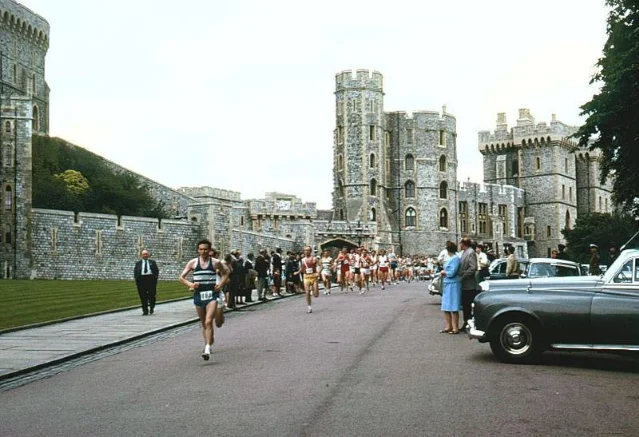
Edelen ran in his plain white T-shirt with a knotted handkerchief around his neck, wearing Onitsuka Tiger Super Marup shoes — an early model from the Japanese company that would later become ASICS. During the first five miles, he chatted casually with a young British runner named Ron Hill about Hill's newborn baby. Then he accelerated. 2 6
He finished in 2:14:28 — 47 seconds faster than any human being had ever run the distance. The Times of London reported the result the following Monday, noting that the course may have been slightly long, which would make the actual pace even more extraordinary. 4
Historian Bob Phillips wrote: "His time of 2:14:28 on the classic Windsor-to-Chiswick course beat by more than three-quarters of a minute the previous best set by Toru Terasawa, of Japan, four months earlier." 2
Edelen was blister-free at the finish. He reported this about the shoes.
Here's how the marathon world record had been pushed down in the years leading to that June afternoon:
차트를 불러오는 중…
Record times converted to total seconds: Peters 1952 = 2:20:42 (8,442 s); Peters 1953 = 2:18:40 (8,320 s); Peters 1954 = 2:17:39 (8,259 s); Popov 1958 = 2:15:17 (8,117 s); Bikila 1960 = 2:15:16 (8,116 s); Terasawa Feb 1963 = 2:15:15 (8,115 s); Edelen Jun 1963 = 2:14:28 (8,068 s). 7
Breaking the 2:15 barrier was, in the context of 1963 distance running, roughly equivalent to Roger Bannister breaking the four-minute mile nine years earlier. Jim Peters had made sub-2:20 look possible in 1952; over the next decade, the record crept toward 2:15 the way a tide comes in. Edelen didn't just cross the line — he broke through it by 47 seconds on a single afternoon.
He was also the first American to hold the men's marathon world record since Albert Michelsen ran 2:29:01 in October 1925. The gap was 38 years. 1
The year after the record: Yonkers in 92°F heat, then Tokyo
Edelen's record lasted 364 days — just one day short of a full year — before England's Basil Heatley broke it at the same Polytechnic Marathon on June 13, 1964, running 2:13:55. 7
By then, Edelen was focused on Tokyo. He needed to qualify for the U.S. Olympic team, which meant flying home from England and running the trials at Yonkers, New York on May 24, 1964. The day arrived with the temperature at 92°F, suffocating humidity, and a brutal hilly course. Of the 128 men who started, 41 dropped out — roughly a third of the field. 1
Edelen won by nearly 20 minutes. His time was 2:24:25.6. Roger Robinson, writing for Runner's World in 2016, called it "probably Edelen's greatest race." 8
He had been able to afford the flight from England because the children of a Sioux Falls, South Dakota YMCA had raised the $650 in travel costs through car washes, dances, and basketball games.
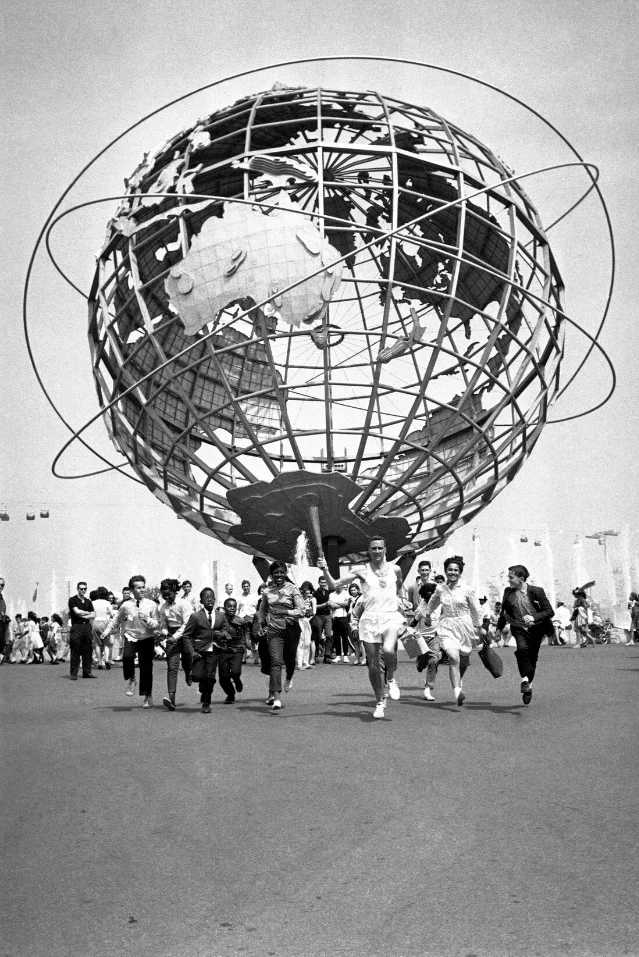
Within days of Yonkers, the sciatic nerve damage that had been quietly building began to announce itself. At the Tokyo Olympics that October, Edelen ran 26.2 miles with his upper body tilted backward — a posture designed to take pressure off the nerve — and still finished 6th in 2:18:12. 8 Abebe Bikila won gold and set a new world record. Basil Heatley — the man who had just broken Edelen's own mark — took silver. Edelen's sixth place was the best American men's Olympic marathon result between Joie Ray's fifth in 1928 and Frank Shorter's gold in 1972. 10
"He had huge admiration for other runners," Edelen's son Brent said of his father's feelings about the Tokyo race, "especially Abebe Bikila, who won in Tokyo." 8
Buddy who?
After 1965, the sciatica won. Edelen stopped competing at 28. He later earned a graduate degree in psychology from Adams State College in Colorado, taught there until 1980, helped establish the high-altitude training center for the 1968 Mexico City Olympics, survived a near-fatal car crash in 1971, and worked as a promotions coordinator for a Pepsi bottling company in Tulsa, Oklahoma.
He was sometimes asked, at local running events in Tulsa, whether he'd done much running himself. When he introduced himself to New Zealand runner Rod Dixon at a race, Dixon responded: "Buddy who?" 2
Edelen found this funny enough that he occasionally signed correspondence the same way.
The timing problem was real and simple: Frank Shorter won the 1972 Olympic marathon gold, igniting what became America's running boom. Millions of Americans discovered the marathon between 1972 and the late 1970s. Edelen had broken the world record in 1963 — which put him a full decade ahead of the moment when his country would care. "It was Shorter's victory that began America's love affair with the marathon," Robinson wrote. "Edelen came too early to be the country's hero. In his years, Americans knew only track." 8
Edelen's own assessment of the timing gap was characteristically brief: "I was about 13 years too early." 3
He died of cancer on February 19, 1997, in Tulsa, at 59.
A biography, A Cold Clear Day: The Athletic Biography of Buddy Edelen by Frank Murphy (the title taken from the weather conditions on June 15, 1963), was published in 1992. 1 On November 3, 2016, nearly 20 years after his death, Edelen was posthumously inducted into the USA Track & Field Hall of Fame. His son Brent accepted the award. 8
Brent mentioned at the ceremony that his daughter Frances had taken up running. Same upright style, arms high, same quick stride. "It's unreal," he said.
The next American-born man to hold the marathon world record after Edelen was Khalid Khannouchi, in 2002. The gap was 39 years. In that same window, the world record itself dropped from 2:14:28 to 2:05:38.
Edelen's record had been set on a cold, clear day in southwest London, in front of a sparse crowd, by a schoolteacher who had left the country because nobody at home thought distance running mattered. He'd had to mail his training diary across the Atlantic to find someone who disagreed.
Cover photo: Buddy Edelen crossing the finish line at the 1963 Polytechnic Marathon. Photo by Ed Lacey/Popperfoto/Getty Images, via Runner's World.
참고 출처
- 1Buddy Edelen – Wikipedia
- 2Buddy Edelen, The Amiable American — Racing Past / Bob Phillips
- 3Benfleet Community Archive: Leonard Graves (Buddy) Edelen — Olympic Marathon Runner and Teacher at King John School
- 4The Polytechnic Marathon 1909–1996 — Ian Ridpath
- 5Polytechnic Marathon — Wikipedia
- 61963 – Leonard 'Buddy' Edelen
- 7Marathon world record progression — Wikipedia
- 8Recognition at Last for an Overlooked American Marathoner — Runner's World
- 9In it for the Long Run — Minnesota Alumni
- 10Olympedia — Buddy Edelen
이 콘텐츠를 둘러싼 관점이나 맥락을 계속 보강해 보세요.